
Vintage Wooden Buffet Table
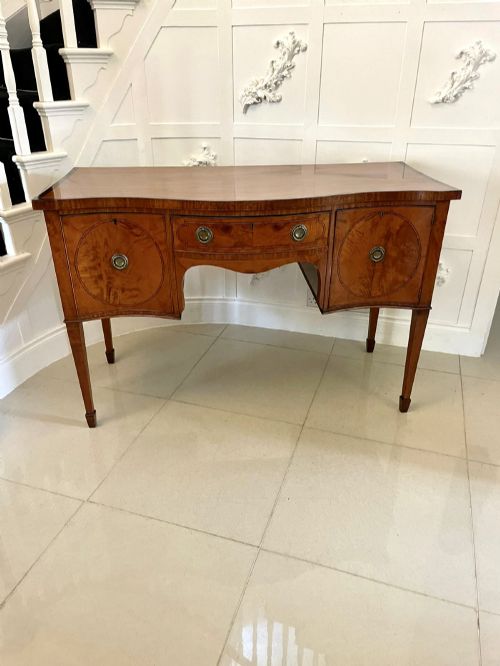
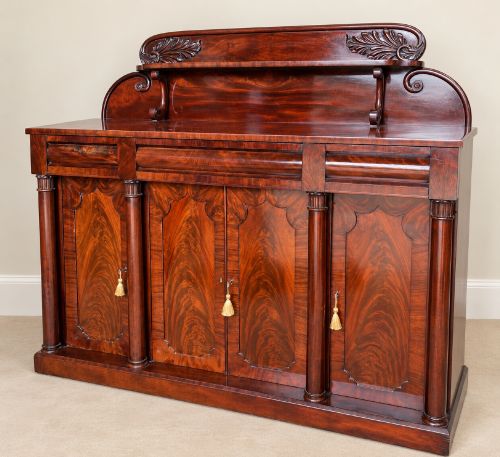
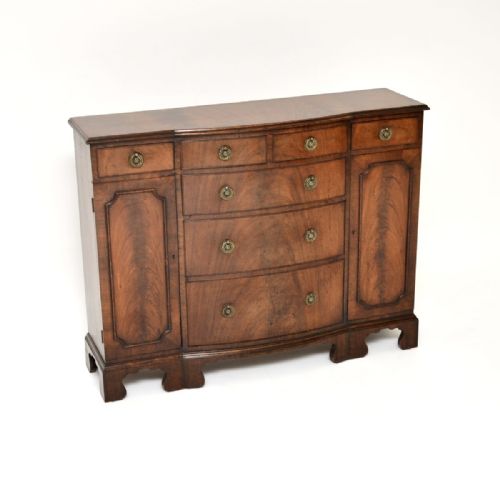
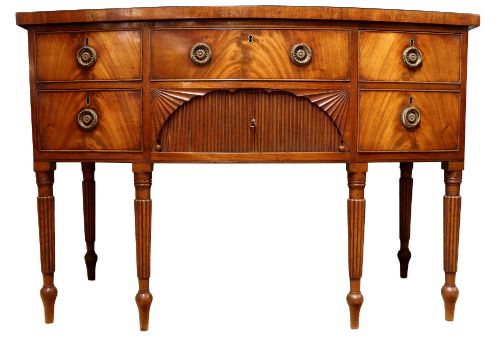
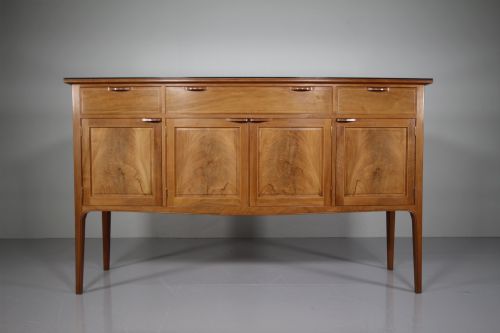
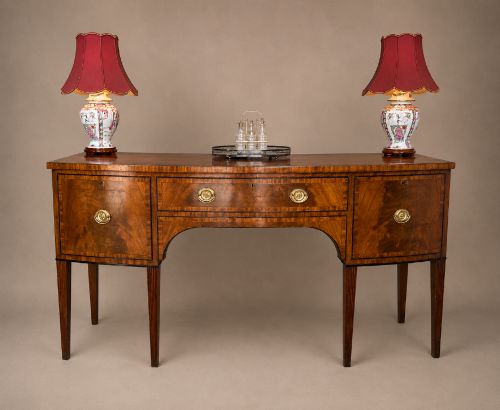
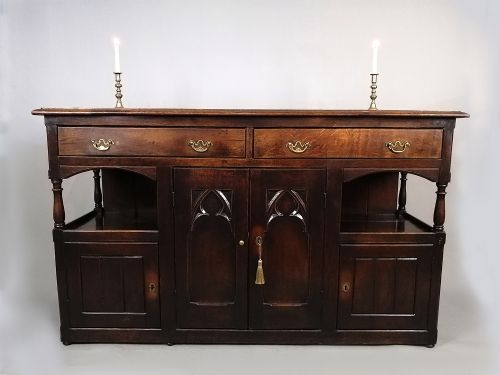
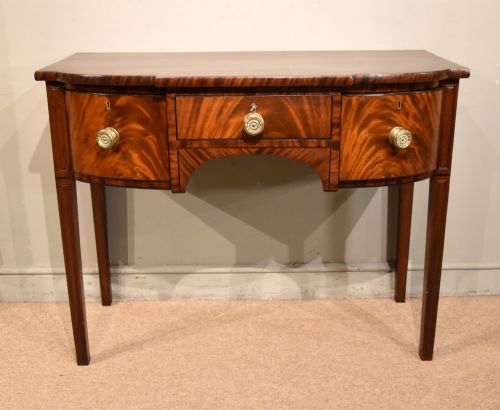
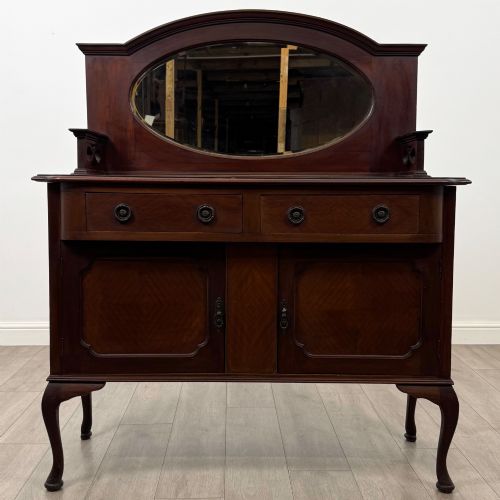
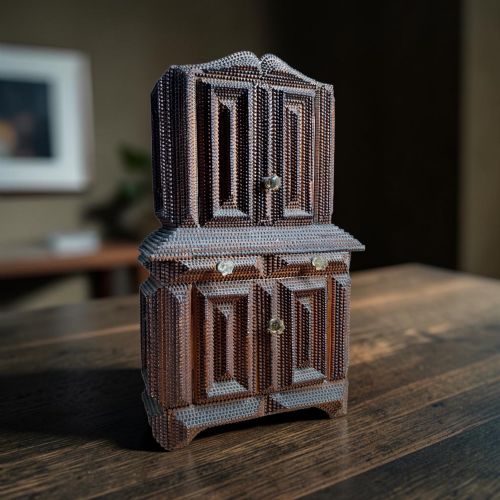
A vintage wooden buffet table brings grand proportions and rich grain to a dining room, offering deep drawers and cupboards for service.
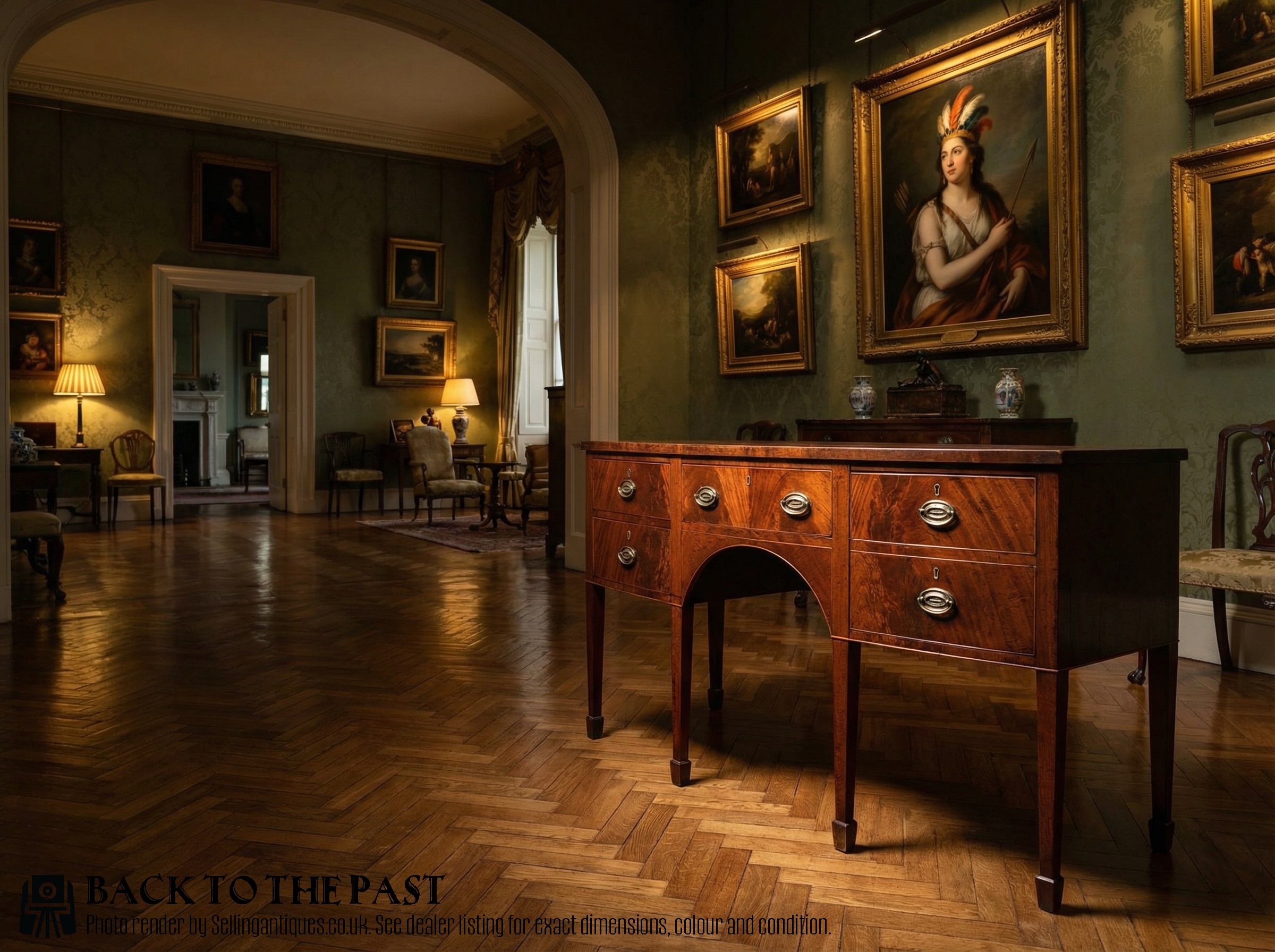
Vintage Wooden Buffet Table
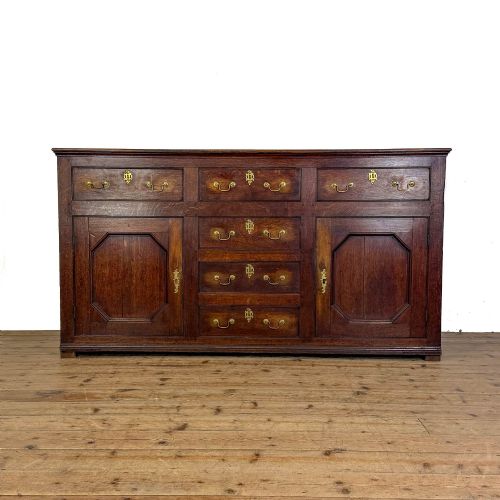
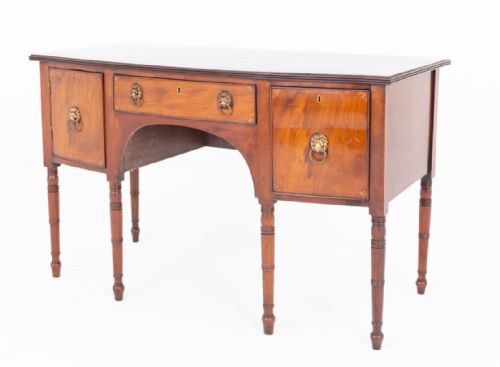
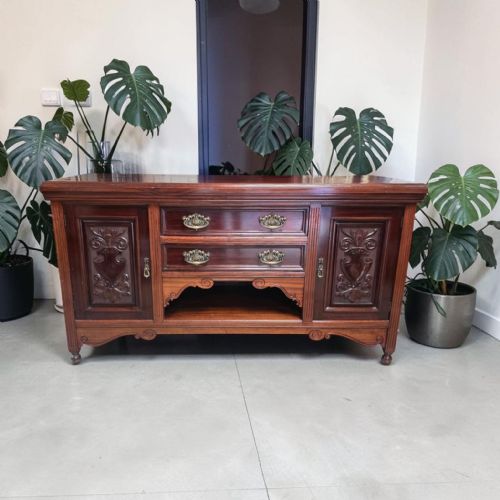
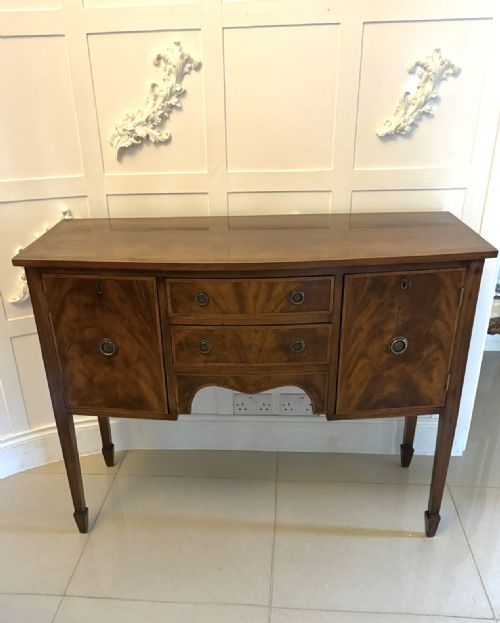
A vintage wooden buffet table serves as a robust surface for food presentation and practical storage in domestic spaces, appearing across several historical eras. When searching for a vintage wooden buffet table, buyers encounter forms ranging from Georgian and Regency sideboards to Edwardian servers and oak dresser bases.
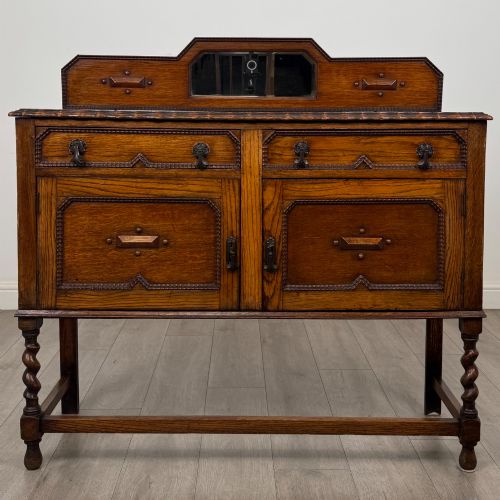
The pieces listed on this page span the eighteenth, nineteenth, and twentieth centuries, predominantly constructed in mahogany and oak. Sideboards, servers, and dresser bases form the bulk of the selection, representing both formal dining room furniture and more rustic country house pieces.
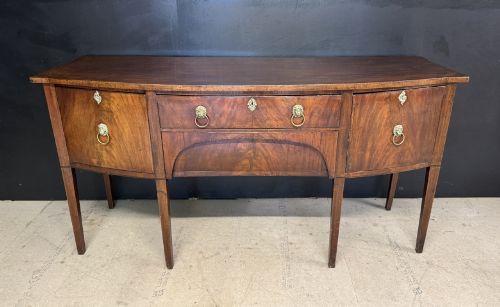
Makers and designers from past centuries heavily influence these forms, with Sheraton revival pieces and items executed in the style of George Hepplewhite appearing frequently. Buyers find everything from bow front and serpentine shapes to plain oak cupboard bases designed for everyday utility.
Distinctions in quality and execution
The refinement of timber selection and the precision of veneer matching separate standard production from exceptional cabinet work. Pieces featuring figured flame mahogany or finely executed satinwood inlay demand closer attention to the crispness of the carving and the alignment of the drawers.
Proportion and architectural balance define the upper tier of these items, where secondary woods are chosen with equal care to the primary faces. Stamped makers' marks or specific attributed designs add documented provenance that elevates the status of a piece.
The listings span eight distinct periods, from the eighteenth century through to the 1930s, featuring oak, mahogany, walnut, and satinwood.
Edward Barnsley·M. D. Miller and Sons·Bowman Brothers
The Vintage Wooden Buffet Table Glossary
- Bow front
- A convex, curved front on a cabinet or table that swells outward in the centre. This shape became popular during the late eighteenth and nineteenth centuries.
- Serpentine
- A furniture front characterised by a wavy outline with a convex centre flanked by concave curves. It requires advanced carpentry skill to execute properly.
- Dresser base
- A low wooden unit containing drawers and cupboards, originating from country houses where it functioned as a practical work surface and storage base.
- Inlay
- A technique where pieces of contrasting wood or other materials are inserted into depressions flush with the surface to form decorative patterns.
- Flame mahogany
- A veneer cut from timber where the grain resembles flickering flames, prized for its dramatic visual movement and rich depth.
Vintage Wooden Buffet Table: Frequently Asked Questions
What is a vintage wooden buffet table used for?
These pieces function primarily as serving surfaces and storage units for dining rooms, accommodating linens, cutlery, and serving dishes within deep drawers and cupboards.
They also provide a surface to display lamps, silver, or decorative objects during dinner parties and everyday meals.
How do I identify the period of a buffet table?
Dating relies on examining the timber, construction methods, hardware, and stylistic details such as bracket feet, tapered legs, or brass ring handles. Georgian and Regency pieces tend to show finer cabinet work, while Edwardian and later reproductions adopt earlier stylistic revivals.
Looking at the secondary woods inside the drawers provides further clues about the regional origin and approximate age of manufacture.
How do I care for a mahogany buffet table?
Maintenance involves dusting with a soft, dry cloth and avoiding placement near direct heat sources or strong sunlight to prevent the timber and veneer from drying out.
Occasional application of high quality furniture wax helps nourish the wood and preserve the natural lustre of the finish over time.
What is the difference between a buffet and a sideboard?
The terms are often used interchangeably, though a traditional buffet sometimes refers to a lower, simpler serving piece, while a sideboard can include deeper cupboards and raised backboards.
Both serve the same core purpose of dining room storage and presentation, varying mainly by regional terminology and specific period design.