
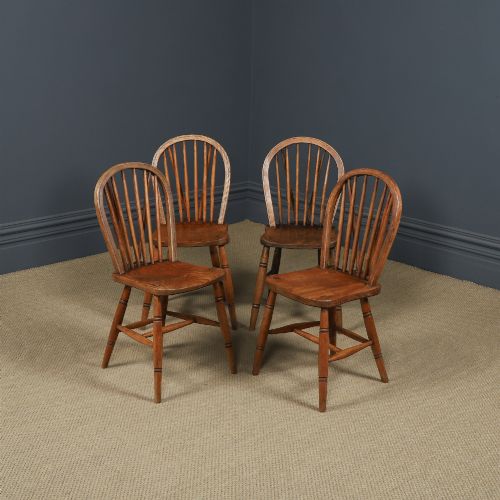
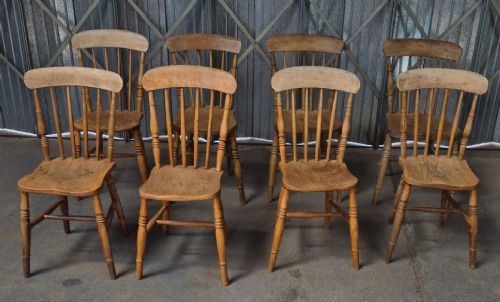
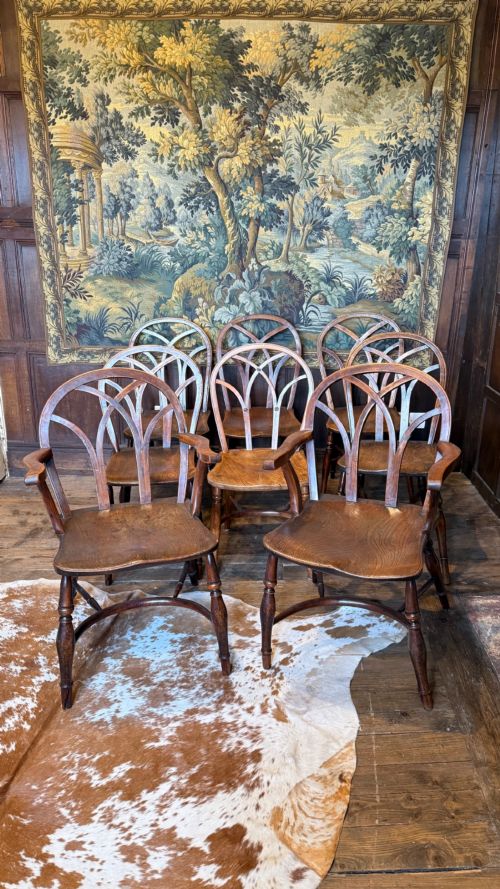
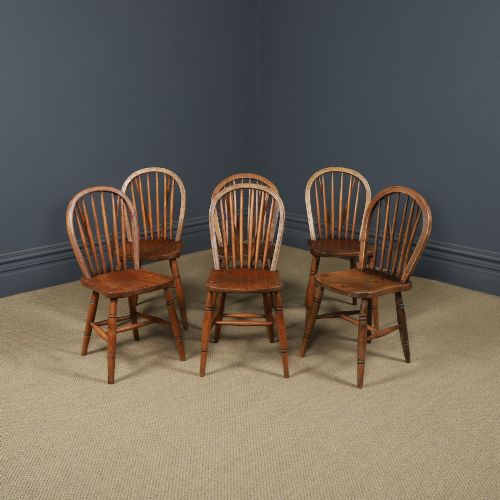
Vintage Windsor Kitchen Chairs
These vintage windsor kitchen chairs are sturdy country seating built from mixed timbers, offering practical everyday use and lasting traditional character.
Vintage Windsor Kitchen Chairs
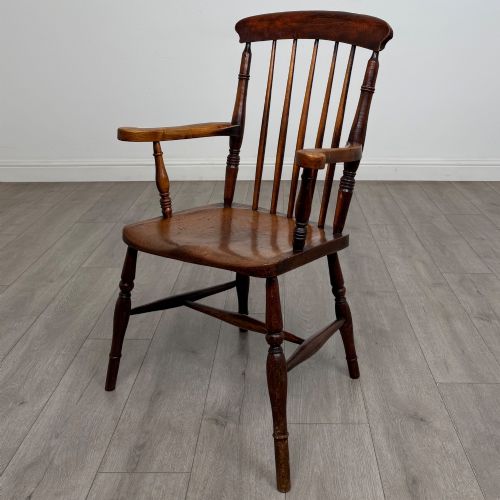
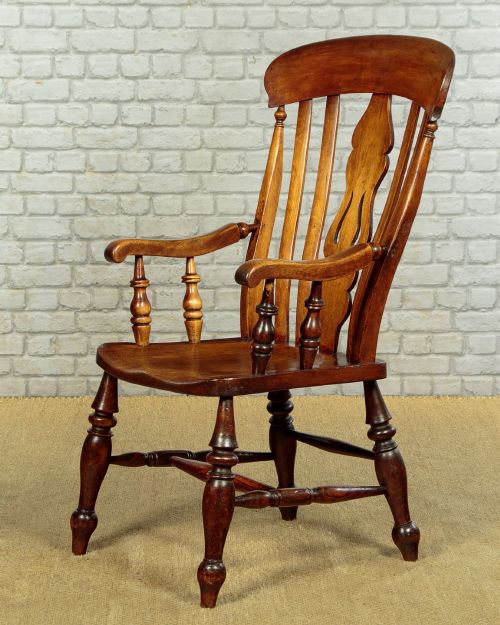
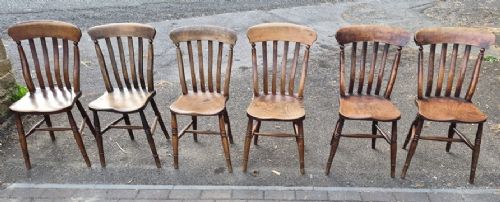
When you examine vintage windsor kitchen chairs, you encounter seating developed through the nineteenth century and into the early twentieth century across English and Scottish workshops. The selection here ranges from single highback armchairs to matched sets of six or eight dining chairs.
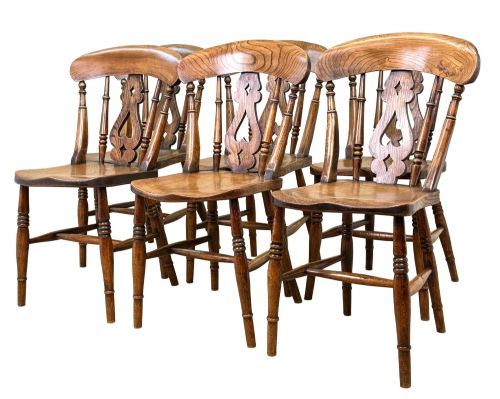
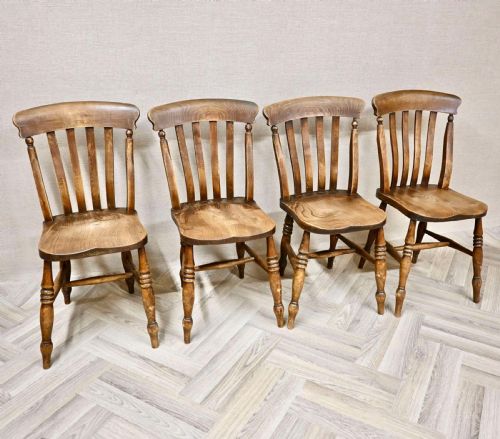
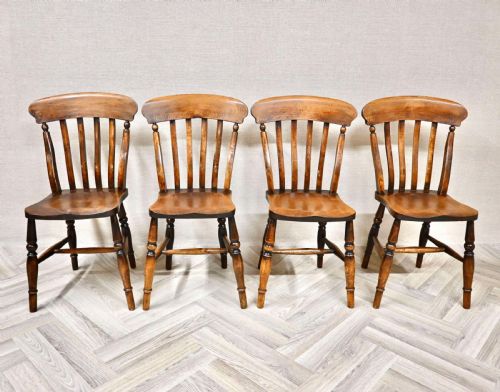
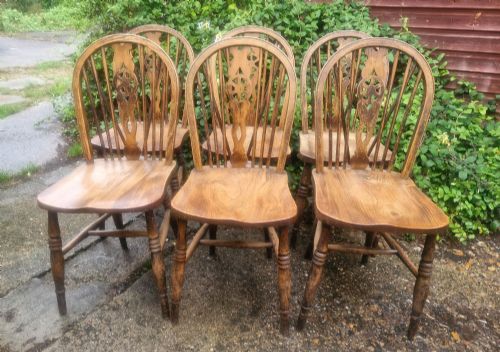
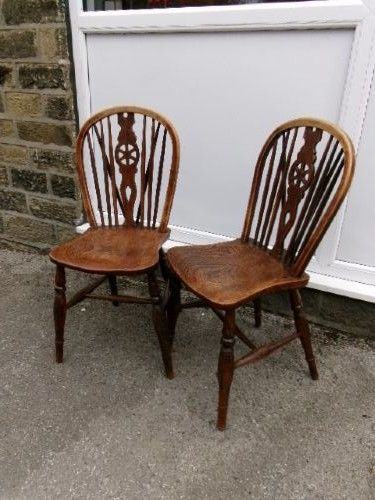
Most examples belong to the Victorian era and the decades immediately following, built for demanding domestic use in farmhouses and country homes. You will frequently meet wheelback, lathback, and stick back formats designed for dining or kitchen utility.
Materials and Construction
Maker construction relies on a combination of native timbers chosen for specific structural demands, pairing elm seats with ash or beech spindles and legs. Oak, yew, and maple also appear in regional variations across these domestic forms.
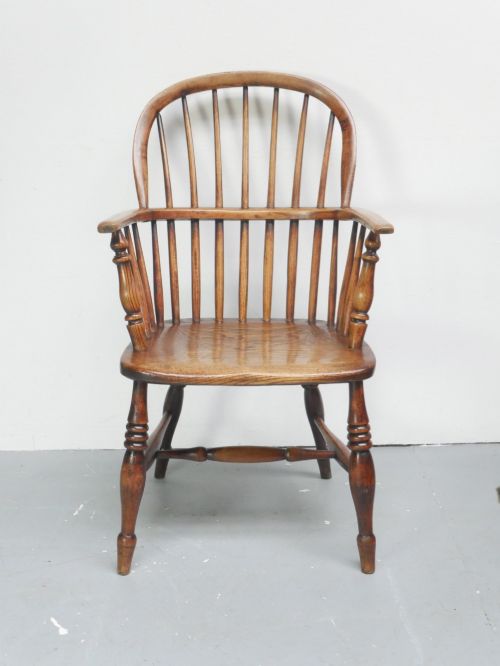
Turned components and steam-bent wooden hoops provide the characteristic rigid frame without metal fasteners, locking the uprights directly into the solid sculpted wooden saddle.
Generations of kitchen elbows have polished these elm seats into smooth, gleaming hollows.
Character and Proportion
Quality rests in the depth of the sculpted elm seat and the visual harmony of the turned spindles and stretchers. Superior examples maintain balanced proportions across larger sets without excessive replacement parts.
The integration of the back construction dictates the structural integrity, separating standard utility pieces from finely finished regional work.
The Vintage Windsor Kitchen Chairs Glossary
- Wheelback
- A Windsor chair variation featuring a pierced central splat shaped like a carriage wheel.
- Lathback
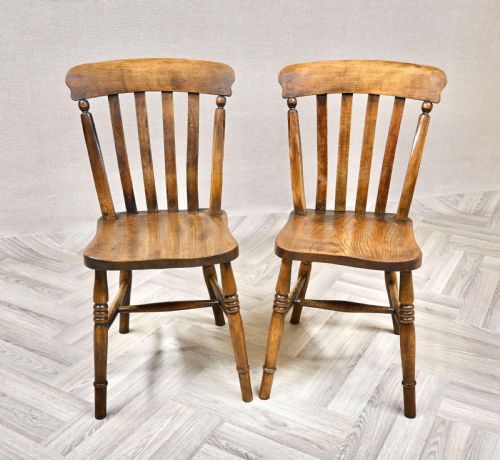
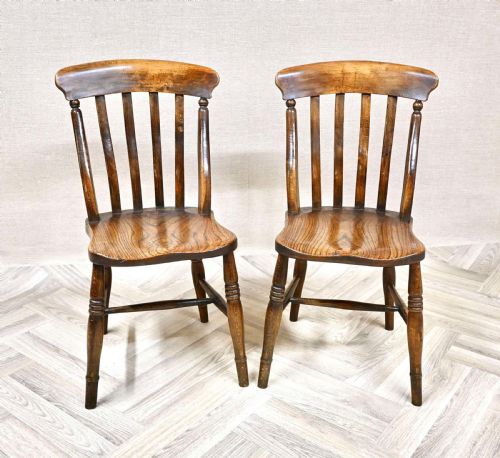
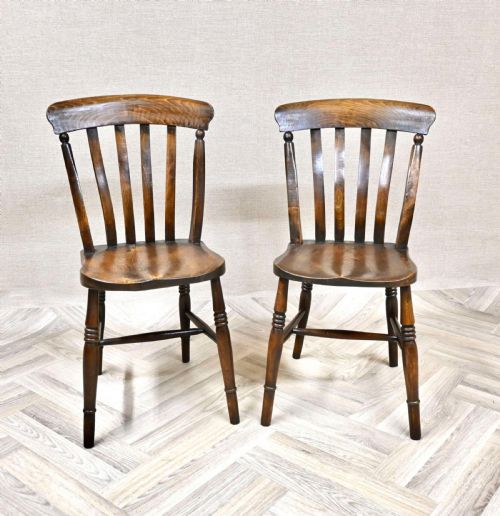
- A chair back constructed with flat wooden slats rather than round turned spindles.
- Hoop back
- A continuous bentwood bow forming the top rail and arms of the seating frame.
- Thames Valley
- A regional manufacturing tradition known for specific combinations of elm and ash timber.
Vintage Windsor Kitchen Chairs: Frequently Asked Questions
How do I identify a Thames Valley Windsor chair?
Thames Valley pieces typically combine elm seats with ash or beech framework, showing specific regional turning styles in the legs and spindles.
These chairs often display high standards of rural craftsmanship developed along river transport routes.
What is the difference between a wheelback and a lathback?
A wheelback incorporates a solid central splat carved into the shape of a spoked wheel within the stick back.
A lathback replaces those vertical spindles with flat horizontal or vertical wooden slats across the upper frame.
Can I mix different Windsor chairs at a dining table?
Harlequin sets of country chairs bring together slightly mismatched regional pieces that share common timber and height proportions.
This approach reflects historic domestic accumulation rather than matched factory production.
Which woods were used to build vintage Windsor chairs?
Green woodworkers utilised elm for comfortable, split-resistant solid seats alongside ash or beech for flexible steam-bent backs.
Additional timbers like oak and yew appear in specific regional workshops across Britain.