
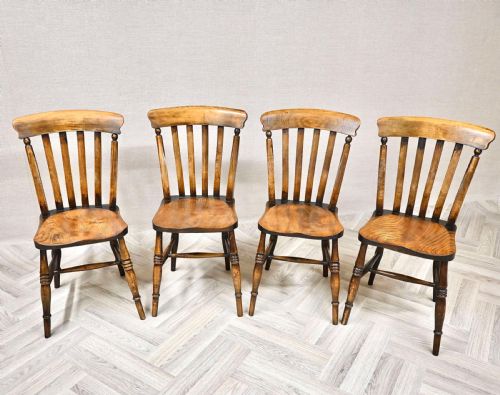
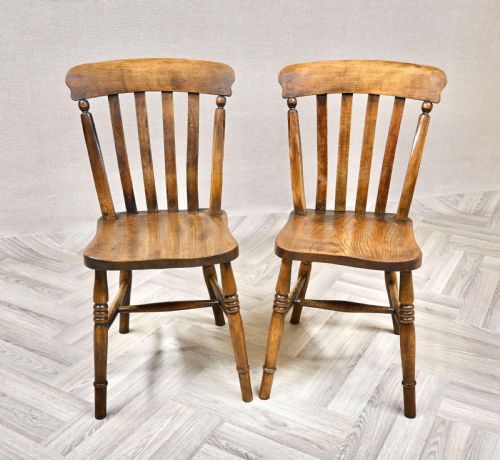
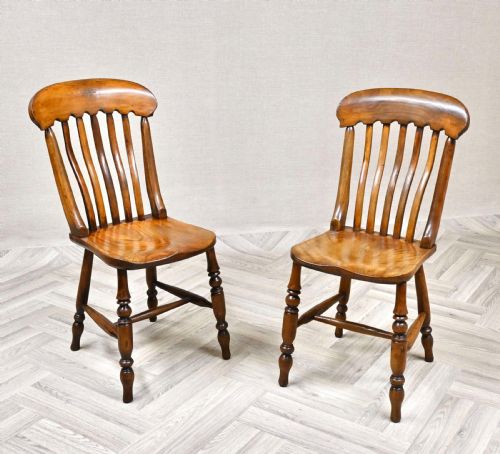
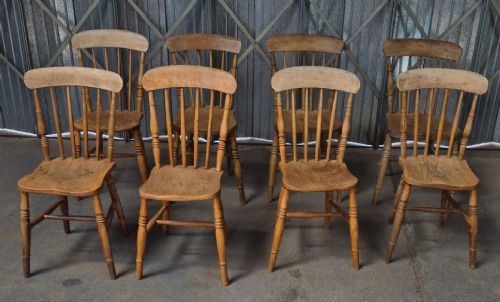


Beech Windsor Dining Chair
A beech windsor dining chair brings honest utility and vernacular craftsmanship to the table, pairing bent frames with solid wooden seats.
Beech Windsor Dining Chair
A beech windsor dining chair is a robust vernacular seat built for daily service in country kitchens and farmhouses. Most examples on this page date from the nineteenth century into the early twentieth century, spanning Victorian, Edwardian, and mid-century utility periods.
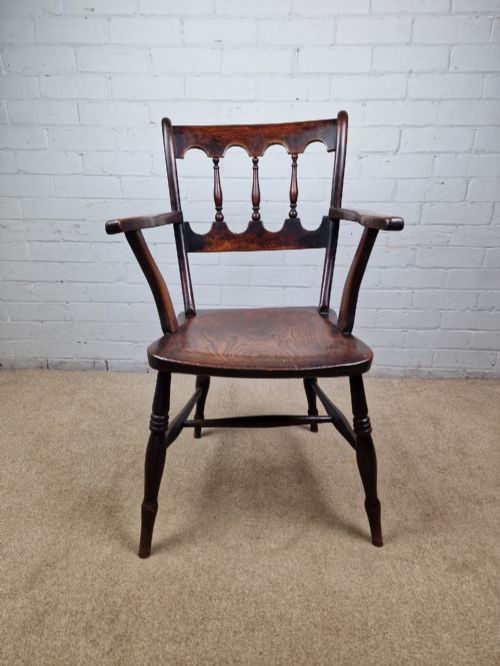
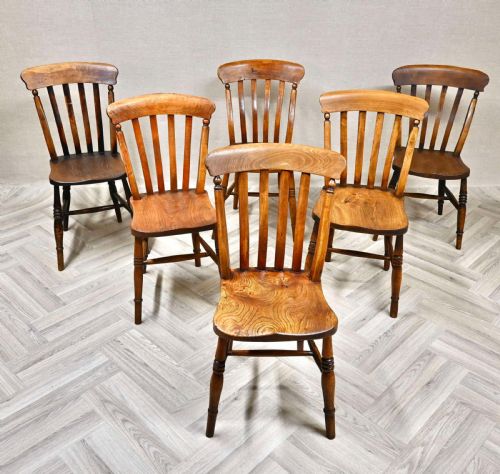
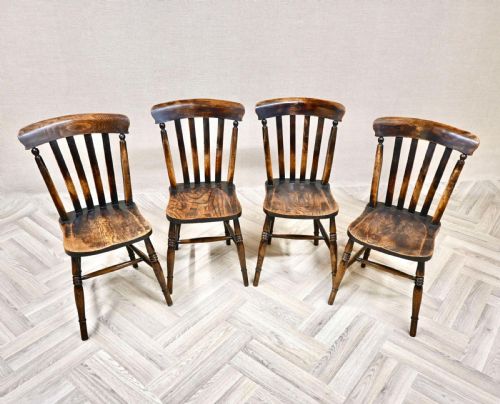
The form typically combines a shaped wooden seat with steam-bent framework and slender spindles. These dining chairs and carver armchairs appear as singles, pairs, or larger matched and harlequin sets.
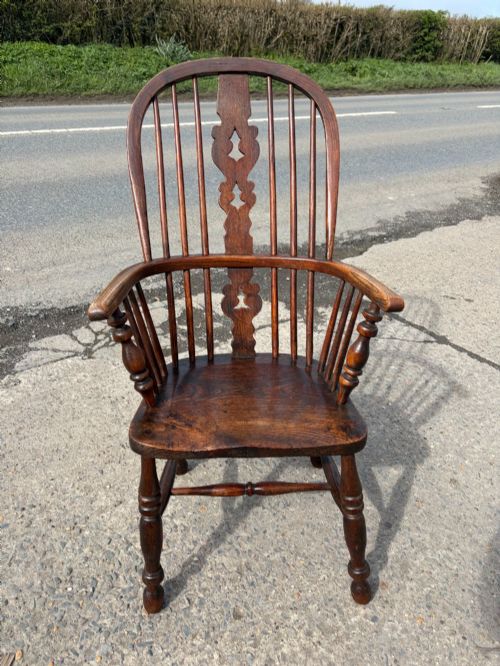
Makers utilised regional traditions to shape the backs, producing wheel back, lath back, stick back, hoop back, Oxford bar back, and splat back variations.
How they were made
Construction relies on a combination of timbers selected for specific structural properties, predominantly beech for the bent frames, legs, and spindles, paired with elm for the solid carved seats. Ash also appears frequently in the framework and undercarriages.
Chairmakers turned legs and stretchers on a lathe before wedging them into bored holes in the heavy seat slab. Steam-bending allowed the back rails and hoops to achieve continuous curves without losing structural integrity.
Materials recorded across the inventory include beech, elm, and ash.
What varies in quality
Quality rests on the depth of the timber selection and the precision of the turning in the spindles and legs. Heavier elm seats and crisply carved splats or pierced wheel backs distinguish finer regional pieces from simpler utilitarian seating.
The integrity of the structural joints and the subtlety of the steam-bent components dictate the longevity and overall refinement of the chair.
The Beech Windsor Dining Chair Glossary
- Wheel Back
- A Windsor chair back featuring a pierced central wooden disc carved to resemble a cartwheel. This decorative splat became popular during the Victorian period.
- Stick Back
- A Windsor chair design where the back is formed from a series of simple vertical spindles inserted directly into the seat. These provide sturdy support without complex carving.
- Carver
- An armchair version of a dining chair, usually featuring open arms fitted to the sides of the seat. They often sit at the head of a dining table.
- Harlequin Set
- A group of dining chairs that share a similar style or period but vary slightly in detail, pattern, or shade. These sets were assembled over time rather than manufactured together.
- Lath Back
- A Windsor chair style utilising horizontal flat wooden slats across the upper back. This design offers a broad surface for leaning.
Beech Windsor Dining Chair: Frequently Asked Questions
How do I care for a beech windsor dining chair?
Keep wooden chairs away from direct heat sources and sudden temperature shifts to prevent the timber from splitting. Feed the dry beech and elm periodically with a traditional wax polish to maintain the surface sheen.
Check the legs and stretchers occasionally to ensure the wedged joints remain firm. Avoid dragging the chairs across rough floors to protect the lower feet from wear.
Can I mix these chairs with a modern table?
The organic forms and warm wood tones of nineteenth-century country seating contrast well with contemporary dining tables. Their modest scale allows them to fit comfortably beneath various table heights.
Mixing single carvers at the table ends with simpler side chairs creates a balanced, collected interior scheme. Harlequin sets add visual texture when paired with a clean-lined modern surface.
What is the difference between a stick back and a wheel back?
A stick back uses plain vertical spindles to support the top rail, offering an unadorned and functional appearance. These tend to represent earlier or more utilitarian country production.
A wheel back incorporates a solid central splat carved with wheel motifs, introducing decorative detail to the chair's profile. Both share the same underlying Windsor construction of a solid wooden seat.
Are carver armchairs meant for everyday dining?
Carvers provide extra support with integrated armrests, making them comfortable for extended sitting around the dining table. Historically, a pair of armchairs sat at the head and foot of the table while side chairs filled the gaps.
Ensure the width of the arms fits beneath your dining table apron if you plan to push them fully in. Their sturdy elm and beech frames handle daily use just as effectively as side chairs.