
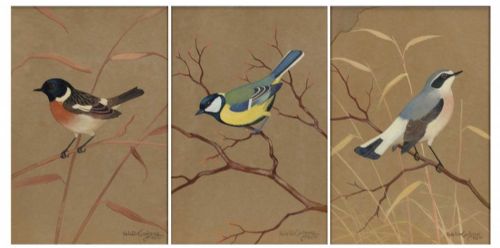


Vintage Wildlife Painting
These vintage wildlife painting works capture birds, beasts and predators across oil, watercolour and bronze from the nineteenth and twentieth centuries.
Vintage Wildlife Painting
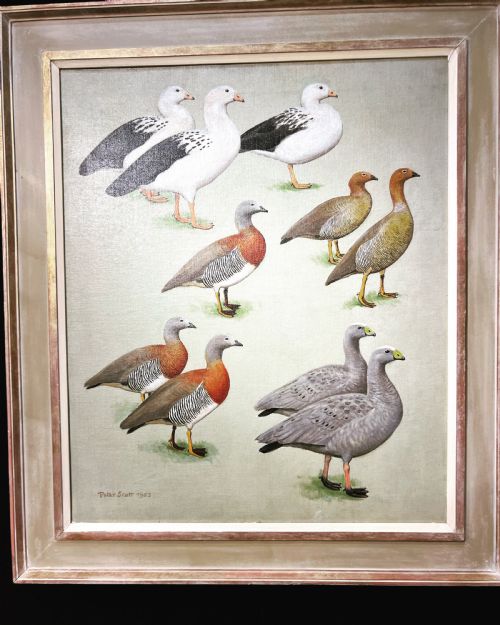
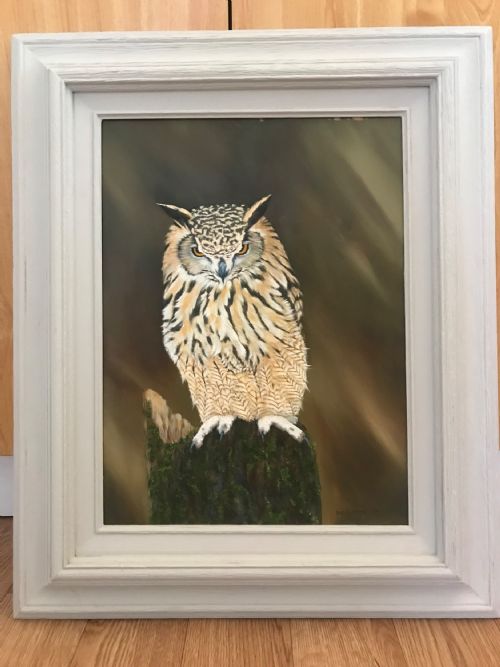
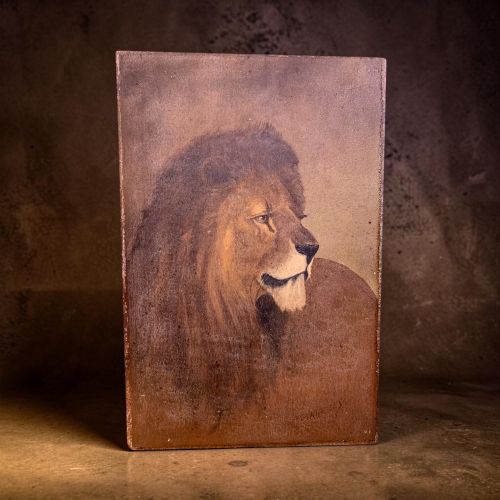
When you search for a vintage wildlife painting, you are looking at depictions of animals, birds and field sports executed across the nineteenth and twentieth centuries. The selection ranges from naive folk art depictions of lions and carved wood antelopes to precise ornithological watercolours and mid-century oil studies.
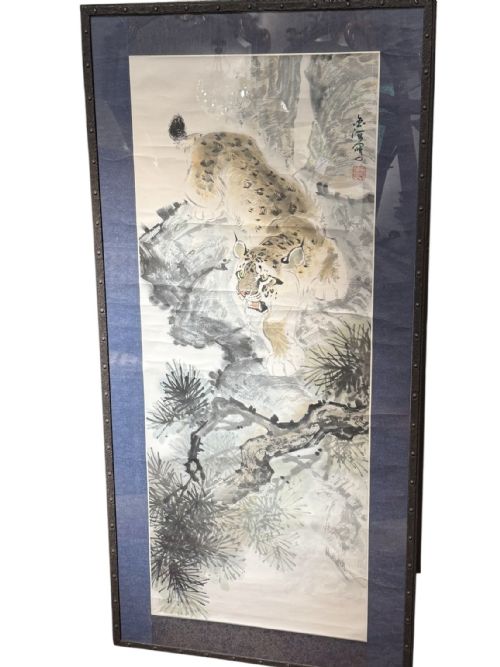
You are most likely to meet twentieth-century watercolours of garden birds and waterfowl alongside mid-century oil paintings on panel or canvas. These pieces span British naturalism, natural history illustration and traditional Chinese scroll formats.
The subjects extend from familiar garden birds and Australian parrots to apex predators such as bears, leopards and stags in combat or repose. Each piece reflects the naturalist observation methods of its respective decade, running from the late nineteenth century through to the 1960s.
Materials and execution
Artists utilise traditional oil paint and watercolour paint applied to canvas, paper, wood panels and silk scrolls. Canvas and wood panels support heavier oil mediums designed for rich impasto and deep tonal ranges, while paper suits the swift transparency of botanical and ornithological watercolours.
Metals also feature through cold painted bronze, where intricate figures of foxes and antelopes are cast and hand-painted before mounting on stone bases such as green onyx. Carved wood appears in three dimensions, shaped into lifesize animal studies with painted or natural finishes.
Listings incorporate oil, watercolour, canvas, paper, wood, glass and bronze across British naturalism, folk art and mid-century styles.
Distinctions in quality
Anatomical precision and direct observation separate the accomplished naturalist study from the generic decorative picture. Artists who spent hours in the field capture posture, feather structure and muscle tension with absolute conviction.
The handling of the chosen medium dictates the lasting visual strength of the work. Skilled brushwork in oil or deft control of wash in watercolour creates depth and atmosphere, whereas weaker examples rely on flat outlines and repetitive patterns.
Sir Peter Markham Scott·Ralston Gudgeon·Bergman·Charles F. Tunnicliffe·Robin Hill·Paul-Louis Barruel·Donald Watson·Godfrey Douglas Giles·William Crampton·James Malcolm Stewart·Stephen Elmer·Cuthbert Edmund Swan·Archibald Thorburn
The Vintage Wildlife Painting Glossary
- Natural history illustration
- Scientific depiction of animals and plants focused on accuracy and detail. This genre bridges fine art and biological documentation.
- Cold painted bronze
- Metal sculpture painted with non-fired polychrome colours that sit on the surface. This technique was widely practiced in Austrian foundries during the late nineteenth and early twentieth centuries.
- Naive art
- Work produced by an artist without formal academic training. These pieces often display charming perspectives and direct, unpretentious charm.
- Impasto
- Paint laid on an area of the surface in thick layers, standing visibly out from the canvas. It allows light to catch the texture and adds physical depth to fur or plumage.
Vintage Wildlife Painting: Frequently Asked Questions
What periods do these pieces cover?
The available works span from the late nineteenth century through the Edwardian era and into the mid-twentieth century, up to the 1960s.
Most items concentrate in the decades between 1900 and 1960, capturing shifting artistic movements from natural history illustration to mid-century British art.
How should I care for watercolour paintings?
Watercolour and paper works require protection from direct sunlight to prevent the pigments and paper stock from fading over time.
Mount them using acid-free materials behind glass and hang them on interior walls away from damp conditions.
Are bronze sculptures marked?
Many cold painted bronze pieces carry foundry stamps, Bergman cachets or numeric pattern marks on the underside or base.
Examining these areas helps identify the Austrian workshops responsible for casting and hand-painting the study.
How do I distinguish folk art from naturalism?
Natural history illustration and British naturalism prioritize strict anatomical correctness and field observation.
Folk art and naive pieces interpret animals through simplified forms and flat perspectives, prioritizing decorative character over scientific precision.