


Framed Ornithological Painting
These framed ornithological painting examples bring British naturalism and avian studies indoors, offering finely rendered subjects from several centuries of observation.
Framed Ornithological Painting
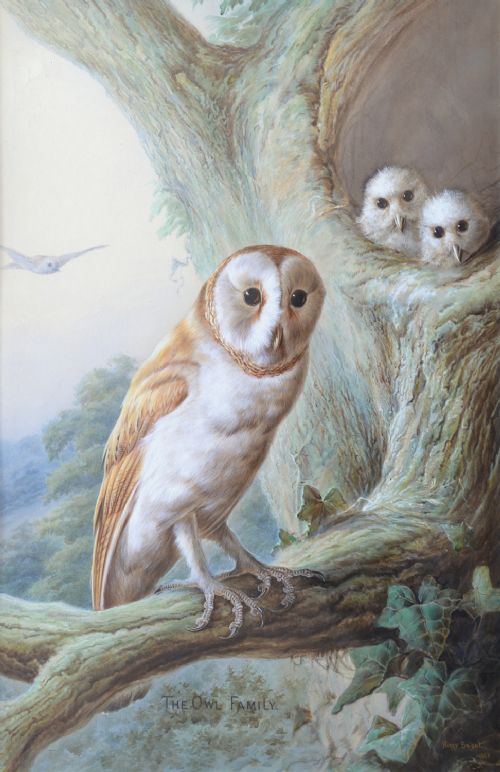
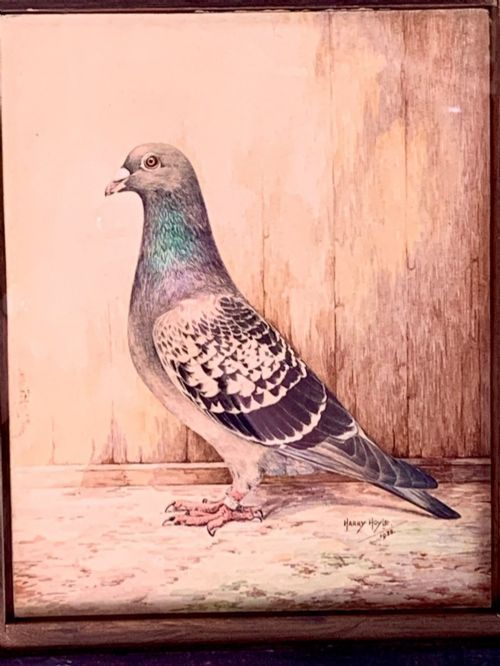
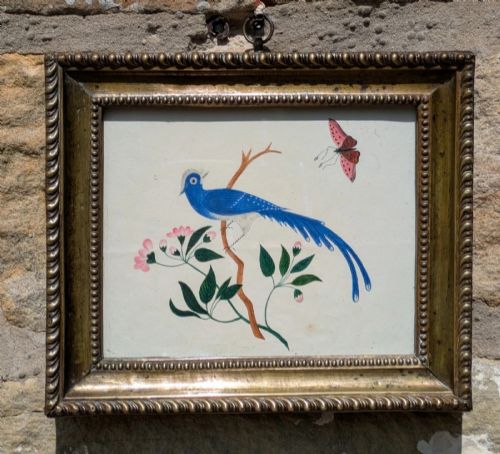
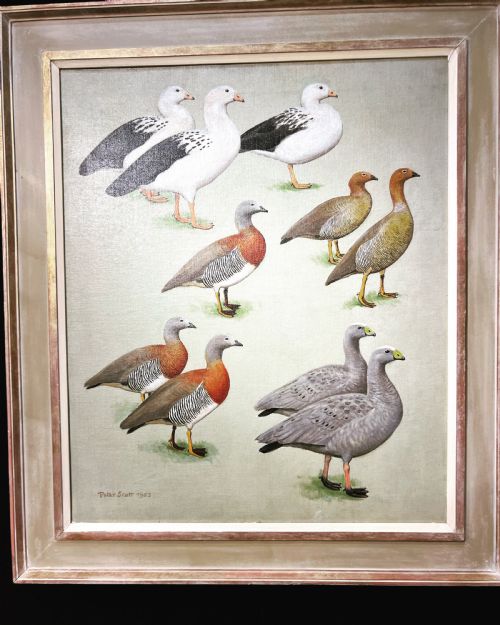
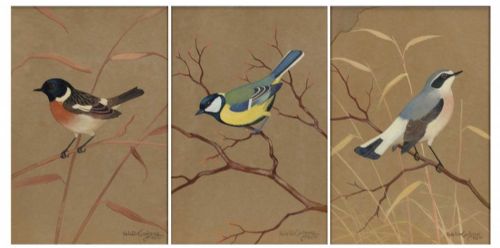
A framed ornithological painting depicts birds in watercolours, oils or mixed media upon paper and canvas, reflecting centuries of natural history illustration and British naturalism. These works range from intimate studies of garden birds and parrots to expansive depictions of game birds in landscapes.
The pieces encountered most frequently on this page span the Victorian era through the mid-twentieth century, alongside examples from the Regency period and earlier. Works often arrive preserved behind glass within wooden frames, occasionally featuring gilt mounts or ebonised surrounds that complement the avian subject.
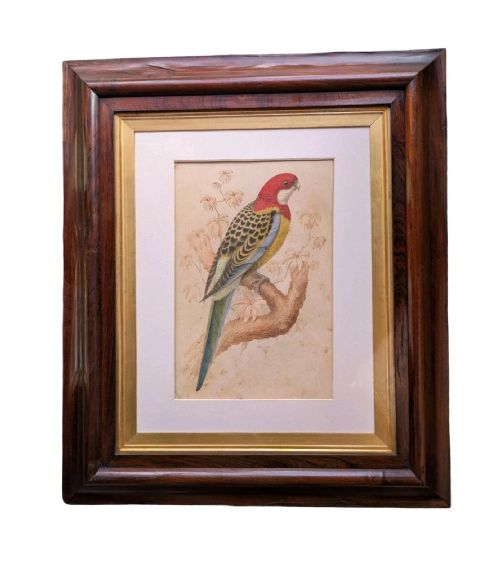
Subjects encompass exotic specimens such as macaws and rosella parrots alongside native British species including thrushes, lapwings and ducks. Artists varied from named illustrators and painters to traditional English school practitioners documenting ornithological subjects.
Materials and construction
Paintings of this nature rely primarily upon watercolour paint applied to paper, or oil paint worked onto canvas and panel. Artists utilised fine brushes to capture feather textures, eye details and plumage colourations with precision.
Framing typically involves wood housings, sometimes embellished with gilt or finished in ebonised coatings to accentuate the artwork within. Protective glass panes shield the delicate paper and paint surfaces from atmospheric moisture and dust.
The selection includes watercolours and oil paintings on paper and canvas, spanning the eighteenth century through the mid-twentieth century.
What separates the finest examples
Quality rests upon the precision of the brushwork and the anatomical accuracy with which the bird is rendered. Master practitioners capture posture, feather layering and light with a vitality that distinguishes a master study from a standard illustration.
The condition and integrity of the original framing elements also influence the piece, particularly where period gilt mounts or ebonised wood frames remain intact and sympathetic to the artwork.
R. Hurst·Sir Peter Markham Scott·Ralston Gudgeon·M Simpson·Charles F. Tunnicliffe·William Andrews Nesfield·Harry Bright·Thomas Blinks·Arthur Wardle·Robin Hill·Michael Jackson·Paul-Louis Barruel·Donald Watson·Stephen Elmer
The Framed Ornithological Painting Glossary
- Watercolour paint
- A medium consisting of pigment suspended in a water-based solution, traditionally applied to paper sheets in transparent washes. This technique allows for delicate layering to represent soft plumage.
- Ebonised frame
- Wood treated to imitate the dark, dense appearance of ebony wood. Such surrounds were frequently utilised during the Victorian period to create high contrast with gilt mounts.
- Giltwood mount
- A decorative framing component covered in a thin layer of gold leaf or gilt paint. It provides a reflective border that draws the eye inward toward the painted subject.
- British naturalism
- An artistic movement focused on the direct observation and faithful recording of the natural world. This ethos underpins many of the bird studies produced by British artists.
Framed Ornithological Painting: Frequently Asked Questions
How do I date an antique bird painting?
Dating relies upon stylistic cues in the artwork, the type of paper or canvas support, and the construction methods of the accompanying frame. Victorian pieces often display distinct mounting styles compared to mid-century works.
Examining artist signatures and inscriptions on the reverse of the paper or frame frequently provides further chronological context.
Where should I hang these artworks?
These paintings suit studies, libraries and living spaces where traditional decor allows detailed avian subjects to be viewed closely. Grouping smaller watercolours together creates a striking display inspired by historical natural history collections.
Position pieces away from direct sunlight to protect watercolours and paper supports from fading over time.
How are watercolour paintings best preserved?
Preservation depends on maintaining stable indoor humidity levels and keeping the works behind protective glass to shield the paper from pollutants. Ensuring the backing board is acid-free prevents yellowing and degradation of the paper.
Avoid hanging pieces in damp environments such as unheated kitchens or bathrooms.
What is the difference between an illustration and a fine art study?
Scientific illustrations prioritise anatomical precision and species identification, often commissioned for publication or strict record-keeping. Fine art studies tend to incorporate atmospheric landscape backgrounds and painterly brushwork.
Both categories overlap considerably within natural history painting traditions.