


Vintage Wedgwood Jasperware
These vintage wedgwood jasperware pieces bring unmistakable Neoclassical relief and characteristic stoneware bodies to a room.
Vintage Wedgwood Jasperware
When you search for vintage wedgwood jasperware, you encounter a distinct ceramic form defined by contrasting moulded figures set against a coloured matte ground. The pieces found here span the nineteenth century up to the mid twentieth century, covering both Victorian production and later Edwardian output.
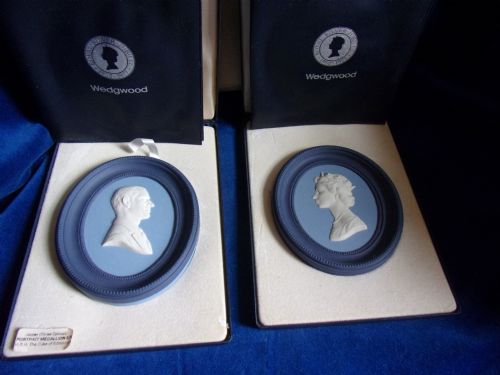
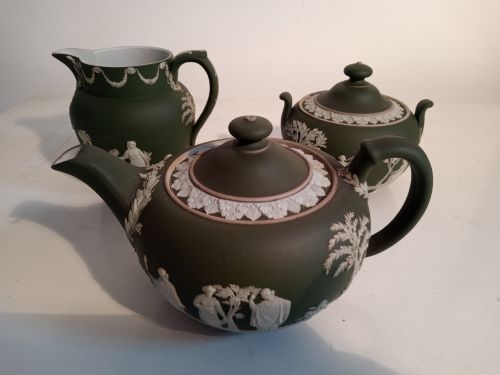
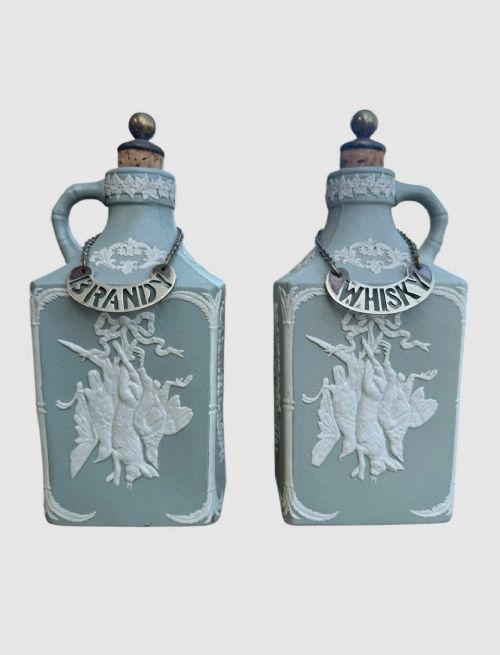
Object types on this page range from small trinket boxes and portrait medallions to larger functional items such as biscuit barrels, teapots, decanters and candlesticks. Blue remains a familiar ground colour, alongside olive green, yellow and dark blue variants.
Origins stretch across the nineteenth century, including specific dates from the 1880s and 1890s, alongside items from the 1920s and mid twentieth century. Styles lean heavily towards Neoclassical and Victorian interpretations.
How they were made
The primary material is fine stoneware ceramic, left unglazed to create the signature matte texture that absorbs light rather than reflecting it. Relief ornaments are moulded separately in white clay and applied by hand to the coloured body.
Certain functional and decorative pieces incorporate mixed materials beyond ceramic, including metal, brass collars, cork stoppers, velvet linings and wooden elements. Silver collars and metal mounts appear on tea ware and decanters to secure pouring lips and hinges.
Listings feature nineteenth-century items alongside pieces from the 1920s and 1960s, incorporating ceramic, brass, and wood.
What varies in quality
The precision of the applied white relief work dictates visual success, where crisply rendered classical figures show clean edges against the coloured background. Softer moulding or blurred details diminish the sharpness of the narrative scenes.
The subtlety of the coloured body tone and the uniform matte finish determine overall harmony. Variations in metal mounts, such as brass or silver collars, add another layer of craftsmanship depending on their weight and integration with the ceramic.
Wedgwood
The Vintage Wedgwood Jasperware Glossary
- Jasperware
- A fine-grained, unglazed stoneware developed by Josiah Wedgwood. It is known for its matte surface and contrasting white relief decorations.
- Neoclassical
- A style drawing inspiration from classical antiquity, featuring symmetrical forms and mythological or historical figures in relief. It heavily influences nineteenth-century ornament.
- Biscuit barrel
- A covered ceramic container historically used for storing dry biscuits at the dining table. They frequently feature metal mounts and handles.
- Relief medallion
- A small, flat plaque displaying a raised portrait or scene. These pieces are often mounted in frames or set into boxes.
Vintage Wedgwood Jasperware: Frequently Asked Questions
What is vintage wedgwood jasperware?
Vintage wedgwood jasperware refers to unglazed stoneware pottery featuring contrasting white clay reliefs applied to coloured ceramic grounds. These pieces encompass decorative plaques, tableware, and boxes produced across the nineteenth and twentieth centuries.
Items range from dark blue trinket boxes and olive green teasets to yellow candlesticks and portrait medallions. Each piece utilises traditional Neoclassical motifs adapted for Victorian and later domestic interiors.
How do I date jasperware?
Dating relies on body colour, applied mounts, style, and factory marks stamped into the ceramic base. Nineteenth-century examples often display specific tonal depths and hand-finished relief work.
Later pieces from the twentieth century introduce different colour palettes and production methods. Accompanying metal elements like brass or silver collars also help place an object within a specific decade.
Were these pieces used daily?
Many items served practical domestic functions on the dining table or sideboard. Teapots, biscuit barrels, decanters, and cheese dishes were designed for active use during meals and tea service.
Other objects, such as brooches, trinket boxes, and decorative plaques, fulfilled purely ornamental or personal accessorising roles. Their robust stoneware construction allowed them to withstand regular handling.
How do I display jasperware?
Jasperware pieces suit placement on wooden sideboards, mantels, or within glass cabinets where their contrasting colours stand out. Grouping items of similar colour grounds creates visual cohesion.
They pair well with traditional and modern interiors alike, adding texture through their matte ceramic finish. Ensuring stable placement protects functional elements like brass mounts and delicate relief details.