


English Jasperware Stoneware
English jasperware stoneware brings classical relief decoration into domestic spaces, offering tactile contrast through fine-grained ceramic bodies.
English Jasperware Stoneware
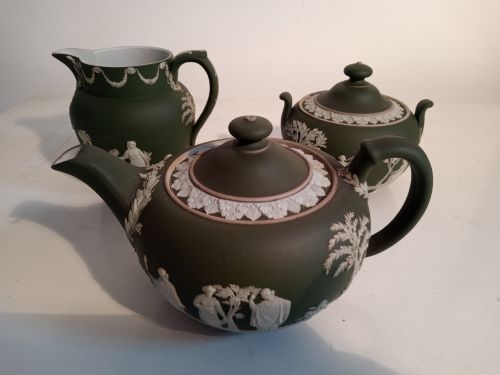
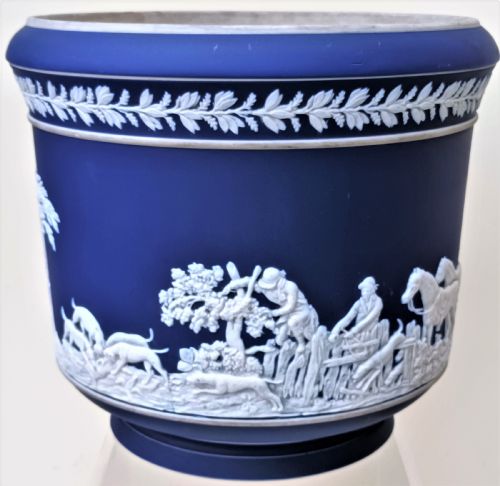
When you search for english jasperware stoneware, you examine fine ceramic vessels and decorative objects produced primarily during the Victorian and Edwardian eras. The current inventory demonstrates a strong representation of nineteenth-century production, ranging from tea sets and teapots to jardinieres and biscuit barrels.
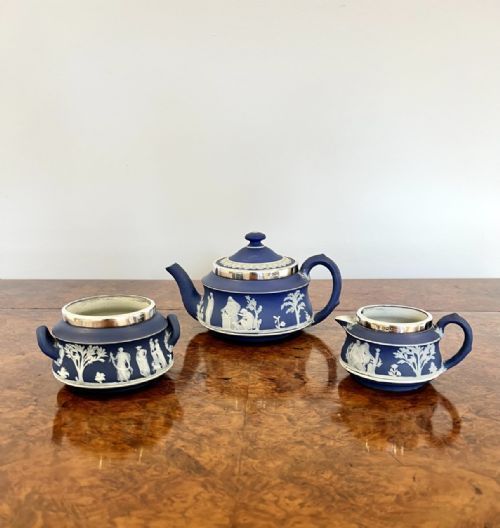
The objects you meet most frequently on this page originate from established potters, utilising characteristic blue and olive green colourways alongside contrasting white relief ornamentation. Forms span from functional tea service components to decorative accessories like patch boxes and candlesticks.
The styles seen across these pieces draw heavily upon neoclassical design principles, reflecting the enduring popularity of classical motifs during the nineteenth and early twentieth centuries. These items serve both ornamental and practical functions within period interiors.
How They Were Made
Potters shaped these pieces using fine clay and earthenware bodies, developing unglazed stoneware that relied on chemical stains to achieve distinctive surface colours such as blue and olive green. Applied white ornamentation, moulded separately in low relief, was meticulously fixed to the dampened body before firing.
Metal mounts in silver and silver plate frequently finished functional forms like teapots, biscuit barrels, and wine coolers, requiring collaborative work between ceramicists and silversmiths. This combination of stoneware and precious metal elements provided both structural reinforcement and decorative contrast.
Current listings span the nineteenth and early twentieth centuries, featuring stoneware, ceramic, silver, and silver plate.
What Varies in Quality
The refinement of the applied relief ornament separates standard production from finer examples, as sharper detailing in the classical figures indicates superior mould quality and skilled hand-chasing after application. The crispness of the contrast between the coloured stoneware body and the white sprigged decoration dictates visual success.
The integration of metal hardware, such as silver collars and mounts, defines the upper tier of domestic vessels like teapots and biscuit barrels. Heavier ceramic bodies and uniform colouring across the piece also signal higher standards of manufacture.
Wedgwood·William Adams and Sons·Copeland Spode
The English Jasperware Stoneware Glossary
- Jasperware
- A fine-grained, unglazed stoneware developed by Josiah Wedgwood that accepts metallic oxide colouring throughout the clay body. It is distinguished by matte surfaces and applied white relief ornamentation.
- Sprigging
- A technique where individually moulded ceramic reliefs are applied to the surface of a vessel using slip as an adhesive. This method creates the characteristic layered ornamentation seen on neoclassical wares.
- Biscuit Barrel
- A covered container designed for storing dry biscuits on the dining or tea table, frequently fitted with metal rims and hinged lids. These vessels often feature ceramic bodies decorated with classical relief scenes.
- Jandiniere
- A large ornamental pot or receptacle intended for holding plants or flowers within interior spaces. Examples in stoneware often incorporate classical friezes around the exterior circumference.
- Neoclassical
- A decorative style inspired by the art and architecture of classical antiquity, featuring symmetrical forms and mythological motifs. This aesthetic heavily influenced nineteenth-century ceramic design.
English Jasperware Stoneware: Frequently Asked Questions
How do I clean jasperware?
Clean unglazed stoneware gently with a soft brush and warm water to remove dust from the intricate relief surfaces without causing abrasion.
Avoid harsh chemical cleaners and submerging pieces with metal mounts for extended periods to protect the silver or silver plate components.
Were these pieces used daily?
Teapots and tea sets saw regular service in nineteenth-century homes, functioning as central elements of domestic hospitality and social ritual.
Decorative items like candlesticks and jardinieres remained stationary, serving to ornament formal rooms and dining tables.
How do I identify the period?
Examine the style of the classical motifs and the presence of metal mounts, as Victorian and Edwardian pieces often incorporate specific silver hallmarks or collar designs.
Clay coloration and the crispness of the sprigged relief also offer clues regarding the manufacturing era.
Can I use a biscuit barrel today?
These covered containers function well for storing dry goods or serving biscuits during afternoon tea, provided the interior remains clean and free from damage.
Many collectors prefer to display them empty to preserve the delicate exterior relief work from accidental chipping.