

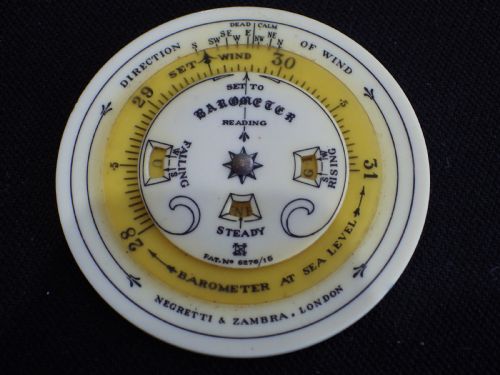


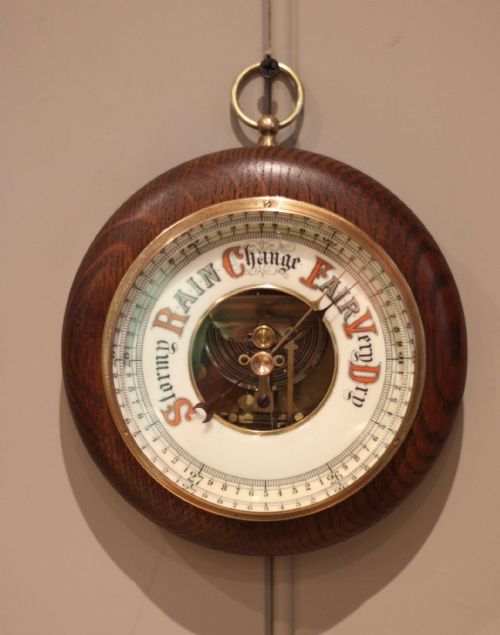


Vintage Weather Indicator
These vintage weather indicator pieces track atmospheric changes and wind direction, offering both practical meteorological observation and striking historical character for your walls.
Vintage Weather Indicator
A vintage weather indicator encompasses a diverse group of meteorological and navigational instruments alongside exterior directional vanes designed to measure atmospheric pressure or track the wind. Collectors searching this phrase encounter everything from indoor domestic barometers and barographs to large copper and iron roof vanes.
The domestic recording instruments present on this page span the 18th, 19th, and early 20th centuries, covering Georgian, Victorian, and Edwardian eras. These include stick barometers, wheel barometers, and aneroid models housed in rich timber cases.
Exterior weather vanes bring robust folk art and maritime character, fashioned from metals like copper and wrought iron with distinct silhouettes. These objects bridge the gap between scientific utility and traditional craftsmanship.
Materials and construction methods
Makers utilised dense timbers such as mahogany, oak, walnut, and boxwood for interior cases, frequently employing fine inlay work or carved details. Brass and copper components provide the mechanical housing and directional markers, while glass protects delicate dials and mercury columns.
Exterior vanes rely on hammered sheet copper, cast iron, and forged wrought iron to withstand the elements. These metal components often display natural patination developed over decades of outdoor exposure.
Vintage Weather Indicator Retail Price Guide 2026
Typical asking prices for vintage weather indicator among the pieces listed under this phrase on Sellingantiques today, from the lower quarter to the upper quarter. They describe what is for sale here now, not the wider market.
The listings combine domestic scientific instruments with exterior iron and copper weather vanes spanning the Georgian, Victorian, and Edwardian periods.
Judging the quality of these instruments
Quality rests in the precision of the maker's movement and the integrity of the housing. Superior domestic barometers feature signed silvered brass dials, intricate carvery on the timber cases, and complex internal mechanisms.
For exterior vanes, quality shows in the sculptural detail of the silhouette and the durability of the hand-beaten metalwork. Patina and original surface finishes also separate standard utilitarian items from exceptional decorative pieces.
Short & Mason·Negretti & Zambra·Maple & Co·Callaghan & Co of London·M Pillischer·A Rivolta·J Groce·George Dollond
The Vintage Weather Indicator Glossary
- Aneroid barometer
- An instrument that measures atmospheric pressure without liquids by using a flexible metal capsule. This design allowed for more compact and varied domestic instrument cases.
- Barograph
- A self-recording meteorological instrument that plots barometric pressure over time onto a revolving drum. These mechanical devices often include integrated thermometers.
- Stick barometer
- A tall, narrow instrument featuring an exposed mercury tube mounted on a wooden backboard. This form represents the traditional style of atmospheric measurement.
- Weather vane
- An architectural device placed on a roof to indicate wind direction, usually featuring a directional cross and a dynamic top silhouette. These are frequently associated with folk art traditions.
- Wheel barometer
- A round instrument with a dial face connected to a siphon tube and pulley mechanism, commonly housed in a banjo-shaped wooden case.
Vintage Weather Indicator: Frequently Asked Questions
How do I read a traditional barometer?
Traditional barometers measure atmospheric pressure using either a mercury column or an internal aneroid capsule connected to a dial hand. Rising pressure generally indicates improving weather, while falling pressure suggests approaching storms or rain.
Most domestic instruments feature an adjustable pointer that lets you mark the current reading so you can track changes over the course of the day.
Where should I place a weather vane?
Weather vanes need to be mounted on an elevated exterior surface where the wind can flow freely around the directional arms without obstruction. Traditionally positioned on roof ridges, cupolas, or garden posts, they require secure anchoring to withstand strong gusts.
Ensure the directional points are correctly aligned to true north using a compass during installation.
How do I maintain an antique barometer?
Keep antique barometers away from direct sunlight, central heating vents, and damp areas to protect the wooden cases and internal mechanical components. Regular dusting with a soft, dry cloth is usually sufficient for surface care.
If the instrument uses mercury, avoid tilting or moving it roughly to prevent breaking the delicate internal glass column.
What is the difference between an aneroid and mercury barometer?
Mercury barometers rely on a column of liquid metal that rises and falls in response to atmospheric pressure, representing earlier scientific technology. Aneroid barometers use a sealed metal box that expands and contracts with pressure changes, driving a mechanical pointer on a dial.
Aneroid mechanisms became popular in the Victorian era because they eliminated the need for fragile liquid columns.