
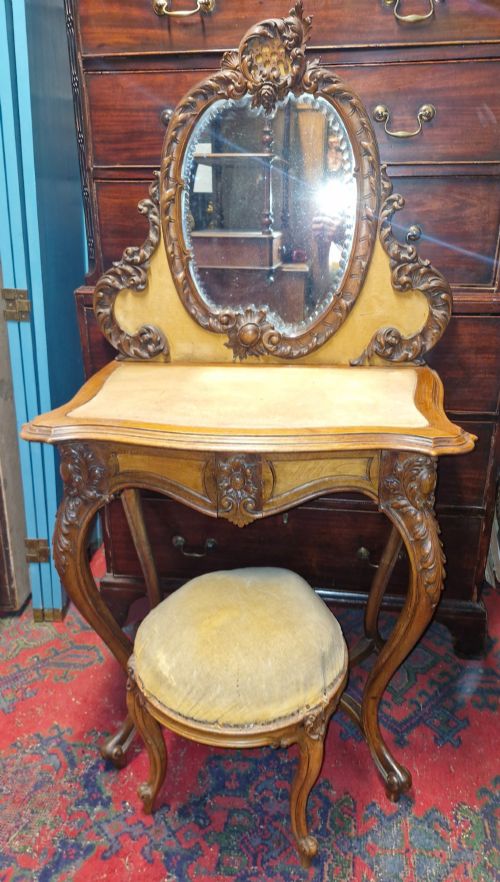
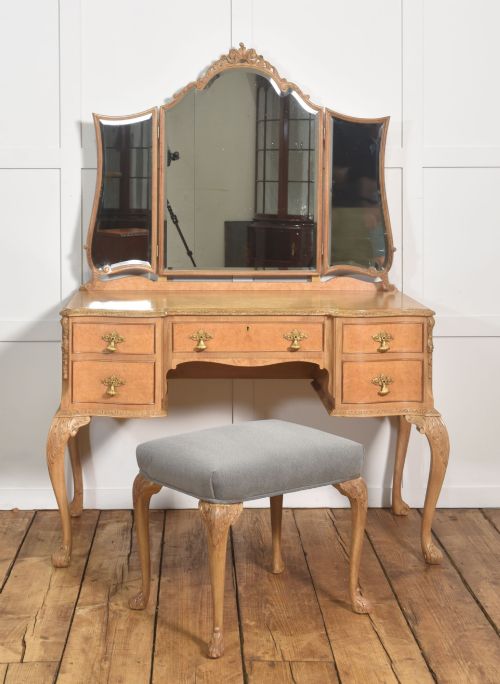
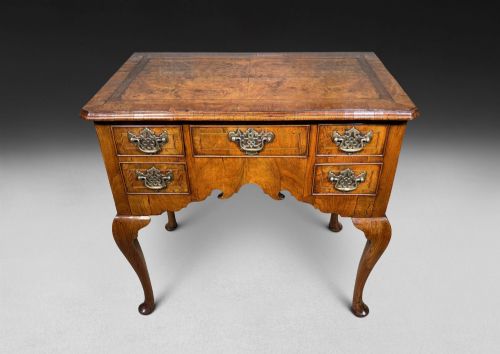
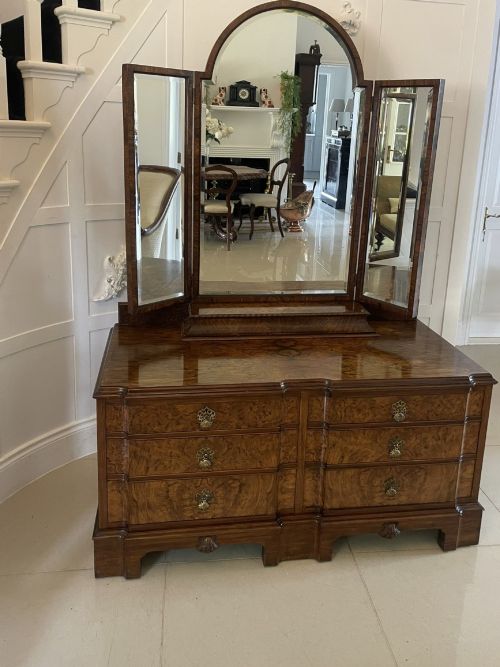

Vintage Walnut Vanity Desk
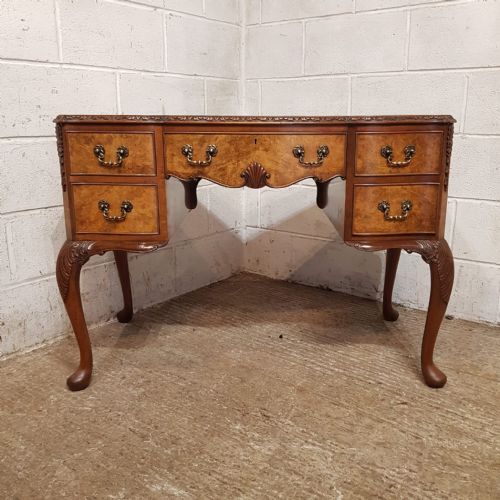
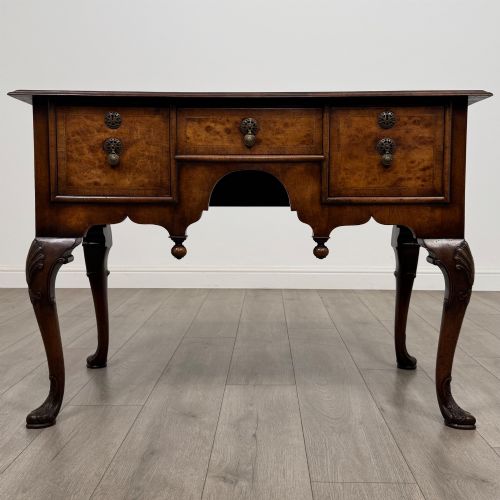
A vintage walnut vanity desk brings rich timber grain and period charm to a dressing room or study.
Vintage Walnut Vanity Desk
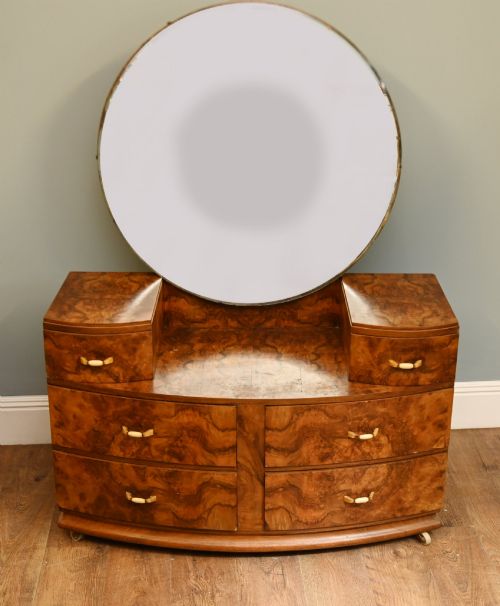
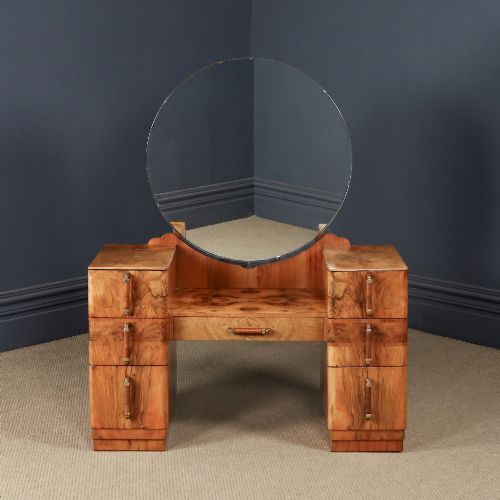
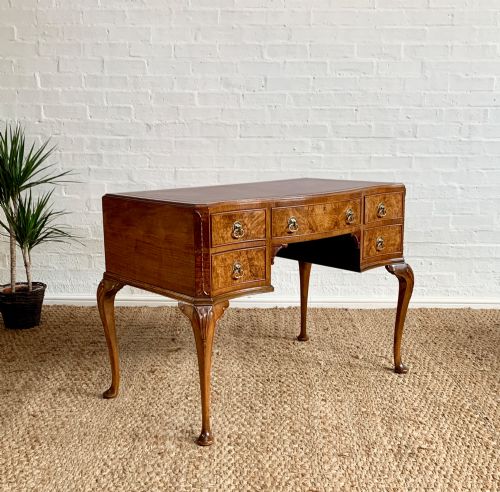
A vintage walnut vanity desk serves as a dedicated space for grooming and writing, uniting the functions of a dressing table and a writing desk. These pieces span several decades, with Art Deco examples from the 1930s and Edwardian or Victorian pieces appearing frequently alongside earlier Queen Anne revival forms.
Makers and workshops utilised figured timber and burr veneers to create striking focal points for the bedroom or study. Buyers encounter pedestal forms with triple mirrors, serpentine fronts, and kneehole configurations designed for daily use.
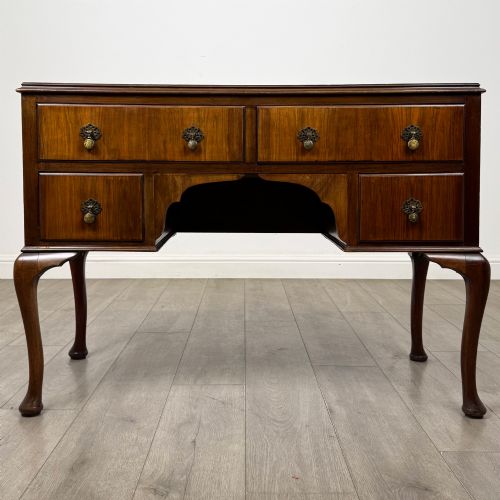
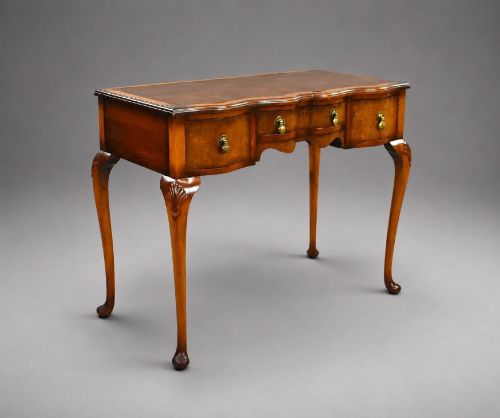
The selection ranges from mid-century Art Deco streamlined designs to traditional Queen Anne style tables set on cabriole legs. Each iteration reflects the prevailing domestic habits and interior tastes of its specific era.
Materials and construction
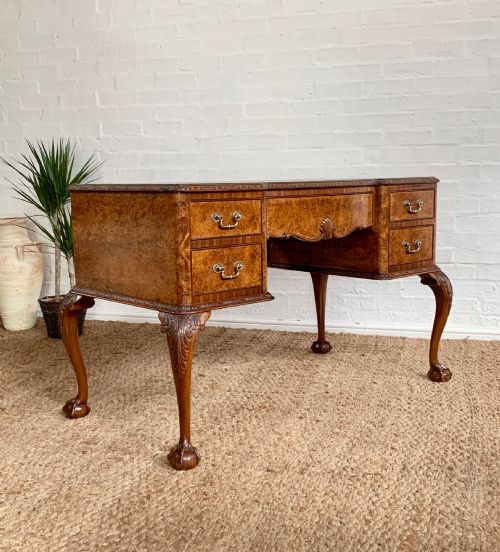
Cabinet makers relied primarily on walnut, frequently selecting highly figured burr walnut veneers to cover primary surfaces with rich, swirling grain patterns. Solid walnut formed structural elements such as cabriole legs, frames, and drawer linings.
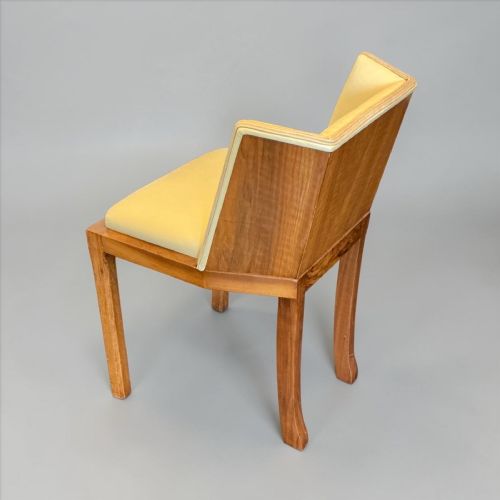
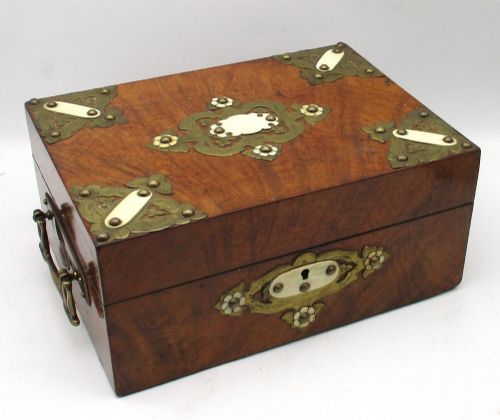
Secondary materials included brass for handles and hardware, glass for dressing mirrors, and leather for the writing surfaces of combined desk pieces. Metal supports and fabric upholstery appear on accompanying chairs and stools.
Listings feature walnut, burr walnut, brass, leather, and mirror glass across periods spanning the 18th century through the Art Deco era of the 1930s.
Distinctions in craftsmanship
The grade of timber selection largely dictates the visual impact of a piece, with densely figured burr walnut veneers requiring exceptional skill to match across drawer fronts and tops. Simpler straight-grained walnut appears on more utilitarian furniture.
Construction methods reveal the hand of the maker through dovetailed drawer boxes, solid secondary timbers, and the integration of specialised hardware. Coarser execution or heavy modern alterations diminish the integrity of period survivals.
Wylie & Lochhead Glasgow·Maples of London·Harry and Lou Epstein
The Vintage Walnut Vanity Desk Glossary
- Burr walnut
- A veneer taken from the wart-like growths on walnut trees, prized for its complex, swirling grain patterns.
- Kneehole desk
- A compact writing table featuring a central recess for the user's legs, flanked by pedestals of small drawers.
- Cabriole leg
- A furniture leg that curves outward at the knee and tapers inward to an ankle, common in Queen Anne revival pieces.
- Lowboy
- A small oak or walnut table with drawers, standing on relatively tall legs, originating in the 18th century.
- Serpentine front
- A piece of case furniture featuring a front edge that curves outward in the centre and inward at the sides.
Vintage Walnut Vanity Desk: Frequently Asked Questions
How do I date a walnut vanity desk?
Dating relies on observing construction techniques, hardware, and stylistic indicators such as Art Deco geometric lines or Victorian proportions. Makers' stamps and labels also provide clear chronological markers.
Changes in veneer thickness and drawer assembly methods help distinguish 18th-century lowboys from later revival pieces produced in the Edwardian era and the 1930s.
Can these desks be used for daily writing?
Many vanity desks double as writing tables, often incorporating fitted drawers and leather writing surfaces suited for modern correspondence and laptop use. Kneehole layouts provide adequate legroom for regular seating.
Buyers should check internal drawer depths and writing height to ensure the piece accommodates daily functional requirements comfortably.
How do I care for walnut veneer surfaces?
Walnut benefits from occasional polishing with traditional beeswax to nourish the timber and protect the delicate burr veneers from drying out. Avoiding direct sunlight prevents the rich brown tones from fading.
Moisture and heat can damage polished wood and leather inserts, so coasters and desk pads help preserve the original finish.
What is the difference between a vanity and a kneehole desk?
A vanity typically incorporates dressing mirrors, compartments for cosmetics, and sometimes a matching stool, focusing on personal grooming. A kneehole desk prioritizes surface area and drawers for paperwork.
Many surviving pieces bridge both categories, featuring writing surfaces alongside tilting mirrors or removable dressing attachments.