
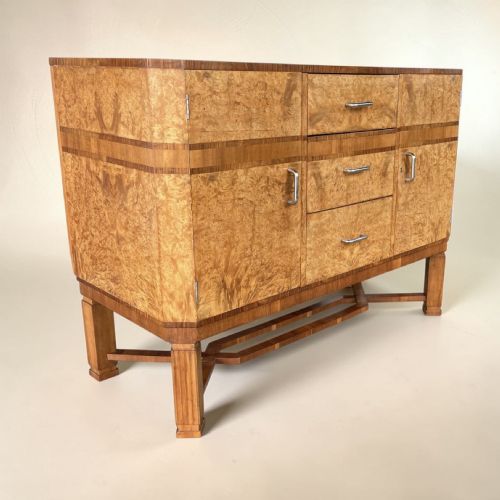
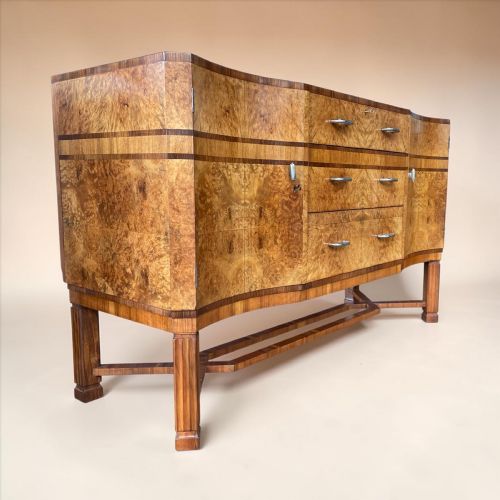
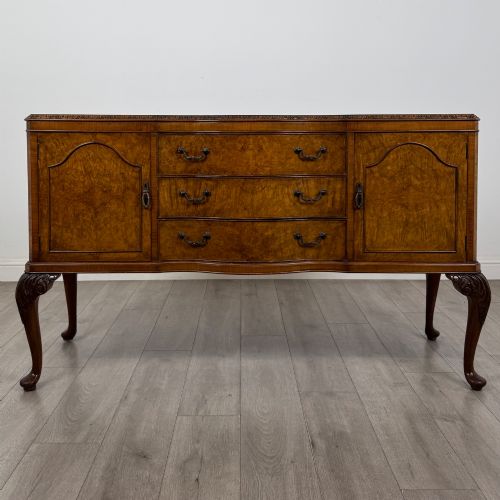
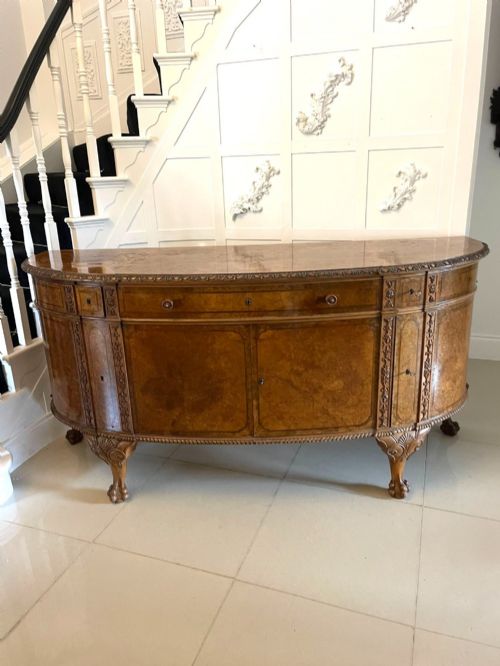

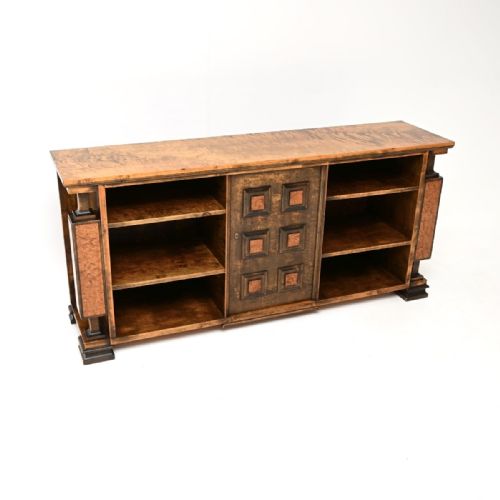
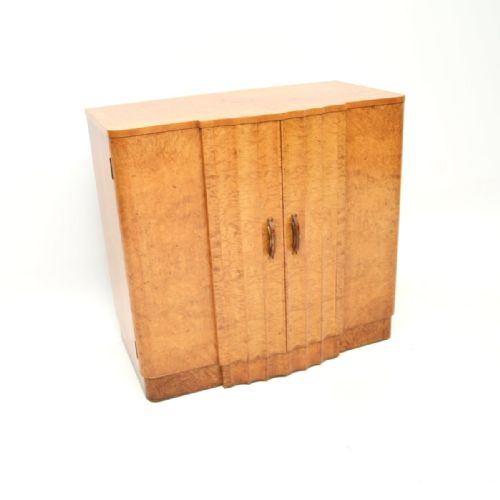
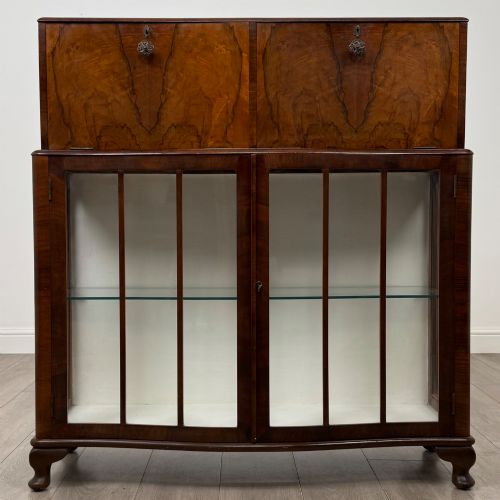
Vintage Walnut Sideboard Cabinet
These vintage walnut sideboard cabinet pieces combine generous storage with striking grain patterns, making them a functional centrepiece for a dining room or living space.

Vintage Walnut Sideboard Cabinet
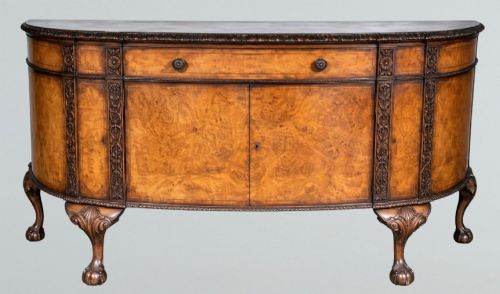
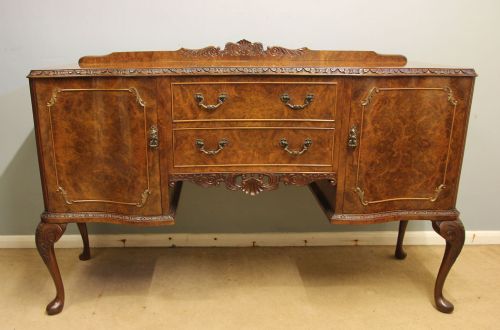
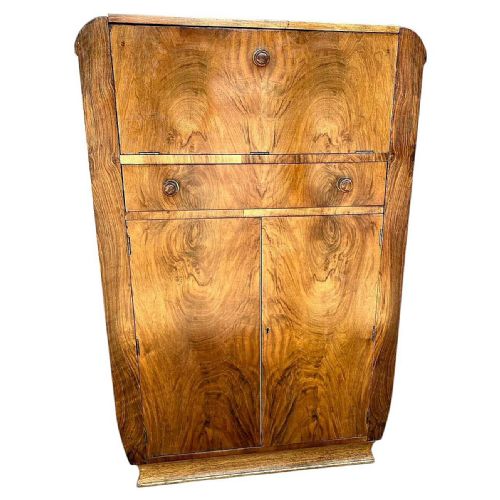
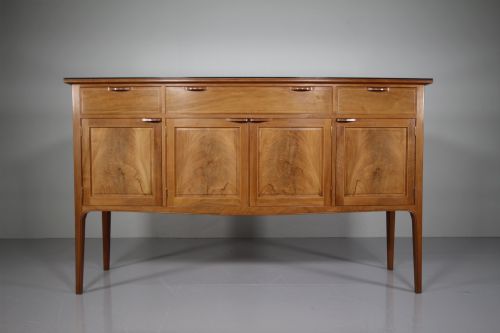
A vintage walnut sideboard cabinet brings together centuries of cabinet-making traditions, ranging from heavy Victorian credentials to streamlined Art Deco designs. Buyers searching for a vintage walnut sideboard cabinet encounter forms varying from serpentine servers and bow-fronted sideboards to cocktail cabinets and glazed display pieces. These items serve primarily to store tableware, glassware, and dining accessories while anchoring a room with rich timber tones.
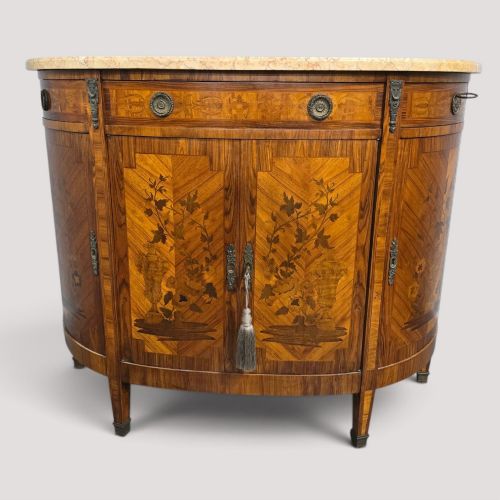
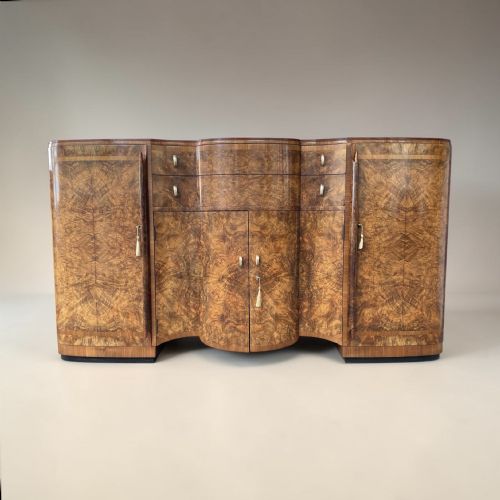
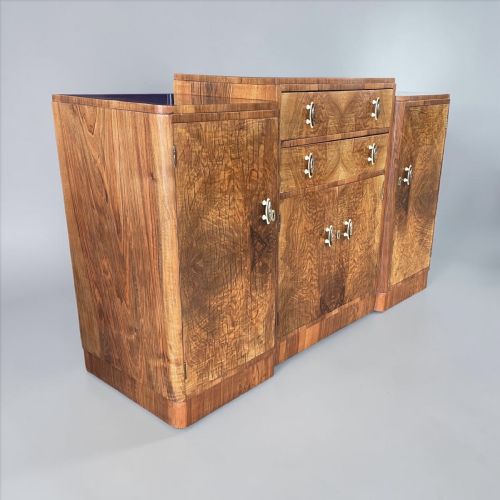
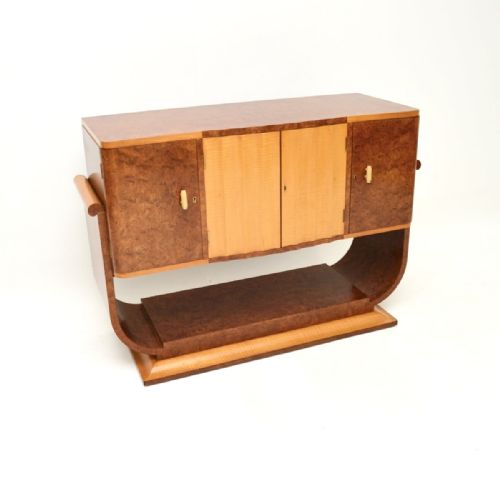
The selection spans multiple decades, with significant representation from the 1930s alongside Edwardian, Victorian, and nineteenth-century examples. Art Deco models frequently pair figured walnut with contrasting woods like sycamore, whereas earlier periods lean towards heavily carved panels and marble tops. Whether you need a low console or a tall cocktail cabinet, the form dictates how the timber grain is displayed across the front doors and drawers.
How they were made
Cabinet makers utilised solid walnut alongside decorative veneers such as burr walnut and figured walnut to create intricate patterns across large surfaces. These timber faces are frequently paired with secondary woods and mounted with brass, ormolu, and glass elements to accent the structural design.
Techniques range from traditional hand-carving seen on Victorian and Edwardian iterations to the sleek, geometric veneering characteristic of 1930s Art Deco workshops. French polishing and marquetry inlay appear across continental pieces, adding depth and colour variation to the walnut surfaces.
Listings feature walnut alongside brass, marble, and ormolu, spanning periods from the Victorian era through the 1930s.
What varies in quality
Quality rests significantly on the selection and matching of the walnut veneer, where symmetrical grain patterns across multiple doors denote superior craftsmanship. The handling of secondary details, such as fitted cutlery drawers, internal lighting in cocktail units, and heavy brass hardware, further separates standard production from exhibition pieces.
Construction methods also distinguish the tier of a piece, with dovetailed drawer boxes and solid timber carcases outlasting lighter builds. Makers who stamped their work or produced pieces for specific exhibitions generally applied higher standards of joinery and finish.
Maurice Adams·Edward Barnsley·Harry and Lou Epstein·Hille
The Vintage Walnut Sideboard Cabinet Glossary
- Burr walnut
- A veneer taken from the wart-like growths on walnut trees, yielding a swirling, highly decorative grain pattern. It is prized for its complex patterns on cabinet doors.
- Marquetry
- The art of applying pieces of veneer to a structure to form decorative designs and pictures. Craftsmen use various coloured woods to achieve tonal contrast.
- Credenza
- A sideboard or buffet typically lacking legs, often featuring glass doors or elaborate marquetry. Victorian examples frequently incorporate mirror backs.
- Serpentine front
- A furniture front curving outward at the ends and inward in the centre. This shape requires advanced woodworking skill to fit drawers and doors accurately.
- Ormolu
- Gilded bronze furniture mounts and decorative details popular in nineteenth-century cabinet making. It provides metallic contrast against dark walnut surfaces.
Vintage Walnut Sideboard Cabinet: Frequently Asked Questions
Where were walnut sideboards placed?
These pieces traditionally stood in dining rooms to hold silver, linen, and serving dishes during meals. They also functioned in reception rooms to display decorative objects and store household items.
Today, buyers place them in living rooms and hallways as media consoles or general storage units. Their substantial top surfaces also serve well for serving drinks or displaying art.
How do I identify Art Deco walnut cabinets?
Art Deco pieces from the 1930s feature symmetrical, book-matched burr walnut veneers combined with geometric shapes and streamlined silhouettes. They often incorporate contrasting light woods like sycamore and lack heavy Victorian ornamentation.
Many of these cabinets double as cocktail bars, featuring mirrored interiors, pull-out slides, and fitted glass holders. Their handles and hinges are typically integrated flush into the overall design.
How do I care for walnut veneer?
Walnut veneer requires protection from direct sunlight to prevent the timber from fading and losing its rich colour over time. Maintaining a stable indoor humidity prevents the underlying wood from expanding and causing the veneer to lift.
Dusting regularly with a soft, dry cloth preserves the polished finish. Periodic application of appropriate wax feeds the timber without building up heavy residues.