
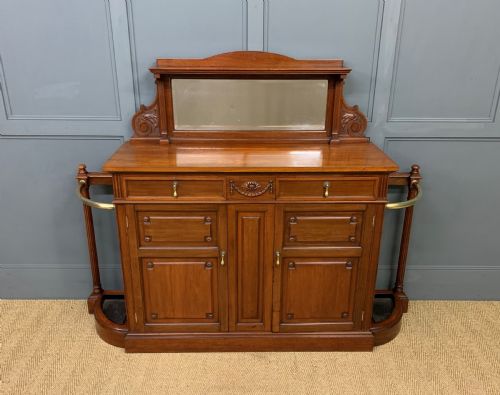
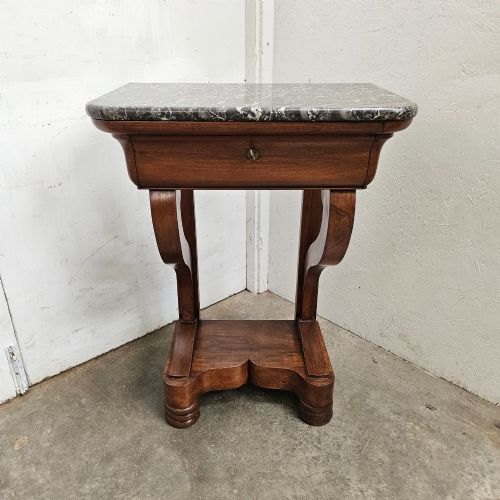
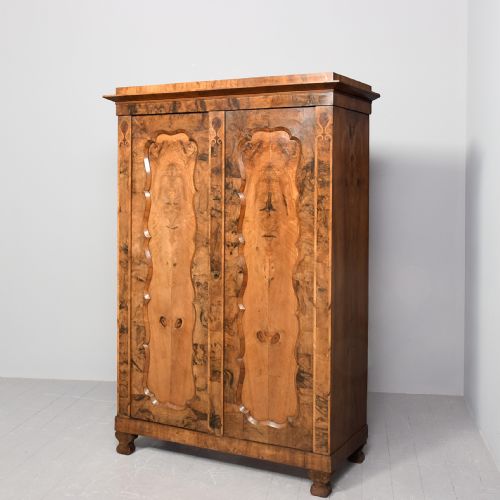


Walnut Hall Cabinet
These walnut hall cabinet pieces bring figured timber and brass detailing to an entryway, offering sturdy storage for daily essentials.
Walnut Hall Cabinet
A walnut hall cabinet bridges the gap between decorative furniture and practical entryway storage, appearing in forms ranging from narrow side cabinets to tall armoires and stands. When you search for a walnut hall cabinet, you encounter pieces designed to organise coats, keys, and correspondence in entrance spaces.
The pieces on this page span several centuries and styles, drawing on Victorian, Edwardian, and earlier Continental traditions. You will encounter tall hall stands alongside low console tables and wall-mounted key cabinets, reflecting how different eras managed the entrance hall.
Materials vary from plain walnut to burr and figured veneers, frequently paired with marble tops, glass, or brass hardware. The geographical origins stretch across England, France, and North Europe, bringing distinct regional proportions to each piece.
Construction and materials
Cabinet makers utilised solid walnut alongside figured and burr walnut veneers to create rich grain patterns across flat surfaces. These timber faces were often mounted on secondary woods or framed with ebonised details.
Functional hardware relied on cast brass handles, hinges, and key escutcheons that provided both structural strength and contrast against the dark wood. Marble tops offered durable, polished surfaces suited to the heavy use of an entranceway.
Listings feature walnut, burr walnut veneer, marble, and brass across pieces spanning the eighteenth century through to the Art Deco period.
Assessing quality and craftsmanship
Quality reveals itself in the selection of the timber veneer, where book-matched burr walnut creates a symmetrical, balanced pattern across the doors and panels. Poorer examples rely on plain, unfigured timber with little variation in tone or grain.
Construction methods distinguish finer workshop output, particularly in the precision of the joinery and the integration of marble tops or brass fittings. Superior pieces maintain crisp carving and tight joints that withstand decades of daily hallway use.
Shoolbred and Co·G Hall of London·S Hall and Sons
The Walnut Hall Cabinet Glossary
- Ebonised wood
- Timber treated with a dark stain or finish to imitate ebony. This technique provided sharp, black contrast against figured walnut in Victorian and later designs.
- Lowboy
- A small table with drawers, standing on relatively tall legs, typically used as a side table or dressing surface. In hallway contexts, it provides compact surface space without blocking walkways.
- Credenza
- A sideboard or cabinet designed for storage and display, often featuring enclosed cupboards. In an entrance setting, it serves as a substantial storage unit for household items.
- Console table
- A table designed to fit flush against a wall, frequently supported by brackets or legs at the front. These pieces often incorporate marble tops and matching wall mirrors in Continental designs.
Walnut Hall Cabinet: Frequently Asked Questions
Where should I place a walnut hall cabinet?
These cabinets suit entrance halls and narrow corridors where floor space is limited but surface storage is required. They sit comfortably against blank walls to hold daily items.
Larger versions like armoires and hall stands require wider clearances to allow doors and drawers to open fully without obstructing the pathway.
How do I care for walnut veneer?
Keep walnut furniture away from direct sunlight and strong heat sources to prevent the timber and underlying glue from drying out. Regular dusting with a soft, dry cloth preserves the polished finish.
Avoid using silicone-based polishes, opting instead for traditional beeswax applied sparingly to maintain the natural lustre of the grain.
What is the difference between Victorian and Edwardian pieces?
Victorian walnut hall cabinets tend to feature darker finishes, heavier carving, and often incorporate ebonised details or marble tops. They reflect a taste for substantial, solid presence in the home.
Edwardian pieces generally present lighter proportions, simpler lines, and less ornate carving, reflecting a shift toward brighter and more open hallway designs.
Can I use a hall cabinet for shoe storage?
Many side cabinets and cupboards offer deep interior shelving suitable for organising footwear out of sight. You should check the internal dimensions and shelf depths of specific cabinets before planning heavy storage.
Pieces with lower drawers or open compartments also provide convenient drop zones for everyday shoes near the front door.