




1930s Walnut Press
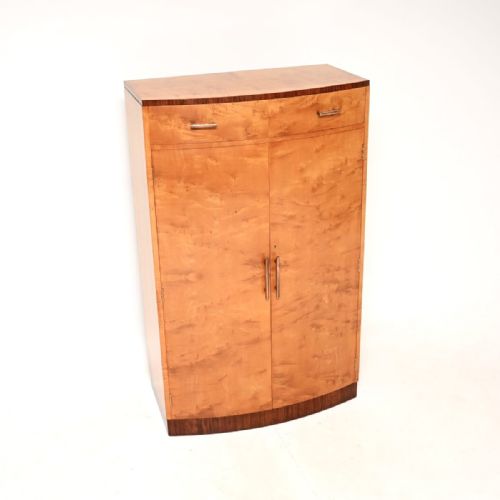
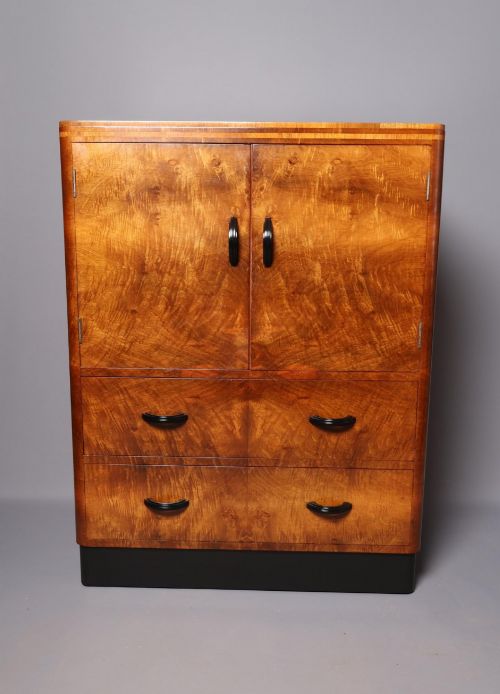
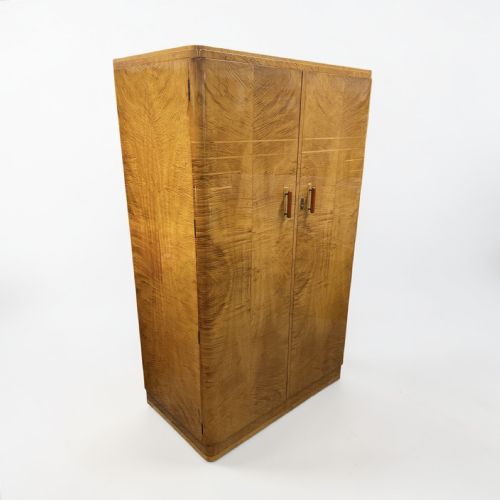
These pieces known as a 1930s walnut press deliver striking grain and generous storage, combining practical bedroom utility with distinct geometric lines.

1930s Walnut Press
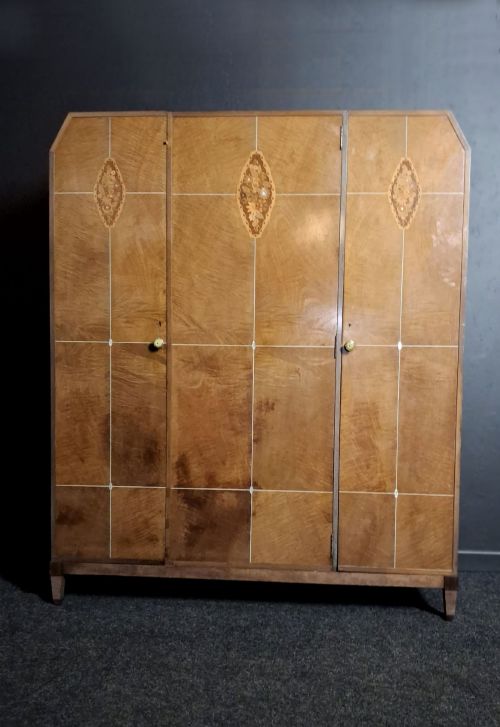
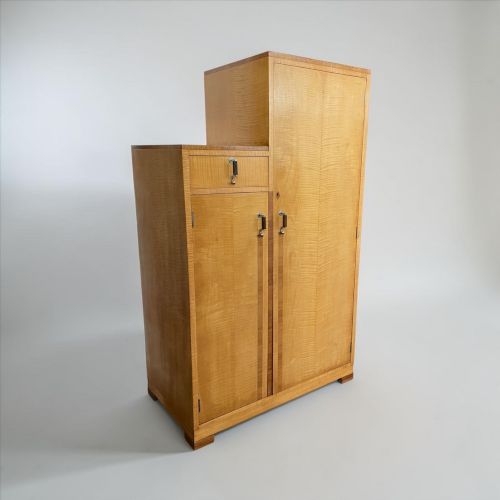
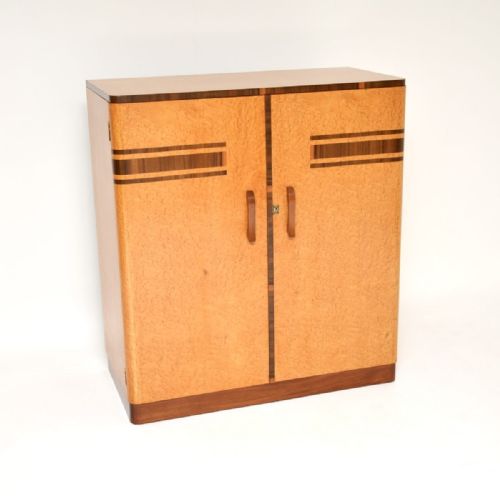
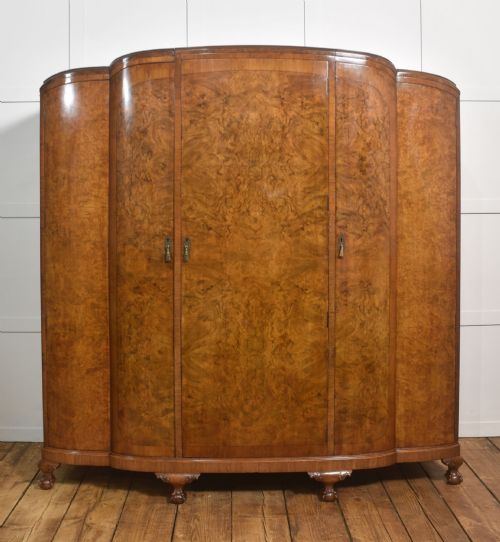
The aesthetic is distinctly shaped by the Art Deco style, favouring clean architectural silhouettes and symmetrical door arrangements. Cabinet makers of the era arranged timber veneers to create bold geometric patterns across the front facades. Alongside standard wardrobes, the selection includes specialised linen cupboards and small wardrobes suited for contemporary bedrooms.
Materials and construction
Makers utilised walnut, burr walnut veneer, and solid oak to build these substantial pieces of furniture. Timber like satin birch and birds eye maple occasionally appears alongside walnut to create contrasting interior compartments or decorative exterior banding. Metal, brass, and dark bakelite furnish the handles, hinges, and lock escutcheons.
Master craftsmen applied finely figured burr walnut veneer over stable secondary timbers to achieve dramatic patterning without warping. The grain alignment on doors and drawer fronts required precise bookmatching techniques to produce symmetrical, repeating visual motifs. Internal fittings such as linen slides and pull-out trays were constructed from durable secondary woods with careful joinery.
1930s Walnut Press Retail Price Guide 2026
Typical asking prices for 1930s walnut press among the pieces listed under this phrase on Sellingantiques today, from the lower quarter to the upper quarter. They describe what is for sale here now, not the wider market.
Makers sometimes concealed small velvet-lined compartments inside compactums specifically intended for storing pocket watches and collar studs.
Factors of quality
The distinction between standard production items and superior pieces rests entirely upon the selection and application of wood veneers. Finer examples feature highly figured burr walnut or cloud walnut with continuous grain wrapping seamlessly across multiple panels. Lesser pieces rely on uniform straight-grained timber or simpler construction with less attention given to the visual rhythm of the facade.
Hardware integration and interior configuration further separate grades of manufacture. Superior items incorporate heavy brass or bakelite fittings that function smoothly within fitted compartments, whereas basic models utilise simpler internal layouts. The precision of the geometric parquetry and the crispness of the edge mouldings indicate the level of care invested by the original workshop.
Heal's
The 1930s Walnut Press Glossary
- Compactum
- A multi-functional wardrobe combining hanging space, shelves, and internal drawers within a single carcass. This form provides comprehensive bedroom storage.
- Burr walnut
- A prized timber harvested from the gnarled growths on walnut trees, yielding intricate swirling grain patterns. Cabinet makers slice this wood into thin veneers for decorative surfaces.
- Tallboy
- A tall chest of drawers often topped by a small cupboard section. It offers vertical storage capacity for rooms with limited floor space.
- Breakfront
- A cabinet design where the central section projects forward from the flanking outer sections. This architectural arrangement creates depth and shadow across the front elevation.
- Bakelite
- An early synthetic thermosetting plastic utilised for door handles and escutcheons. Its dark, lustrous finish complements polished walnut surfaces.
1930s Walnut Press: Frequently Asked Questions
What is a compactum wardrobe?
A compactum is a multi-compartment wardrobe designed to hold various types of clothing in one unit. It typically houses hanging space alongside internal drawers and linen shelves.
These pieces emerged to maximise bedroom storage efficiency during the early twentieth century. They suit modern homes well by consolidating wardrobes and chest of drawers functions into a single footprint.
Where should I place a tallboy?
A tallboy functions best in bedrooms or dressing areas where floor space is limited. Its vertical proportions provide significant drawer capacity without demanding a wide footprint.
Ensure the piece sits against a stable wall away from direct heat sources to protect the walnut veneer. Proper placement allows the geometric grain patterns to catch natural light effectively.
How do I care for walnut veneer?
Walnut veneer requires protection from direct sunlight and extreme humidity fluctuations to prevent fading and lifting. Dust the surface regularly with a dry, soft cloth and avoid chemical polishes.
Occasional application of appropriate natural wax nourishes the timber and preserves the sheen. Treating the wood gently ensures the intricate grain patterns remain stable for decades.