
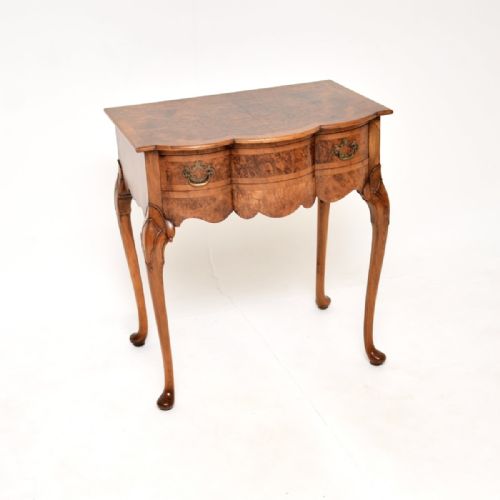


Vintage Walnut Lowboy
A vintage walnut lowboy offers compact table storage in figured timber, spanning Georgian origins through to twentieth-century revivals.
Vintage Walnut Lowboy
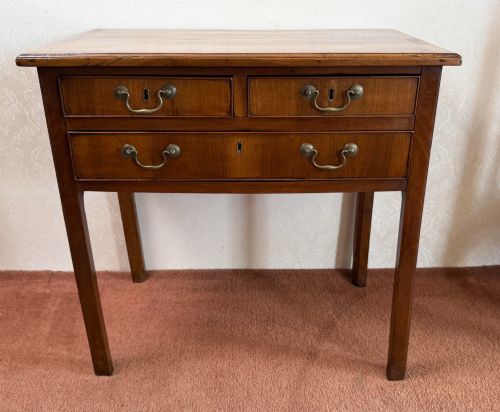
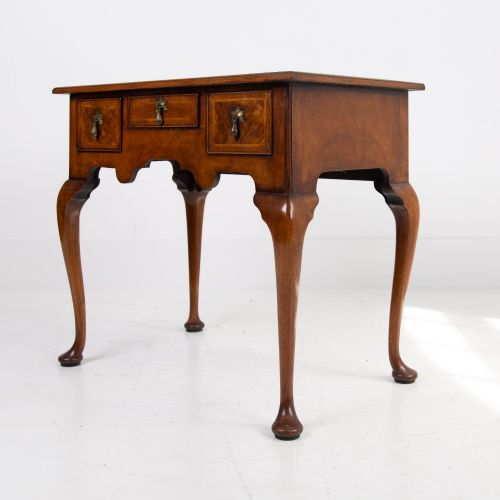
A vintage walnut lowboy typically functions as a small side table, dressing table or writing surface equipped with drawers beneath the top. When you examine the pieces gathered here, you encounter examples stretching from the eighteenth century through to the nineteen-twenties and nineteen-thirties.
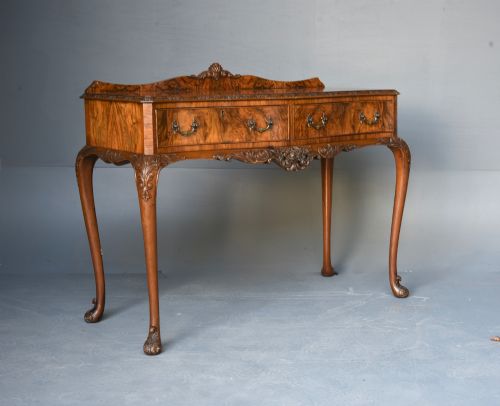
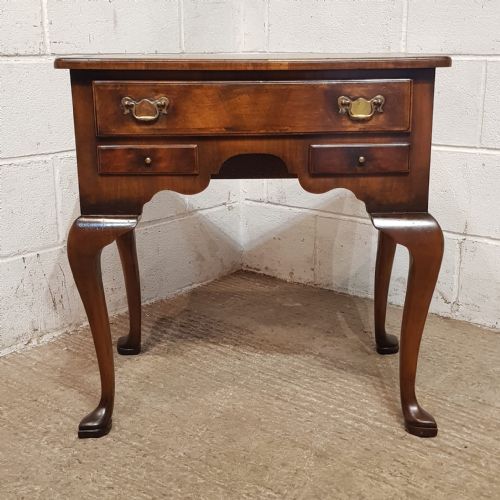
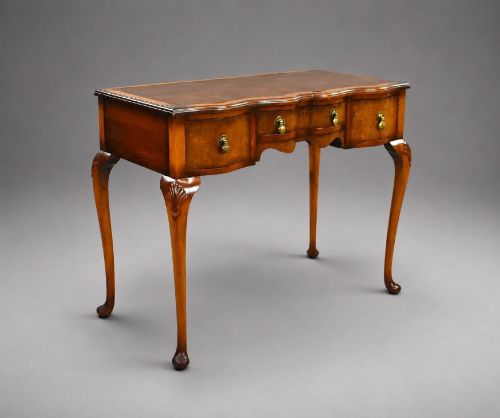
The twentieth-century revival pieces dominate the selection, heavily influenced by Queen Anne and George II styles. These later iterations borrow the characteristic cabriole legs and proportioned drawer arrangements of earlier periods.
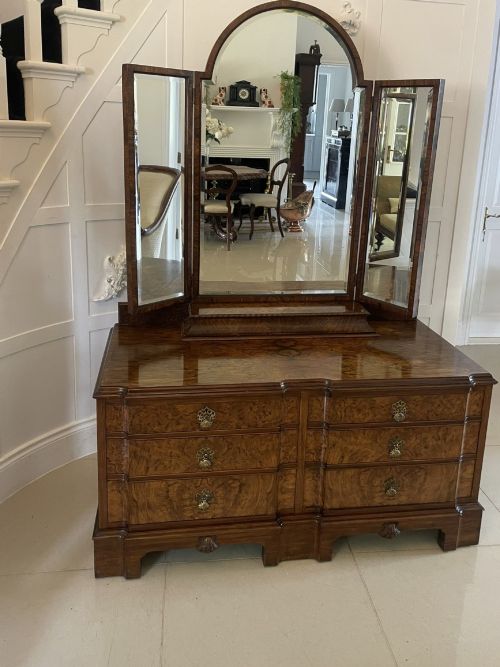
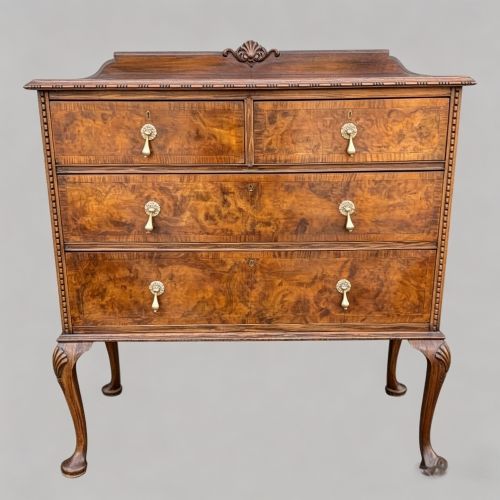
Alongside dedicated lowboys, the selection includes related side tables, dressing tables and small chests that share the same timber and low-slung proportions. The forms vary from austere plain walnut to highly decorative burr walnut veneers.
Materials and construction methods
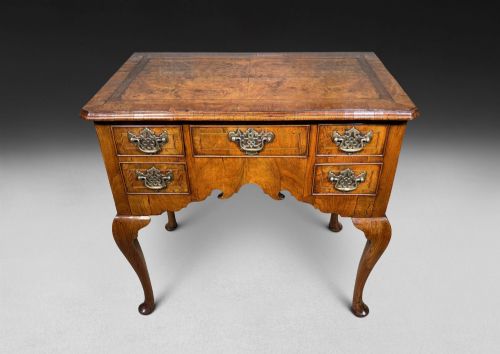
Cabinet makers utilised solid walnut and burr walnut veneer over secondary timbers such as oak, applying the figured veneers to drawer fronts and top surfaces to create striking patterns. Brass handles and escutcheons punctuate the facades, while occasional pieces incorporate mirror glass, leather writing surfaces or giltwood accents.
Construction relied on traditional joinery methods suited to fine cabinet work, pairing dovetailed drawer construction with pegged frames. Cabriole legs, often terminating in pad or hoof feet, provide the structural support for the lower framework.
Cabinet makers used burr walnut knots so aggressively patterned that cats frequently try to pounce on the swirling wooden grain.
Assessing quality and execution
The grade of timber dictates much of the visual appeal, separating standard plain walnut surfaces from richly figured burr walnut veneer laid with deliberate symmetry. Finer examples display meticulous matching of the grain across drawer fronts and tops, whereas lesser pieces show random or mismatched patterning.
Execution of the carving on cabriole legs and the crispness of the drawer dovetails reveal the maker's hand and the period's manufacturing ethos. Eighteenth-century originals and careful revival pieces from the early twentieth century maintain tighter tolerances in their joinery than mass-produced alternatives.
Maple's of London
The Vintage Walnut Lowboy Glossary
- Lowboy
- A small table with drawers, raised on four tall legs and typically used as a dressing table or side table.
- Burr walnut
- Timber taken from a tree growth or wart, yielding intricate, swirling grain patterns highly prized for cabinet veneers.
- Cabriole leg
- A furniture leg that bends outward in a convex curve and tapers inward in a concave curve, ending in a foot.
- George II style
- A furniture design movement reflecting the mid-eighteenth century, noted for robust proportions and carved knee details on cabriole legs.
Vintage Walnut Lowboy: Frequently Asked Questions
What is a lowboy used for?
A lowboy serves primarily as a small side table or a dressing table, offering surface display space combined with under-counter drawers.
Historically placed in bedrooms or halls, these compact tables hold personal items, letters or small accessories without dominating a room.
How do I date a walnut lowboy?
Dating relies on examining the timber preparation, secondary woods like oak, drawer construction methods, and stylistic cues such as cabriole leg shaping.
Eighteenth-century pieces show hand-cut joinery and authentic wear, whereas revival pieces from the nineteen-twenties adopt earlier aesthetic forms with twentieth-century structural techniques.
What is burr walnut?
Burr walnut is a specialised veneer sliced from a tree's knot or burl, creating dense, swirling patterns across the wood surface.
Cabinet makers apply these decorative veneers to drawer fronts and tabletops to catch the light and add visual depth.
Are lowboys and side tables the same?
While all lowboys function as side tables, not every side table is a lowboy because lowboys specifically feature one or more rows of drawers beneath the top.
Their distinct proportions separate them from taller tallboys or standard console tables.