
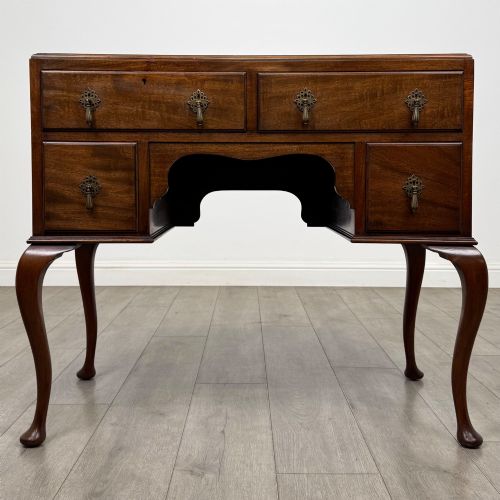
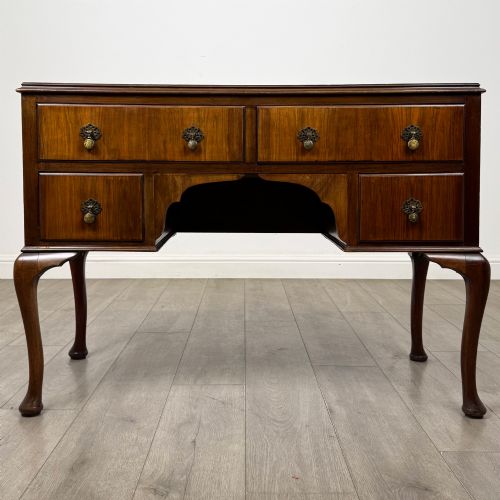
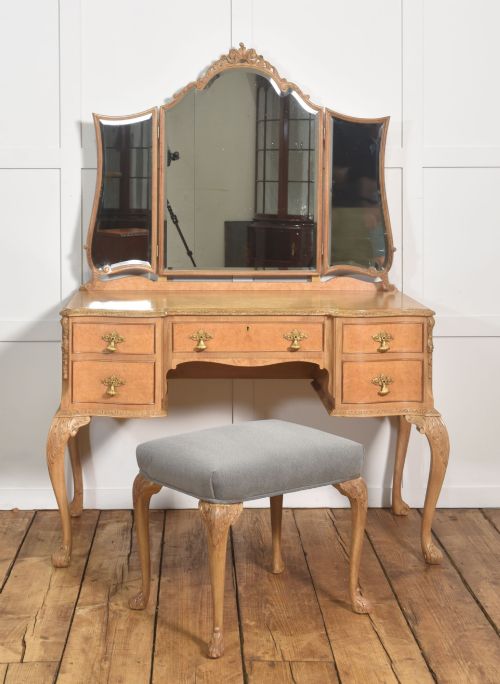
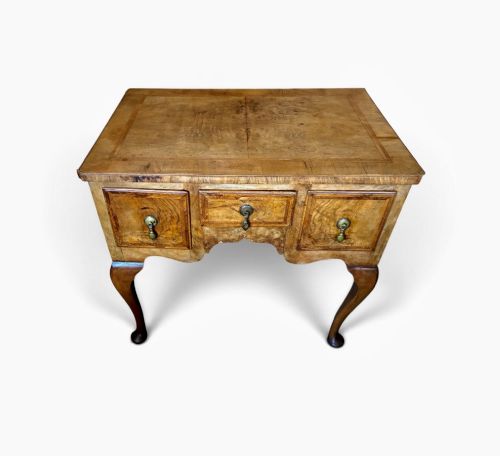
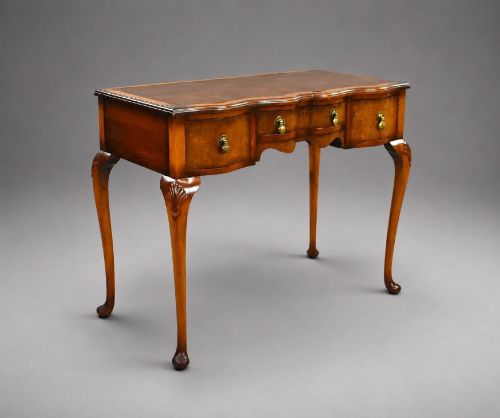
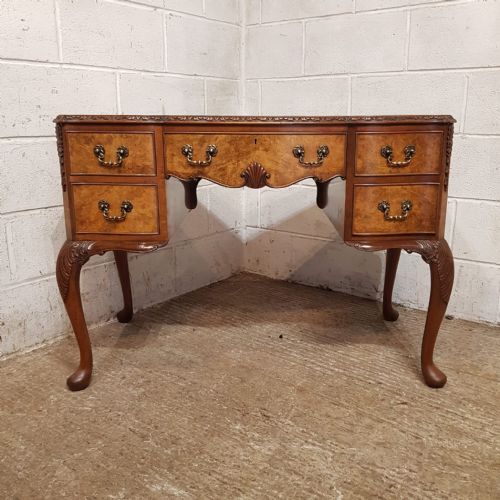
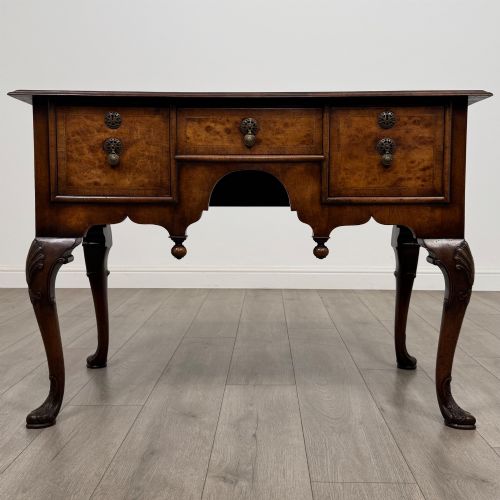
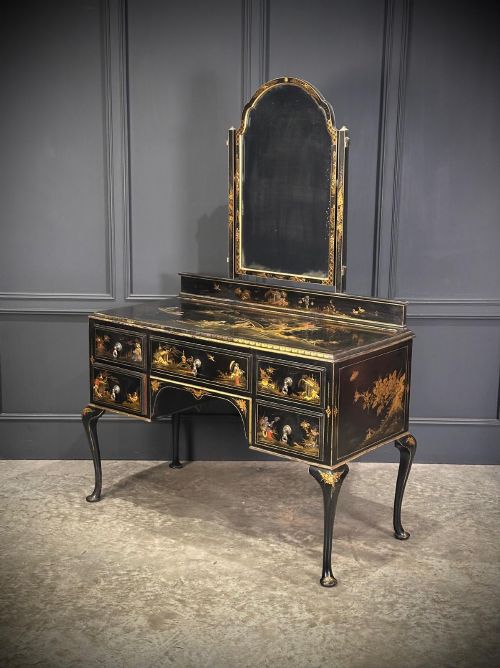

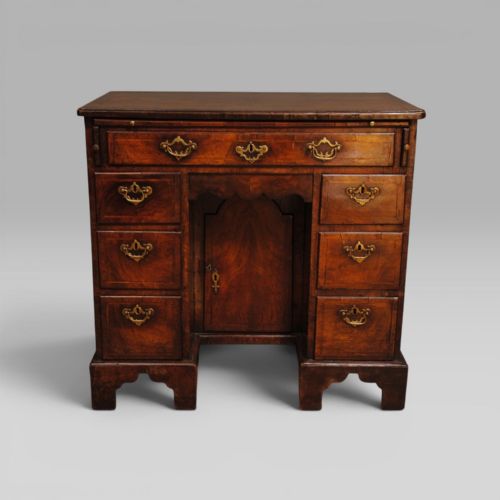


Queen Anne Vanity Desk
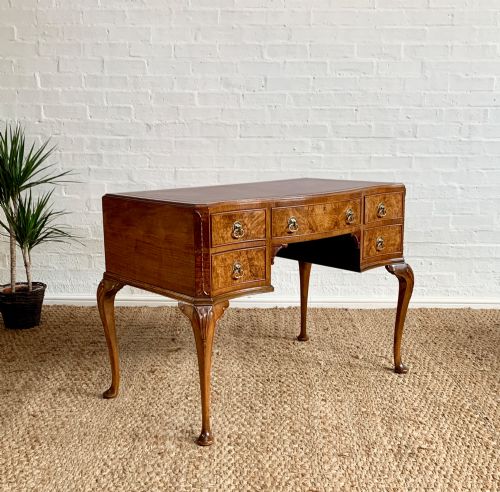
A queen anne vanity desk brings proportion and walnut warmth into a room, serving as a graceful writing place or dressing table.
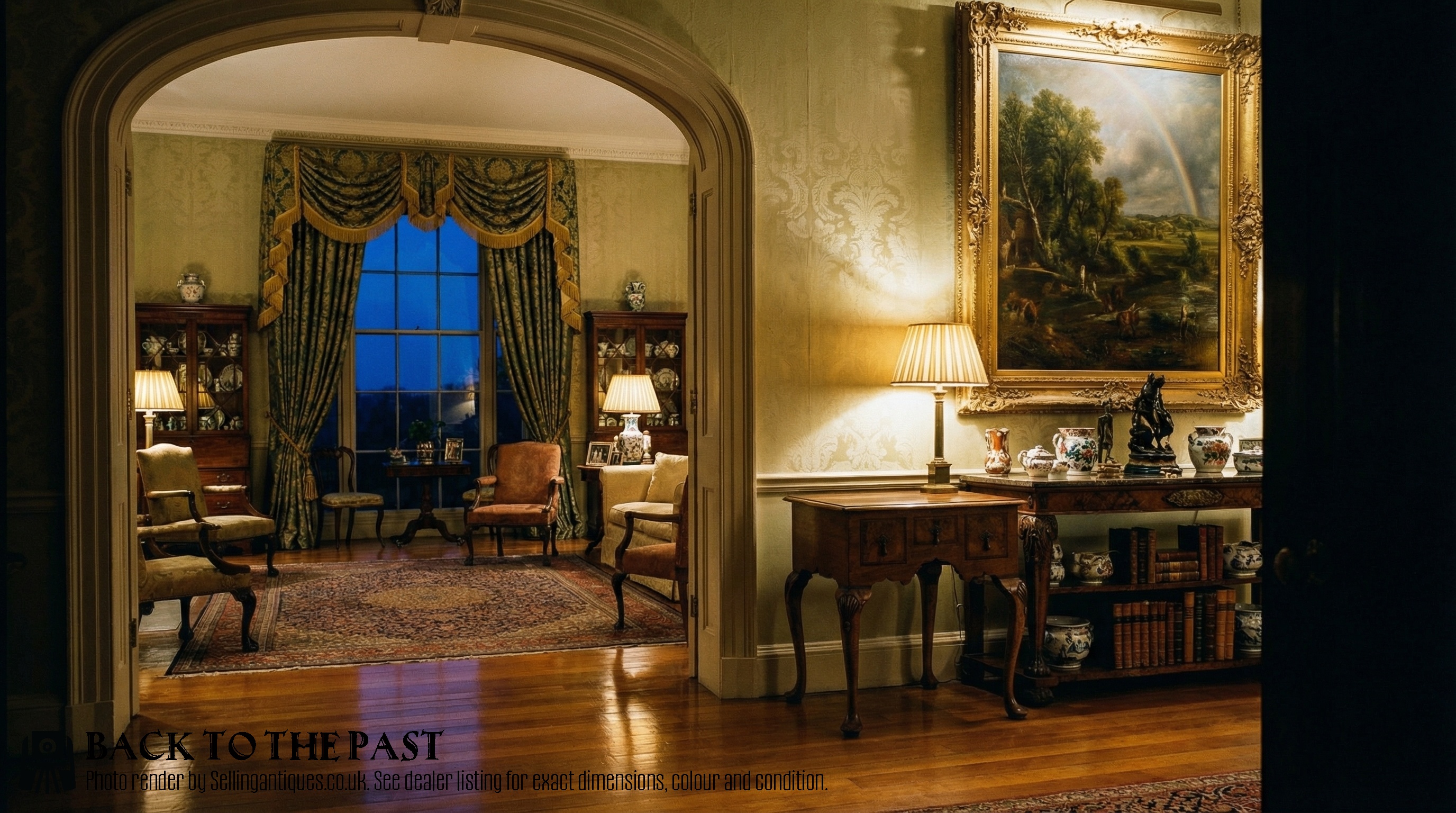
Queen Anne Vanity Desk
When you search for a queen anne vanity desk, you encounter pieces designed for writing and grooming across several centuries. The selection spans authentic eighteenth-century oak and walnut examples alongside revival pieces from the Edwardian era and the nineteen-twenties and thirties.
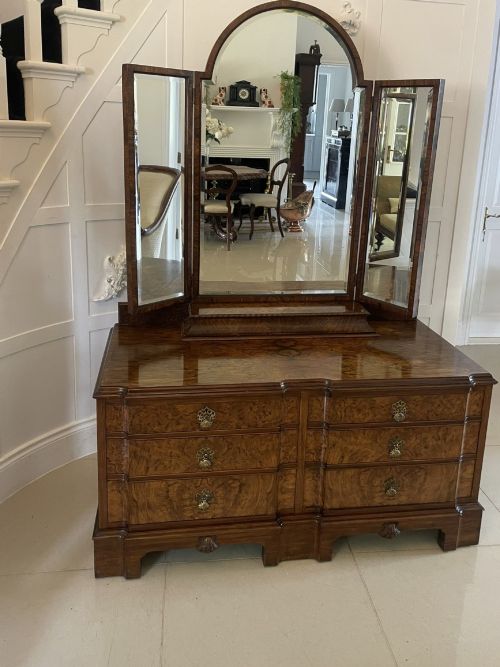
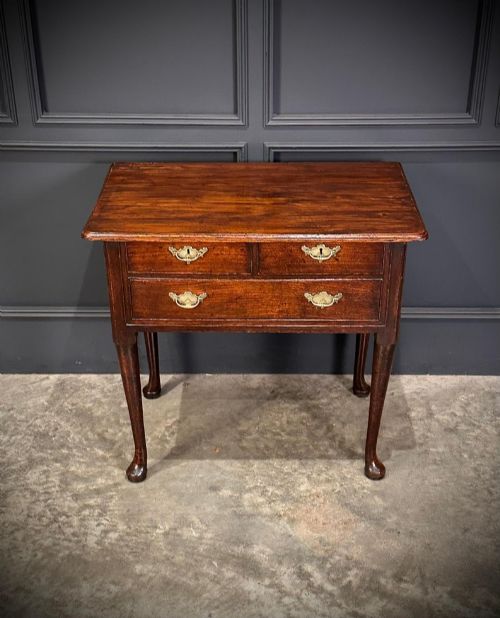
Lowboys and kneehole desks dominate the form, often doubling as dressing tables with fitted drawers and matching mirrors. You also meet side tables, writing desks, and occasional Chinoiserie lacquered pieces that share the characteristic cabriole leg and pad foot.
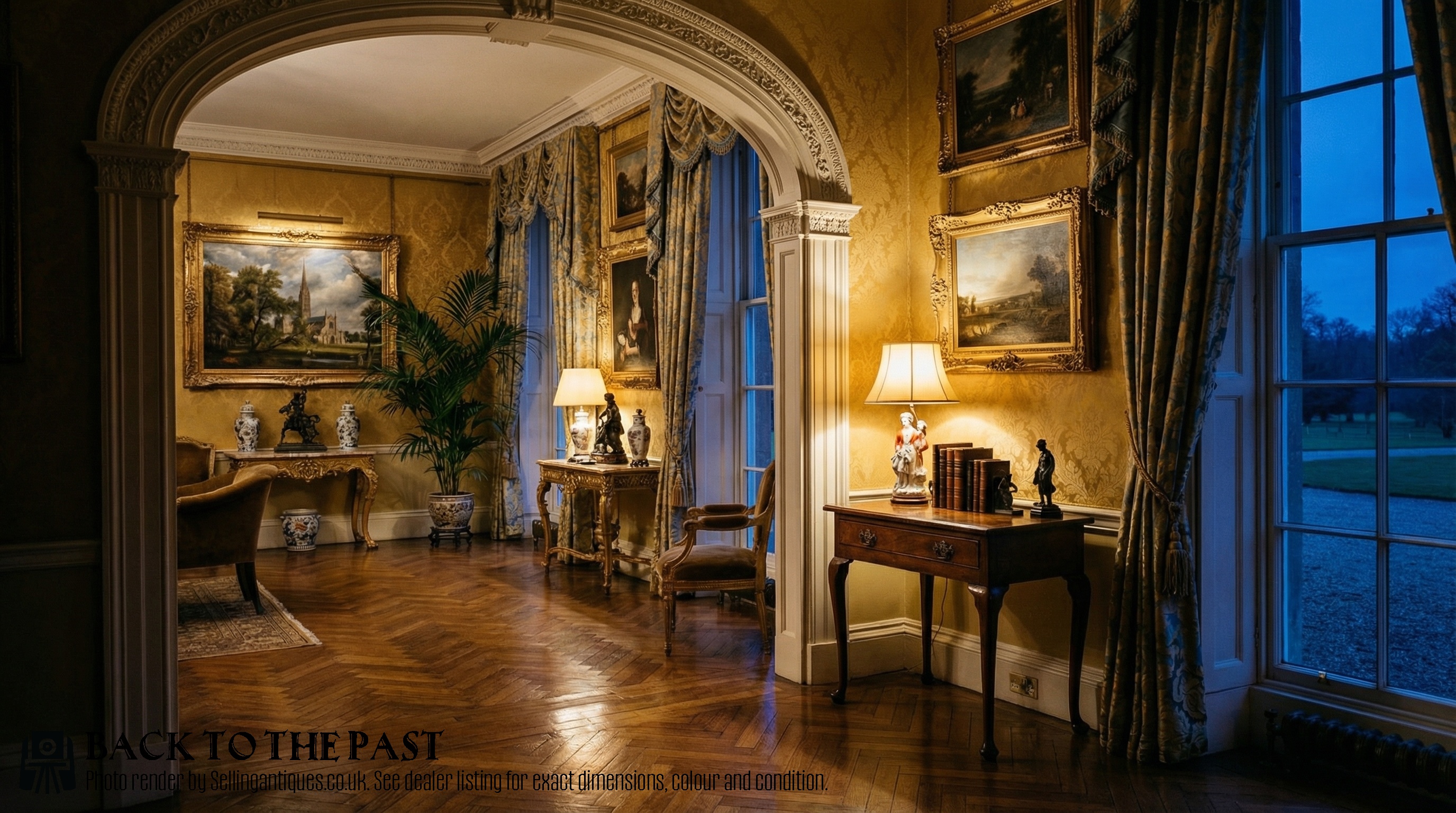
Materials and Construction
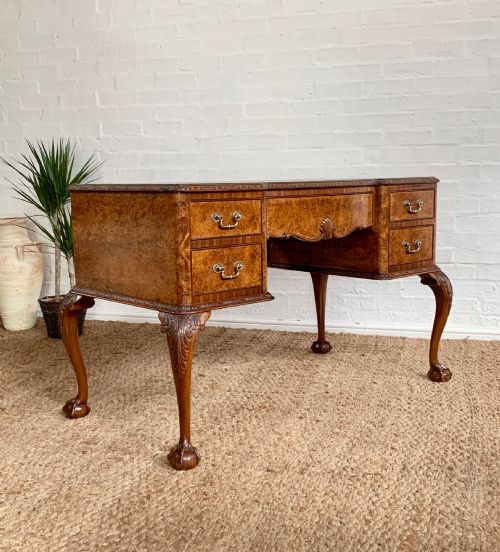
Cabinetmakers built these pieces primarily in walnut and burr walnut, often laid as veneers over firmer secondary timbers like oak and mahogany. Featherbanding and quarter-veneered tops add linear definition to the surfaces, while brass handles and green tooled leather inserts complete the writing sections.
Mirrors utilise original mirror glass housed within adjustable swing frames, and specific examples feature elaborate Chinoiserie lacquer work. Joinery relies on traditional dovetailed drawer construction and pegged frames designed to support everyday use.
Several desks include hidden compartments within the kneehole pedestal for concealing private letters and small valuables.
Judging the Standard
The standard of a piece rests on the choice of timber figure and the crispness of the carving on the knees and feet. Burr walnut and quarter-matched veneers demand high skill from the cutter, separating ordinary production from exceptional cabinet work.
Proportion and integrity dictate value in this field. Retaining original brass hardware, uncompromised leather inserts, and matching dressing mirrors elevates an example far above one altered or re-veneered in later decades.
Wylie & Lochhead Glasgow·Maples of London
The Queen Anne Vanity Desk Glossary
- Lowboy
- A small table with drawers, standing on relatively tall legs, commonly utilised as a dressing table or side table in eighteenth-century interiors.
- Kneehole desk
- A desk featuring a central recessed space for the legs, flanked by pedestals of small drawers.
- Cabriole leg
- A furniture leg that bends outward in a convex curve and tapers inward in a concave curve, ending in a pad or foot.
- Featherbanding
- Narrow strips of wood veneer laid in a herringbone pattern around the edge of a table or drawer front.
- Chinoiserie
- European decorative art reflecting Chinese artistic styles, typically executed in raised lacquer and gilt on wood.
Queen Anne Vanity Desk: Frequently Asked Questions
How do I use a lowboy today?
A lowboy functions effectively as a compact dressing table, a hallway console, or a writing desk in a smaller study.
Its shallow drawers hold stationery or cosmetics while the surface remains clear for a lamp or mirror.
Are these desks comfortable for writing?
Eighteenth-century kneehole desks and lowboys often sit lower than modern office desks, so chair clearance requires attention.
Revival pieces from the twentieth century tend to offer standard modern ergonomic heights for daily writing.
How do I distinguish eighteenth-century from revival?
Genuine eighteenth-century timber shows natural oxidation, hand-cut dovetails, and pegged joints that differ from later machine work.
Revival pieces from the Edwardian era or the nineteen-twenties utilise older styles but employ nineteenth or twentieth-century construction methods.
Do dressing mirrors come attached?
Most dressing mirrors from this tradition stand independently on the table surface rather than fixing directly to the rear.
This allows the table to convert easily between a vanity station and a standard writing desk.