
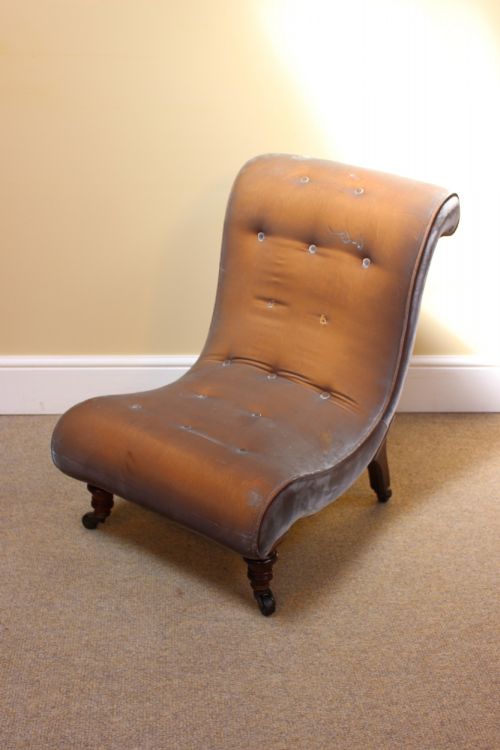


Vintage Walnut Low Chair
These vintage walnut low chair selections bring together timber frames and low seats spanning the nineteenth and twentieth centuries.
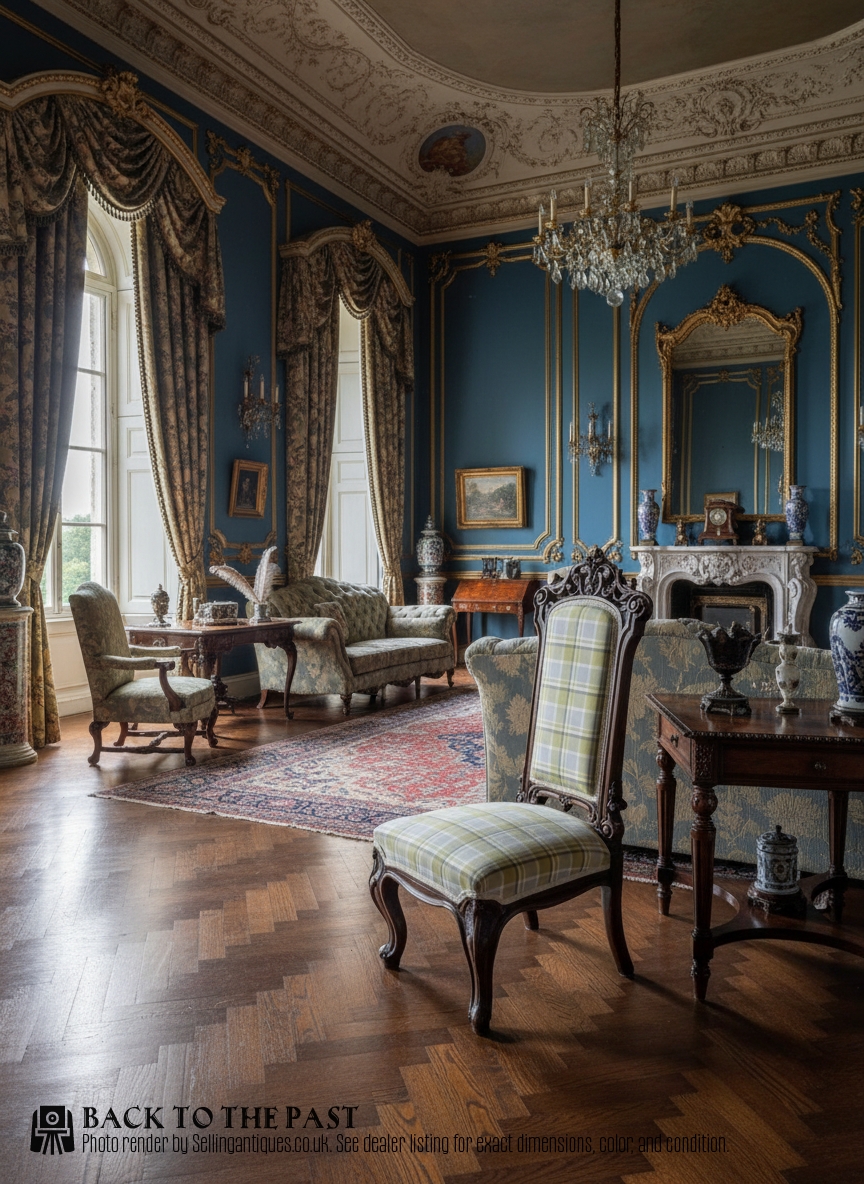
Vintage Walnut Low Chair
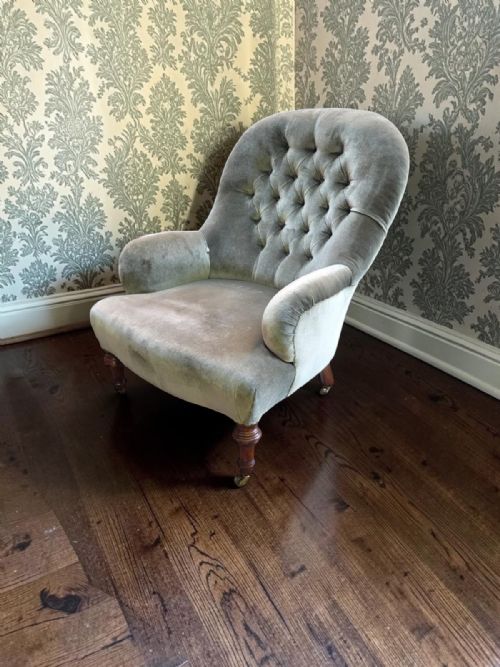
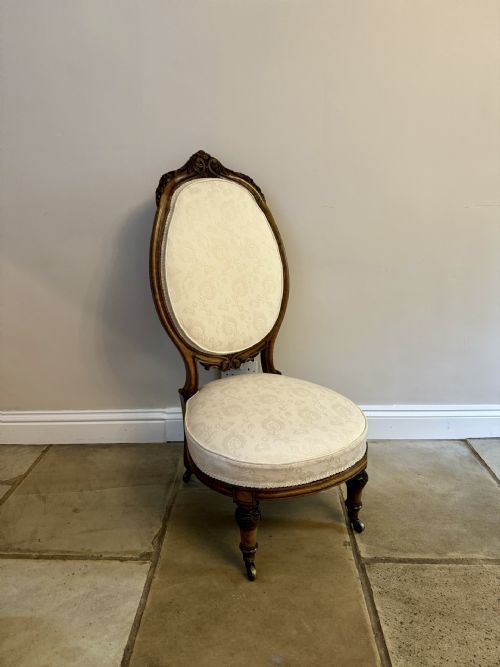
A vintage walnut low chair typically appears in forms such as nursing chairs, salon chairs, dressing table stools, and fireside seating. These compact pieces sit close to the floor, designed for domestic comfort in bedrooms, dressing rooms, and parlours during the Victorian and Edwardian eras.
The selection ranges from mid-nineteenth century carved showwood frames to early twentieth century Edwardian and Art Deco interpretations. Buyers encounter styles spanning Queen Anne revival, Aesthetic movement influences, and country house armchairs.
Object types include armchairs, slipper chairs, and low rocking chairs alongside paired stools and footstools. Walnut serves as the unifying framing material across these diverse nineteenth and twentieth century seating formats.
Materials and construction methods
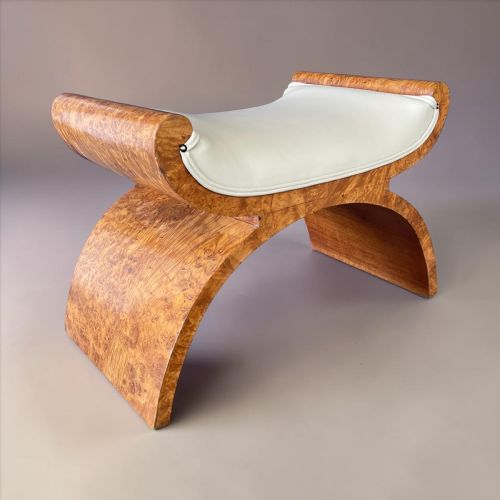
Makers utilised walnut as the primary structural timber, often selecting burr walnut veneers for decorative surfaces or carving solid sections into showwood frames. Timber components feature turned elements like barley twist supports alongside detailed hand-carved ornamentation.
Upholstery techniques involve traditional stuffing secured with fabric, textile, velvet, needlepoint, and rexine coverings. Brass castors, ceramic details, and button-backed padding frequently complement the wooden structures.
Listings feature walnut framing across nineteenth century Victorian, Edwardian, and Art Deco periods, incorporating brass, velvet, and ceramic details.
Distinctions in construction and design
Quality reveals itself in the depth and crispness of the timber carving on walnut showwood frames. Finer pieces demonstrate superior joinery stability and more articulate turning, such as barley twist detailing.
The refinement of the upholstery work and the selection of covering materials, from original needlepoint to velvet, distinguish high-grade examples. Proportions and the grace of the low profile also separate standard production from exceptional pieces.
Harry and Lou Epstein·Howard and Sons
The Vintage Walnut Low Chair Glossary
- Nursing chair
- A low-seated chair designed originally for feeding infants or personal grooming in bedrooms. These low proportions define much of the seating seen in this category.
- Showwood
- Exposed timber framing left visible around upholstered sections. This highlights the grain and colour of the walnut beneath.
- Barley twist
- A spiral turning technique applied to wooden legs or stretchers. Cabinet makers carved or turned timber into this helical form during the nineteenth century.
- Showroom
- A term relating to pieces displayed for retail, though here referring to domestic salon and reception furniture. Salon chairs formed part of formal entertaining spaces.
Vintage Walnut Low Chair: Frequently Asked Questions
What is a vintage walnut low chair used for?
These low seats served practical domestic purposes in nineteenth and twentieth century bedrooms, dressing rooms, and firesides. Their reduced height suited dressing hair, nursing infants, or relaxing near a low hearth.
Today, buyers place them in living rooms, hallways, and bedrooms as accent pieces or dressing table seating. Their compact footprints allow them to fit into spaces where standard armchairs prove too bulky.
How do I identify Victorian examples?
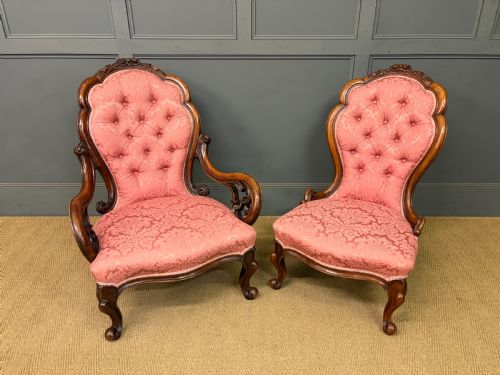
Victorian pieces often feature rich walnut frames with dark patination, heavy button-backed upholstery, and intricate hand-carved details. Common forms from this period include low nursing chairs and salon seating with serpentine fronts.
Mid-century examples may incorporate specific stylistic revivals, such as Queen Anne or Aesthetic movement details. Examining the timber framing and turning style helps distinguish these mid-nineteenth century pieces from later Edwardian work.
Are these chairs comfortable for daily use?
Most of these low chairs feature supportive sprung or stuffed seats designed for relaxation, though their lower stature differs from modern lounge seating. Their compact dimensions suit reading or resting rather than sprawling.
Some retain traditional padding and upholstery that offers firm support. Buyers often assess whether the seat height aligns with their personal comfort preferences for daily seating.
How do Edwardian pieces differ from Victorian ones?
Edwardian low chairs generally display lighter proportions and occasionally simpler woodwork than their heavy Victorian predecessors. Makers in this later period frequently drew inspiration from country house aesthetics or earlier furniture styles.
Upholstery fabrics and patterns also shifted between the decades, reflecting changing domestic tastes around nineteen hundred. Burr walnut finishes and button-backed padding remained popular across both periods.