
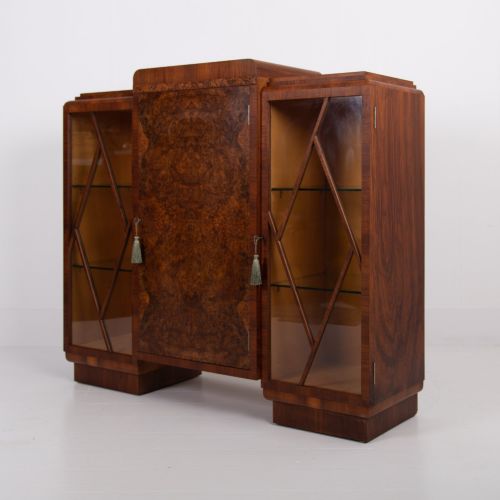


Vintage Walnut Display Case
A vintage walnut display case brings warmth and architectural interest to a room while holding collections safely behind glass.
Vintage Walnut Display Case
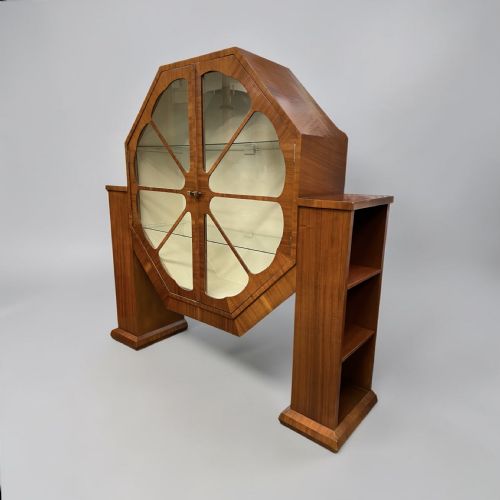
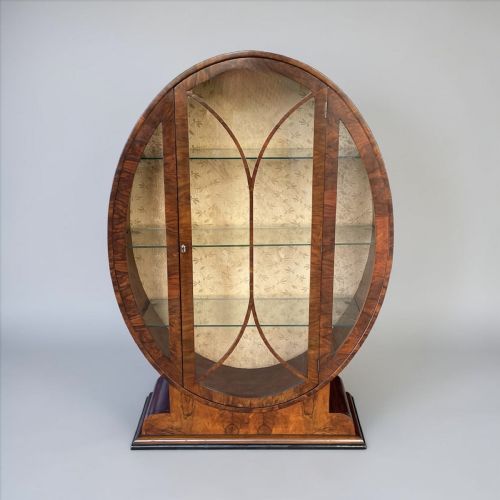
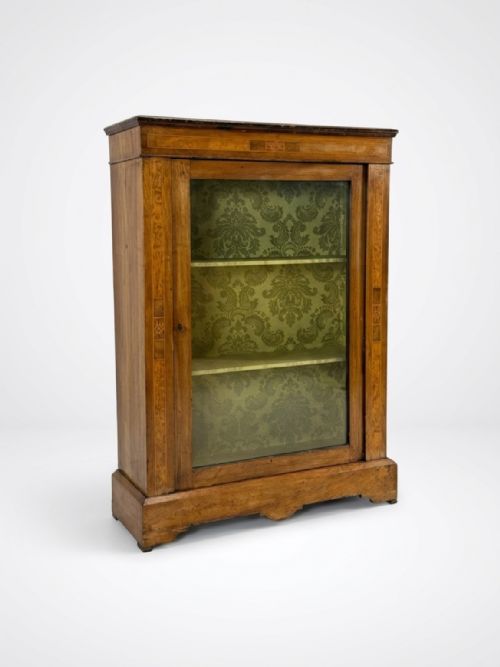
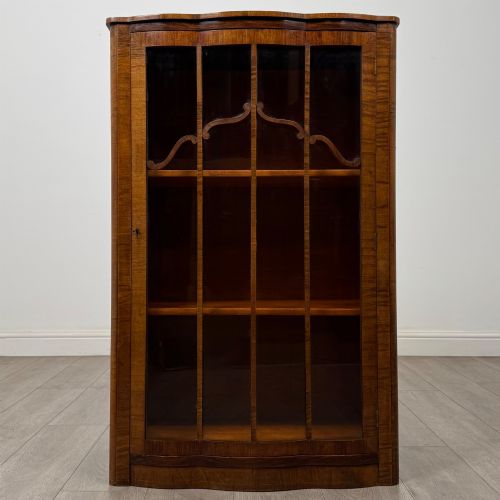
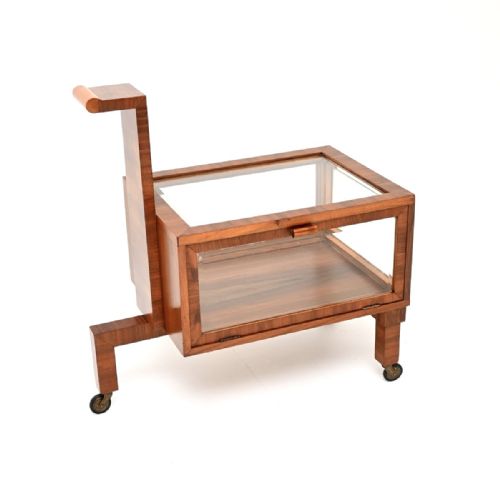
A vintage walnut display case encompasses glazed cabinets, corner cupboards, and slender pier cabinets designed to showcase ceramics, books, or curiosities. Buyers examining this page encounter significant numbers of 1930s Art Deco pieces alongside earlier Victorian and Edwardian examples.
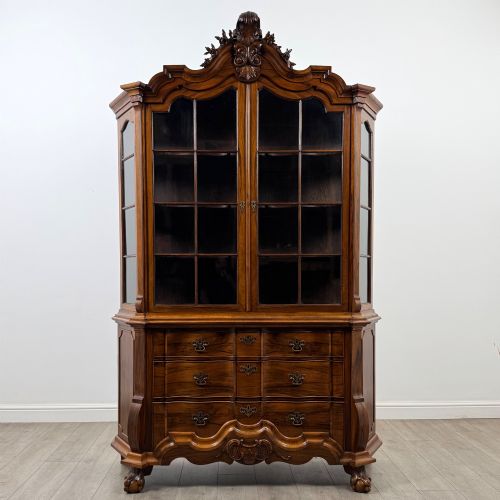
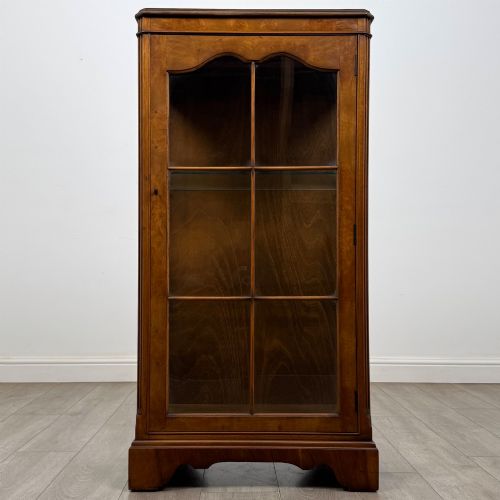
The architectural forms range from tall upright bookcases and bureau cabinets to circular, oval, and clove-shaped vitrines. Many items demonstrate revivalist influences, including Queen Anne style and Dutch Baroque or Rococo interpretations.
Origins span English workshops, French ateliers, and Dutch cabinet makers, utilising the rich figuring of the timber to create striking focal points in domestic interiors.
Distinctions in construction and design
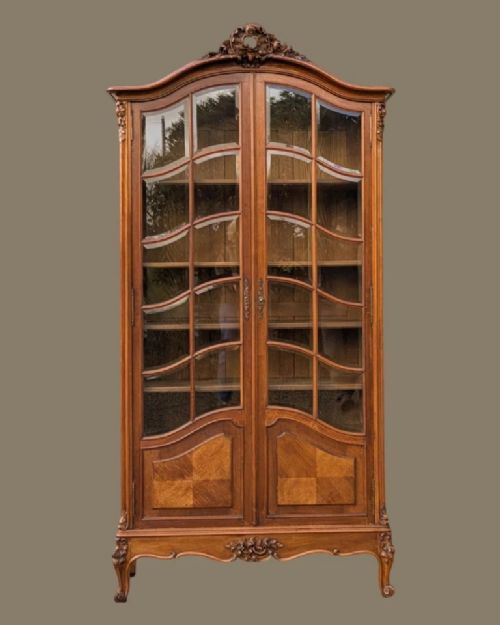
Quality rests upon the choice of timber veneer, where book-matched burr walnut creates harmonious geometric patterns across doors and panels. The fluidity of the silhouette, whether a geometric Art Deco curve or the restrained lines of a Victorian pier cabinet, dictates the visual impact.
Refined glazing bars, stable door alignment, and the crisp execution of marquetry inlay separate standard utility pieces from masterworks. The depth of the natural patina and the preservation of original fabric or brass hardware further define the hierarchy of these items.
One unexpected Victorian cabinet bears hand-painted advertising for Fry's chocolate, suggesting it once served commercial life before entering the home.
Epstein
The Vintage Walnut Display Case Glossary
- Burr walnut
- A prized timber harvested from the irregular growth knots of the walnut tree, displaying swirling, highly decorative grain patterns. Cabinet makers prized this veneer for principal surface areas.
- Pier cabinet
- A low, glazed cabinet traditionally designed to fit the narrow stretch of wall between two windows. Victorian examples often feature gilt bronze mounts and inlaid decoration.
- Vitrine
- A glass-sided display cabinet designed primarily for the exhibition of porcelain, silver, or curiosities. These pieces often feature all-glass doors or curved side panels.
- Marquetry
- The art of applying decorative veneer pieces in various woods to form geometric or pictorial designs. Skilled artisans cut these elements to fit flush across cabinet doors.
- Bombe
- A swelling, outward-curved shape characteristic of continental furniture styles, requiring advanced woodworking skill to veneer accurately. This contour creates a dramatic play of light across the walnut grain.
Vintage Walnut Display Case: Frequently Asked Questions
How do I clean a walnut display case?
Dust the exterior regularly with a soft, dry cloth and nourish the timber periodically with an appropriate wax. Avoid using silicone-based polishes that can build up and degrade the original finish over time.
Keep glass panels clean using standard glass cleaner applied to a cloth rather than sprayed directly, preventing moisture from seeping into the surrounding wooden frame.
Can I adjust the shelves inside?
Many period examples incorporate adjustable wooden or glass shelving systems supported by wooden ratchets or metal pins. This allows you to reconfigure the internal space to accommodate taller objects or book collections.
Older cabinets often feature fixed wooden shelving, so check the specific internal configuration if you plan to display items of varying heights.
Are these cabinets secure for valuable items?
Most pieces feature operational locks with original keys, offering standard security for domestic display purposes. The glazed doors enclose the contents completely to keep out dust and wandering hands.
For high-value collections, ensure the cabinet sits level on the floor to maintain door alignment and latch security.
How do I tell Art Deco from Victorian walnut?
Art Deco pieces dating from the 1930s favour streamlined curves, waterfall edges, and symmetrical burr walnut veneers without excessive ornamentation. They often take circular, octagonal, or architectural slab forms.
Victorian and Edwardian cabinets lean towards traditional revival styles, featuring carved mouldings, glazed panel doors with wooden tracery, and darker, heavier proportions.