


Vintage Walnut Bench
A vintage walnut bench brings warmth and solid timber grain to a room, offering practical seating shaped across decades of changing design.
Vintage Walnut Bench
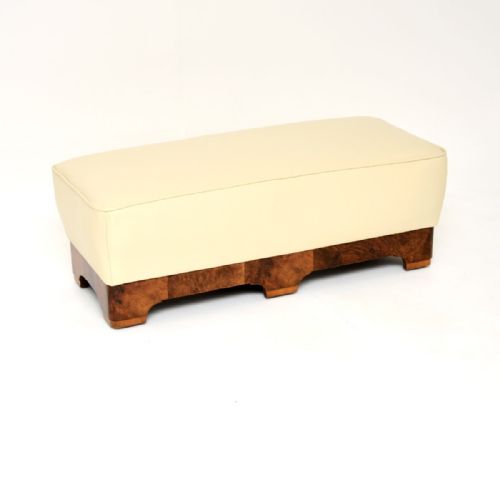
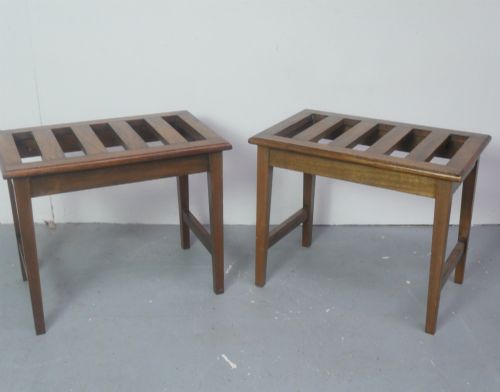
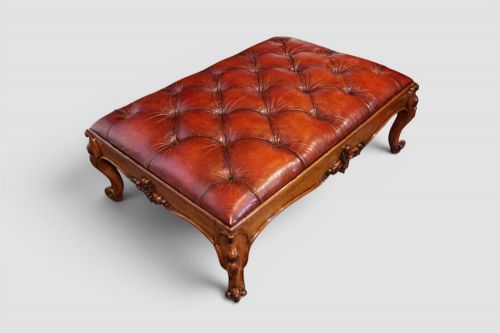
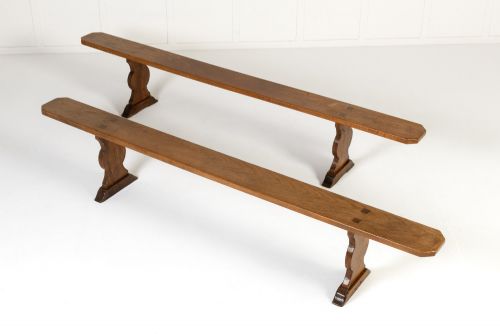
A vintage walnut bench encompasses a broad family of low seating options, including long hall seats, window seats, and upholstered stools designed for domestic spaces. These pieces span the nineteenth century through the art deco period, drawing on earlier traditions such as the Queen Anne style.
The selection on this page relies heavily on compact stools and longer settee forms rather than standard dining benches. Walnut provides the unifying structural timber across these diverse eras, often paired with textile or leather upholstery.
Assessing craftsmanship and condition
The degree of hand-carving and the choice of timber figure heavily influence the presence of a piece. Plain walnut boards contrast with highly figured burr walnut, while crispness in carved foliage or cabriole joints marks superior cabinet work.
Interventions such as reupholstery and frame restoration alter the state of surviving examples. Older frames retain a patinated surface on the timber, whereas restored pieces show cleaner lines and fresh upholstery materials.
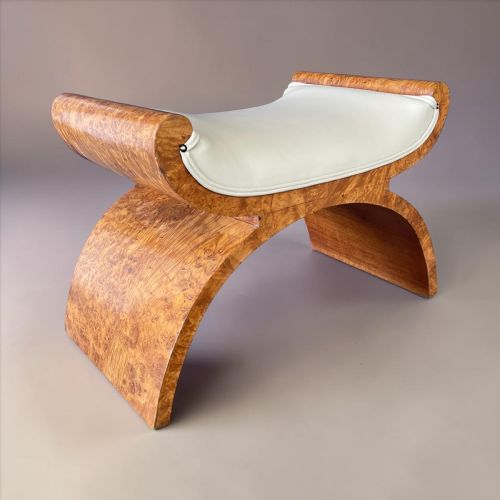
The listings on this page span several decades, featuring Victorian, Edwardian, and Art Deco interpretations of walnut seating.
Harry and Lou Epstein·Howard and Sons
The Vintage Walnut Bench Glossary
- Burr walnut
- A veneer sliced from the deformed growths or burls of walnut trees, prized for its swirling, knotted grain patterns. Furniture makers applied it to prominent surfaces like stool tops to create decorative effects.
- Cabriole leg
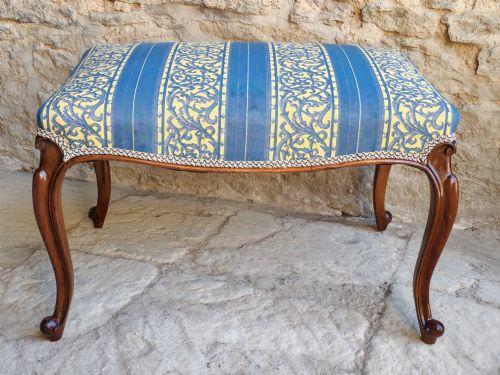
- A furniture leg that curves outward at the knee and tapers inward toward the foot, inspired by animal limbs. This form appears frequently on Queen Anne style and Victorian walnut frames.
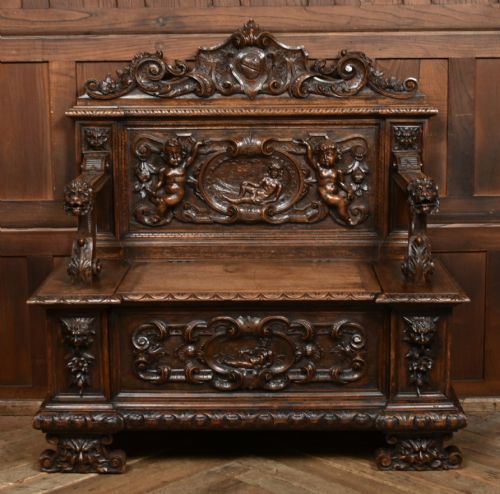
- Cassapanca
- An Italian wooden bench featuring a high back and arms, often incorporating a storage chest beneath the seat. Examples in walnut display carved wooden panels.
- Caning
- A woven lattice made from rattan or split cane used for seat panels and backs. It lightens the visual weight of walnut daybeds and settees.
- Settee
- A small upholstered sofa designed for two or more occupants, sharing stylistic traits with larger living room seating. These wooden frames often feature open arms and padded seats.
Vintage Walnut Bench: Frequently Asked Questions
Where should I place a walnut bench?
Shorter stools fit well at the foot of a bed or beside a dressing table, while longer settees serve as seating in hallways or living rooms. Their compact proportions allow them to occupy awkward alcoves or narrow corridors.
Matching the period style of the bench to surrounding furniture helps integrate the piece into an existing room layout without visual friction.
How do I care for vintage walnut wood?
Regular dusting with a soft, dry cloth preserves the finish of the timber. Avoid placing walnut furniture in direct sunlight or near heat sources to prevent the wood from drying out.
Applying a traditional beeswax polish periodically nourishes the grain and maintains the natural lustre of the surface without building up synthetic residues.
What is the difference between a stool and a settee?
Stools provide seat pads without backs or arms, designed primarily for short-term perching or supporting feet. Settees incorporate backs and sometimes arms, offering structured support for longer periods of sitting.
Both forms utilise walnut frames, but settees require more complex joinery to support the upper back structure.
How do I identify a Queen Anne style bench?
Queen Anne style walnut pieces typically feature curved lines, pad feet, and smooth uncarved surfaces that highlight the grain of the timber. Proportions remain relatively restrained compared to heavier Victorian designs.
Later revivals from the Edwardian period and the early twentieth century often replicate these characteristic eighteenth-century silhouettes.