




Cream Leather Seat
A cream leather seat brings warmth and tactile comfort to a room, ranging from plush Art Deco armchairs to sturdy Victorian dining chairs.
Cream Leather Seat
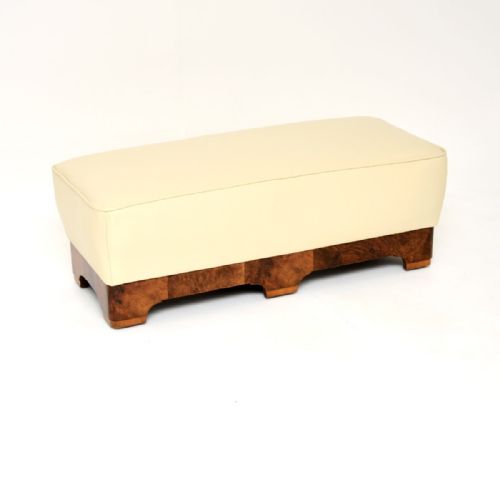
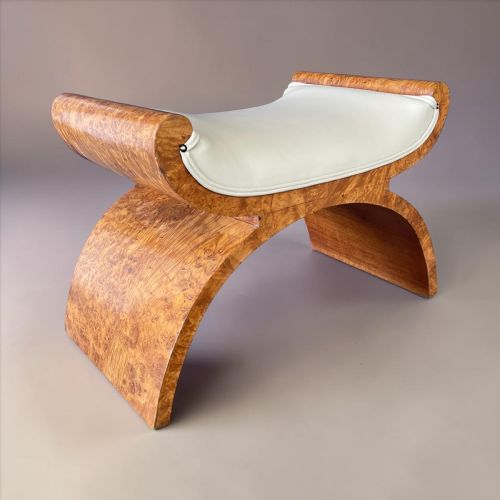
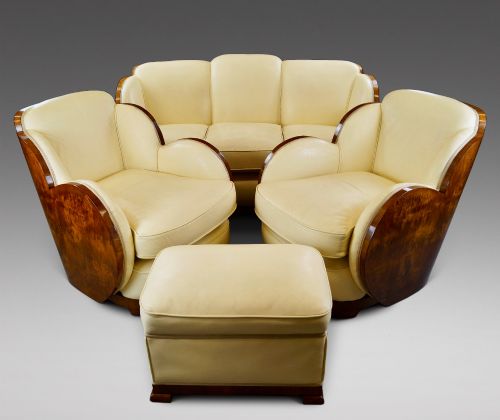
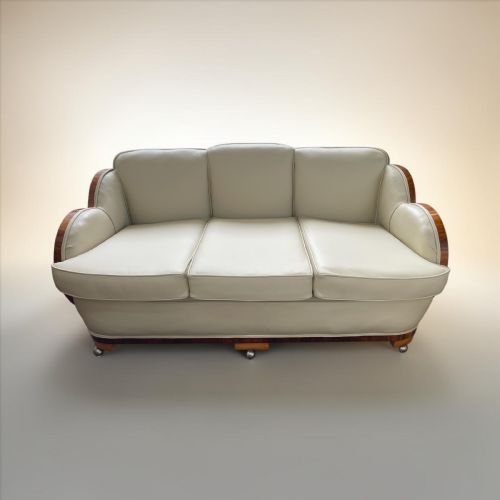
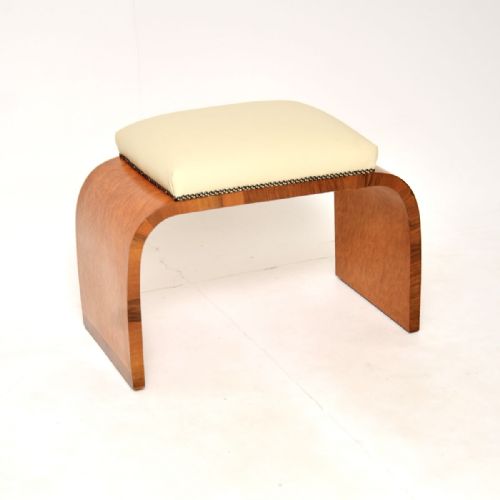
A cream leather seat encompasses diverse forms designed for comfort and utility, spanning compact dressing table stools and expansive lounge suites. Buyers seeking this combination most frequently encounter Art Deco seating from the early twentieth century, particularly pieces featuring upholstered pads paired with rich timber frames.
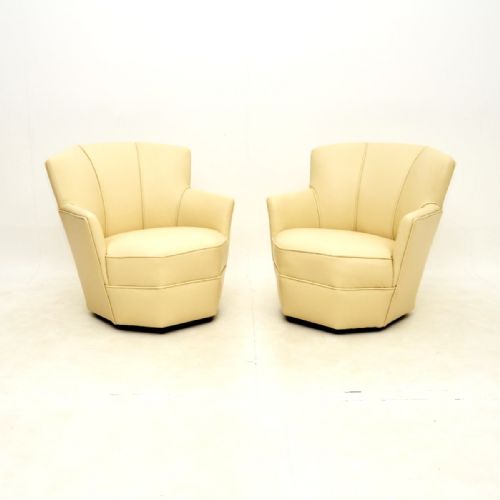
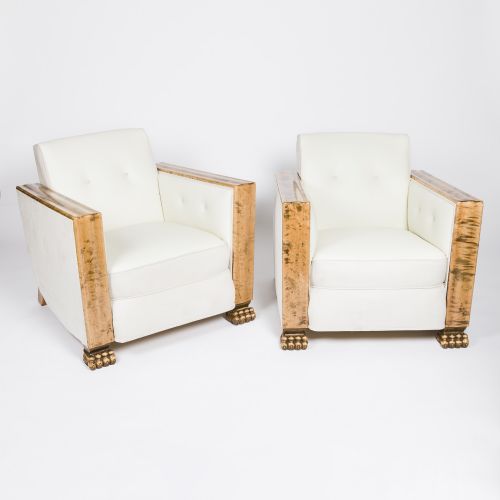
The selection ranges widely across historical periods, including nineteenth-century mahogany dining chairs, Edwardian club chairs on turned feet, and twentieth-century cloud suites. While armchairs and sofas dominate the larger lounge pieces, smaller stools and side chairs appear regularly alongside them.
Origins vary from English workshops and country houses to continental studios, bringing distinct regional characteristics to the woodwork and upholstery. Each piece reflects the domestic habits of its era, whether intended for formal dining, dressing rooms, or relaxed sitting spaces.
Materials and construction
Makers built these frames from hardwoods such as mahogany, walnut, burr walnut, birch, and timber, often selecting figured veneers to create striking visual patterns on visible surfaces. Upholsterers then applied leather over supportive padding, securing the hides with traditional stitching and sometimes brass detailing.
Structural integrity relied on classic joinery techniques suited to the period, supporting heavier seating like lounge suites and sofas as well as lighter occasional chairs. Wrought iron also appears in specific continental designs, offering an alternative structural frame.
Musicians once performed from specialised maple stools designed to keep them comfortable through long evening recitals.
Assessing quality and craftsmanship
Quality reveals itself in the choice of cabinet timbers and the skill of the veneer work, particularly on Art Deco burr walnut and birds-eye maple frames. Superior pieces display harmonious grain matching and precise joinery that remains stable across the entire structure.
The finish of the leather upholstery and the proportion of the frame dictate the overall refinement of the piece. Well-balanced seating proportions and carefully shaped woodwork separate master-workshop output from standard commercial production.
Hille·Harry and Lou Epstein
The Cream Leather Seat Glossary
- Art Deco
- A design style characterised by sleek geometric forms, streamlined curves, and luxurious materials that dominated the nineteen-twenties and thirties. It heavily influences the twentieth-century seating found within these listings.
- Cloud suite
- A matching set of lounge seating featuring rounded, voluminous upholstered backs reminiscent of cloud formations. These suites typically comprise a sofa and armchairs.
- Burr walnut
- A prized timber harvested from walnut tree growths, valued for its swirling, intricate grain patterns. Cabinetmakers used it extensively for decorative veneer panels.
- Wingback armchair
- A tall seating form featuring protective side panels designed to shield the sitter from draughts. Versions appear across multiple historical periods.
- Dressing table stool
- A low, compact seat intended for use at a vanity or dressing table. They frequently feature padded leather tops supported by timber frames.
Cream Leather Seat: Frequently Asked Questions
What periods do cream leather seats come from?
These seats span the nineteenth century through to the nineteen-thirties, encompassing Victorian, Edwardian, and Art Deco eras. The majority originate from the interwar period.
Earlier examples from the eighteen-sixties and eighteen-eighties bring traditional mahogany frames, whilst nineteen-thirty pieces showcase modern veneers and rounded silhouettes.
Where were these chairs used originally?
Depending on their form, these seats served various rooms including drawing rooms, bedrooms, and dining spaces. Stools suited dressing tables and pianos.
Larger lounge suites and club chairs occupied domestic sitting rooms and country house libraries for daily relaxation.
Are these seats suitable for daily use?
Most pieces are built from sturdy hardwoods like mahogany and walnut, making them durable for everyday living. Robust frames support regular sitting.
Maintenance involves caring for the timber structure and leather upholstery according to their specific material needs to preserve their condition.