
Vintage Vanity Unit
A vintage vanity unit brings period character to a modern room, offering dedicated surfaces and storage built from solid timbers.
Vintage Vanity Unit
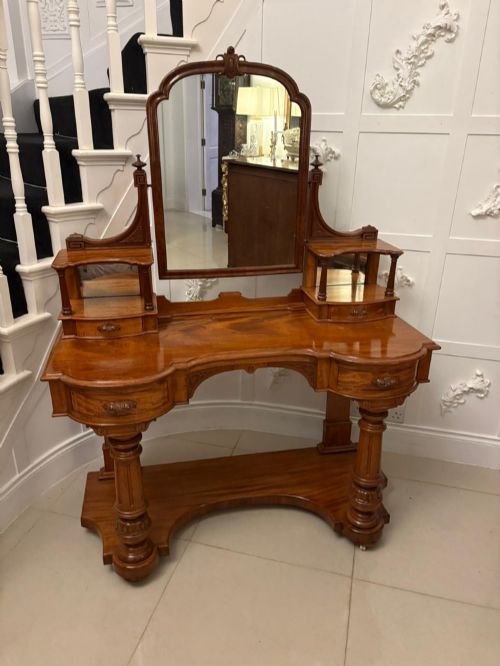
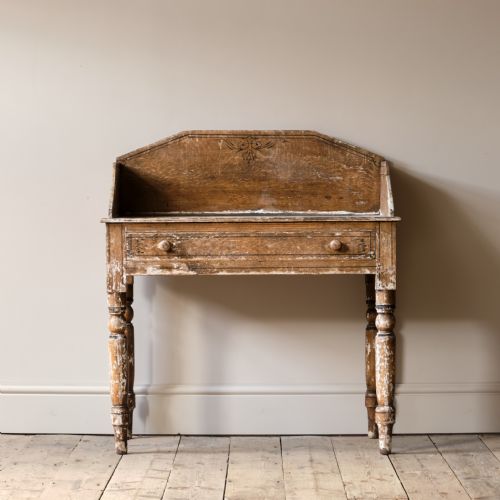
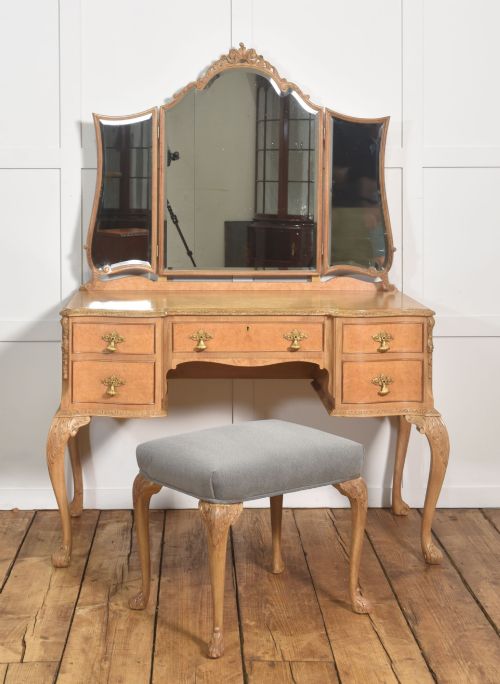
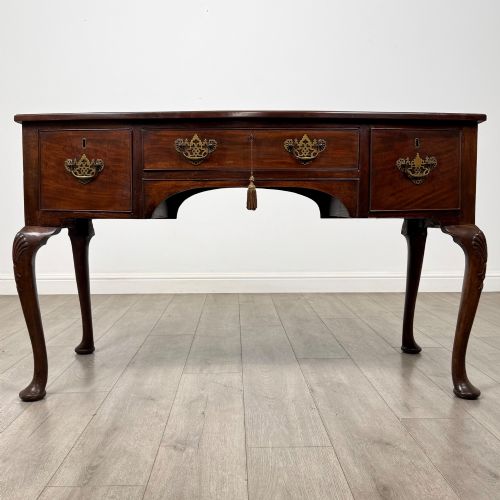
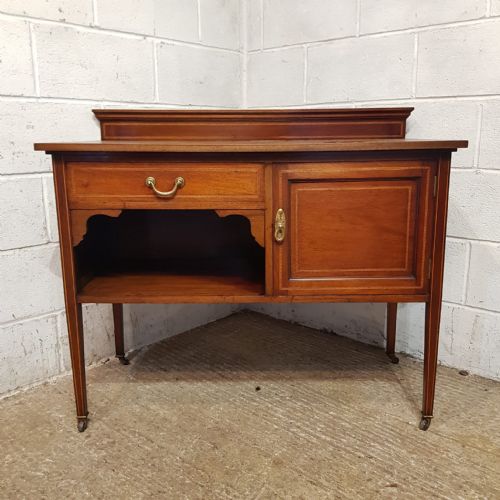
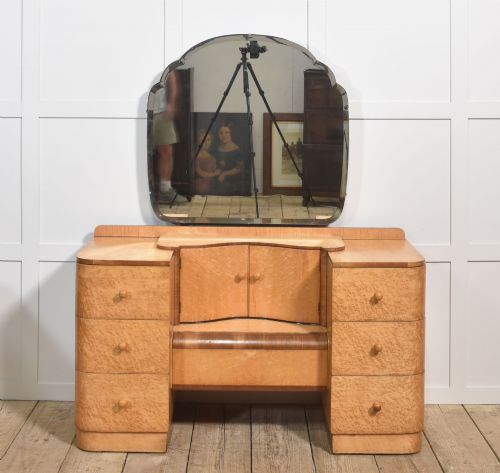
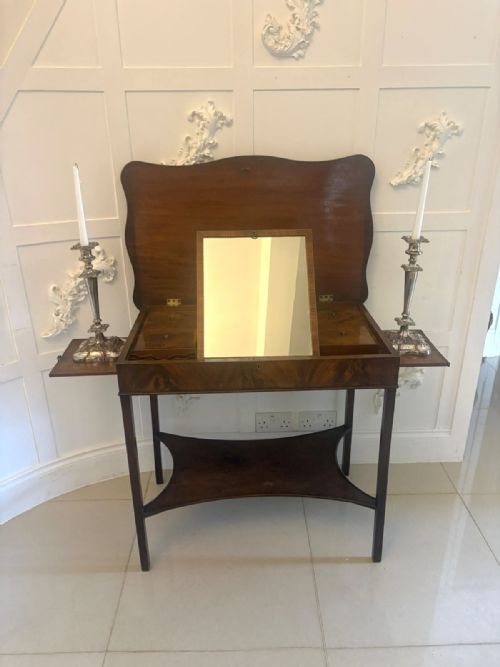
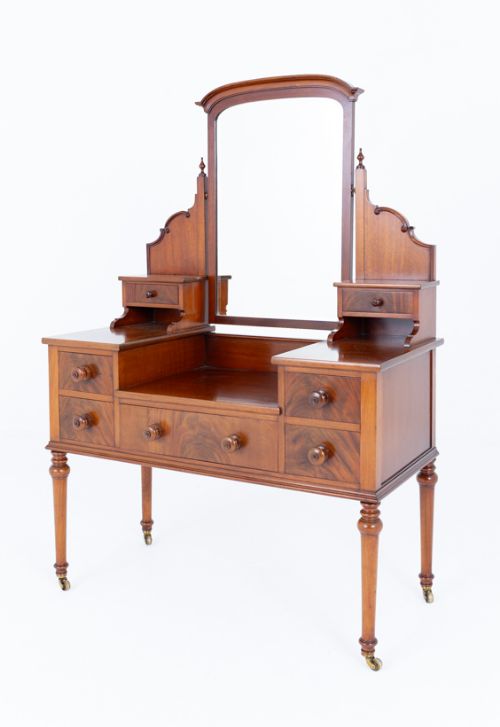
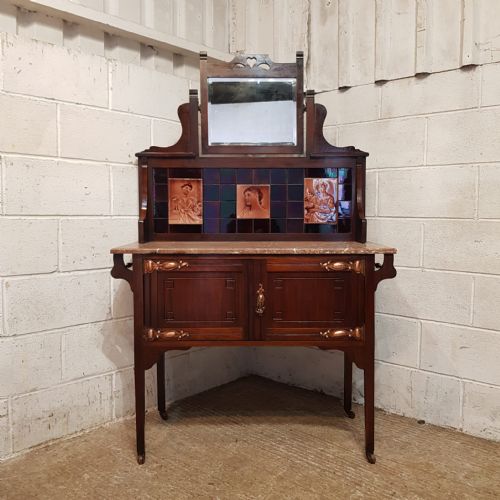
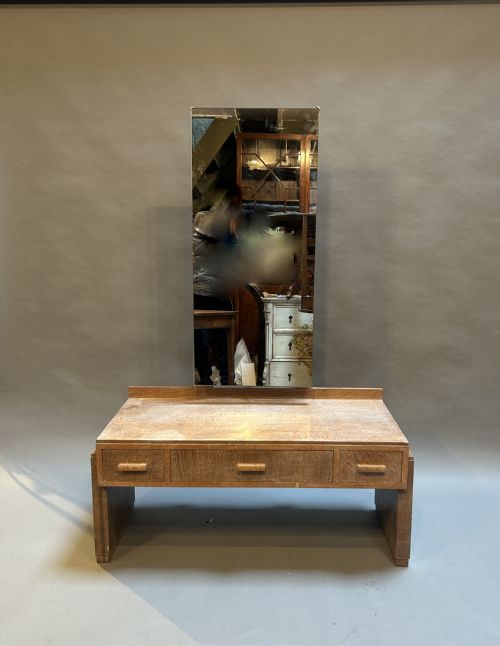
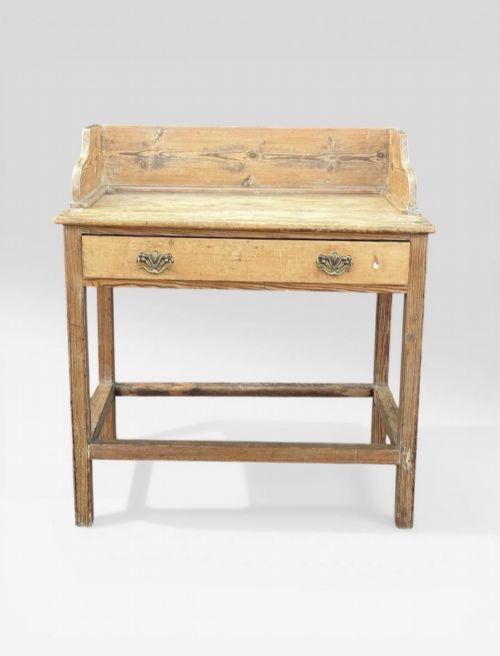
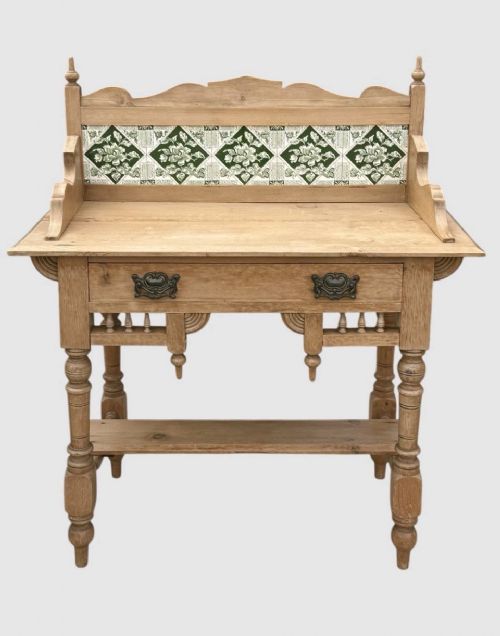
When buyers search for a vintage vanity unit, they encounter a diverse group of historical forms primarily consisting of dressing tables, washstands, and dressing chests. These pieces span the Victorian, Edwardian, and Art Deco eras, capturing shifts in domestic routines from the nineteenth century into the twentieth.
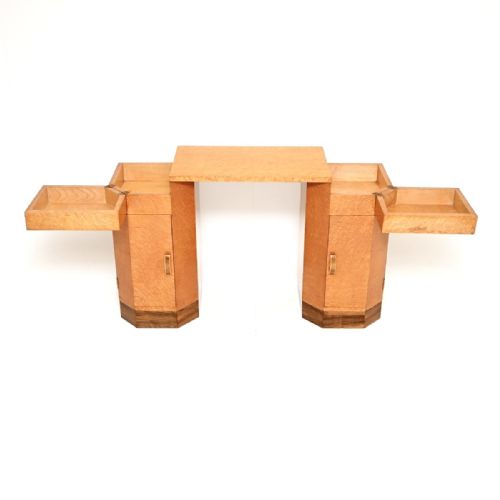
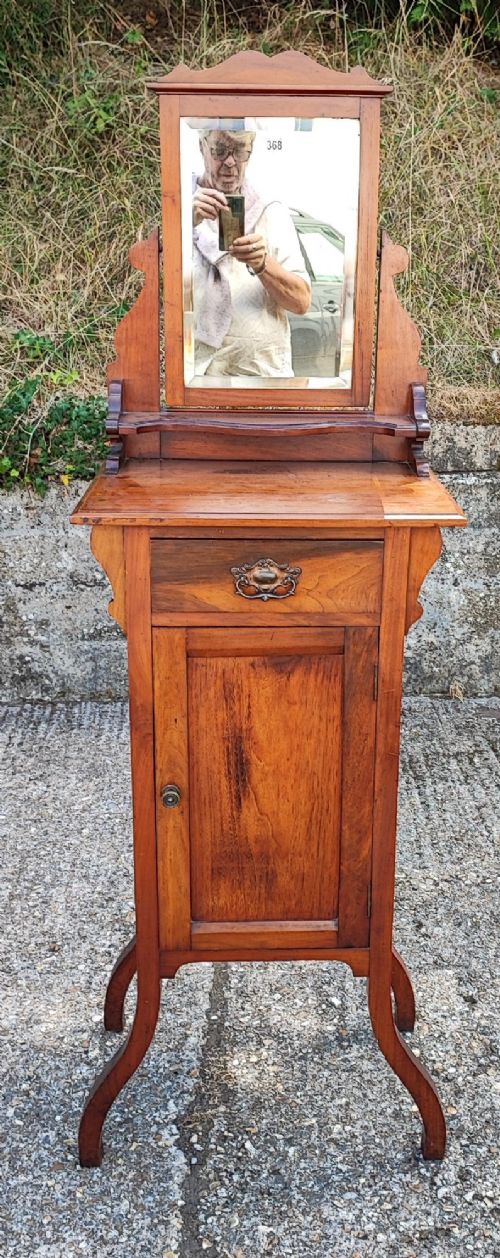
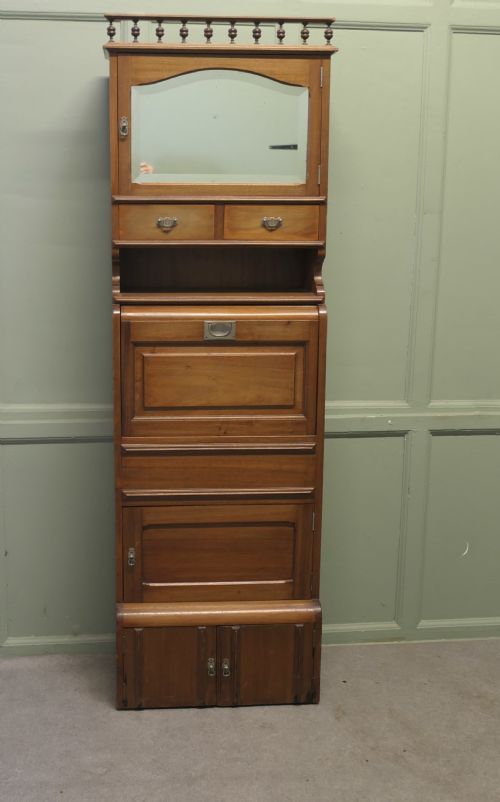
The versions most commonly met on this page include mahogany and pine washstands alongside maple and oak dressing tables from the 1920s and 1930s. Pieces range from simple rustic pine basin stands to elaborate walnut dressing units equipped with triple mirrors.
Origins vary from English workshops and London retailers to French marine cabinets intended for yachts, demonstrating how utilitarian wash facilities and bedroom furniture evolved side by side.
How they were made
Cabinet makers utilised dense hardwoods such as mahogany, walnut, and oak, often pairing them with contrasting satinwood or maple veneers. Structural carcasses frequently incorporate secondary timbers like pine, built with traditional joinery suited to daily use.
Surface treatments and fittings define the construction, featuring marble tops designed to withstand water on washstands alongside bevelled glass mirrors and brass hardware. Inlaid marquetry, limed finishes, and carved mahogany details display the specific craftsmanship of periods from the mid-nineteenth century through the Art Deco movement.
Listings feature pieces spanning the Victorian, Edwardian, and Art Deco periods, constructed in mahogany, oak, walnut, pine, and marble.
What varies in quality
Quality rests in the selection of timbers and the precision of cabinet construction, where figured veneers and solid mahogany frames outlast simpler pine builds. The integration of original mirrors, marble slabs, and brass handles elevates a piece from standard utility furniture to high craftsmanship.
Distinction also lies in attribution and design ambition, separating standard regional workshop output from marked examples by notable makers and London retailers. The crispness of marquetry inlay, the retention of matching stools, and the structural integrity of washstand basins and pedestals dictate the standing of each item.
Harrods·Heals·Shapland and Petter·Maurice Adams·Harry and Lou Epstein·Edwards and Roberts
The Vintage Vanity Unit Glossary
- Washstand
- A piece of furniture designed to hold a basin and jug for washing, frequently topped with marble. These items form a direct ancestor to modern bathroom sink units.
- Dressing Chest
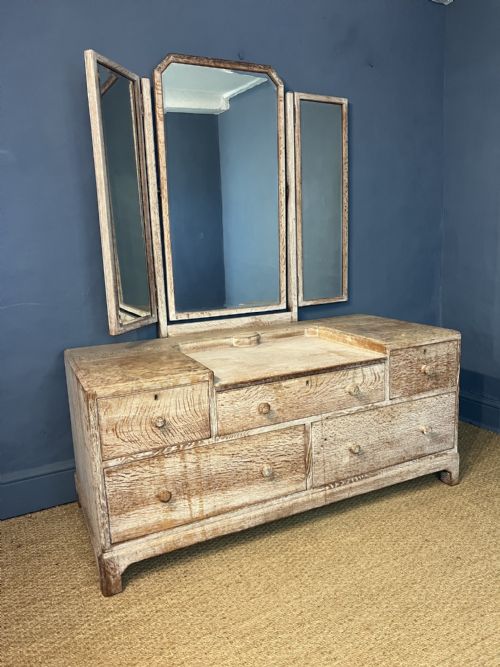
- A lower chest of drawers fitted with an attached mirror for grooming. They provide substantial bedroom storage alongside a surface for daily use.
- Marquetry
- Decorative patterns formed by fitting thin pieces of wood veneer into a wooden background. This technique creates complex pictorial or geometric designs on tabletops and drawer fronts.
- Limed Oak
- Oak treated with a pickling finish that leaves a whitish pigment in the grain. This technique gained prominence during the Arts and Crafts and Art Deco periods.
- Pedestal Dressing Table
- A dressing table featuring banks of small drawers supporting the main desk surface on either side. They offer an imposing presence and generous storage capacity.
Vintage Vanity Unit: Frequently Asked Questions
What is a vintage vanity unit?
A vintage vanity unit encompasses historical dressing tables, washstands, and dressing chests produced during the Victorian, Edwardian, and Art Deco eras.
These pieces combine functional basins or mirrors with period cabinetry, utilising materials like mahogany, oak, and marble.
How do I tell an Edwardian vanity from a Victorian one?
Victorian pieces often feature heavy carved mahogany, dark finishes, and robust proportions associated with mid-to-late nineteenth-century design.
Edwardian examples tend to display lighter satinwood inlays, cleaner lines, and pine or mahogany structures reflecting turn-of-the-century aesthetics.
Can I use an antique washstand as a modern sink basin?
Antique washstands provide solid timber structures and marble tops that frequently accommodate modern basin and plumbing installations.
Buyers often adapt these pieces for contemporary bathrooms while retaining their historical character and surface integrity.
What wood types appear in Art Deco dressing tables?
Art Deco pieces commonly showcase exotic and figured timbers such as birdseye maple, burr walnut, and limed oak.
These materials are paired with geometric lines, contrasting veneers, and matching mirrors to define the style of the 1920s and 1930s.