
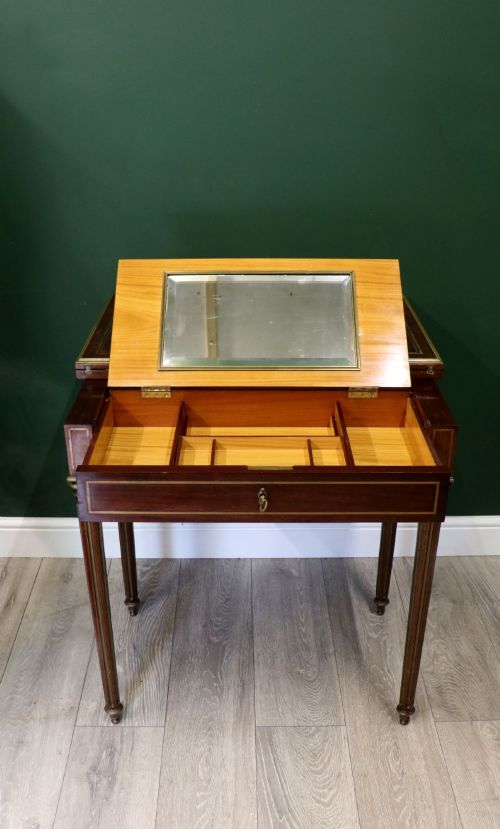
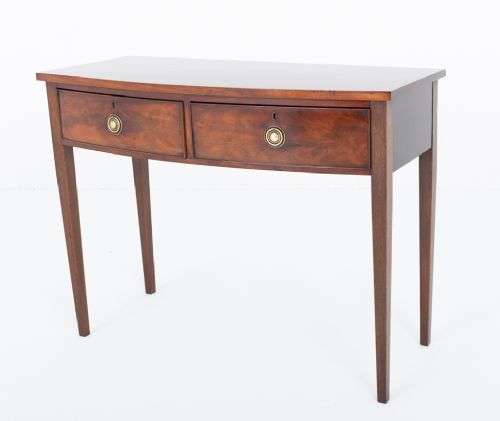
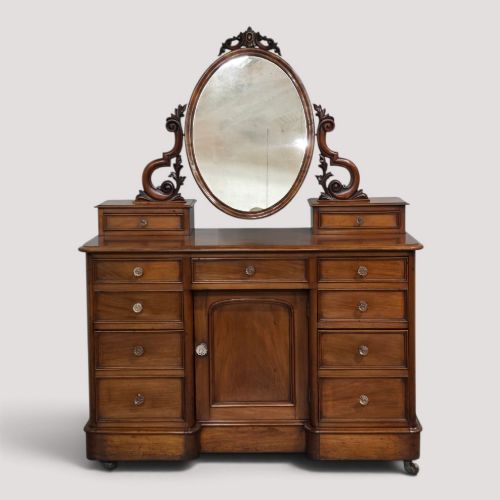
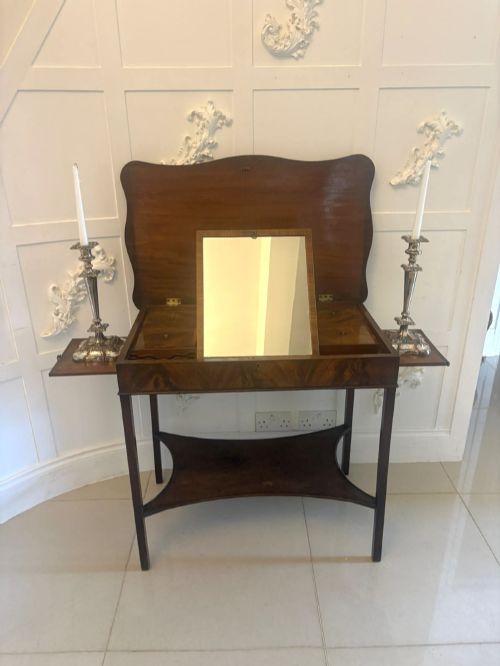
Vintage Vanity Table Desk
These vintage vanity table desk pieces combine surface and mirror for grooming and writing, offering dual utility in walnut, mahogany, and oak.
Vintage Vanity Table Desk
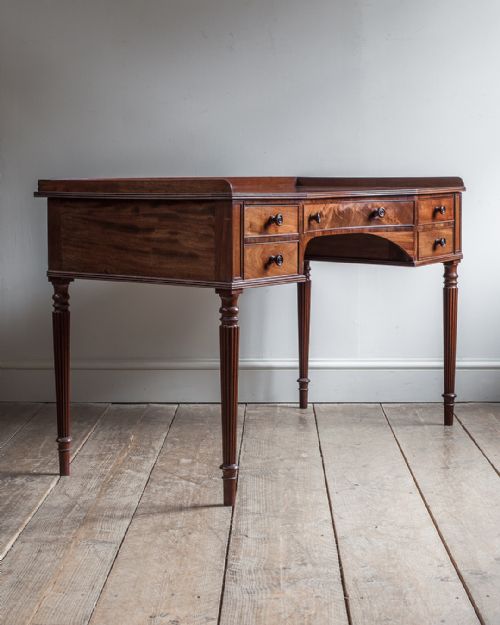
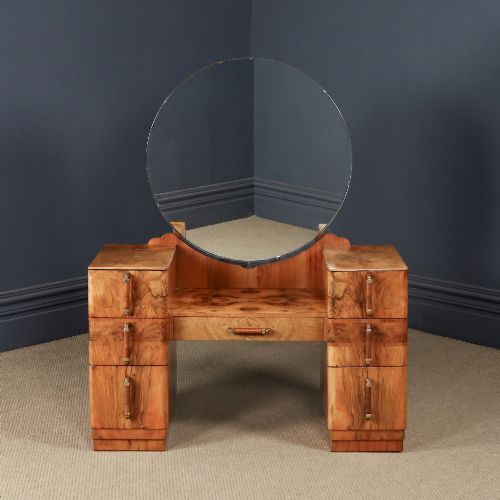
A vintage vanity table desk serves the dual purpose of a writing surface and a dressing station, bridging the gap between a study and a bedroom. When searching this phrase, buyers encounter forms ranging from 18th-century lowboys to 1930s Art Deco pedestal pieces equipped with mirrors.
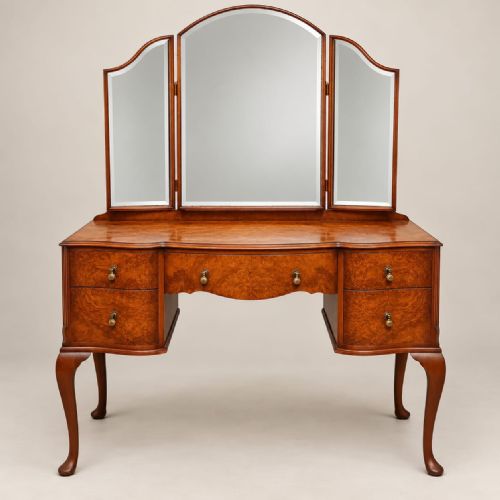
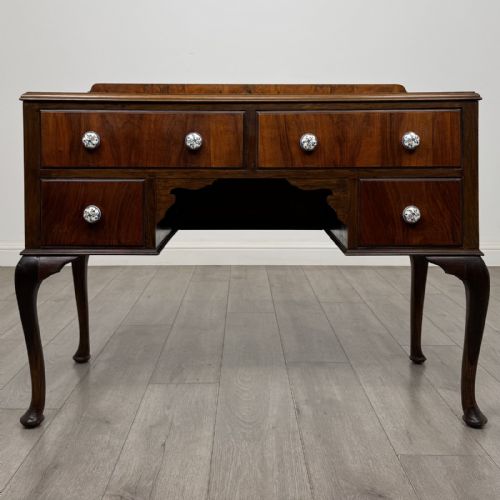
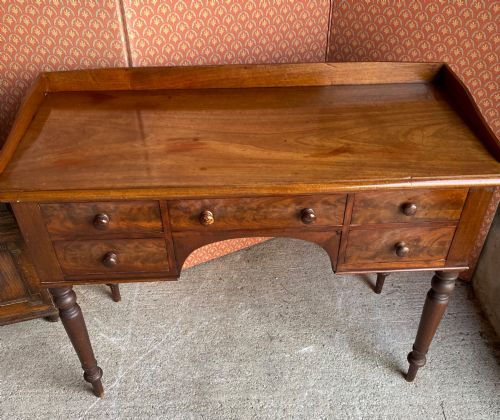
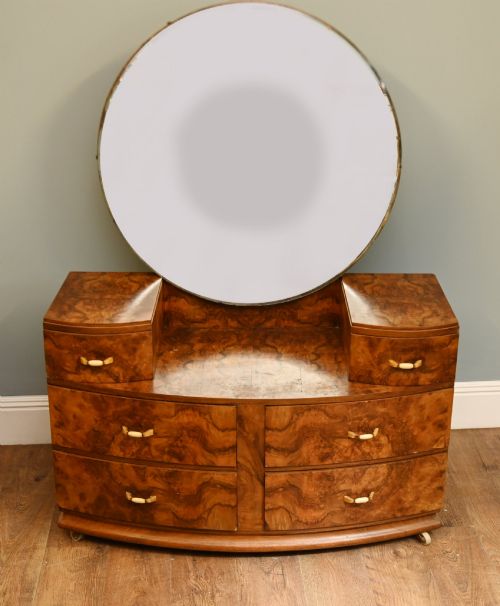
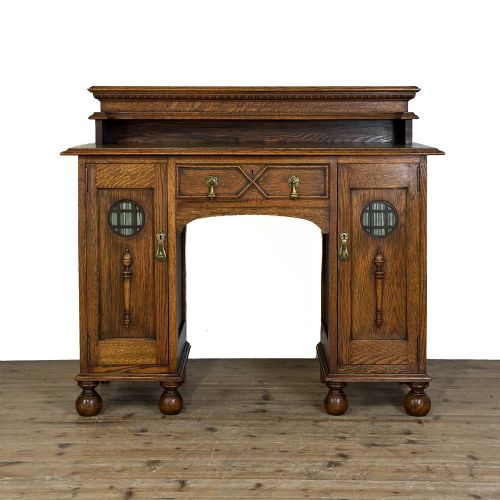
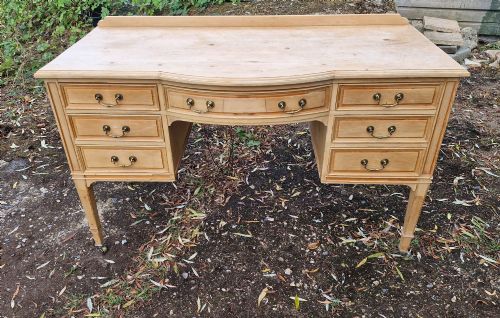
The pieces appearing on this page span several centuries, with prominent representation from the Edwardian era, the 1920s, and the 1930s. Common configurations include kneehole writing tables, maple dressing tables with triple mirrors, and oak desks fitted with drawers.
Makers and designers from notable firms like Maples, Wylie & Lochhead, and Heal's occasionally contribute labeled or attributed examples to this category. Buyers also find revival styles such as Queen Anne, Regency, and Georgian interpretations executed in rich timbers.
Materials and construction methods
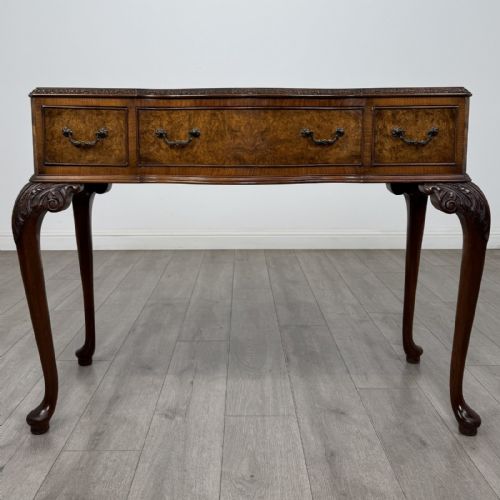
Cabinet makers utilised dense hardwoods such as mahogany, walnut, and pitch pine to build the carcases and frames of these tables. Figured and burr walnut veneers frequently cover drawer fronts and pedestals to create striking decorative grain patterns.
Surface details often incorporate contrasting elements like maple, satinwood, and tooled green leather writing inserts. Brass handles, glass mirror plates, and occasional lacquer or painted finishes complete the construction of these versatile furniture pieces.
Listings in this category span from the 18th century through the Art Deco period, featuring solid oak, mahogany, and burr walnut.
Evaluating quality and craftsmanship
Quality in these dual-purpose tables rests upon the selection of timber veneers and the precision of the cabinet work in the drawers and kneeholes. Pieces featuring matched burr walnut or bird's-eye maple show a higher grade of design ambition than plain softwood carcases.
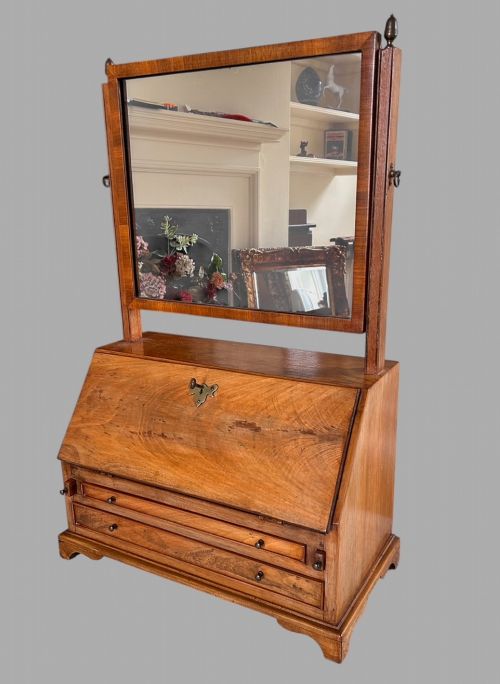
The presence of original bevelled mirror glass, integrated swing frames, and maker labels by firms such as Heal's or Wylie & Lochhead elevate an example above standard commercial production. Subtle carving, such as cabriole legs or serpentine fronts, further distinguishes finer workshops from simpler utility pieces.
Maples of London and Paris·Wylie & Lochhead Glasgow·Mappin & Webb
The Vintage Vanity Table Desk Glossary
- Lowboy
- A small, low table with drawers, typically dating from the 18th century and used as a dressing or writing table. It usually stands on four tall legs.
- Kneehole desk
- A desk or dressing table featuring a central recess for the user's knees, flanked by pedestals of small drawers. This layout provides structured storage while maintaining a compact footprint.
- Burr walnut
- Wood taken from a walnut tree growth where the grain has grown in a deformed, swirling pattern. It produces highly decorative veneers prized for luxury cabinet work.
- Pedestal desk
- A heavy freestanding desk or dressing table supported by two pillars or stacks of drawers down to the floor. The pedestal format allows for generous drawer capacity.
- Tabletop bureau
- A small portable or stationary desk featuring a sloping writing flap that folds down. These often sit atop larger chests or dressing tables.
Vintage Vanity Table Desk: Frequently Asked Questions
What is the difference between a vanity table and a desk?
A vanity table traditionally incorporates a mirror and surface space intended for grooming and cosmetics. A desk focuses primarily on a flat writing surface and drawers for stationery.
Many examples in this category combine both functions, offering pull-out writing slides or integrated mirrors that allow the piece to serve as either.
How do I identify an Art Deco vanity table?
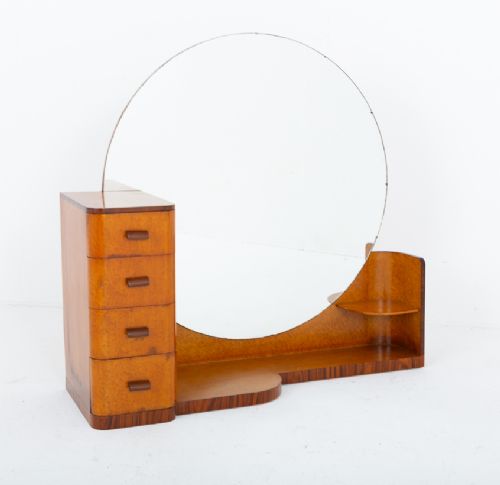
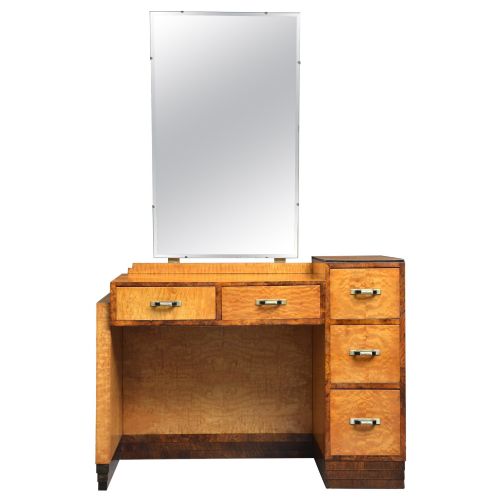
Art Deco vanity tables, typically dating from the 1920s and 1930s, display geometric symmetry and streamlined silhouettes. They frequently utilise exotic woods like bird's-eye maple or burr walnut alongside contrasting glass elements.
Mirrors on these pieces are often large, circular, or triple-panelled with stepped wooden frames rather than ornate carving.
Can I use a vintage dressing table as a modern workspace?
Many Edwardian and 1930s dressing tables feature kneehole designs and appropriate heights for use with a modern chair. However, clearance should be checked if the piece has central drawer boxes underneath.
Adding a protective glass top or leather pad preserves the original timber and veneer surfaces during daily laptop or writing work.
How do I care for burr walnut veneer?
Burr walnut veneer requires protection from direct sunlight and excessive heat to prevent the delicate grain from drying or cracking. Regular dusting with a soft, dry cloth maintains the polished finish.
Applying a quality beeswax periodically nourishes the wood and enhances the natural chatoyancy of the figured grain patterns.