



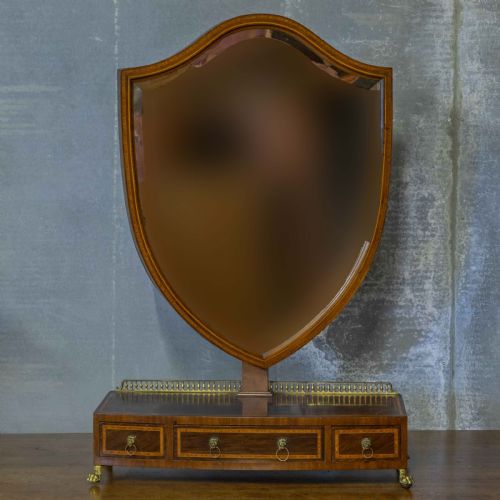


Edwardian Shield Mirror
An edwardian shield mirror brings a polished warmth to a room, offering the graceful curved lines typical of the period.
How they were made
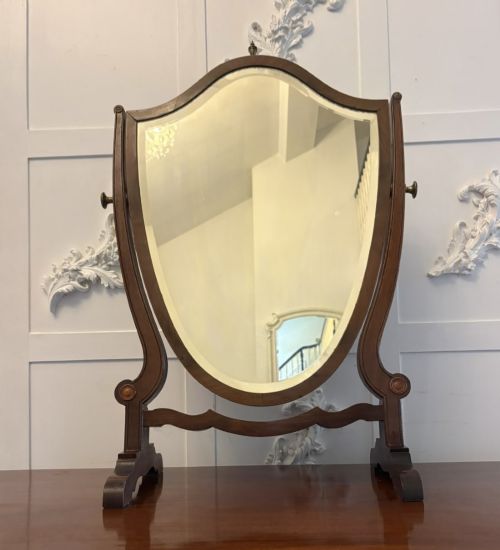
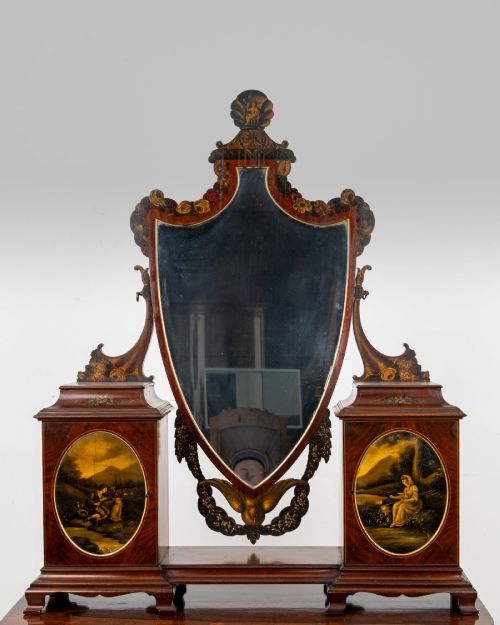
Cabinet makers constructed the frames primarily from mahogany, frequently enhancing the timber with boxwood stringing, satinwood crossbanding, and marquetry inlays. These materials reflect the prevalent preference for figured wood during the Sheraton Revival and Edwardian eras.
Metal components such as brass fittings, copper frames, and giltwood embellishments appear across the selection, providing structural support and decorative contrast to the timber. Mirror glass forms the reflective surface, occasionally held by pivoting brass brackets on table top and cheval formats.
What varies in quality
The standard of a piece depends heavily on the crispness of the inlaid decoration and the choice of timber figure used in the frame. Finer examples display precise boxwood stringing and carefully matched mahogany veneers rather than simple painted lines.
Construction details also separate standard items from superior ones, visible in the turning of the supporting uprights, the weight of the brass or copper fittings, and the stability of the mirror frame within its pivots.
Listings feature mahogany, brass, copper, and satinwood across Edwardian, Victorian, and Arts and Crafts periods.
The Edwardian Shield Mirror Glossary
- Shield mirror
- A looking glass shaped in the form of a heraldic shield, mounted on a dressing stand or designed for wall hanging. This distinctive outline defines the core of this search.
- Cheval mirror
- A full length dressing mirror supported on a freestanding frame with vertical pillars and pivoting screws. They allow the user to tilt the glass to various angles.
- Crossbanding
- A strip of veneer applied across the grain of the primary wood around the border of a panel or frame. It creates a neat framing effect common in Sheraton Revival pieces.
- Stringing
- A narrow inlay of contrasting wood or light-coloured material set flush into the surface. Makers used this technique to outline drawers, panels, and mirror frames.
- Shaving stand
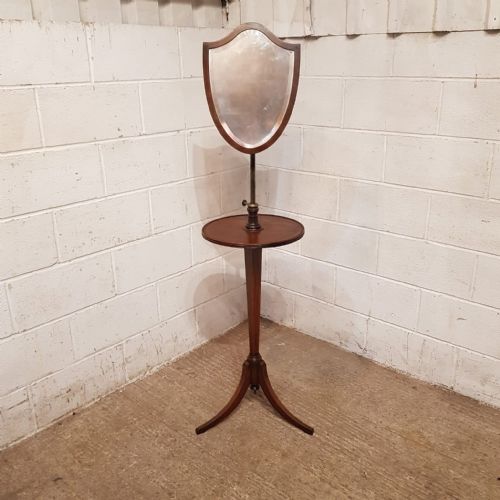
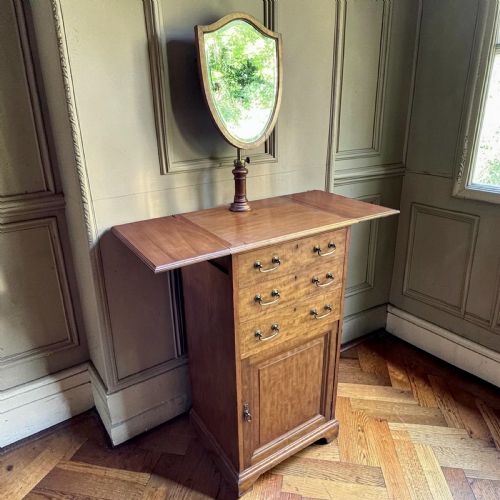
- A specialised piece of furniture incorporating an adjustable mirror, small drawers, and occasionally a basin or candle sconce. They date frequently from the Victorian and Edwardian periods.
Edwardian Shield Mirror: Frequently Asked Questions
How do I mount a wall mirror safely?
Hanging a heavy timber frame requires locating the correct wall fixings to support the weight securely. Ensure you use appropriate screws and wall plugs suited to your plaster or brickwork.
Check that the hanging wire or integrated brackets on the back of the copper or wooden frame are stable before lifting the piece into position.
Are these mirrors adjustable?
Many table top and cheval formats feature brass pivot screws on either side of the glass. These allow you to tilt the shield mirror forward or backward to suit your height.
Wall hanging versions remain fixed in place, while dressing table variants rely on side supports attached to small drawers or upright arms.
What is Sheraton Revival style?
Sheraton Revival furniture draws inspiration from late eighteenth-century neoclassical designs popularized by Thomas Sheraton. Makers revived these lighter forms during the Edwardian era.
You can spot this style through symmetrical shapes, tapered legs, and delicate inlaid details like satinwood banding and boxwood lines.
Where were these pieces used?
These mirrors and stands belonged primarily in bedrooms, dressing rooms, and boudoirs of Edwardian and Victorian homes. They formed part of larger suites alongside dressing chests and washstands.
Wall-mounted versions occasionally found places in hallways or reception rooms to provide a quick reflection before leaving the house.