

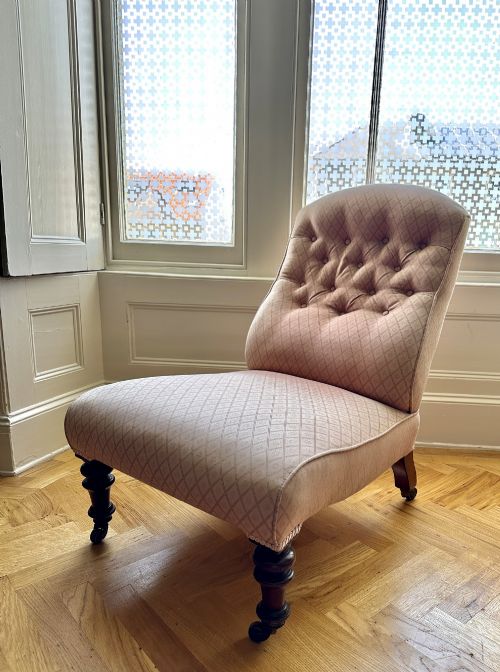


Vintage Upholstered Slipper Chair
A vintage upholstered slipper chair brings low-slung comfort and period charm to bedrooms and dressing rooms.
Vintage Upholstered Slipper Chair
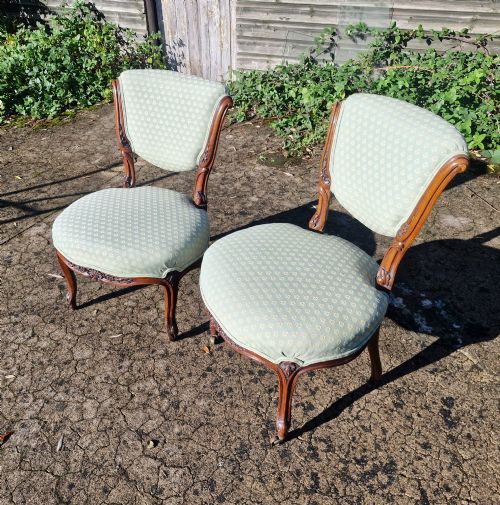
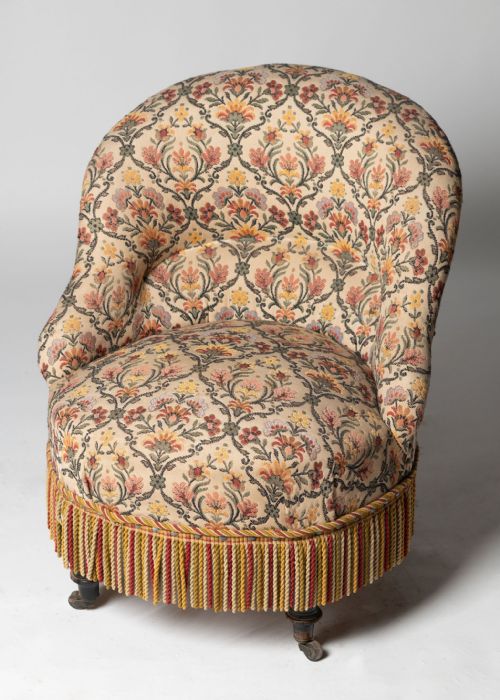
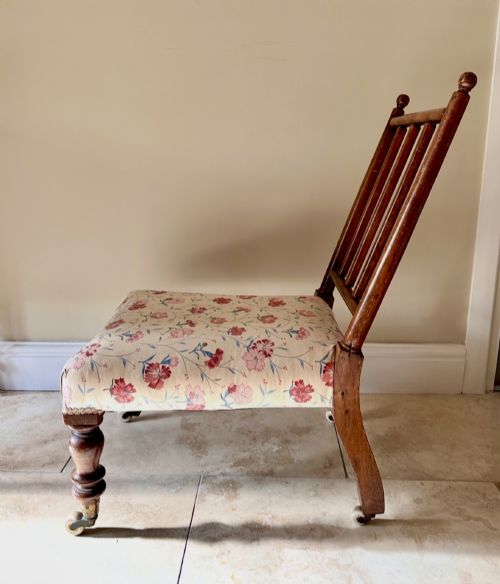
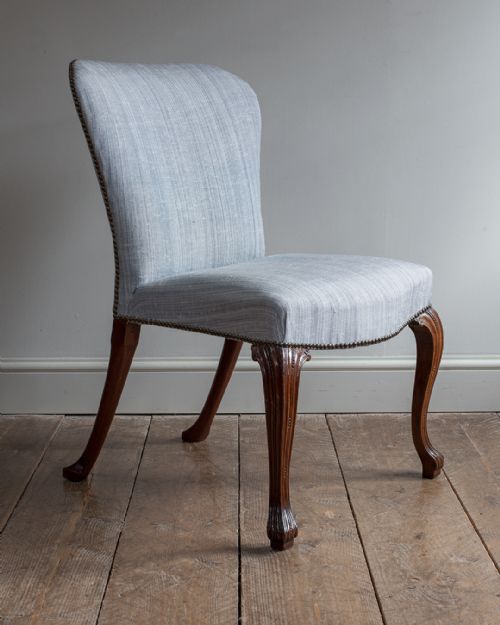
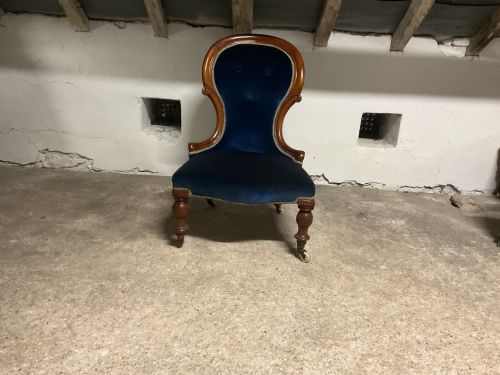
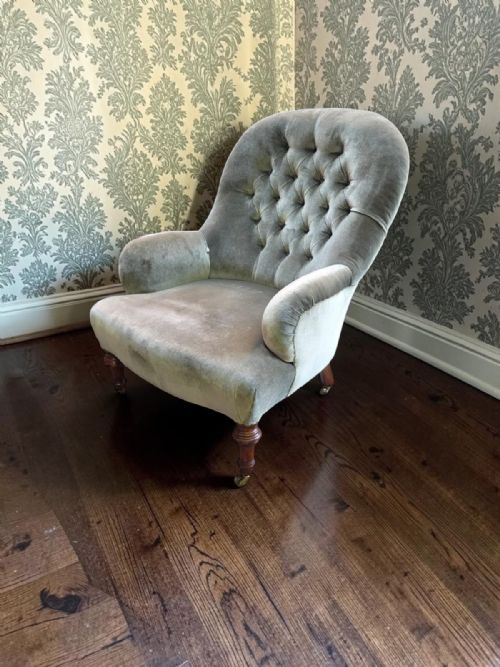
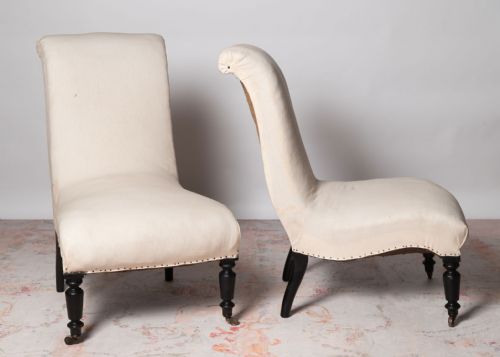
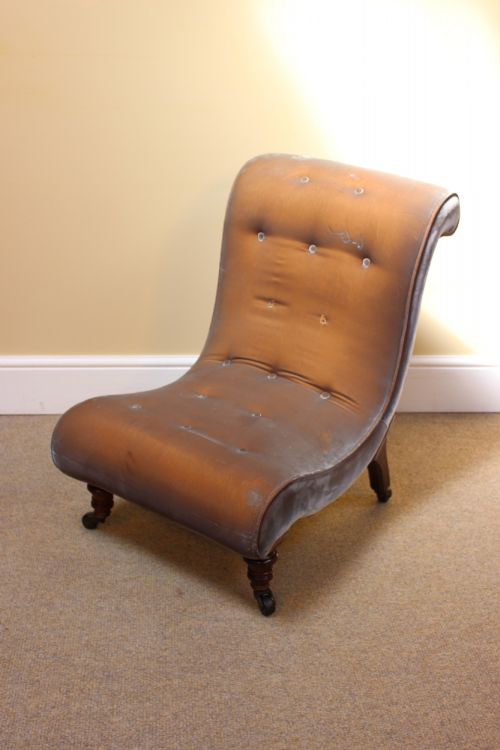
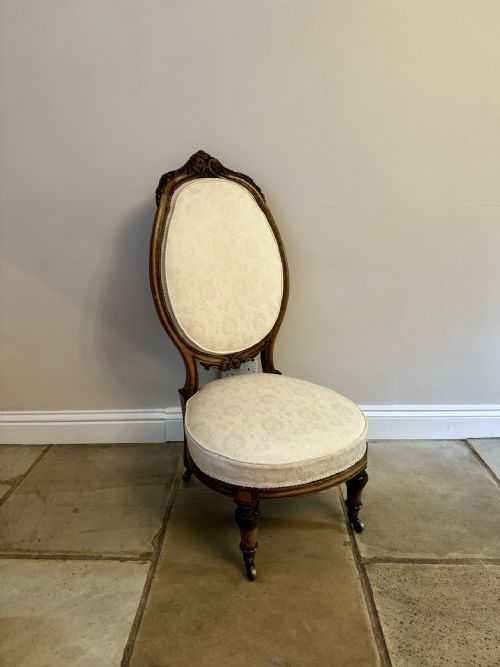
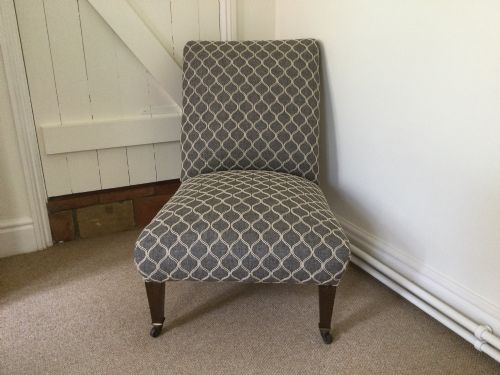
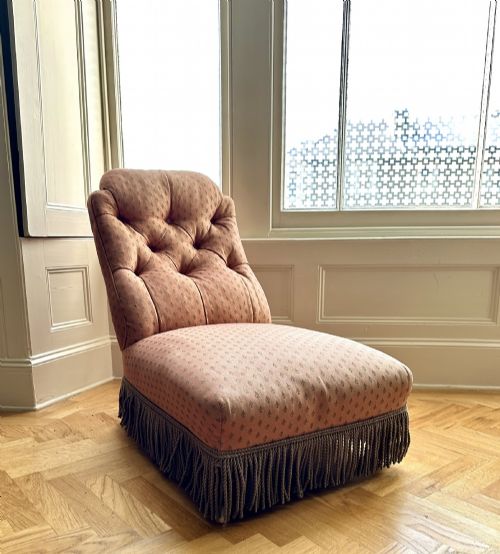
A vintage upholstered slipper chair is a low-seated armchair designed historically for ladies to dress in comfort, appearing frequently alongside nursing chairs, bedroom chairs, and boudoir seating in the current selection.
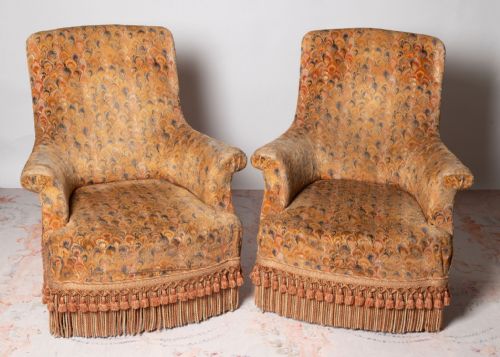
The inventory spans the nineteenth century through the Edwardian era, taking in Victorian walnut and mahogany frames, Edwardian oak and inlaid mahogany examples, and French Napoleon III or boudoir pieces.
Makers and designers from the period occasionally utilised specific forms like scroll backs, button backs, and prie dieu styles, upholstered in fabrics ranging from velvet and tapestry to linen and vintage cotton.
Assessing the craftsmanship
Quality rests upon the integrity of the timber frame, where carved walnut or mahogany and solid oak construction outlast lighter secondary woods.
The finesse of the joinery and the depth of hand-carved ornamentation distinguish standard bedroom seating from exceptional salon pieces.
The execution of the upholstery, from the choice of velvet, linen, or tapestry to the precision of buttoning and fringing, determines the refinement of the finished chair.
Vintage Upholstered Slipper Chair Retail Price Guide 2026
Typical asking prices for vintage upholstered slipper chair among the pieces listed under this phrase on Sellingantiques today, from the lower quarter to the upper quarter. They describe what is for sale here now, not the wider market.
Listings feature timber frames in walnut, mahogany, and oak, paired with textiles including velvet, tapestry, linen, and cotton.
Gillows
The Vintage Upholstered Slipper Chair Glossary
- Slipper chair
- A low-seated upholstered chair originally designed for bedchambers and dressing rooms. Its elevated accessibility made dressing convenient.
- Nursing chair
- A low Victorian armchair designed originally for feeding infants. These often feature sprung seats and buttoned upholstery.
- Prie dieu chair
- A devotional prayer chair with a low seat and a high back incorporating a rest. They originate from the Victorian period.
- Button back
- An upholstery style where depressions are formed in the padding using tight buttons. This secures the internal stuffing while creating a decorative pattern.
- Boudoir chair
- A small, decorative occasional chair intended for a private sitting room or bedroom. They appear frequently in French nineteenth-century styles.
Vintage Upholstered Slipper Chair: Frequently Asked Questions
What is a slipper chair used for?
These low-slung seats were historically kept in bedrooms and dressing rooms for women to sit comfortably while putting on shoes or garments. Today they serve as versatile accent chairs in sitting rooms or studies.
Because they sit closer to the floor than standard armchairs, they occupy less visual space while offering a comfortable place to sit.
How do I date an antique chair?
Dating relies on identifying the underlying timber, the framing style, and the upholstery methods. Victorian examples often feature dark walnut or mahogany with elaborate carvings, while Edwardian pieces frequently display lighter oak or inlaid woodwork.
Cabinetmaking techniques and the choice of textile also provide clues to whether a piece originates from the mid-nineteenth century or the early twentieth century.
Are these chairs comfortable for daily use?
Most of these pieces were constructed with sprung seats and padded backs designed for comfortable lounging in private rooms. Their low profile provides a relaxed seating posture suited to reading or resting.
Depending on the age of the piece, internal webbing and padding may vary in firmness, contributing to a supportive yet yielding feel.
How do I style a bedroom chair?
A bedroom or boudoir chair works well placed in a vacant corner, beside a dressing table, or paired with a small side table. Their compact proportions allow them to fit into spaces where standard armchairs would overwhelm the room.
Matching the upholstery textile, whether velvet, linen, or tapestry, to existing room colours helps integrate the antique piece into a modern interior.