



Needlepoint Slipper Chair
A needlepoint slipper chair is a low-seated Victorian upholstered chair covered in wool tapestry, designed for comfort and ease beside the fire.
Needlepoint Slipper Chair
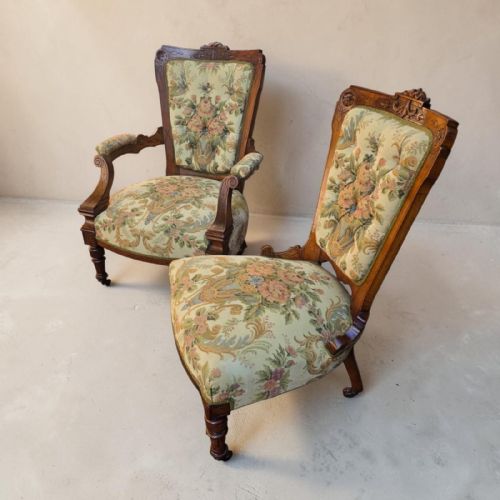
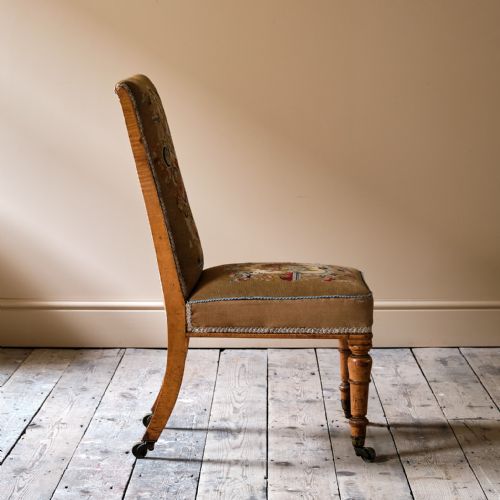
A needlepoint slipper chair sits low to the ground and typically lacks arms, offering a compact form designed originally for Victorian bedrooms and dressing rooms. The listings show these pieces appearing under various functional names such as nursing chairs, side chairs, and fireside chairs, spanning the Victorian period.
Most examples found on this page date from the nineteenth century, including specific decades like eighteen fifty, eighteen seventy, and eighteen eighty. The frames range from straightforward vernacular pieces to more ornate Victorian Rococo Revival and Aesthetic Movement designs.
Makers and workshops of the era produced these forms in walnut, mahogany, rosewood, and birds eye maple. The upholstery primarily consists of wool tapestry and needlepoint textile work, often featuring floral or pictorial designs worked by hand.
Materials and construction methods
Makers utilised sturdy hardwoods such as mahogany, walnut, and rosewood for the structural frames, often employing carved decoration along the crest rails and cabriole legs. Several pieces exhibit turned wooden components, brass castors, and ceramic castors to aid mobility.
The defining textile element is wool tapestry or needlepoint upholstery, stretched tightly over traditional stuff-over spring or webbed stuffing. The needlework itself displays dense wool stitching executed on a canvas ground, secured with brass tacks to the wooden frame.
Needlepoint Slipper Chair Retail Price Guide 2026
Typical asking prices for needlepoint slipper chair among the pieces listed under this phrase on Sellingantiques today, from the lower quarter to the upper quarter. They describe what is for sale here now, not the wider market.
Victorian makers designed these low seats specifically so skirts could cascade freely without getting caught on wooden arms.
Assessing quality and execution
The distinction between standard and superior pieces rests largely on the ambition of the timber carving and the complexity of the wood frame. Elaborate walnut framing with deep relief carving or exotic timbers like birds eye maple indicates a higher grade of manufacture.
The fineness of the wool tapestry work and the integrity of the underlying frame construction further separate individual examples. Original needlework showing intricate pictorial detail or refined floral patterns elevates the character of the piece significantly.
R Whytock of Edinburgh·Gillows
The Needlepoint Slipper Chair Glossary
- Tapestry
- A heavy textile woven or worked with decorative designs, typically using wool threads on a canvas ground. In these listings, it forms the primary upholstery material for the seat and back.
- Nursing chair
- A low-seated Victorian chair designed without arms to allow women to nurse infants comfortably in the nineteenth century. They share a remarkably similar low profile to the slipper chair.
- Rococo Revival
- A mid-nineteenth-century decorative style characterised by asymmetrical flowing curves, naturalistic scrollwork, and florid carved wooden frames. Pieces from this movement often feature rich walnut frames.
- Aesthetic Movement
- A later nineteenth-century design style that emphasised simplicity, artistic craftsmanship, and refined linear forms over heavy historicism. It represents a distinct departure from earlier ornate Victorian revivals.
- Prie-Dieu chair
- A devotional chair featuring a high, narrow back designed for kneeling during private prayer in the Victorian home. They share the low seat and upholstered construction typical of bedroom chairs.
Needlepoint Slipper Chair: Frequently Asked Questions
What is a needlepoint slipper chair?
A needlepoint slipper chair is a low-framed Victorian seat upholstered in wool tapestry or needlework. These chairs were built without arms to allow ease of movement in bedrooms and dressing rooms.
They bridge domestic seating and decorative textile art, combining nineteenth-century cabinetmaking with hand-worked wool upholstery.
How do I date a Victorian slipper chair?
Dating relies on identifying timber choices, frame carving styles, and structural markers such as the presence of rosewood or birds eye maple. Mid-century examples often display Rococo Revival curves, while later pieces lean towards Aesthetic Movement lines.
Cabinet woods shift from early Victorian mahogany and rosewood towards walnut frames by eighteen eighty.
Were these chairs used in bedrooms?
Victorian slipper and nursing chairs served primarily private spaces like bedrooms and dressing rooms. Their low stature made them suitable for sitting near fireplaces or dressing tables.
The absence of arms allowed voluminous nineteenth-century garments to drape comfortably over the sides of the seat.
Are the tapestry covers original?
Many nineteenth-century examples retain period wool tapestry work, though upholstery condition varies across individual pieces. Some listings note original floral needlework, while others reflect later textile replacement.
Examining the tension, backing materials, and tacking helps determine the age of the fabric relative to the wooden frame.
What woods were used for the frames?
Makers constructed the frames using native and imported hardwoods appropriate to the period. Walnut and mahogany appear frequently across Victorian examples.
More ambitious pieces occasionally utilise rosewood or birds eye maple, paired with brass or ceramic castors on the feet.