


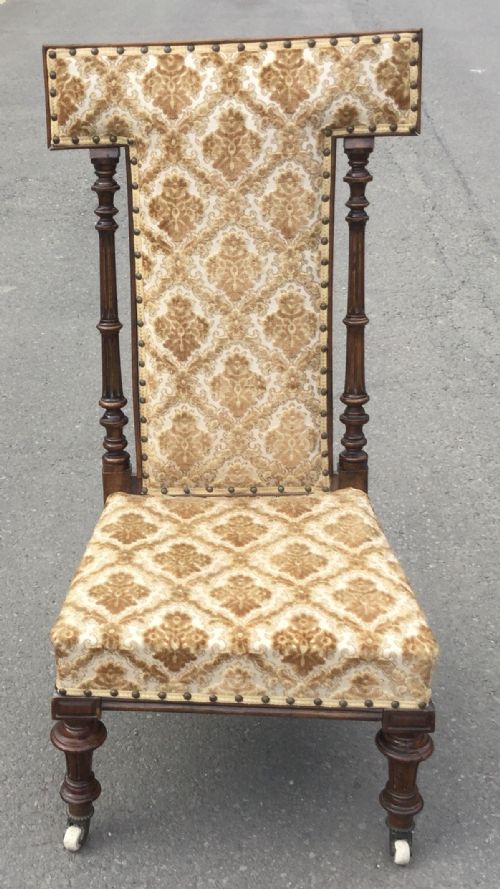


High Back Slipper Chair
A high back slipper chair offers low seating paired with a tall back, providing a comfortable seat for dressing or resting.
High Back Slipper Chair
A high back slipper chair is a low-slung seat designed originally for Victorian bedrooms and dressing rooms, allowing ladies to put on shoes or slippers with ease. The pieces seen on this page span the Victorian and 19th-century periods, alongside examples from 1820 to 1920, predominantly taking the form of nursing chairs and prayer chairs.
Most examples you meet here are framed in walnut, rosewood, or mahogany, often with intricate carved details in Victorian, Victorian Rococo Revival, or Gothic Revival styles. These low chairs frequently feature upholstered backs and seats finished in fabrics such as velvet, wool tapestry, or traditional upholstery textiles.
How they were made
Makers shaped the frames of these chairs from dense hardwoods like walnut, rosewood, and mahogany, utilising carved woodwork for decorative elements. Turnings such as barley twists and scroll details appear frequently across the wooden structures.
The seats and tall backs rely on traditional upholstery methods, employing durable fabrics including velvet and wool tapestry secured to the wooden frames. Brass elements sometimes accent the construction or mobility of the pieces.
Listings for high back slipper chairs feature Victorian and 19th-century periods alongside materials such as walnut, rosewood, and velvet.
What varies in quality
The refinement of the wood carving dictates much of the distinction between standard and superior pieces, particularly in Victorian Rococo Revival and Gothic styles. Crisp detailing in walnut or rosewood frames signals superior craftsmanship.
The integrity of the original upholstery fabric and the choice of luxury materials such as velvet or wool tapestry also separate ordinary examples from finer specimens.
R Whytock of Edinburgh
The High Back Slipper Chair Glossary
- Nursing chair
- A low-seated chair designed in the Victorian period for comfortable nursing or general bedroom use. These pieces typically feature a high back to support the sitter.
- Prie-Dieu chair
- A devotional chair featuring a low seat and an upper rail designed for kneeling or leaning during prayer. They are common variants within this grouping.
- Rosewood
- A dense, richly grained timber utilised by cabinet makers for high-status Victorian seating. Its dark tones and natural polish enhance carved details.
- Barley twist
- A woodworking technique producing a spiral turning resembling a twisted rope. This detail appears frequently on the uprights and legs of Victorian frames.
High Back Slipper Chair: Frequently Asked Questions
What is a high back slipper chair used for?
These low seats were originally placed in Victorian bedrooms and dressing rooms to provide a comfortable place for dressing and putting on footwear. The tall back offered support while maintaining a compact footprint.
Over time, collectors have transitioned these pieces into living spaces, studies, and occasional rooms as accent seating due to their distinct profile and historical charm.
How do I identify a Victorian high back slipper chair?
Look for dense timber frames made from walnut, rosewood, or mahogany, often paired with characteristic revival styles like Gothic or Rococo. Details such as scroll backs and turned wooden elements point directly to nineteenth-century manufacture.
The upholstery fabric often utilises period textiles like wool tapestry or velvet, reflecting the interior tastes of the era.
How do I live with a high back slipper chair?
These compact seats fit easily into corners, bedrooms, or alongside larger reception furniture as an accent piece. Their low profile ensures they do not overwhelm smaller spaces.
Protect the historic wood and textile surfaces by keeping them away from direct sunlight and excessive moisture to preserve the original materials.