

Vintage Upholstered Desk Chair
A vintage upholstered desk chair brings functional comfort to a study through period craftsmanship in mahogany, leather, and fabric.
Vintage Upholstered Desk Chair
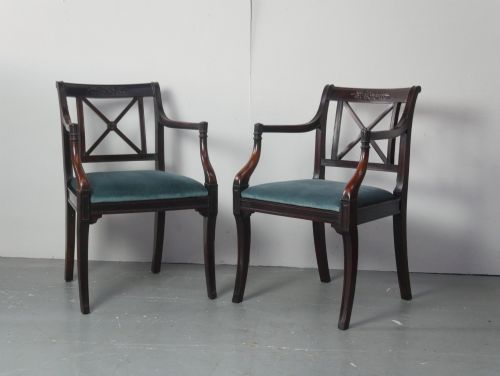
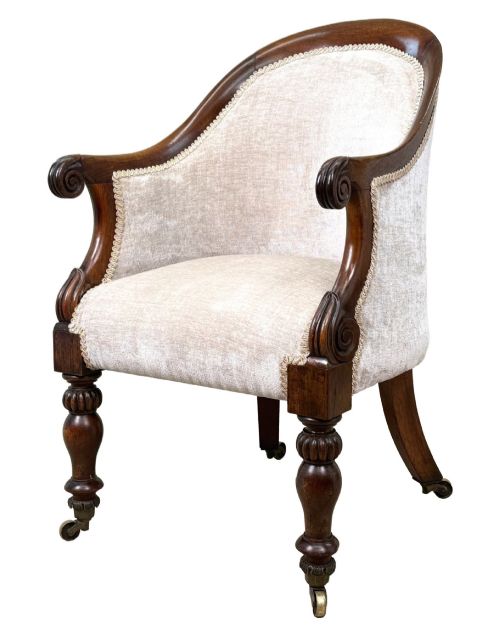
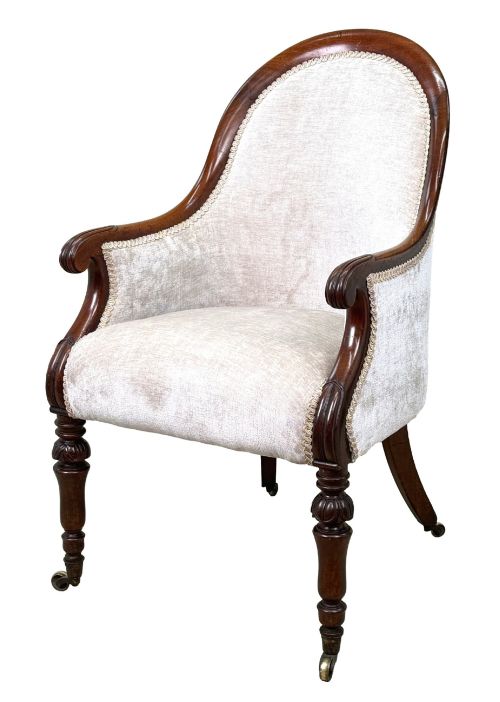
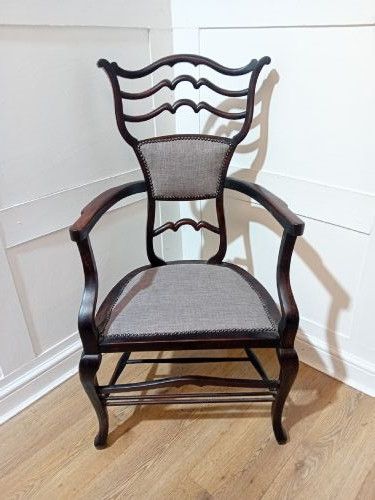
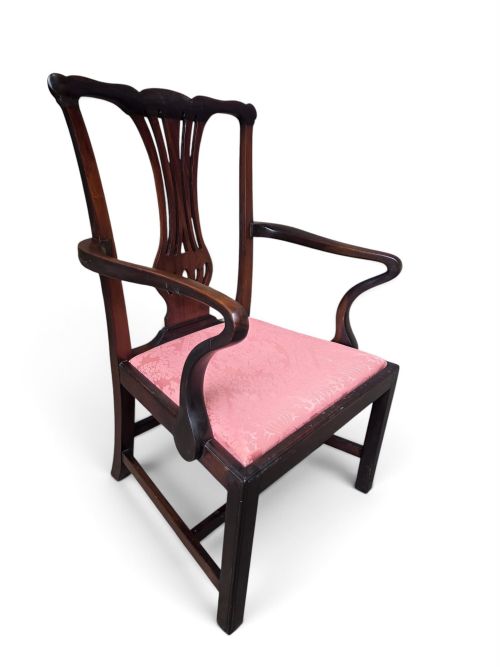
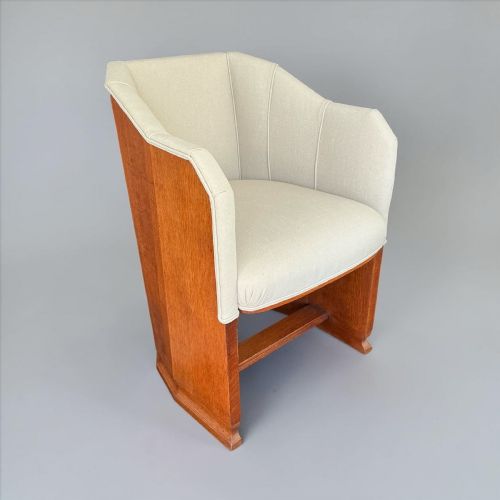
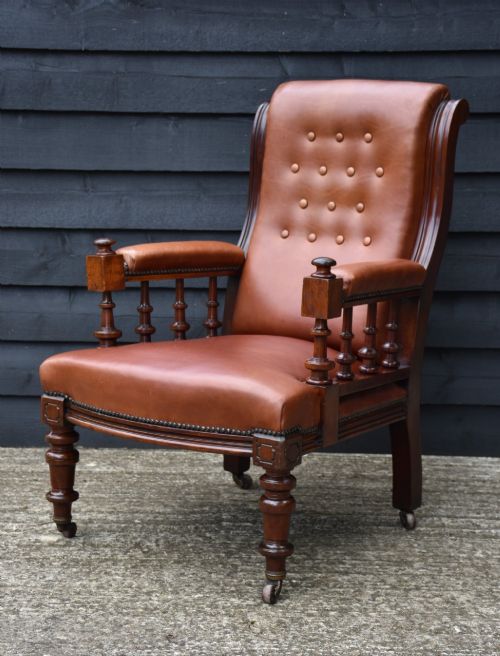
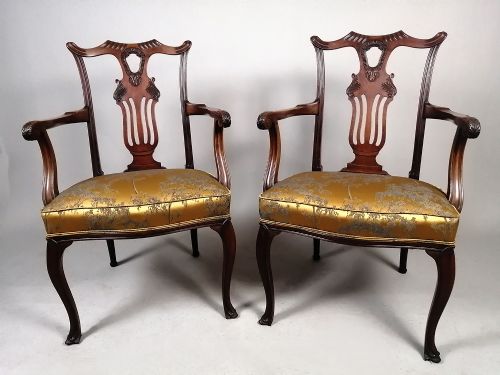
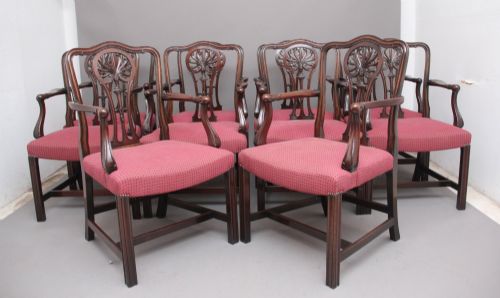
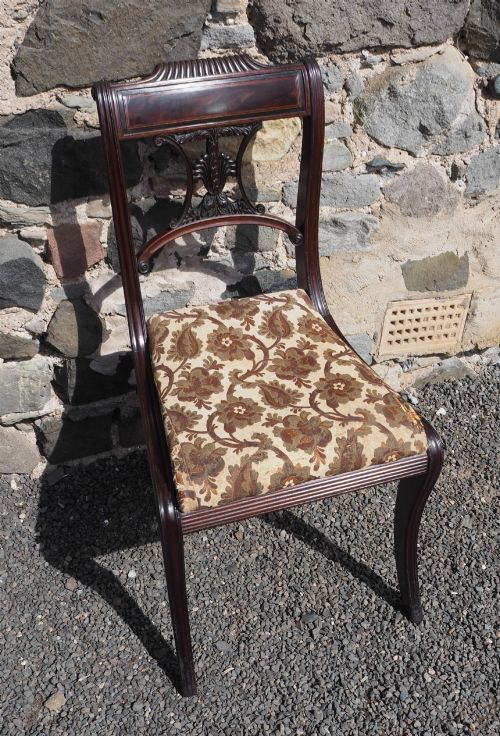
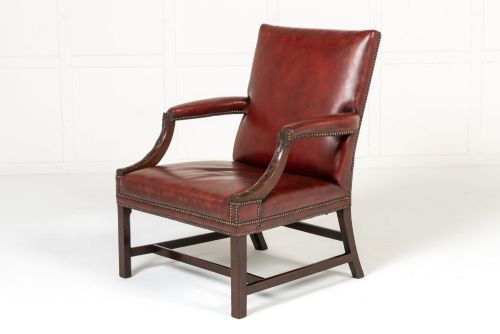
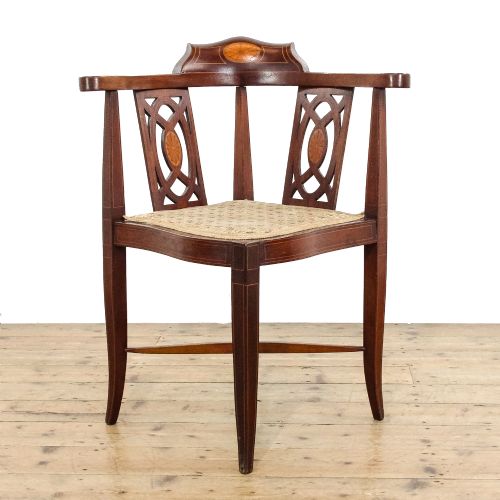
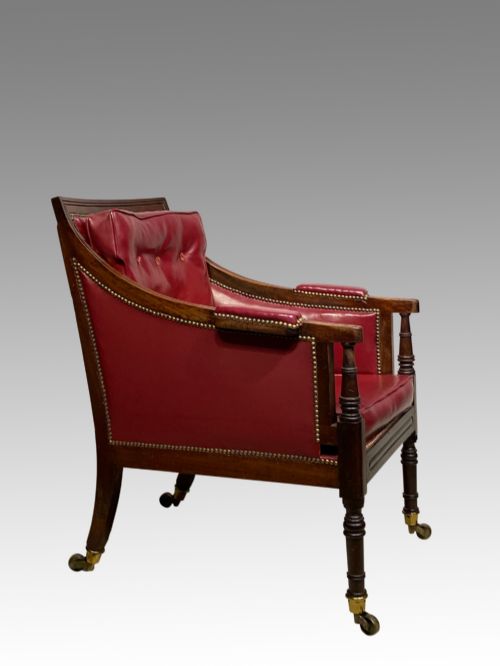
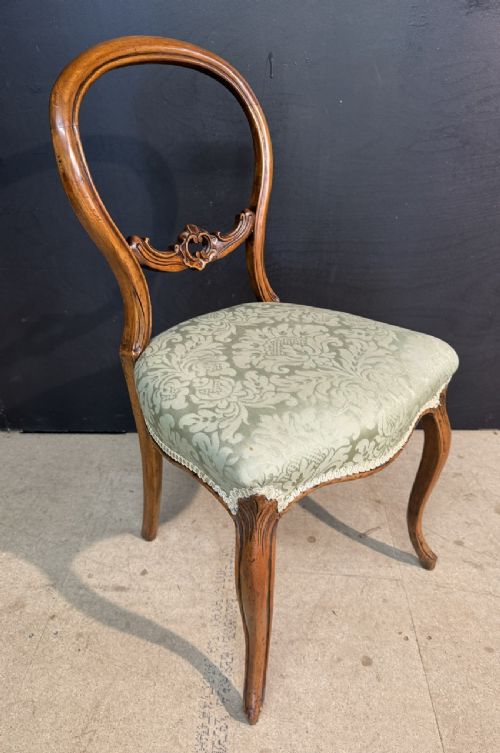
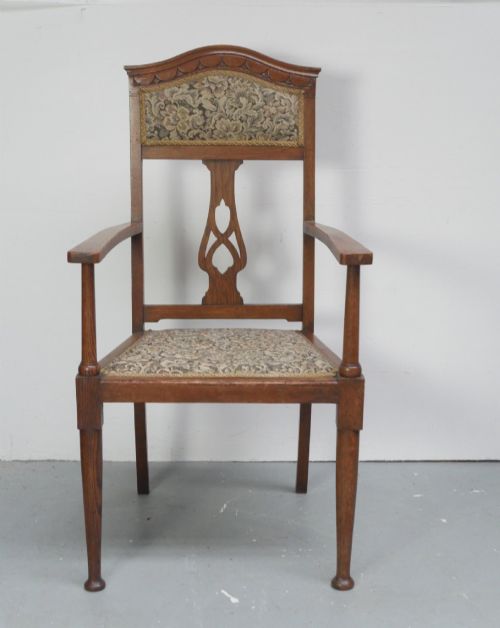
When you search for a vintage upholstered desk chair, you find seating built for study, reading, and writing across the eighteenth, nineteenth, and early twentieth centuries. These pieces encompass forms ranging from library armchairs and tub chairs to Gainsborough chairs and cabriole leg vanity seats.
The selections on this page feature frameworks from the Victorian, Edwardian, Georgian, and Regency periods, alongside later Art Deco examples. They combine rigid timber structures with padded seats and backs finished in leather, fabric, or upholstery fabric.
How they were made
Cabinet makers constructed the frames primarily using solid hardwoods such as mahogany, walnut, oak, and rosewood, often employing traditional joinery methods. Turnings, carved details, and inlaid satinwood or brass accents define the decorative vocabulary of these pieces.
Upholstery techniques applied webbing, springs, and stuffing beneath durable outer layers of leather or woven fabric. Brass studs frequently secure the hide or textile edges to the wooden framework.
Among the seating options, a folding campaign chair stands ready for unexpected field dispatches.
What varies in quality
The distinction between ordinary and exceptional pieces lies in the crispness of the timber carving and the integrity of the structural frame. Finer examples display carefully selected wood grain, such as Cuban mahogany or birds eye maple, matched with high-grade leather or period-appropriate textiles.
Proportion and comfort dictate the desirability of a workspace seat, where well-balanced arm heights and supportive backrests indicate thoughtful original design. Revived or later copies differ from period originals through the choice of secondary timbers and the precision of assembly.
Alfred Allen of Birmingham·Bath Cabinet Makers
The Vintage Upholstered Desk Chair Glossary
- Gainsborough chair
- A wide, upholstered armchair with an open-framed mahogany structure, padded armrests, and square or cabriole legs, originating in the eighteenth century.
- Tub chair
- An armchair featuring a continuous curved back and arms that form a rounded enclosure, frequently upholstered in leather.
- Bergère
- An enclosed armchair with upholstered back and sides, often incorporating cane panels within a wooden frame.
- Carver chair
- A sturdy wooden armchair, traditionally placed at the head of a dining table or used as a desk seat.
- Cabriole leg
- A furniture leg that curves outward at the knee and tapers inward toward the foot, typical of eighteenth-century and revival designs.
Vintage Upholstered Desk Chair: Frequently Asked Questions
How do I identify a genuine period desk chair?
Examine the construction methods, timber patination, and wear patterns on the frame and underside. Genuine pieces display period-specific joinery and materials consistent with their attributed century.
Compare the proportions and decorative carving styles against established historical eras like the Georgian or Victorian periods to confirm authenticity.
Can I use an antique library chair at a modern desk?
Many vintage library and desk chairs suit modern workspaces, provided the seat height and leg clearance align with your desk dimensions. vérifier the depth of the seat and the height of the armrests to ensure comfortable clearance beneath the desktop.
Keep in mind that older seating was often built lower than contemporary office chairs, so checking measurements is essential for daily use.
What is the difference between leather and fabric upholstery on these chairs?
Leather upholstery offers durability and a traditional appearance, often secured with brass tacks on library and Gainsborough chairs. Fabric upholstery, including velvet or patterned textiles, provides softer textures and a wider range of colours.
Both materials appear across different periods, with leather typically favoured for heavy-use study and library seating.
How should I care for a vintage upholstered chair?
Protect wooden frames from direct sunlight and sudden temperature changes to prevent timber splitting or veneer lifting. Condition leather regularly with appropriate balms and vacuum fabric surfaces gently to remove dust.
Avoid placing these chairs in overly damp or dry environments to preserve both the internal stuffing and the outer upholstery.