


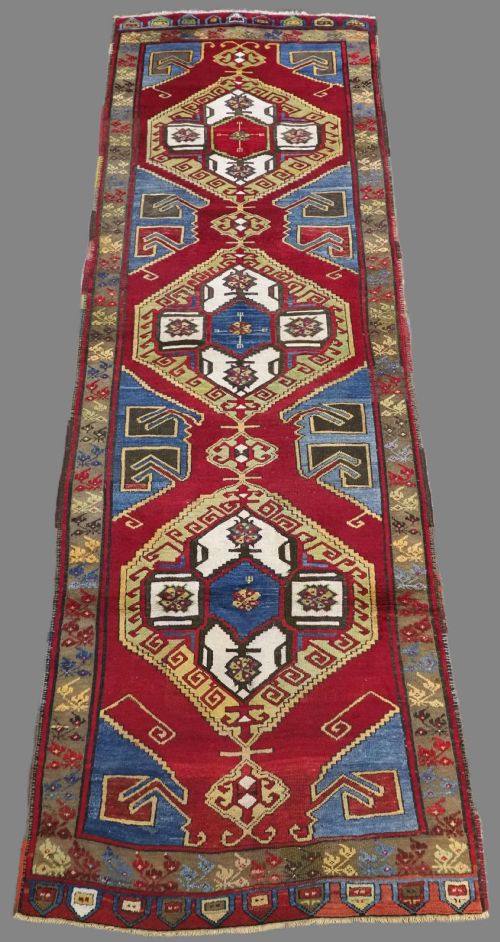


Vintage Turkish Runner
These vintage turkish runner selections bring regional Anatolian weaving traditions directly into narrow hallways and long corridors.

Vintage Turkish Runner
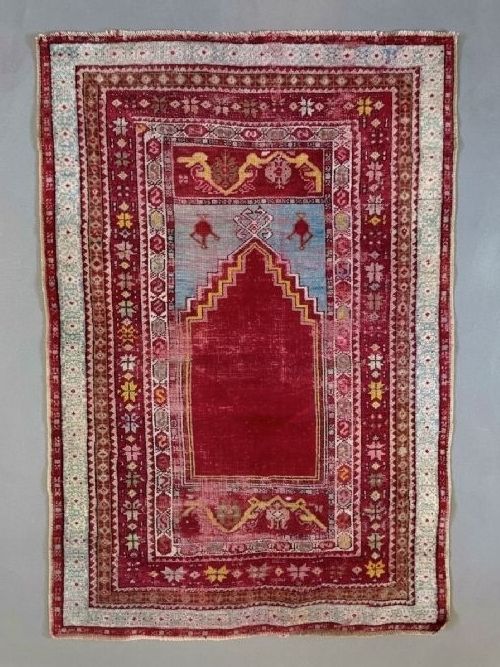
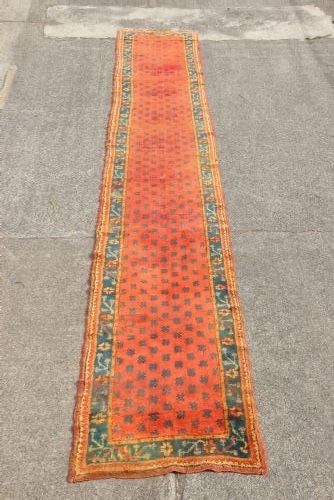
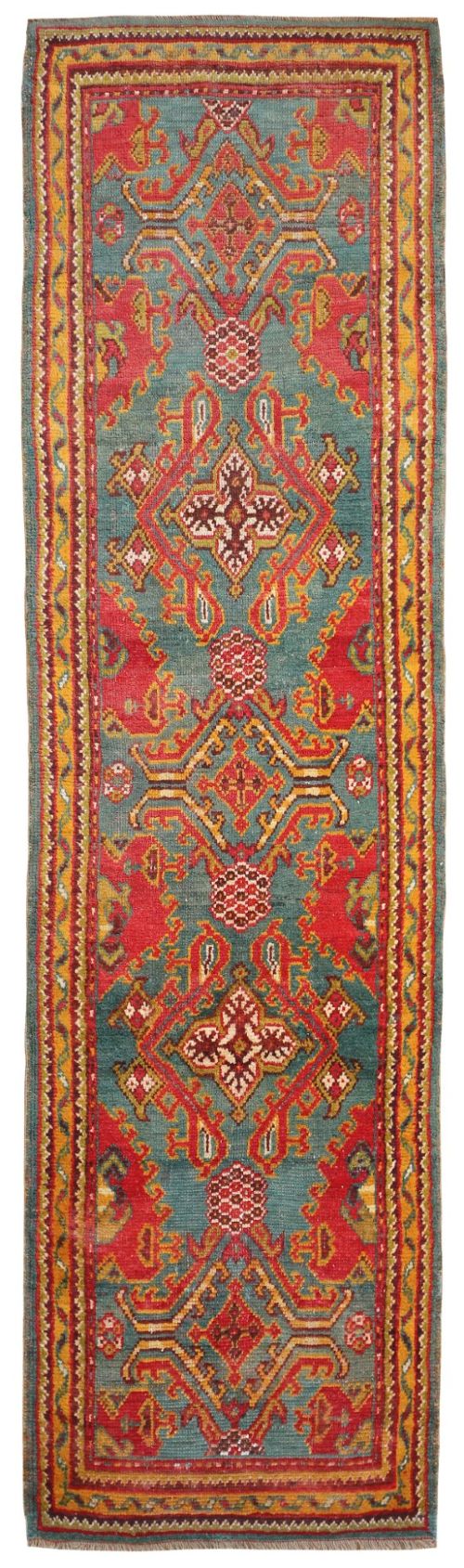
A vintage turkish runner is a long, narrow format textile designed specifically for corridors, staircases and hallways, originating from various weaving centres across Anatolia. The selection includes pieces spanning from the nineteenth century into the early twentieth century, taking forms such as knotted pile runners and flat-woven kelims.
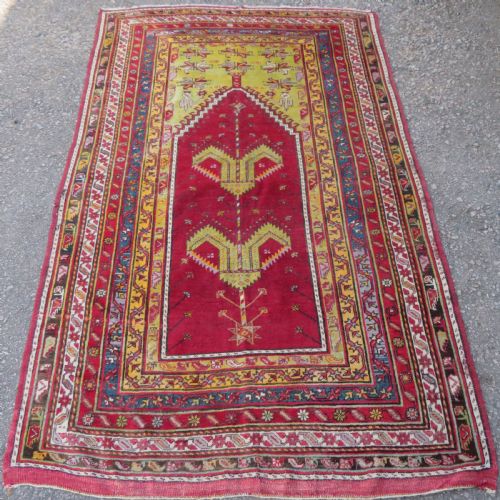
Buyers meet examples associated with traditional regional groups including Ushak, Konya, Kirsehir, and Yagcibedir. These items serve both practical floor-covering purposes and decorative functions in contemporary domestic spaces.
The format ranges from long narrow corridor carpets to half-kilim constructions and village rugs adapted into runner proportions. Each piece reflects the distinct aesthetic vocabulary of its specific Anatolian district of origin.
How vintage turkish runner textiles were constructed
Weavers utilised natural materials such as wool, cotton, silk, and art silk, frequently employing hand-spun wool for foundations and pile. Some specialised examples incorporate metallic thread alongside traditional animal and plant fibres.
Construction methods vary between pile knotting and flat-weaving techniques, with certain kilims woven in distinct parts and joined together. Natural dyeing traditions provided the palette for these hand-woven floor coverings before the introduction of synthetic alternatives.
Vintage Turkish Runner Retail Price Guide 2026
Typical asking prices for vintage turkish runner among the pieces listed under this phrase on Sellingantiques today, from the lower quarter to the upper quarter. They describe what is for sale here now, not the wider market.
Regional attributions include Ushak, Konya, Kirsehir, Milas, and Yagcibedir across various village and tribal styles.
What varies in quality among vintage turkish runner examples
Quality differences stem from the fineness of the weave, the integrity of the foundation materials, and the sophistication of the regional design execution. Finer knot density and precise geometric or floral drafting distinguish exceptional village and town pieces.
The condition of the wool pile, the survival of original borders and selvedges, and the depth of natural dye colours separate well-preserved historical examples from heavily worn or distressed pieces.
The Vintage Turkish Runner Glossary
- Kilim
- A flat-woven textile produced without a pile, creating a smooth surface with pattern visible on both sides.
- Oushak
- A renowned weaving tradition originating from the town of Ushak, noted for large-scale floral and medallion motifs.
- Prayer Rug
- A textile featuring a central mihrab or niche design, traditionally used for individual prayer.
- Selvedge
- The tightly bound side edges of a rug that prevent the weft threads from unravelling.
- Mihrab
- The arched niche design found on prayer rugs representing the direction of prayer.
Vintage Turkish Runner: Frequently Asked Questions
Where were these runners originally used?
These long textiles served primarily in domestic corridors, wide staircases, and entrance halls of traditional Anatolian homes. Their narrow proportions adapted well to high-traffic transition spaces.
Over time, families also utilised them in long rooms or as bedside runners to insulate stone or timber floorboards against cold weather.
How do I care for a wool runner?
Gentle regular vacuuming without a rotating power brush helps remove grit from the wool fibres. Professional cleaning suited to antique textiles preserves the natural lanolin.
Positioning an appropriate underlay beneath the piece prevents slipping on smooth flooring and reduces mechanical wear from daily foot traffic.
What is an Ushak runner?
An Ushak runner originates from the historic western Anatolian production centre known for softer colour palettes and relaxed floral ornamentation. These pieces often feature looser knots compared to city workshops.
Collectors prize this specific lineage for its ability to blend harmoniously with varied interior design schemes due to faded, harmonious vegetable dyes.
How do I identify a flat-weave?
A flat-weave lacks the raised pile found on knotted carpets, resulting in a thin, tapestry-like fabric created by tightly interweaving warp and weft threads. Examining the reverse side reveals a nearly identical pattern to the front.
These lighter textiles function well in spaces where door clearance is limited or where a less heavy floor covering is preferred.