


Vintage Tripod Plant Stand
A vintage tripod plant stand elevates foliage with slender three-legged grace, bringing height and structure to botanical displays.
Vintage Tripod Plant Stand
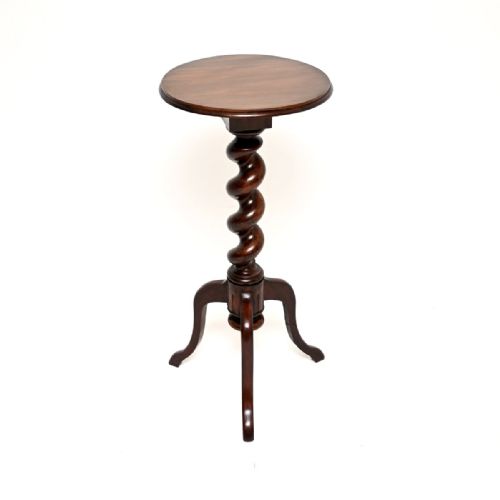
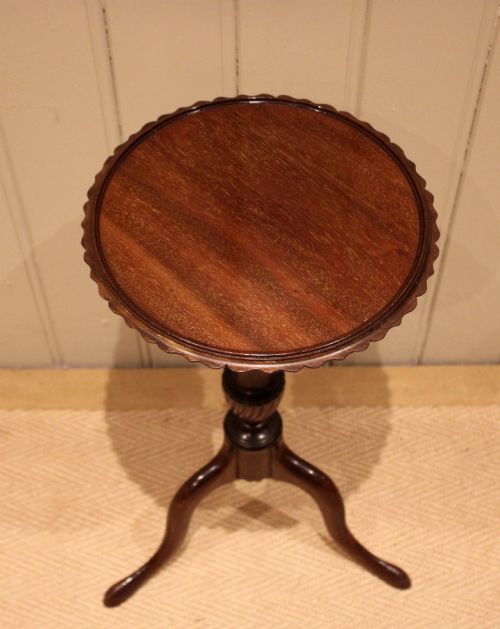
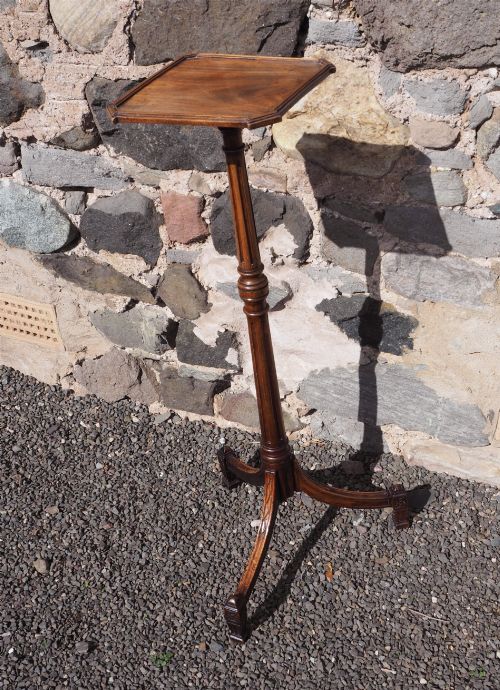
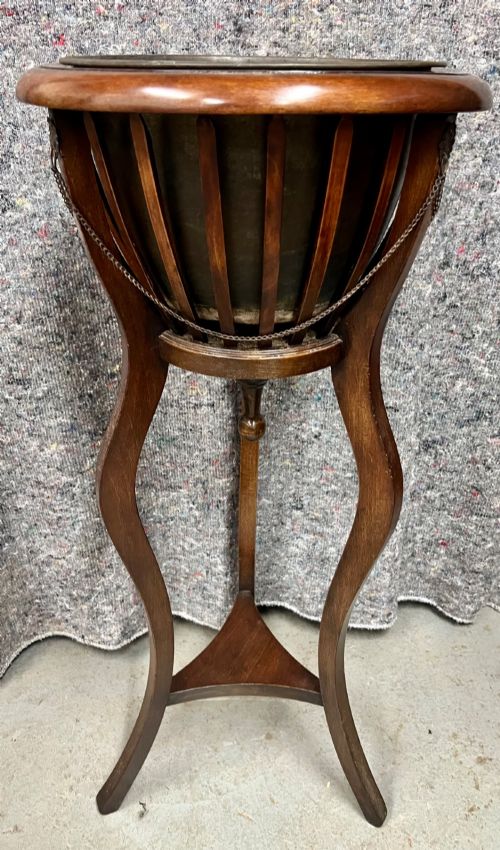
A vintage tripod plant stand is designed specifically to elevate potted plants, jardinières, or decorative urns using a stable three-legged base. These pieces draw from a rich heritage spanning the 18th century through the Edwardian era and the 1920s.
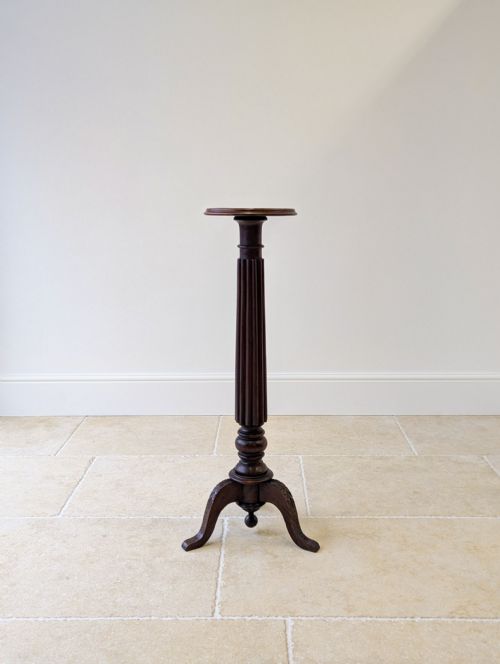
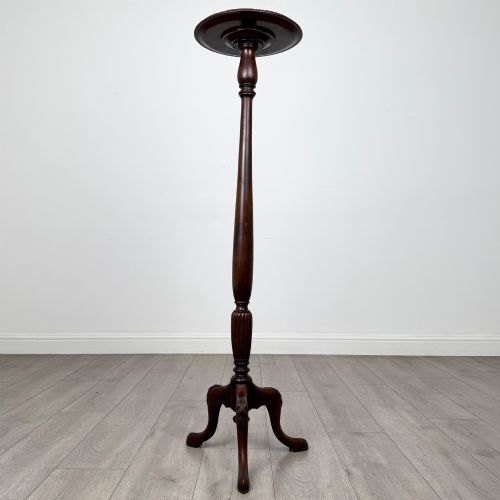
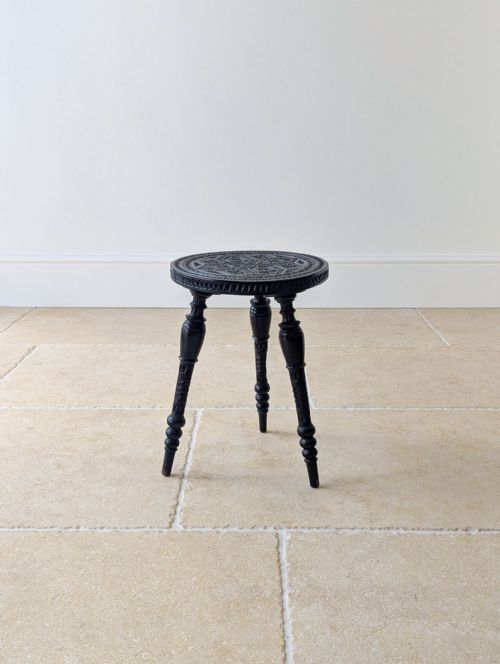
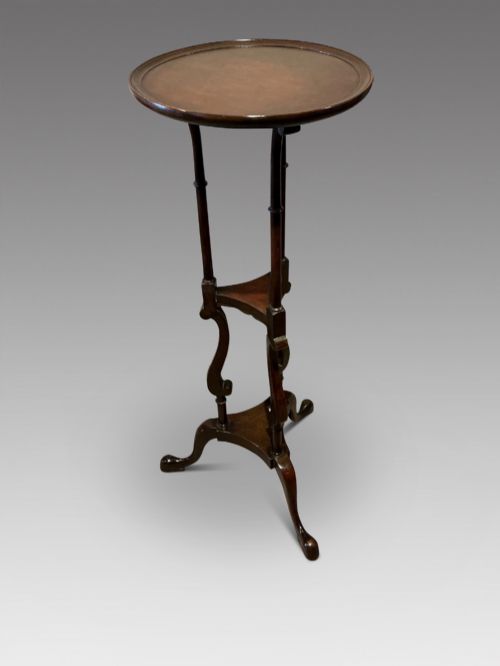
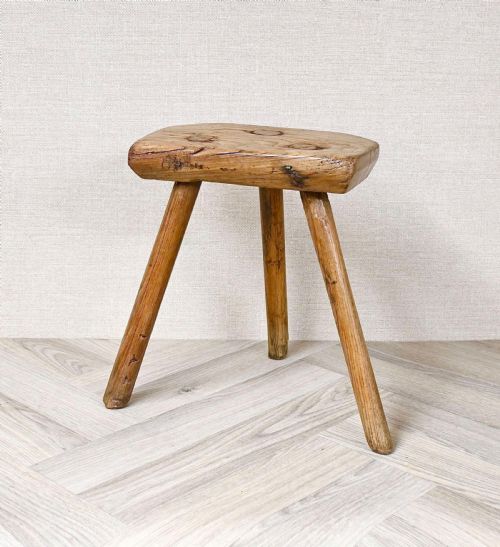
The most common form encountered on this page is the tall torchere or slender pedestal, often built with a circular top supported by three splayed legs. Makers adapted these versatile stands from classical forms, sometimes grouping them with wine tables, stools, and small occasional tables.
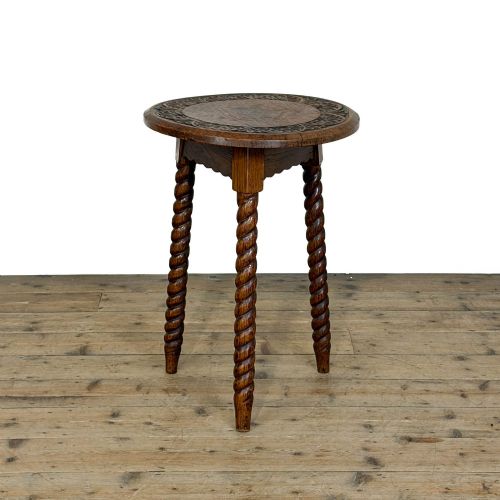
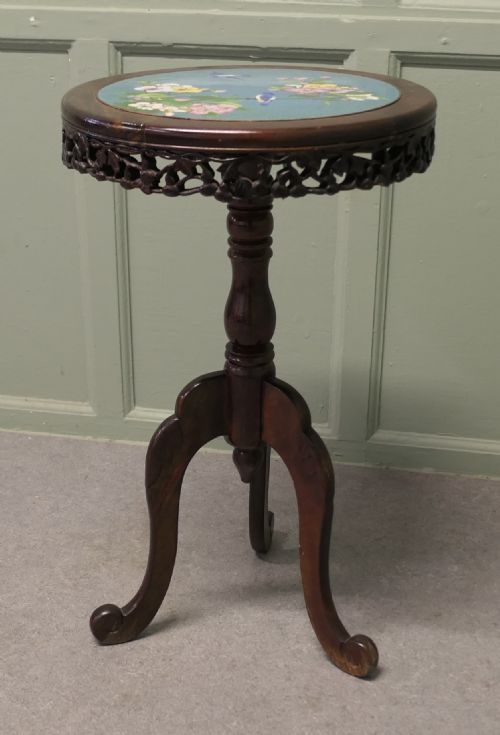
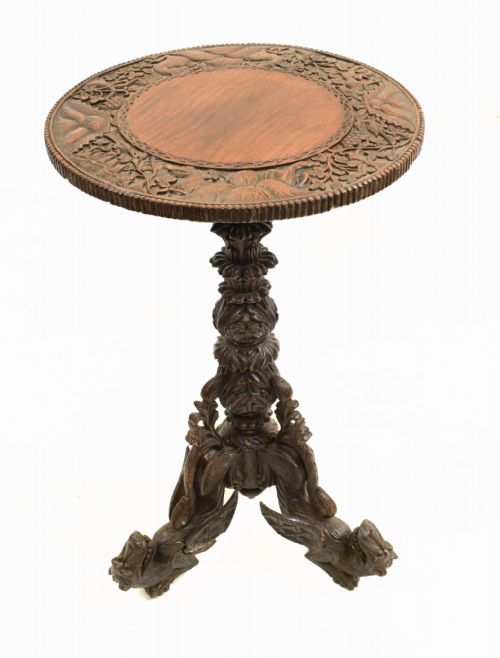
Examples range from restrained Georgian styles to heavily carved Anglo-Indian and rustic country creations. Buyers will find diverse timber choices, alongside occasional brass, iron, and onyx iterations.
Judging quality in tripod stands
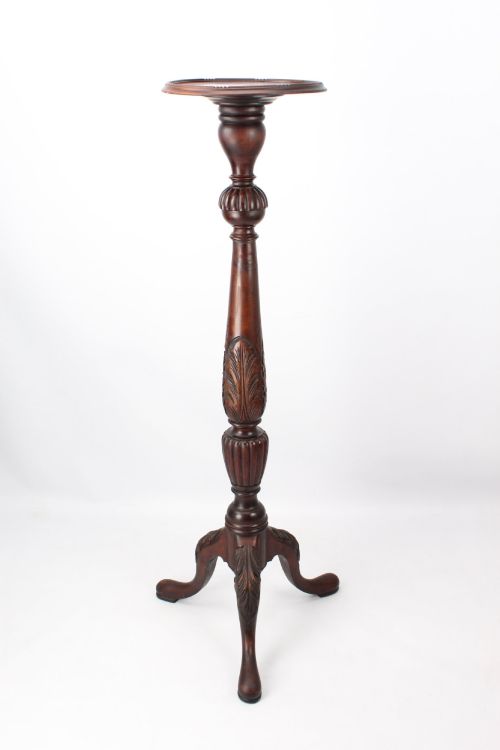
Quality rests upon the structural integrity of the three-legged joinery and the harmonious proportion of the central shaft to the top. Superior examples demonstrate crisp hand-carved details or precise inlay, whereas lesser pieces rely on plain turned components.
The choice of material heavily influences the calibre of the piece, with dense figured mahogany and exotic hardwoods achieving sharper carving and greater longevity than softer utility timbers.
Several pieces double as silent conversational partners, featuring carved dragons, elephants, and birds plucked from far-flung imaginations.
The Vintage Tripod Plant Stand Glossary
- Torchere
- A tall, slender stand originally designed to hold a candle or torch, later adapted to display plants and urns. These pieces typically feature a small top raised high on a decorative pillar and three supporting legs.
- Jardiniere
- An ornamental pot or stand for holding plants or flowers. In furniture terms, it describes tall pedestals specifically proportioned to support heavy botanical displays.
- Tripod base
- A furniture support consisting of three legs diverging from a central pillar. This arrangement provides natural stability on uneven floors.
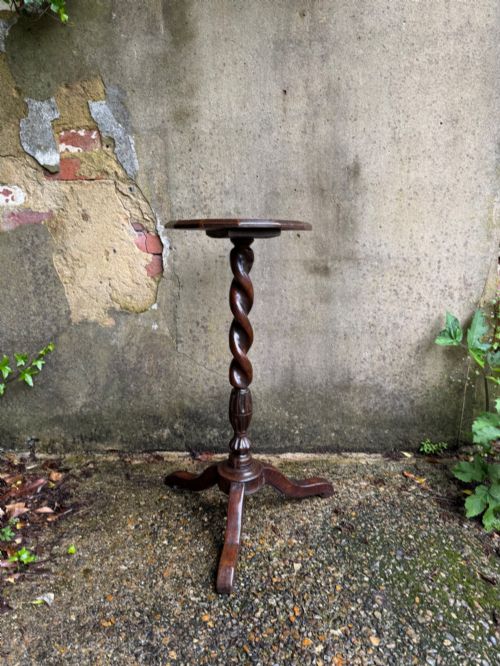
- Barley twist
- A decorative turning technique resembling a spiral rope. It is frequently seen on the central stems of Victorian and Edwardian stands.
- Inlay
- A technique where contrasting materials such as lighter wood or metal are inserted into depressions within the base wood to form decorative patterns.
Vintage Tripod Plant Stand: Frequently Asked Questions
What is a tripod plant stand used for?
These stands elevate potted greenery, ferns, and floral arrangements to create varying heights within a room. Their compact footprint makes them ideal for brightening empty corners or framing windows.
Historically, similar tall pedestals also supported lighting, decorative urns, or small display items. Today, they serve both practical botanical functions and purely decorative interior roles.
How do I date an antique plant stand?
Dating relies on observing stylistic markers, timber types, and construction methods associated with periods like the Georgian era, the Victorian age, or the Edwardian years. For instance, heavy carving and dark walnut point towards earlier centuries, while slender mahogany and satinwood inlay often indicate Edwardian production.
Examining the underside, fixings, and general wear patterns helps confirm whether a piece is a genuine antique or a later revival. Tool marks and fastener types offer further clues to the decade of manufacture.
Are these stands stable enough for heavy pots?
The three-legged design naturally accommodates uneven floor surfaces without rocking, providing reliable balance for moderate weights. However, the actual load capacity depends entirely on the sturdiness of the central column and the thickness of the timber.
Slender antique torcheres were originally built to hold lightweight candles or small decorative objects rather than heavy ceramic planters. Buyers should assess the physical build of each individual piece before placing heavy flora upon it.
What is the difference between a torchere and a plant stand?
A torchere is traditionally a tall, decorative pedestal designed to hold a light source or ornamental object, originating in the 18th century. Plant stands share this elevated form but are specifically adapted or reinforced to hold botanical specimens and damp pots.
In practice, antique dealers and makers often used the terms interchangeably because the slender proportions suit both functions equally well. Many pieces listed under this search phrase bridge both categories.