



Mahogany Planter Bucket
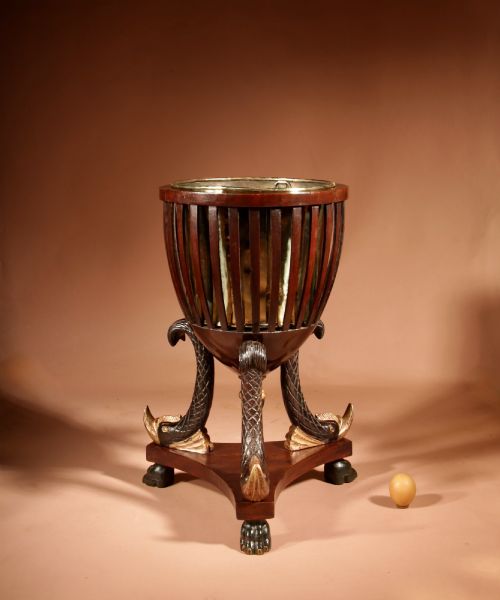
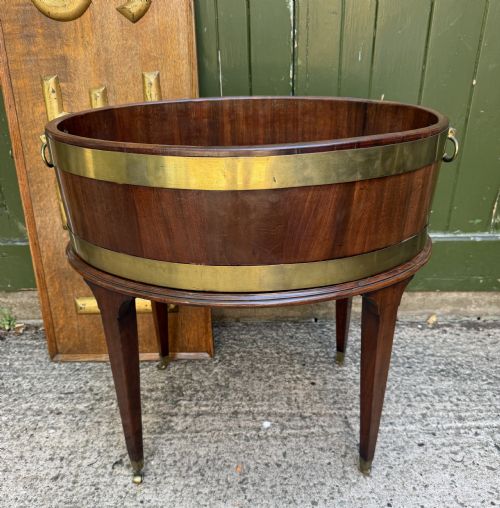
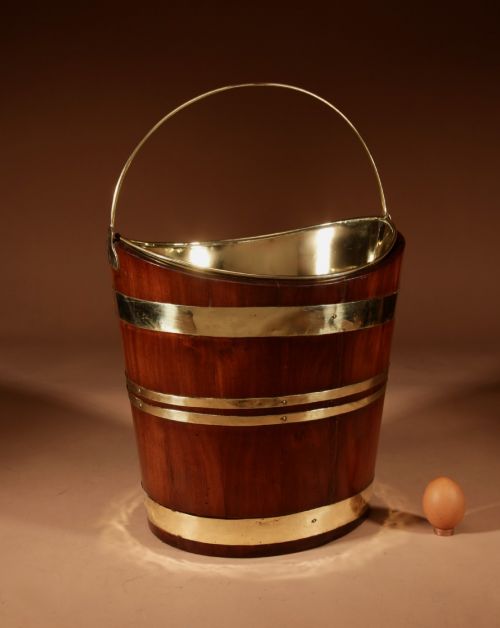
These mahogany planter buckets combine deep timber grain with heavy brass bands, serving as functional vessels for plants, wine, or peat.
Mahogany Planter Bucket
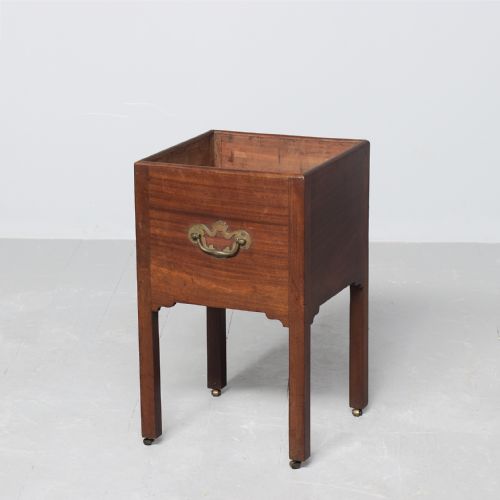
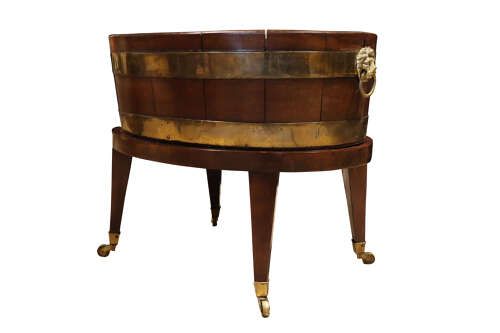
A mahogany planter bucket takes several traditional domestic forms, appearing frequently as oval or round wine coolers, cellarettes, and peat buckets. The examples gathered under this search phrase span centuries of cabinet-making, reflecting functional shifts from dining room beverage cooling to drawing room horticulture.
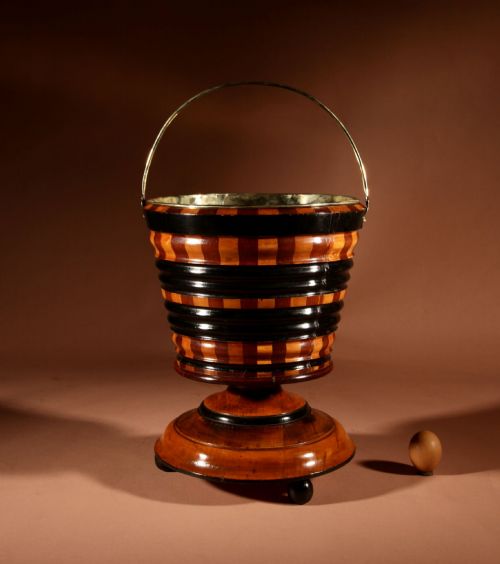
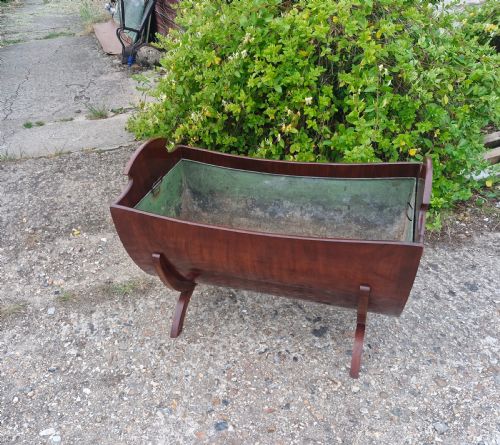
Many items show dual or multiple historical uses, doubling as tea stoves, log baskets, or jardinières. Coopered vessels with boat shapes, known as schuitjes, sit alongside simpler floor-standing cylinders and examples raised upon dedicated matching stands.
Georgian and Regency pieces dominate the earlier end of the timeline, whilst Edwardian revivals and later twentieth-century interpretations continue the tradition. Buyers encounter both compact miniature versions and large country house items built for heavy duty.
Materials and construction methods
Makers built these vessels primarily from solid mahogany, walnut, or ebonised wood, frequently employing coopered construction methods where vertical staves are shaped and bound tightly together. This barrel-making technique provided the structural strength required to hold wet earth, melting ice, or heavy fuel.
Metal components play a structural and decorative role, with heavy brass bands encircling the timber bodies and secured by pins or rivets. Liners made of zinc or metal protected the wood from moisture damage, whilst occasional boxwood inlay added refined surface detail to the staves.
The inventory records pieces incorporating brass, mahogany, zinc, metal, ebonised wood, walnut, coopered wood, and boxwood inlay.
Distinguishing craftsmanship and authenticity
Quality rests in the weight and thickness of the timber staves, the precision of the cooperage, and the gauge of the brass used for the bands and drop handles. Superior examples display tight, seamless joints that have remained stable across centuries of atmospheric change.
The presence of original interior liners, whether zinc or metal, elevates an item's historical integrity. Finer pieces also retain their original matching stands, whereas lesser or adapted items often appear without supporting frames or show mismatched later elements.
The Mahogany Planter Bucket Glossary
- Coopered
- Made by a cooper using curved wooden staves joined vertically and bound with metal hoops. This technique ensures the vessel remains watertight.
- Jardnière
- An ornamental stand or receptacle for holding growing plants or flowers. These items sit upon the floor or rest within dedicated wooden frames.
- Cellarette
- A lockable container or cabinet used to store wine bottles near the dining table. Many examples double as freestanding bucket coolers.
- Schuitje
- A boat-shaped Dutch vessel utilised historically as a peat bucket or tea stove. Their distinctive curved profiles sit low upon the floor.
- Peat bucket
- A deep container designed to hold dried turf or peat blocks for an open hearth. They frequently share identical construction with wine coolers.
Mahogany Planter Bucket: Frequently Asked Questions
How were mahogany planter buckets originally used?
These versatile vessels served primarily in dining rooms to chill wine and liquor bottles in ice and water. Alternatively, households utilised them by the hearth to store peat fuel or warm tea kettles.
Over time, many of these durable containers transitioned into decorative plant holders and indoor jardinières. Their robust construction allowed them to handle heavy damp soil and moisture without failing.
How do I tell an 18th-century piece from a later revival?
Eighteenth-century and early Regency examples show hand-cut dovetailing, heavy cast brass work, and rich, patinated timber surfaces developed through decades of polishing. The wood grain on older pieces often exhibits deeper figure and warmth.
Revival pieces from the Edwardian era or later twentieth century tend to feature machine-planed staves and lighter, brighter brass fittings. Examining the interior construction and wear patterns helps clarify the true age.
What is the difference between a wine cooler and a jardinière?
Wine coolers and cellarettes were engineered specifically with watertight metal linings to hold melting ice and bottles during dining hours. They often feature drop handles for carrying.
Jardinières focus purely on horticulture and display, though their physical construction remains virtually identical. Makers frequently adapted wine coolers for floral use as dining habits changed.