


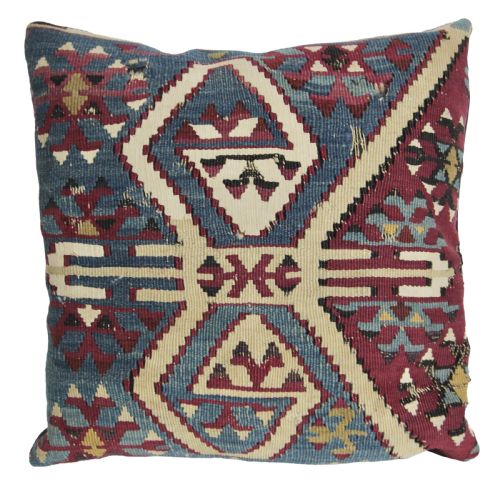

Vintage Tribal Cushion
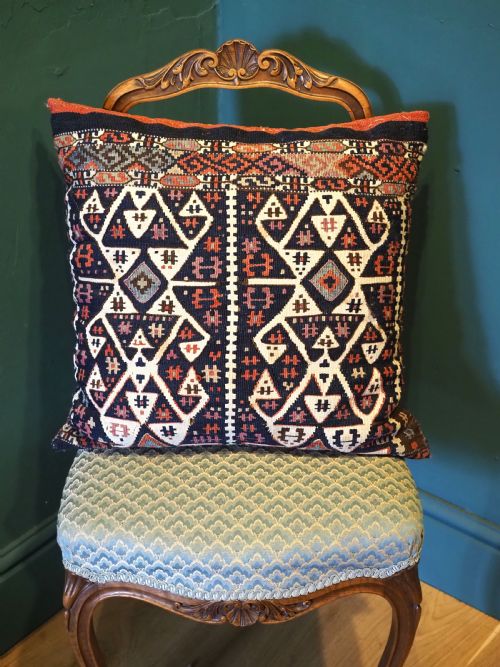
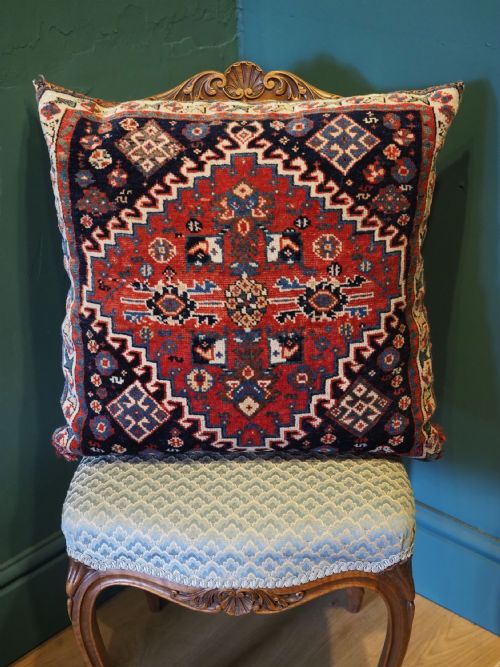
These vintage tribal cushion pieces bring nomadic textiles into modern rooms, formed from repurposed saddlebags, storage sacks, and kilims.
Vintage Tribal Cushion
When you search for a vintage tribal cushion, you encounter utilitarian textiles from Persian, Anatolian, and Turkmen weaving traditions that have been adapted into soft furnishings. The pieces on this page span the nineteenth and early twentieth centuries, originating as functional saddlebags, storage torbas, grain sacks, and kilims created by nomadic and village tribes.
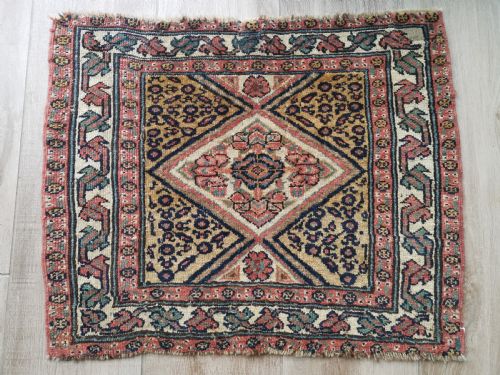
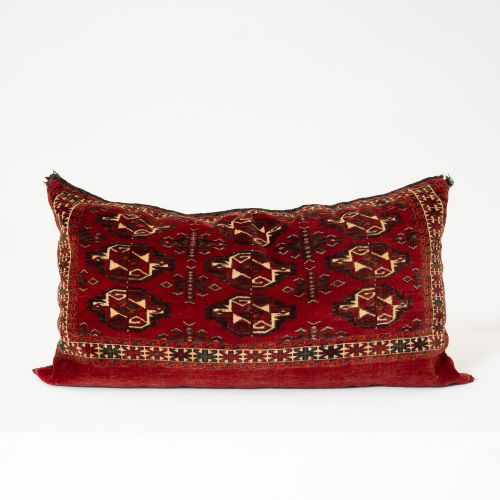
You are most likely to meet bag faces and rug fragments repurposed into cushions, retaining their original woven panels on the front. These items draw on regional designs such as boteh motifs, gul roundels, and banded weft work from groups including the Qashqai, Afshar, Baluch, and Bakhtiari tribes.
The objects combine historic tribal handiwork with domestic utility, presenting dense geometric patterns and pile or flatweave structures. Each cushion preserves a fragment of nomadic material culture, translating functional pastoral items into decorative textiles suited for interior seating.
How They Were Made
The construction relies on hand-spun wool, cotton foundation threads, and occasional goat hair for structural durability along the edges. Weavers utilised traditional upright or horizontal looms to produce tight warp and weft arrangements, creating durable pile carpets or flatwoven kilim and storage bag faces.
Natural and vegetable dyes provide the colour palette, yielding deep madder reds, indigo blues, and earthy yellows that mellow over decades of exposure and use. Artisans knotted or wove these materials by hand, incorporating complex geometric repeats and tribal symbols directly into the textile structure before later conversion into cushions.
Wheat sacks originally designed for agricultural storage in Western Persia now serve as comfortable decorative cushions.
What Varies in Quality
Quality depends upon the fineness of the weave, the density of the knotting or flatweaving, and the complexity of the tribal design. Tightly structured wool and intricate geometric execution distinguish finer nomadic work from simpler utilitarian pieces.
The richness and clarity of the natural dyes significantly influence the visual depth of the textile. Pieces retaining vibrant, saturated vegetable colours and well-balanced compositions represent the upper tier of tribal weaving traditions.
The Vintage Tribal Cushion Glossary
- Kilim
- A flatwoven textile produced without a pile, commonly utilised for rugs, bags, and coverings across Anatolia and Persia. These pieces rely on interlocking weft techniques to create sharp geometric patterns.
- Chuval
- A large Turkmen tent-storage bag traditionally used for bedding and household goods. Surviving fragments often feature distinctive gul motifs and rich red wool.
- Torba
- A smaller storage bag made by Turkmen and other nomadic groups for provisions or personal items. They typically display horizontal banded designs or repeated medallion patterns.
- Boteh
- An almond-shaped or paisley motif representing a floral spray or cypress tree in Persian and tribal weaving. This symbol appears frequently in saddlebag faces and rug cushions.
- Gul
- An octagonal medallion or floral motif used as a primary design element by Turkmen tribes. Each pattern often identifies a specific tribe or sub-group.
Vintage Tribal Cushion: Frequently Asked Questions
How are these cushions made from old bags?
Original tribal storage sacks, saddlebags, and kilim fragments are carefully cleaned and backed with complementary fabrics to create functional cushions.
The historical woven face remains intact on the front, preserving the original pile or flatweave structure created by nomadic weavers.
What periods do these pieces come from?
The items originate from the nineteenth century up to the early twentieth century, spanning periods of traditional nomadic production.
Dates are attributed based on material wear, structural techniques, and regional design characteristics recorded across the inventory.
How do I identify different tribal designs?
Distinctive motifs such as gul roundels, boteh sprays, and banded weft patterns point toward specific groups like the Turkmen, Afshar, or Baluch.
Each tribe utilised characteristic colour palettes and weaving structures that distinguish their output from neighbouring regions.
How should I care for a vintage wool cushion?
Gentle surface cleaning and regular airing help maintain the natural wool fibres and vegetable dyes without damaging the historic textile.
Keeping the cushion away from direct, prolonged sunlight prevents the natural colours from fading over time.