
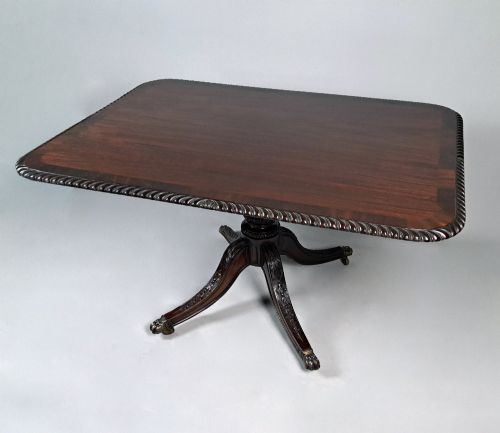
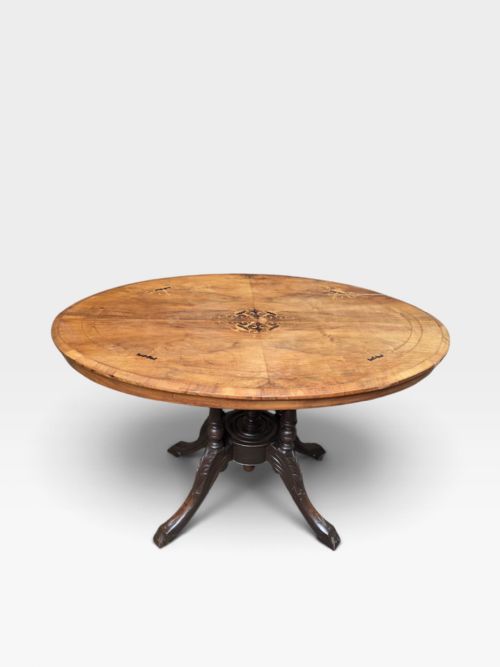


Vintage Tilt Top Dining Table
A vintage tilt top dining table offers clever folding function combined with rich timber grain, saving space while bringing period presence.
Vintage Tilt Top Dining Table
A vintage tilt top dining table combines practical utility with robust nineteenth century craftsmanship, designed to fold flat against a wall when not in daily use. These versatile pieces function as breakfast tables, centre tables, and occasional dining surfaces within larger rooms.
Most examples found here date from the Victorian and William IV periods, featuring circular tops supported on sturdy central pillars and pedestal bases. Timber choices range from rich figured mahogany and rosewood to oak and burr walnut, reflecting the domestic tastes of the Victorian era.
Buyers often encounter variations such as snap top tables and French country vendagne or vigneron tables alongside traditional British breakfast tables. Each format retains the characteristic pivoting mechanism that defines this functional genre of antique furniture.
How they were made
Cabinet makers utilised dense native and imported timbers, selecting figured mahogany, rosewood, and burr walnut for decorative surface veneers. These woods were expertly joined to solid timber carcases and mounted onto substantial octagonal or turned central pillars.
Mechanisms relied on sturdy brass latches and pivoting catches that allowed the heavy table tops to tilt securely into a vertical position. Pedestal bases typically terminated in robust platform feet or carved tripod supports for reliable balance.
What varies in quality
Quality rests primarily in the selection of the timber veneer and the precision of the pivoting mechanism. Finer tables display striking figured grain patterns across the circular top, whereas simpler utilitarian versions utilise plain pine or basic oak.
The architectural design of the central pedestal and pillar carving separates standard production items from exceptional cabinet work. Heavier rosewood and figured mahogany examples from the William IV and Victorian periods generally command greater presence through substantial proportions.
The Vintage Tilt Top Dining Table Glossary
- Tilt-top table
- A table featuring a hinged mechanism that allows the top to rotate into a vertical position when not in use. This clever design saved valuable floor space in nineteenth century parlours.
- Snap-top
- An alternative term for a tilt-top table utilising a spring catch or brass latch to lock the horizontal top firmly into place. The mechanism prevents accidental pivoting during regular dining use.
- Centre table
- A freestanding piece designed to be viewed from all sides rather than pushed against a wall. These tables often occupied the middle of a Victorian hallway or principal reception room.
- Breakfast table
- A large circular or oval table from the nineteenth century intended for morning dining. They frequently share the tilt-top format for convenient storage.
- Vendange table
- A traditional French country harvesting or wine table adapted for domestic dining use. They are commonly constructed from oak with simple folding frames.
Vintage Tilt Top Dining Table: Frequently Asked Questions
How do tilt top tables work?
A hinged wooden block beneath the circular top connects to the central pillar via a pivoting brass pin. Releasing a small catch allows the entire surface to swing upright into a vertical storage position.
When lowered back down, a secondary latch secures the top firmly against the pedestal base to prevent wobbling during meals.
Can I use a breakfast table for daily dining?
These nineteenth century pieces were built for active household use from solid timbers and robust veneers. Their sturdy central pillars easily support everyday meals and family gatherings.
Using heat mats and coasters protects the polished mahogany or rosewood surfaces from accidental marks during routine dining.
How do I distinguish William IV tables?
William IV examples typically feature heavy architectural proportions with bold octagonal pillars and substantial platform bases. Cabinet makers favoured dark tropical hardwoods like rosewood and heavily figured mahogany during this era.
Carved scrolling details and heavy scroll feet further distinguish pieces from the 1830s compared to later Victorian designs.
Where should I place a centre table?
Centre tables are designed to stand proudly in the middle of a room rather than against a perimeter wall. Their finished backs and all-round decorative detail suit entrance halls and spacious dining rooms.
The tilting mechanism also makes them practical for rooms where floor space needs to be cleared occasionally.