
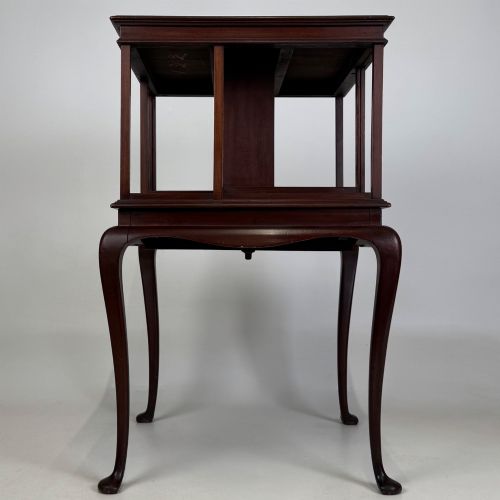
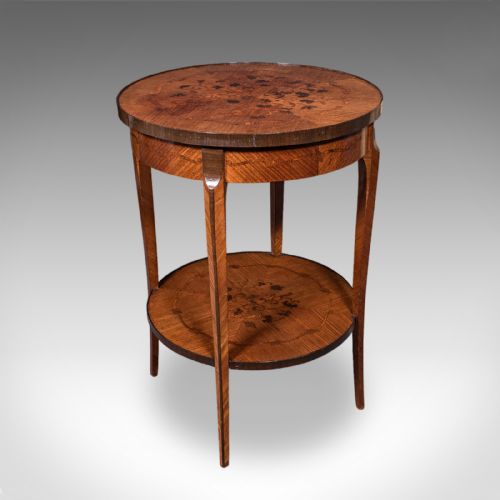
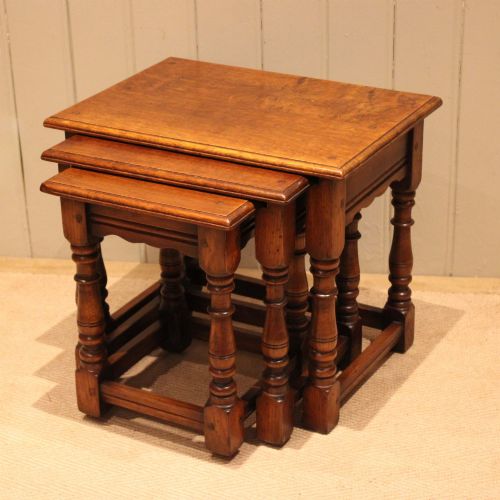
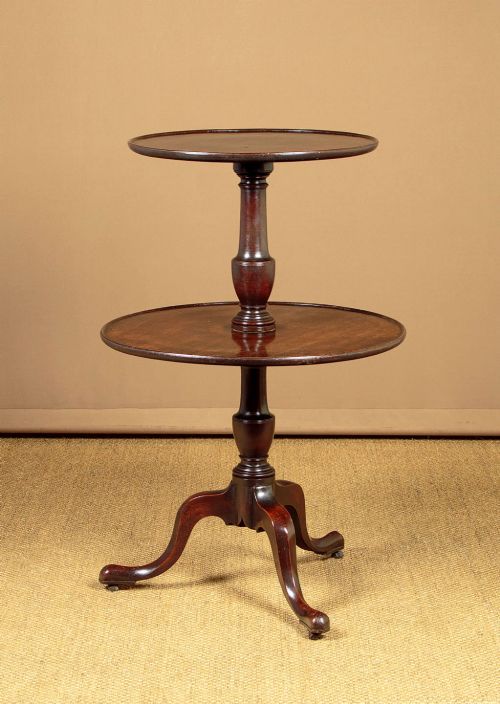
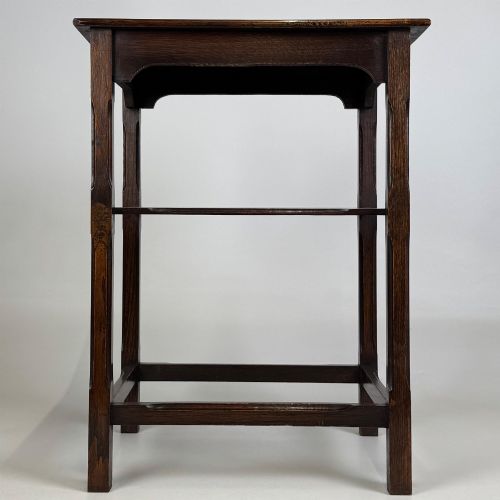
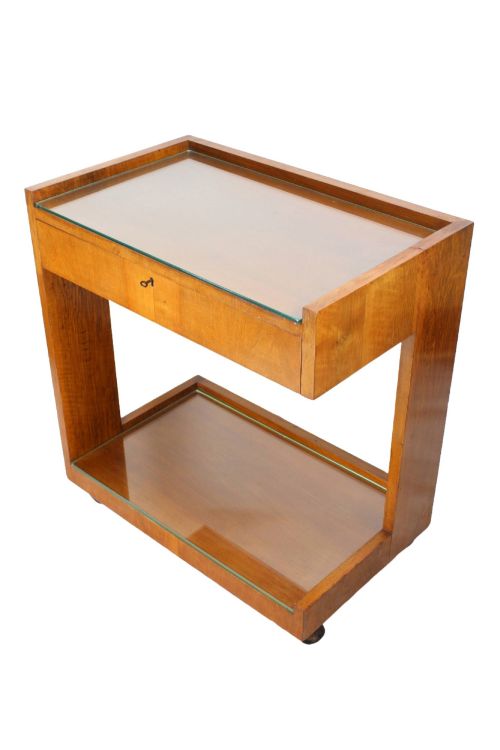
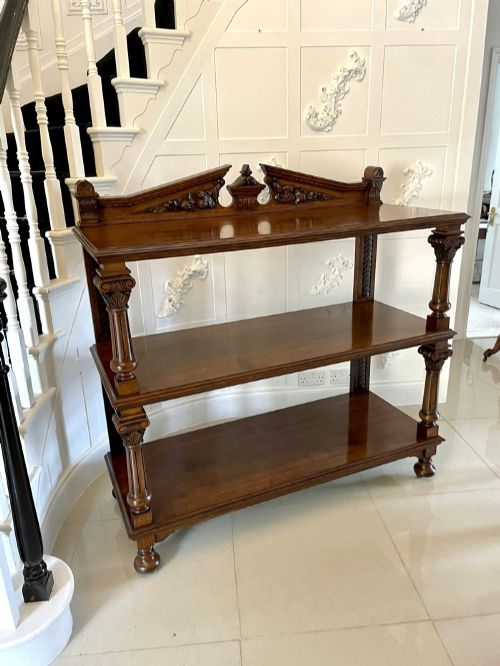
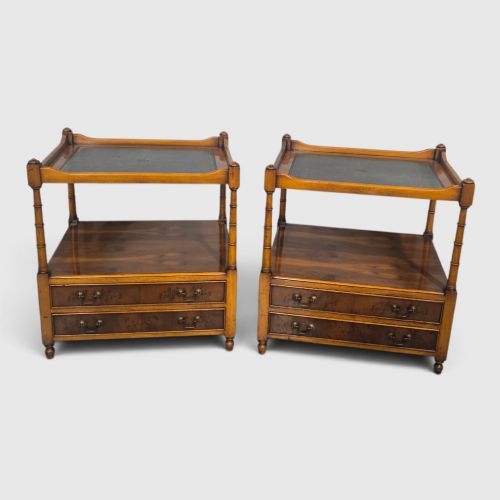
Vintage Tier Side Table
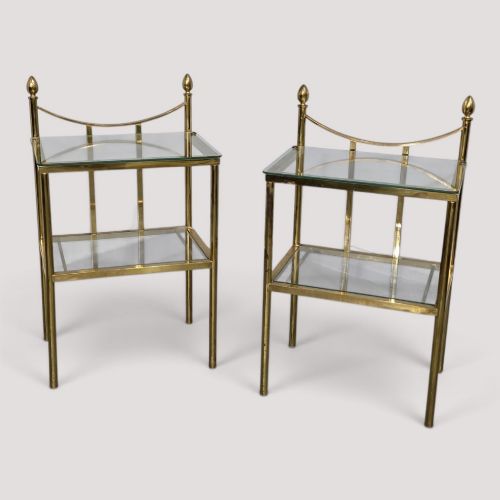
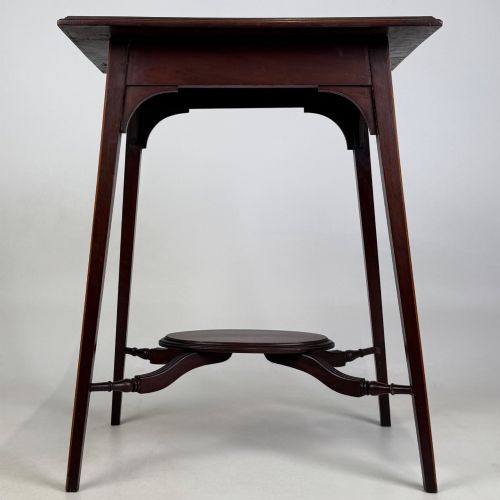
These vintage tier side table examples provide practical tiered surface space in timber, brass, and glass across periods from the Victorian era to Art Deco.
Vintage Tier Side Table
A vintage tier side table offers multi-level surface utility, frequently appearing as a two-tier or three-tier occasional table, plant stand, or etagère. These pieces span periods from the 19th Century through the Edwardian era and 1930s Art Deco.
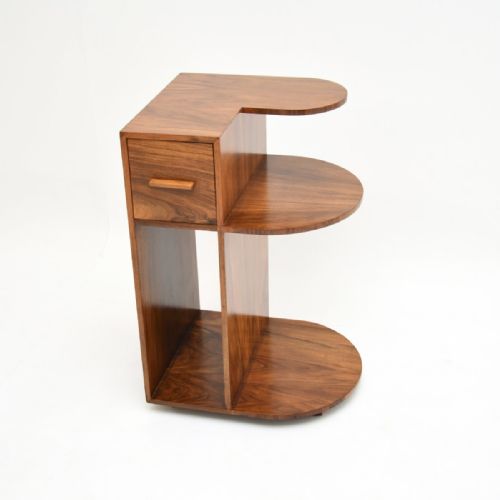
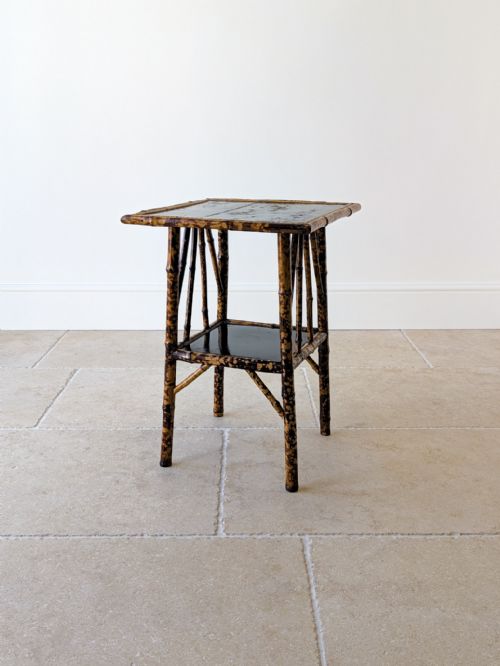
Buyers encounter forms ranging from Georgian mahogany dumb waiters and Victorian bamboo occasional tables to Art Deco figured walnut trolleys and oak Arts and Crafts pieces. The selection includes side tables, lamp tables, and nests of tables designed for compact display or service.
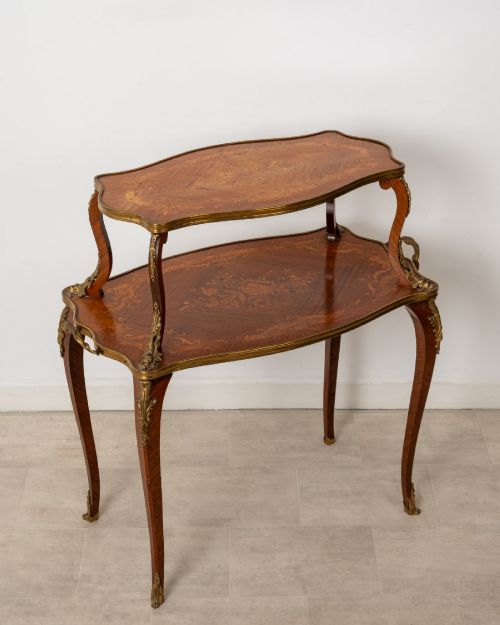
Origins include English workshops, Cotswold School designs, and French Louis XV style marquetry pieces. The core utility remains a stepped surface layout that accommodates objects on multiple levels within a domestic room.
Materials and construction methods
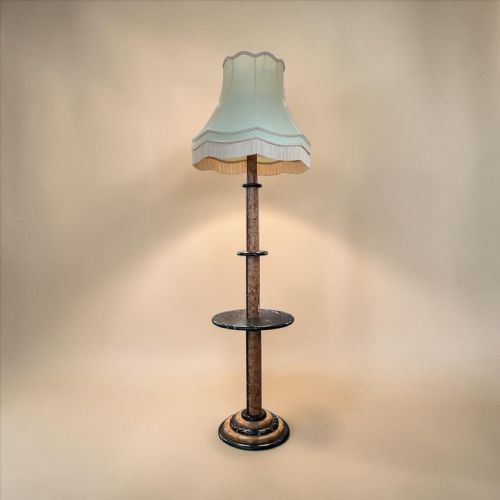
Cabinetmakers utilised solid timbers such as oak, mahogany, walnut, and rosewood, alongside walnut veneers and specialised applications like yew or kingwood marquetry. Metal and glass components appear in brass and glass lamp tables, lacquered brass frames, and bamboo occasional pieces.
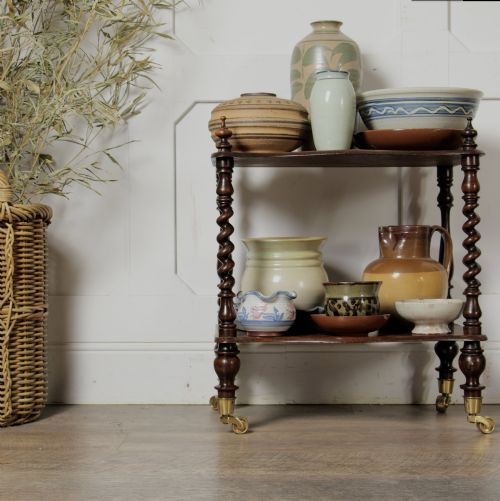
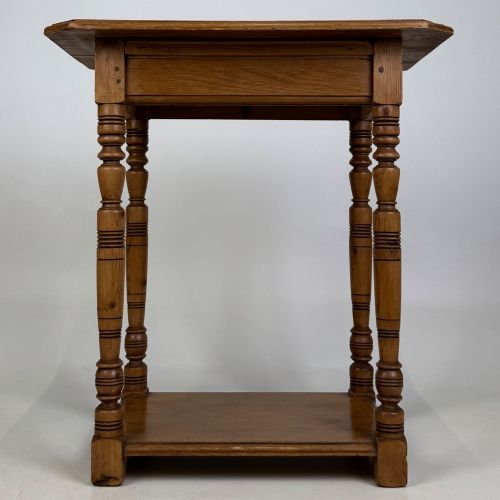
Construction techniques involve traditional joinery, turning such as barley twist standards, and surface treatments including polished mahogany, limed oak, painted finishes, and tooled leather inserts. Multi-tier frames rely on secure vertical supports to separate shelves or trays.
Some Victorian bamboo occasional tables brought botanical exoticism straight into conservative British parlours.
Distinctions in quality and execution
Quality rests upon the selection of timber grains, such as figured walnut or distinct oak quarters, and the precision of decorative elements like marquetry inlay or brass mountings. Finer pieces demonstrate careful proportion between the tiers and structural stability across multiple levels.
Execution varies from straightforward utilitarian oak trolleys to highly decorative French etagères and Arts and Crafts specimen tables. The integration of materials, whether solid hardwood, brass, marble, or leather, determines the finish of the piece.
The Vintage Tier Side Table Glossary
- Étagère
- A piece of furniture consisting of a set of open shelves for displaying small objects or serving. These are often multi-tiered and constructed in woods like mahogany, rosewood, or kingwood.
- Dumb waiter
- A multi-tiered piece designed to hold food, drinks, or service items without the need for constant staff attendance. Examples range from Georgian mahogany formats to Victorian stands.
- Nest of tables
- A set of graduated tables designed to fit neatly one beneath another when not in use. They frequently appear in oak or walnut from the early 20th century.
- Barley twist
- A form of woodturning resembling a spiral rope. This decorative column style is commonly found on Victorian and Edwardian stands and table supports.
- Occasional table
- A small, light table intended for sporadic use in a sitting room or bedroom. They occur across various periods in forms such as lamp tables and plant stands.
Vintage Tier Side Table: Frequently Asked Questions
What is a vintage tier side table used for?
These tables provide extra surface space on multiple levels for lamps, drinks, books, or decorative plants. The tiered design allows for efficient placement in smaller rooms.
They function beside seating areas or in corners where a standard single-surface table provides insufficient display or storage capacity.
How do I identify an Art Deco tier table?
Art Deco examples often feature figured walnut, limed oak, or rosewood with clean geometric lines or curved tier structures. They frequently date from the 1930s.
Unlike ornate Victorian or Edwardian pieces, these tables emphasise smooth polished wood grains and streamlined multi-tier architectural profiles.
What woods were used for Edwardian tier tables?
Edwardian makers frequently used mahogany, oak, and rosewood, sometimes combined with brass elements or painted finishes. These woods reflected both traditional tastes and lighter aesthetic preferences.
Selected pieces incorporate inlaid details or tiered plant stands designed for domestic display spaces of the early 20th century.
Are these tables sturdy enough for daily use?
Most multi-tier tables are constructed with solid wood frames or secure veneered shelves designed to support everyday objects like lamps and books. Proper vertical supports ensure stability across the tiers.
Care should be taken to distribute weight evenly, particularly on lighter formats such as bamboo occasional tables or etagères.