


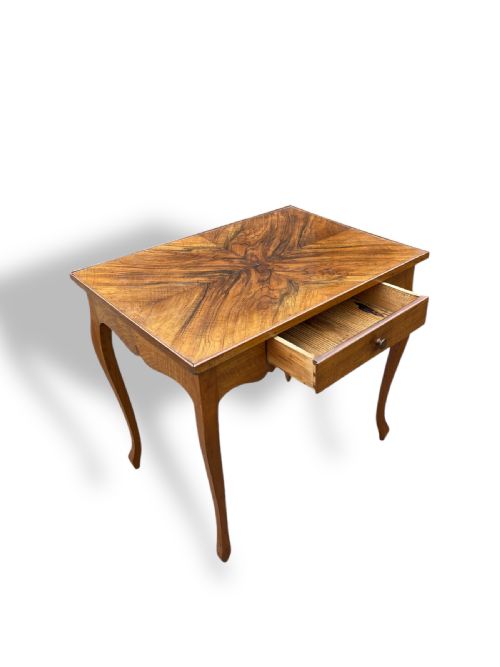


Walnut Veneer Nightstand
These walnut veneer nightstand pieces offer compact bedside storage with striking grain patterns, spanning Art Deco to earlier Revival styles.
Walnut Veneer Nightstand
A walnut veneer nightstand brings compact bedside storage and display space to a bedroom through forms such as bedside tables, cabinets, and chests. Buyers encounter bedside tables and cabinets alongside occasional and side tables serving the same function.
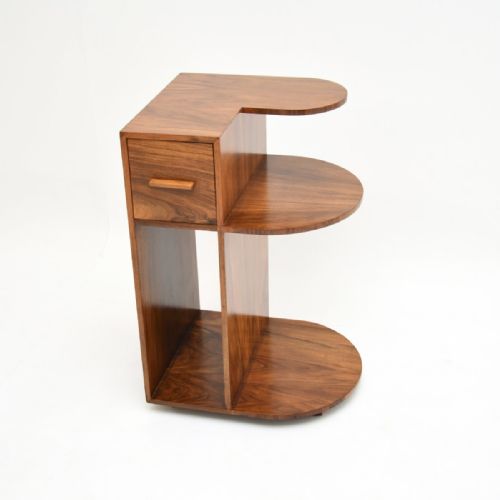
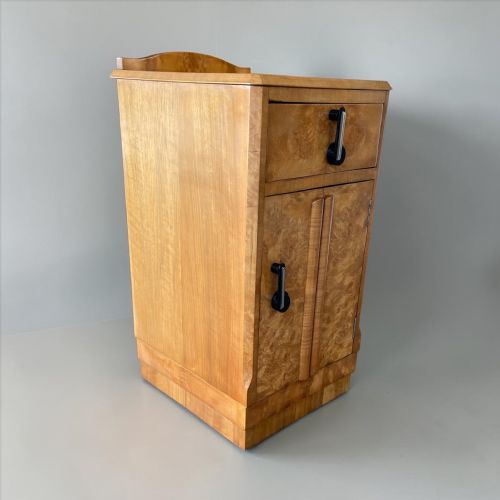
The pieces on this page lean heavily towards the Art Deco period of the nineteen-thirties, alongside examples from nineteen ten, nineteen twenty, eighteen seventy, and the nineteenth century. Makers and designers such as Maurice Adams appear among English and French interpretations of the form.
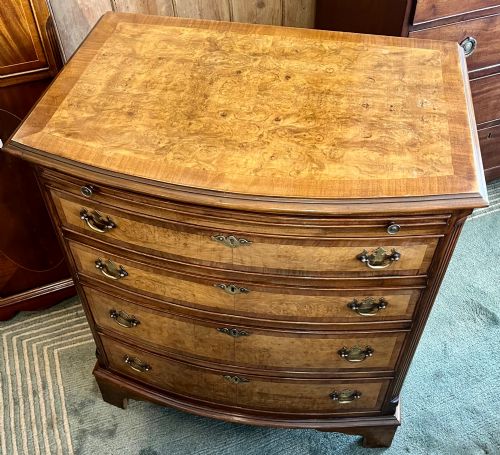
Styles range from geometric Art Deco designs to Louis XV Revival, French Provincial, and Georgian Revival. Buyers will find single pieces as well as matched pairs finished in distinct regional tastes.
Materials and construction methods
Makers utilised walnut and walnut veneer as the primary surface materials, often selecting burr walnut, figured walnut, or quartered walnut to showcase complex wood grains. Supporting elements incorporate satinwood, cherry, wood, and brass or chrome hardware.
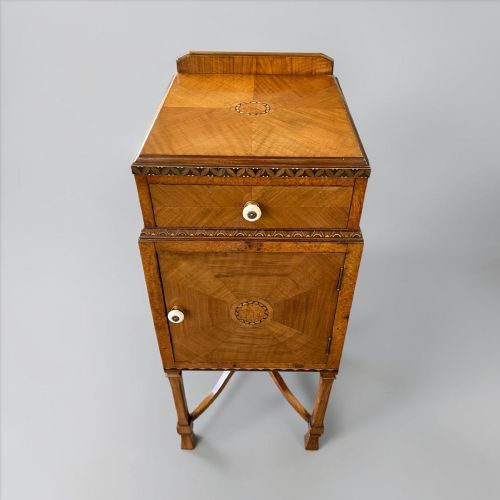
Surface decoration relies on parquetry and inlaid veneers, paired with mirror tops in specific Art Deco instances. Carved detailing and cabinet framing ground the decorative wood surfaces in solid structural timber.
Some Art Deco tables throw in a mirror top so you can check your reflection before you even get out of bed.
Judging quality in veneered bedside furniture
Quality rests on the selection and matching of the timber veneers, where quartered, burr, or figured walnut displays deliberate grain symmetry across the top and drawer fronts. Lesser examples rely on plain timber surfaces without considered grain placement.
Construction integrity depends on the precision of parquetry work and the integration of secondary woods like satinwood or cherry. Well-executed hardware in brass or chrome and stable cabinet joints distinguish finer pieces.
Maurice Adams
The Walnut Veneer Nightstand Glossary
- Walnut veneer
- A thin layer of walnut timber applied to a core structure to display decorative grain patterns. This technique allows makers to utilise striking figures like burr or quartered walnut efficiently.
- Parquetry
- A geometric mosaic of wood pieces used for decorative surfaces on tables and cabinets. It requires precise cutting and fitting of different timber sections.
- Art Deco
- A design style from the nineteen-thirties characterised by sleek lines, geometric shapes, and modern materials. Pieces from this era often feature streamlined silhouettes and contrasting wood veneers.
- Louis XV Revival
- A nineteenth-century style imitating the ornate curves and naturalistic motifs of the French rococo period. These pieces frequently incorporate cabriole legs and delicate proportions.
Walnut Veneer Nightstand: Frequently Asked Questions
What periods do these nightstands come from?
The selection includes pieces from the nineteen-thirties Art Deco era, alongside examples from nineteen ten, nineteen twenty, eighteen seventy, and the nineteenth century.
Revival styles draw on earlier French and English design traditions while retaining the manufacturing techniques of their actual period of production.
Are pairs common in these listings?
Many listings feature matched pairs of bedside chests, tables, and cabinets alongside single lamp and occasional tables.
Pairs are often matched in veneer type and style, making them suitable for placing on either side of a bed.
What wood types besides walnut appear?
While walnut and walnut veneer dominate the surface work, secondary and accent materials include satinwood, cherry, and standard wood framing.
Metal elements in brass and chrome appear as handles and structural accents, particularly on Art Deco pieces.
How do Art Deco models differ from Revival styles?
Art Deco pieces focus on clean geometric lines, symmetrical grain patterns, and sometimes mirror glass tops. They reflect the modern aesthetic of the nineteen-thirties.
Revival styles such as Louis XV and Georgian Revival lean towards curved silhouettes, ornate woodwork, and traditional decorative motifs.