

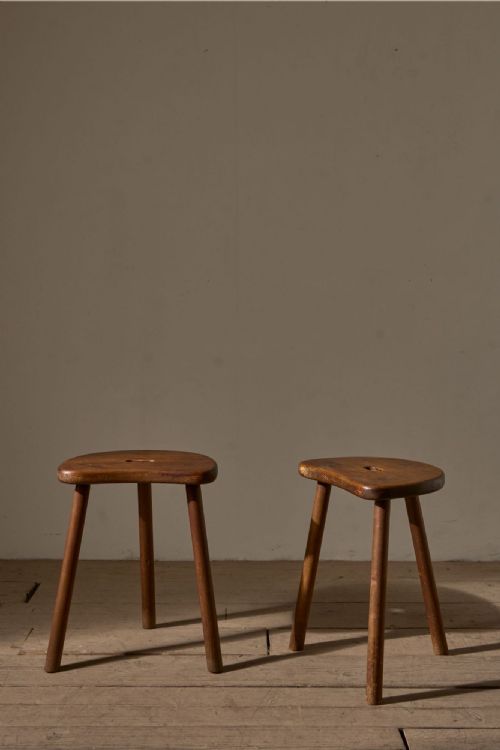

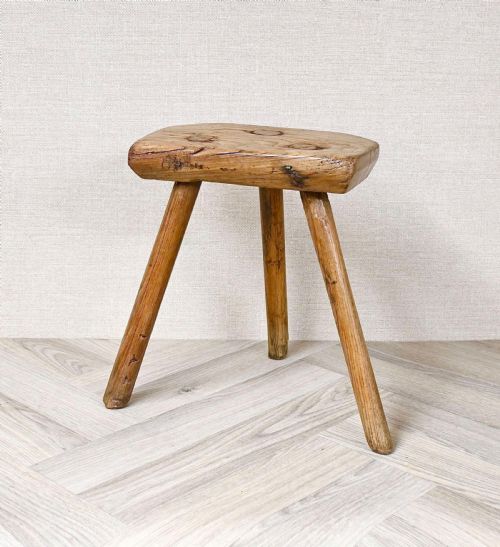


Vintage Three Leg Stool
A vintage three leg stool offers unpretentious character and sturdy practicality, shaped by generations of rural use and artisan trade.
Vintage Three Leg Stool
A vintage three leg stool brings immediate rustic utility to a room, drawing on centuries of domestic and agricultural tradition. Buyers searching this phrase typically encounter robust country pieces designed for milking, chopping or workshop tasks, alongside occasional decorative variants.
The selection ranges from simple vernacular forms dating back to the eighteenth century through to Victorian artisan seats and later revival styles. Oak, elm, pine and beech dominate the construction, reflecting the local timber available to early makers who prioritized function above all else.
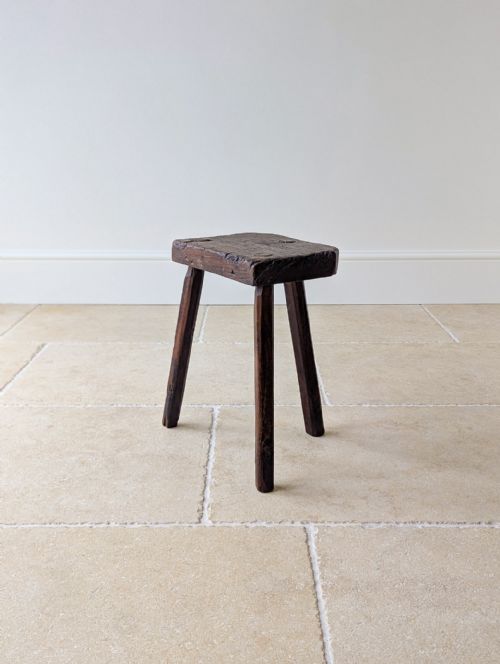
Makers shaped these tripod seats to remain stable on uneven farmhouse floors, a practical geometry that defines their enduring appeal. Whether configured as low milking seats or taller artisan perches, they function equally well as standalone decorative objects or side tables.
Materials and construction
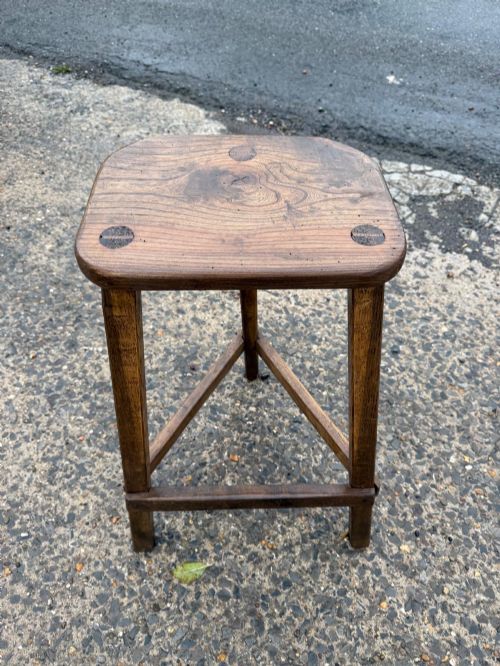
Makers relied on native hardwoods such as oak, ash, elm and beech, often combining multiple timbers within a single piece. Seats were frequently carved from solid slabs or thick planks, while legs were turned on a lathe or shaped with drawknives before being secured with wedge-tenon joints.
Construction techniques prioritized strength and straightforward assembly, utilising wedged tenons where leg tops pierce straight through the seat. Surfaces display the tool marks of adzes, drawknives and planes, showing the direct intervention of the maker's hand.
Vintage Three Leg Stool Retail Price Guide 2026
Typical asking prices for vintage three leg stool among the pieces listed under this phrase on Sellingantiques today, from the lower quarter to the upper quarter. They describe what is for sale here now, not the wider market.
Listings span from the eighteenth century through to the early twentieth century, showcasing oak, elm, pine, beech and ash across vernacular and Arts and Crafts styles.
Markers of quality and integrity
Superior examples exhibit thoughtful proportion, harmonious timber grain and evidence of honest, period use rather than excessive modern intervention. The connection between the three legs and the underside of the seat reveals the maker's skill in achieving structural stability without complex hardware.
The best pieces retain their original surface patination, developed through decades of domestic handling and wax polishing. Quality lies in the integrity of the timber and the retention of original components, distinguishing genuine vernacular work from later decorative imitations.
Thonet
The Vintage Three Leg Stool Glossary
- Vernacular
- Everyday objects made by local craftsmen for practical use rather than following high-style academic designs. These pieces derive their form purely from regional traditions and available materials.
- Milking stool
- A low three-legged seat traditionally used by agricultural workers for milking livestock. The tripod design ensured stability on uneven barn floors and muddy ground.
- Game block
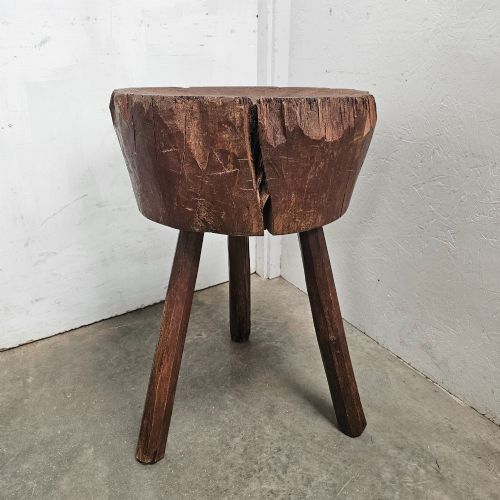
- A heavy timber section or tree trunk slice used in butchery or game preparation. These dense blocks display deep surface scoring from heavy cutting implements.
- Bobbin turned
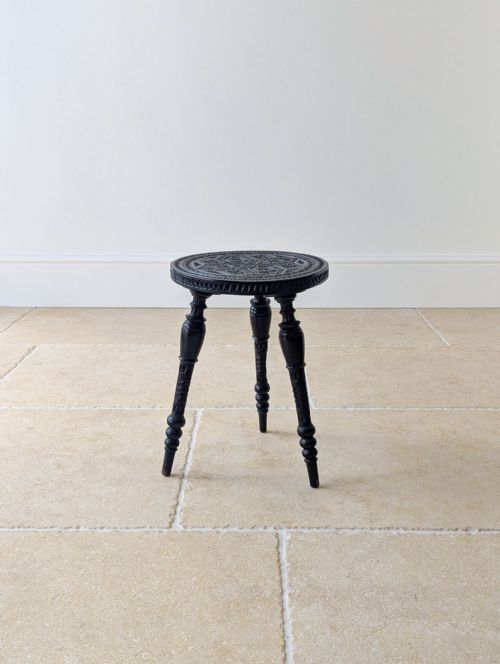
- A style of furniture leg or stretcher shaped on a lathe to resemble a series of wooden reels or bobbins. This decorative turning became popular in seventeenth-century English furniture and later revivals.
- Pokerwork
- A decorative technique using heated metal tools to burn designs into a wooden surface. Scottish pieces occasionally feature traditional inscriptions and motifs applied with this method.
Vintage Three Leg Stool: Frequently Asked Questions
Are three leg stools actually stable?
Yes, three legs naturally adjust to uneven surfaces without rocking, which explains their historical popularity in barns, dairies and workshops.
This geometric advantage makes them uniquely practical for placement on uneven antique floorboards or flagstones.
How do I date a wooden stool?
Dating relies on identifying the tool marks, timber species, joint construction methods and the natural wear patination accumulated on the seat.
Earlier pieces often feature pit-sawn timber and hand-carved saddle seats, whereas later nineteenth-century examples may show mechanized turning.
Can I use an antique stool as a side table?
These sturdy platforms make ideal bedside tables, plant stands or chairside perches for books and small lamps.
Their compact footprint allows them to fit easily into tight corners where standard four-legged tables would prove too bulky.
What is a game block stool?
Game blocks are thick slices of hardwood, such as beech or oak, originally utilised for butchery and game preparation.
Heavy usage leaves distinct cross-grain scoring across the top surface, giving each heavy block a striking sculptural texture.