









Vintage Textile Runner
A vintage textile runner brings centuries of tribal weave, embroidery and tapestry into a modern hallway or living space.
Vintage Textile Runner
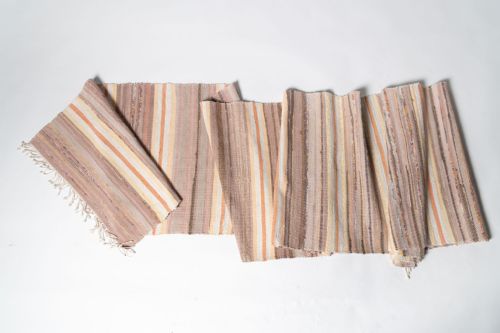
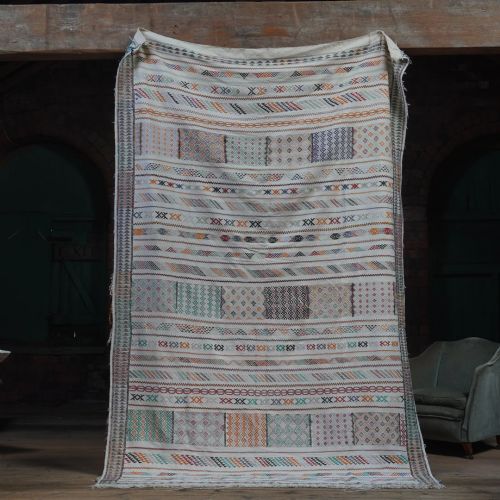
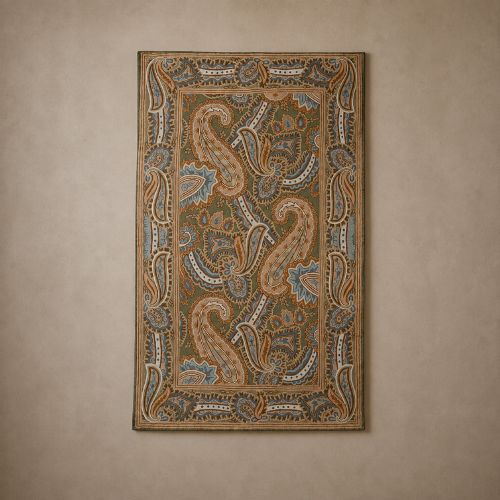
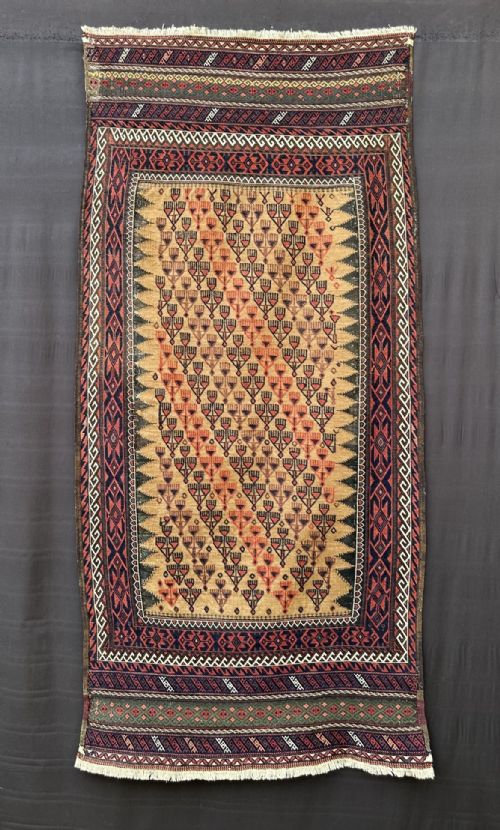
A vintage textile runner encompasses long, narrow floor coverings, tribal fragments, and decorative wall panels sourced from regions spanning Central Asia, Persia, Europe, and Morocco. These pieces range from flat-woven kilims and storage bagfaces to long silk panels and embroidered tent bands.
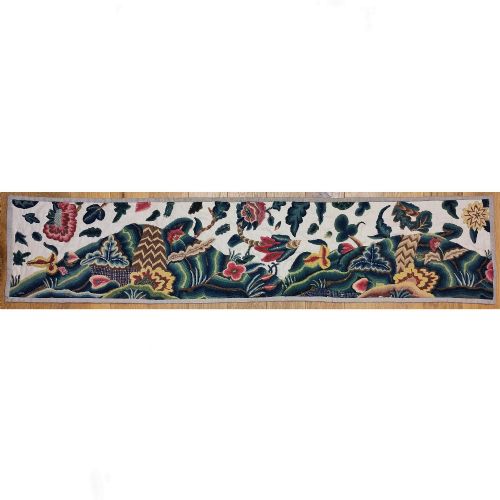
The selections visible here concentrate heavily on tribal weaving traditions from the nineteenth and early twentieth centuries. Buyers encounter Anatolian, Caucasian, and Turkmen pieces alongside English crewelwork and Scandinavian country formats.
The physical format is dictated by original function, such as nomadic tent bands, narrow Sofreh dining cloths, or elongated carpets meant for specific architectural spaces. Their elongated proportions make them suited to hallways, staircases, and gallery walls.
Materials and Construction Techniques
Construction relies primarily on wool, cotton, silk, and linen, often combined with metallic thread, velvet, or sabra cactus fibre depending on the origin. Weavers utilised flat-weaving, knotting, and intricate embroidery on grounds of felt, cotton, or wool.
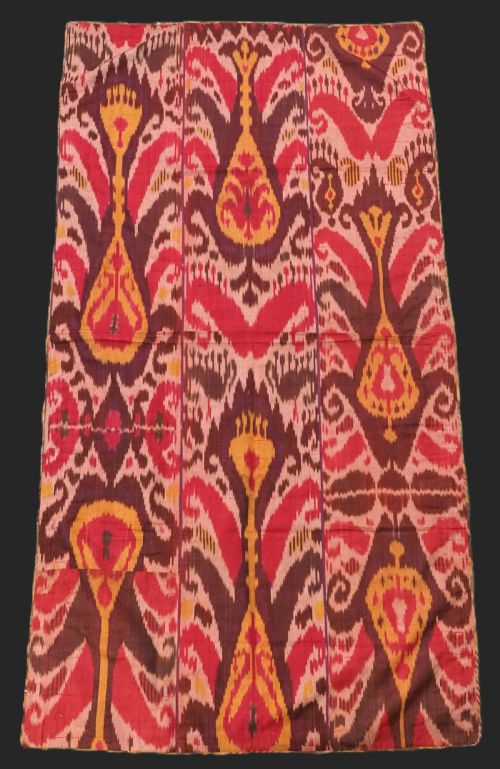
Many Central Asian and Persian examples employ strip-weaving techniques, joining multiple narrow woven sections together to form wider panels or substantial covers. Embroidery styles such as crewelwork, Suzani needlework, and Rasht satin stitch build dense surface patterns over plain woven foundations.
Vintage Textile Runner Retail Price Guide 2026
Typical asking prices for vintage textile runner among the pieces listed under this phrase on Sellingantiques today, from the lower quarter to the upper quarter. They describe what is for sale here now, not the wider market.
Nomadic weavers occasionally inserted deliberate imperfections into geometric patterns to ward off the evil eye.
Distinguishing Quality in Woven Textiles
Quality rests on the integrity of the structural weave, the precision of the needlework, and the stability of the ground material. Denser knotting or finer embroidery stitches indicate superior craftsmanship and greater durability in daily use.
The choice and preservation of dye materials heavily influence aesthetic value, particularly where vegetable or natural dyes have aged with harmonious subtlety. Integrity of original borders, minimal intervention in past repairs, and structural soundness set finer examples apart from heavily compromised fragments.
The Vintage Textile Runner Glossary
- Kilim
- A flat-woven carpet or rug produced without a pile, common throughout Turkey, the Caucasus, and Central Asia. They are created by tightly interweaving warp and weft strands.
- Suzani
- A type of embroidered and decorative tribal textile made in Tajikistan, Uzbekistan, and other parts of Central Asia. Usually worked in silk thread on a cotton or linen foundation.
- Sofreh
- A cloth or textile spread upon the floor or ground for dining, dough preparation, or ritual meals in Persian and nomadic cultures. Often rectangular or elongated in format.
- Torba
- A small Turkmen storage bag or trapping used inside a yurt for household belongings. They frequently feature characteristic gul motifs and secondary guls.
- Crewelwork
- A type of surface embroidery using wool yarn on a heavy linen or cotton twill fabric. Traditional English examples often depict scrolling floral and botanical motifs.
Vintage Textile Runner: Frequently Asked Questions
Can these runners be used on floors?
Many examples function well as floor coverings in low-traffic areas, provided a quality underlay is used to prevent slipping and reduce abrasion. Flat-woven kilims and sturdy runner rugs tolerate gentle foot traffic when protected this way.
Delicate silk panels, wall hangings, and fragile embroidered fragments are better suited to vertical display or low-traffic placement away from direct sunlight.
How are wall panels mounted safely?
Mounting is best achieved by stitching a cotton or linen sleeve to the reverse edge and sliding a slim wooden batten through it. This distributes the weight evenly across the entire top edge rather than stressing isolated points.
Direct gluing, nailing, or pinning should be avoided entirely because piercing historic silk, wool, or linen causes permanent structural damage to the fibres.
What indicates a piece is tribal rather than commercial?
Tribal pieces display asymmetrical motifs, natural irregularities in the weave, and dye variations resulting from small-batch preparation. These variations reflect domestic production for personal use or local community exchange.
Commercial or workshop pieces typically show strict geometric symmetry, uniform machine-spun yarns, and standardised sizing designed for export markets.