



Vintage Tapestry Hearth Screen
A vintage tapestry hearth screen offers both practical warmth protection and a decorative focal point, bringing period textile art directly into the modern living room.
Vintage Tapestry Hearth Screen
When you search for a vintage tapestry hearth screen, you encounter functional fire guards featuring needlework, needlepoint, or canvas panels designed to shield rooms from open flames. The selections span periods from the Georgian era through the Victorian epoch and into the twentieth century.
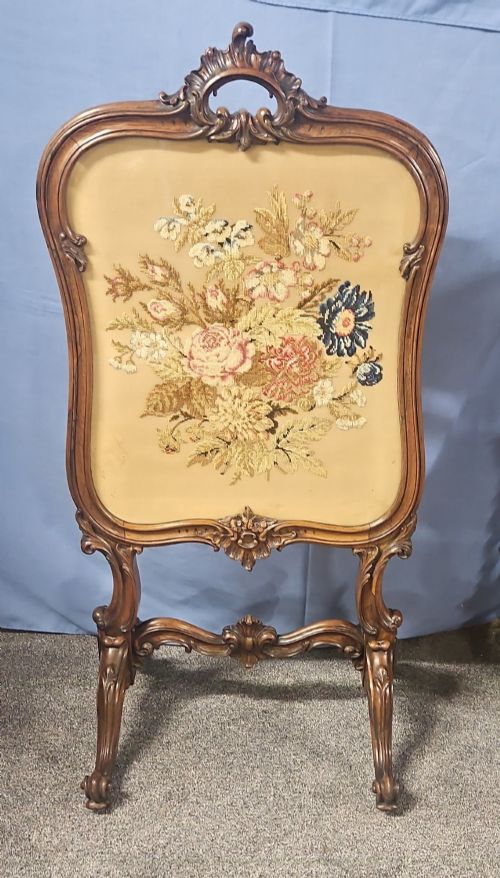
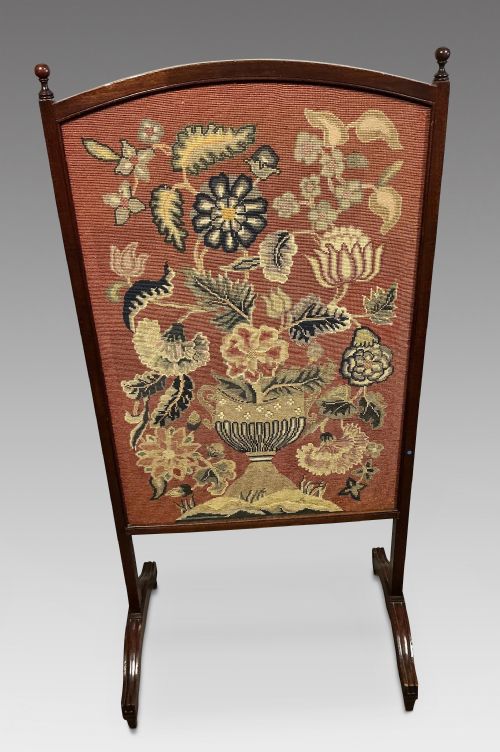
Most examples found here take the form of either standing pole screens with adjustable panels or framed firescreens resting on carved bases. Materials range widely across mahogany, rosewood, walnut, and oak frames paired with detailed textile pictures.
The styles shift from restrained Regency lines to elaborate Victorian Rococo Revival carving and decorative Art Nouveau brass work. Buyers primarily meet Victorian walnut or mahogany iterations alongside earlier needlework sampler designs.
How they were made
The structural frameworks utilise dense timbers such as mahogany, rosewood, walnut, and carved oak, often shaped with bobbin turning or elaborate figural woodwork. Pole screens incorporate adjustable brass mechanisms allowing the textile panel to slide vertically to block radiated heat.
The inserted panels rely on wool, canvas, and textile needlepoint or needlework to create pictorial scenes, geometric samplers, or parrot motifs. Glazed protection sometimes covers the delicate needlework to prevent soot and ash damage from active hearths.
Vintage Tapestry Hearth Screen Retail Price Guide 2026
Typical asking prices for vintage tapestry hearth screen among the pieces listed under this phrase on Sellingantiques today, from the lower quarter to the upper quarter. They describe what is for sale here now, not the wider market.
Current listings feature frames built from mahogany, rosewood, walnut, oak, and brass, paired with wool, canvas, and glass.
What varies in quality
The distinction between ordinary and exceptional pieces rests primarily on the crispness of the timber carving and the complexity of the needlework panel. Solid rosewood or elaborately carved walnut frames with grand proportions command greater attention than simple turned pine or plain oak.
The intricacy of the wool tapestry work itself dictates the visual success of the piece, with finely stitched pictorial sampler scenes outperforming basic mechanical textiles. Original brass adjustment hardware and intact glazing further elevate the standing of an individual screen.
The Vintage Tapestry Hearth Screen Glossary
- Pole screen
- A standing fire screen featuring a vertical wooden shaft where a framed textile panel adjusts up and down via a collar mechanism. This design allowed occupants to position the screen to block radiant heat from the fireplace.
- Needlepoint
- A type of canvas work embroidery stitched by hand using wool yarn to create dense pictorial or geometric surfaces. It forms the central decorative panel in the majority of hearth screens.
- Bobbin turned
- woodwork created on a lathe to produce a series of rounded, spool-like swellings and rings along the length of a furniture leg or frame moulding. This decorative turning technique appears frequently on Victorian mahogany and walnut frames.
- Rococo Revival
- A nineteenth-century design style characterised by asymmetrical flowing curves, naturalistic leaf motifs, and elaborate scrollwork. It heavily influences the carved frames of many Victorian fire screens.
Vintage Tapestry Hearth Screen: Frequently Asked Questions
What is a pole screen?
A pole screen is a tall, slender standing fire guard featuring a vertical wooden shaft and a sliding textile panel. The adjustable panel moves up and down to block radiant heat from the hearth.
These pieces were traditionally placed near fireplaces to protect ladies' complexions from excessive heat. They served as both functional furniture and displays for fine needlework.
Are needlework and tapestry the same?
Needlework encompasses any textile decorated with hand stitching using a needle and thread, whereas tapestry strictly refers to woven wall hangings created on a loom. Antique hearth screens almost universally feature needlework or needlepoint canvas work rather than woven tapestry.
Victorian makers used wool yarn stitched onto stiff canvas mesh to build up pictorial scenes, birds, and floral patterns. This stitched surface is durable enough to withstand daily domestic environments.
How do I date a hearth screen?
Dating relies on observing the prevailing timber, carving style, and manufacturing technique of the frame. Regency and William IV pieces often display refined mahogany or rosewood, while Victorian examples favour walnut, bobbin turning, and Rococo Revival curves.
Art Nouveau screens introduce brass framing and distinct botanical motifs around nineteen hundred. Examining the hardware and the style of the needlework helps narrow the period of origin.