
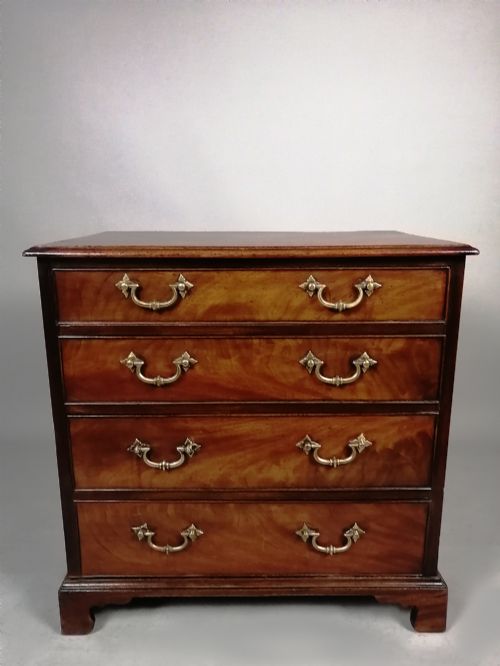
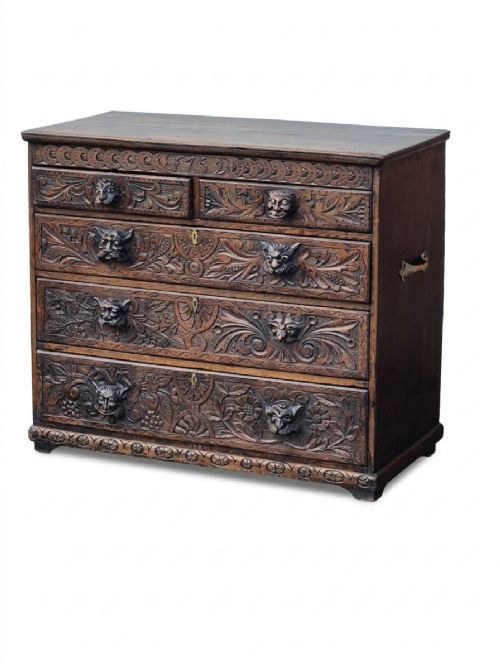
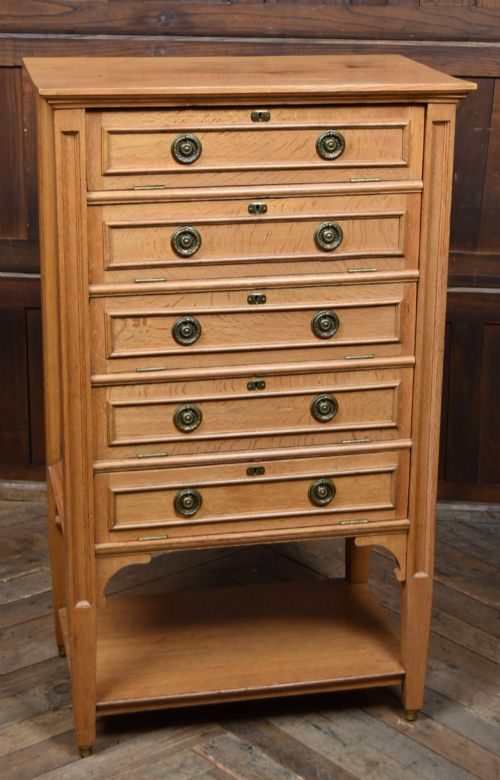
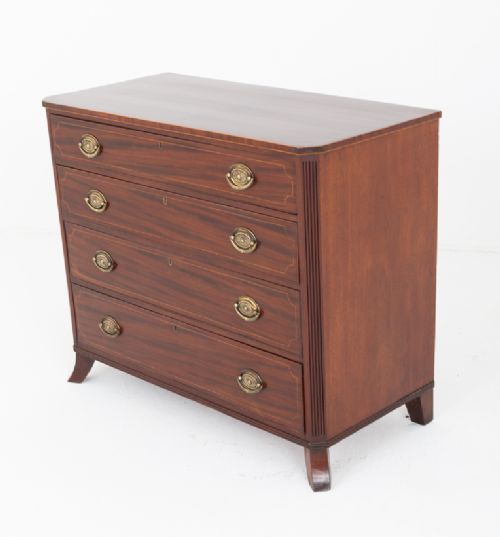
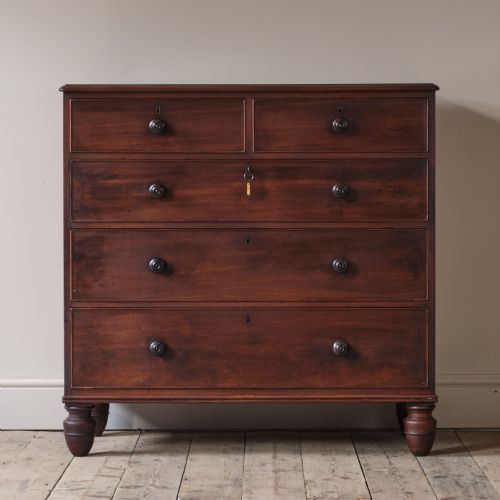
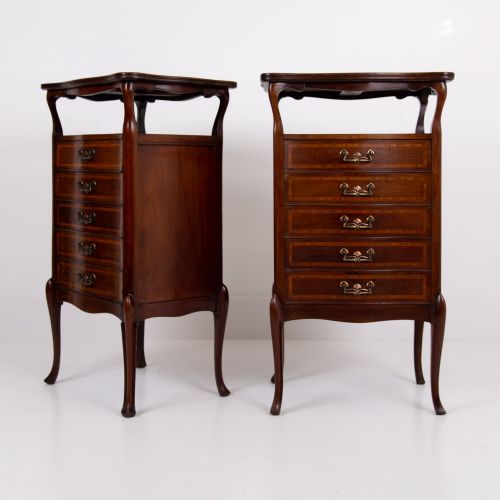
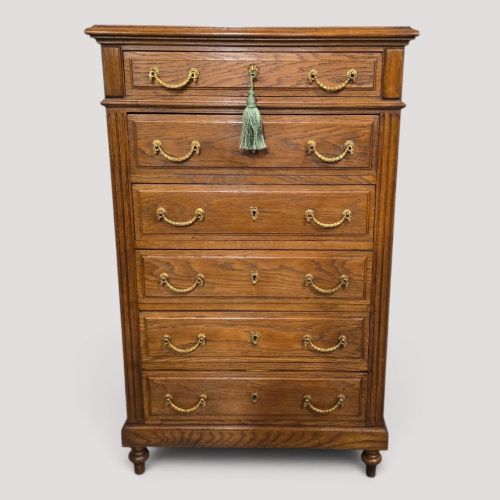
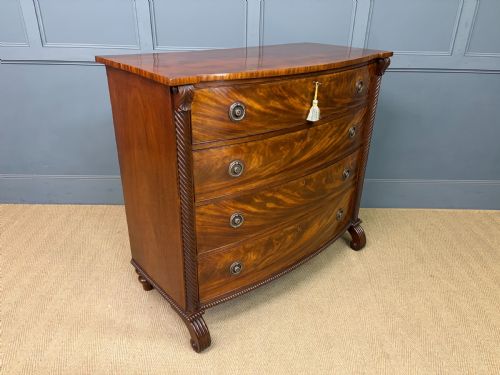
Vintage Tallboy Drawers
These vintage tallboy drawers offer substantial vertical storage in hardwoods like mahogany and oak across various historic periods.
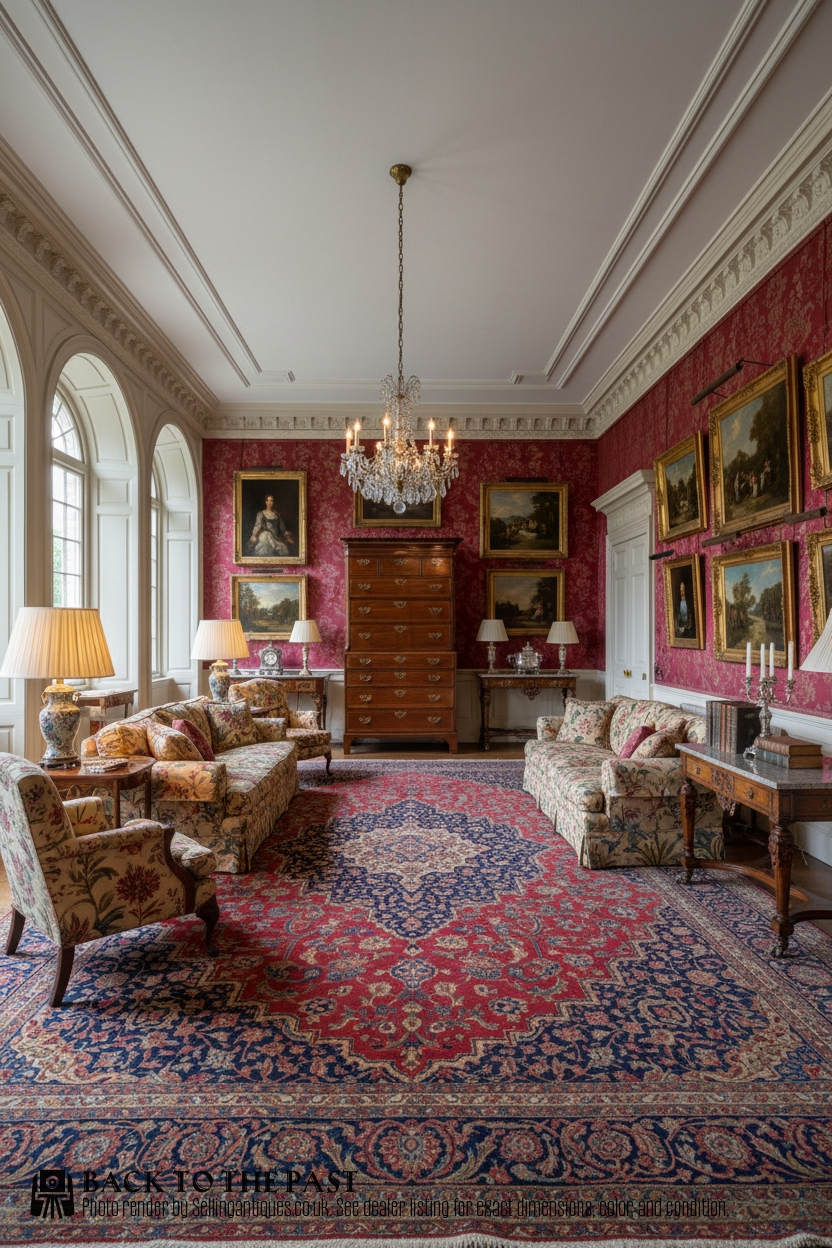
Vintage Tallboy Drawers
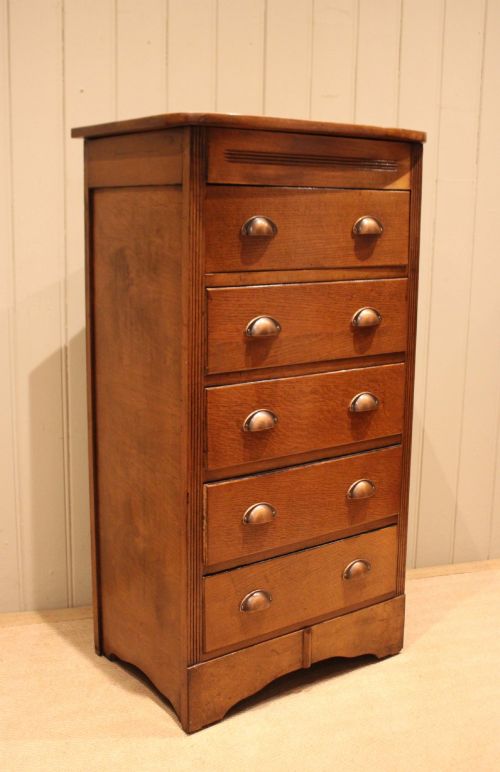
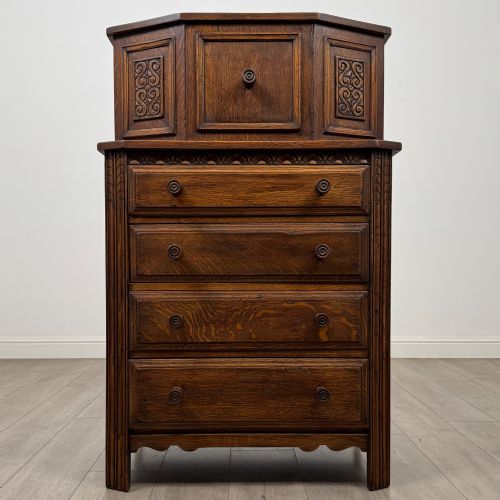
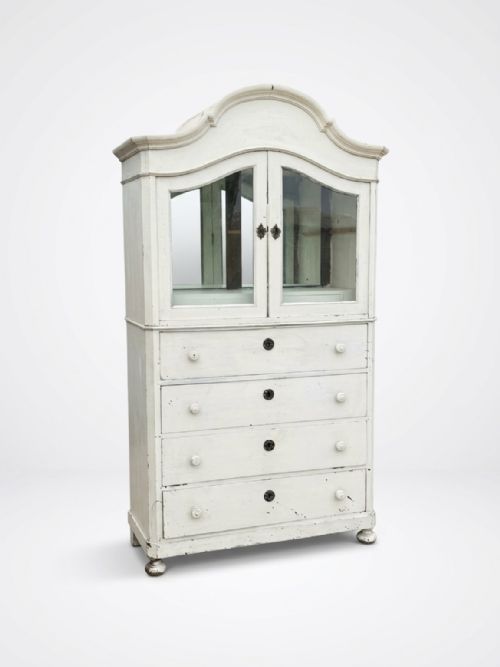
Vintage tallboy drawers provide generous vertical storage within a compact floor footprint, making them practical for smaller rooms. When buyers search for vintage tallboy drawers, they encounter tall chests, chests on chests, and narrow multi-drawer cabinets.
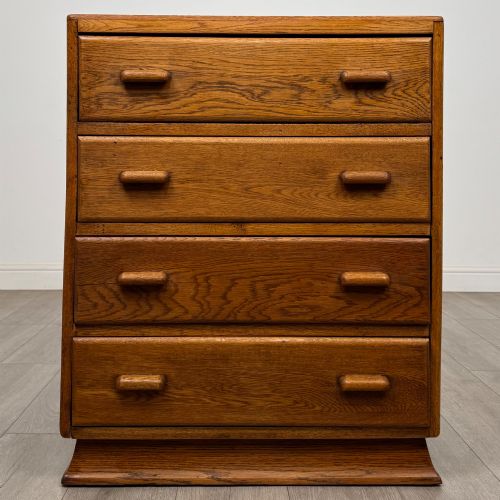
The selections span multiple eras including the Georgian, Victorian, and Edwardian periods, alongside later Art Deco and 1930s examples. Mahogany and oak dominate the forms, frequently appearing alongside pine, walnut, and flame mahogany veneer.
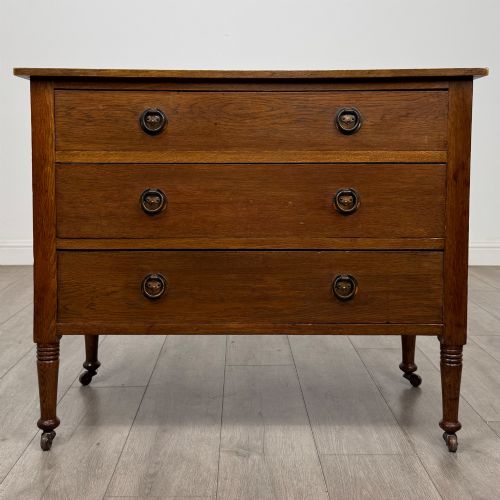
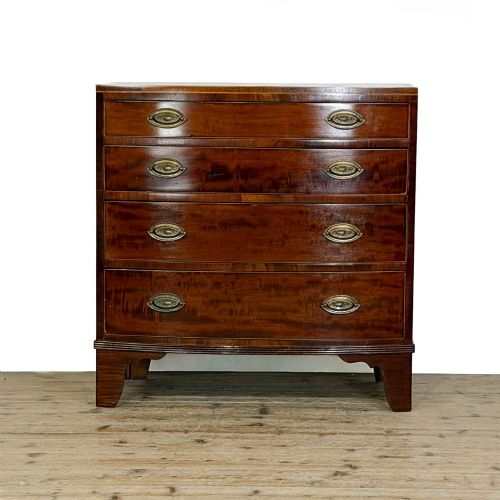
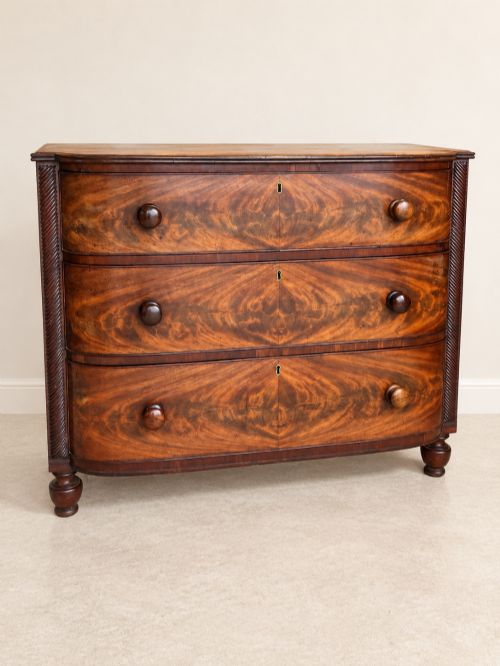
Tallboys and compactums appear alongside traditional chests of drawers and filing cabinets. Pieces range from formal bow-front designs in figured timbers to utilitarian pine constructions from country workshops.
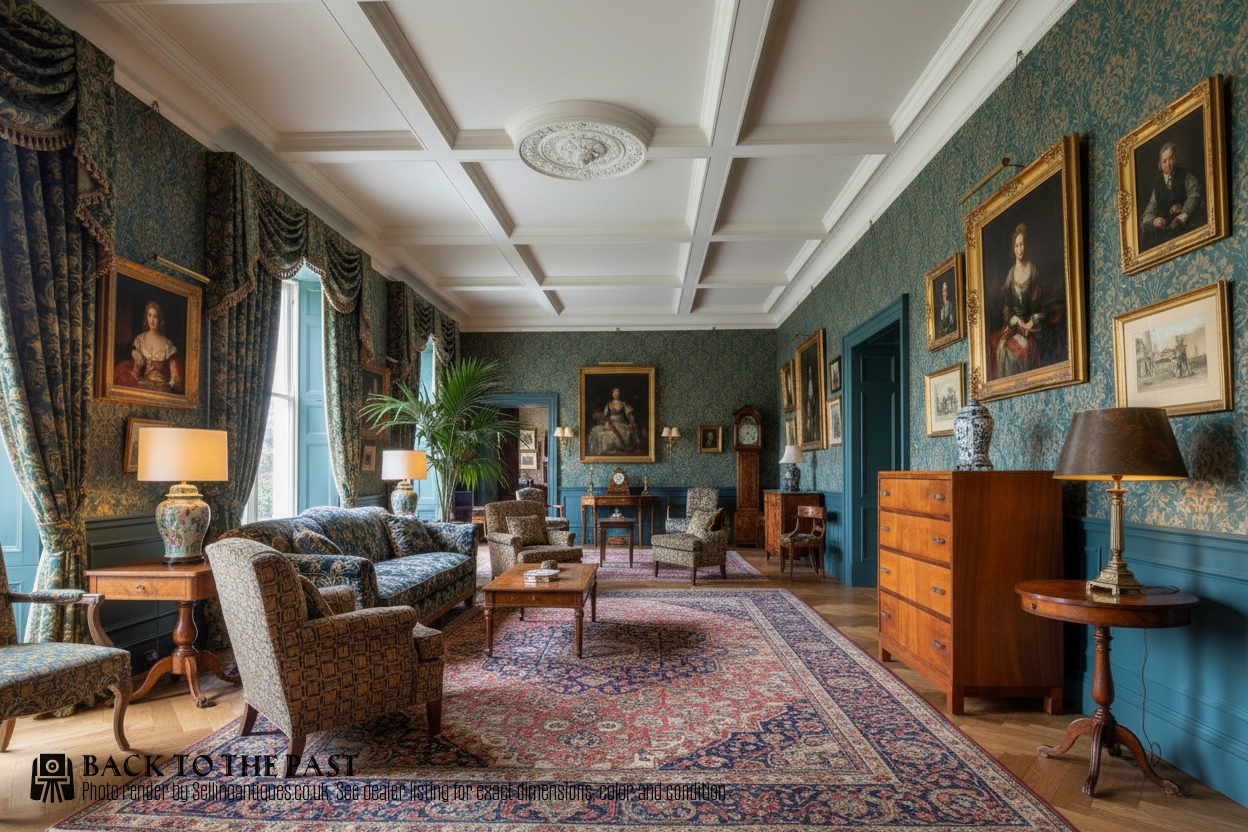
How they were made
Cabinet makers utilised solid timbers alongside specialised veneers, applying flame mahogany, burr walnut, and satinwood banding to primary display surfaces. Carcase construction relied on traditional joinery methods, housing drawer boxes built with hand-cut dovetail joints.
Hardware details typically include brass drawer pulls and handles, matching the formal register of the timber. Secondary woods such as pine appear inside drawer linings and internal framing across the Georgian, Victorian, and Edwardian periods.
Vintage Tallboy Drawers Retail Price Guide 2026
Typical asking prices for vintage tallboy drawers among the pieces listed under this phrase on Sellingantiques today, from the lower quarter to the upper quarter. They describe what is for sale here now, not the wider market.
One cheerful Edwardian cabinet bears the specific design signature of architect Sir Clough Williams-Ellis.
What varies in quality
The standard of timber selection divides the material hierarchy, separating plain utilitarian boards from highly figured mahogany, burr walnut, and satinwood veneers. Expert matching of grain patterns across multiple drawer fronts signals superior workshop execution.
Construction precision dictates durability and smoothness of operation, particularly in the fit of deep drawer boxes within their carcases. Surviving original brass hardware and well-preserved surface polishes preserve the integrity of the piece.

T G Seddon·Sir Clough Williams Ellis
The Vintage Tallboy Drawers Glossary
- Tallboy
- A tall chest of drawers, often comprising a smaller chest stacked upon a larger base, or a single tall vertical cabinet.
- Bow front
- A convex curved front facade popular in Regency and Georgian furniture design.
- Wellington chest
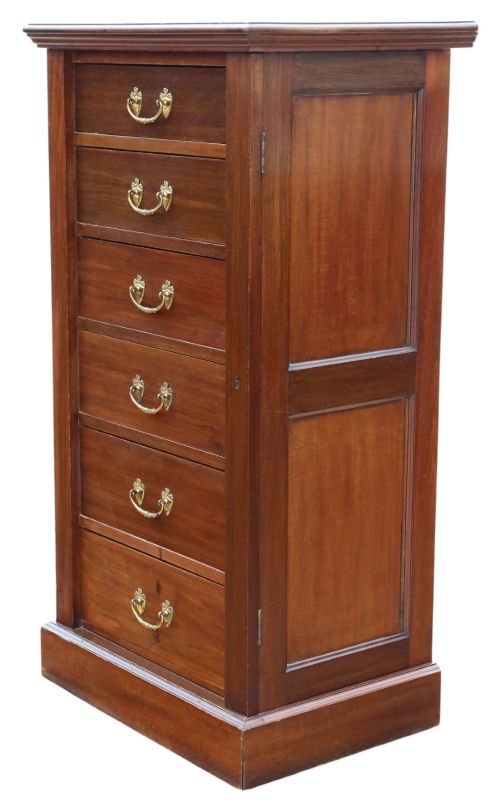
- A tall, narrow chest of drawers secured by a hinged vertical locking sidebar fastened with a key.
- Chest on chest
- A two-part tall storage piece featuring an upper chest resting directly upon a slightly wider lower chest.
- Dovetail
- An interlocking joint used in drawer construction, formed by interlocking wedge-shaped fingers.
Vintage Tallboy Drawers: Frequently Asked Questions
How do I date a tallboy?
Dating relies on identifying timber choices, construction techniques, and stylistic markers consistent with recorded periods like Georgian, Victorian, or Edwardian.
Secondary woods, handle types, and dovetail precision offer further clues to the decade of manufacture.
What is the difference between a tallboy and a chest on chest?
A tallboy generally refers to a single tall chest unit designed for vertical storage.
A chest on chest specifically describes two distinct cabinetry sections stacked vertically, where a smaller upper chest sits on a larger lower carcase.
Where should I place a tallboy in my home?
Their narrow footprints make them suitable for bedrooms, hallways, or dressing areas requiring maximum storage with minimal floor usage.
Placing them away from direct heat sources protects the vulnerable veneers and solid timbers from warping.
How do I maintain mahogany and walnut surfaces?
Regular dusting with a soft, dry cloth prevents particulate build-up on polished wood surfaces.
Occasional application of appropriate wax polish maintains the moisture and lustre of historic timber finishes.