





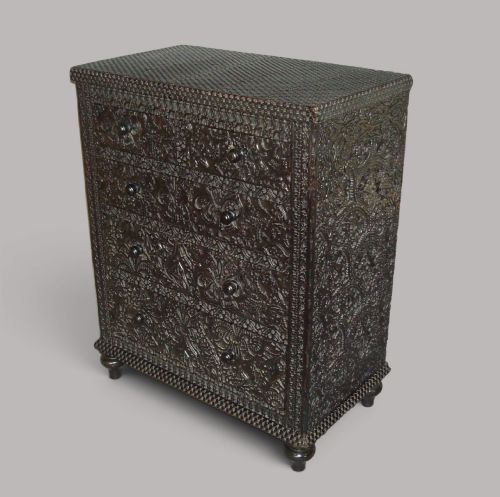
Anglo Indian Chest Drawers
These anglo indian chest drawers combine colonial utility with striking hardwood grains, offering sturdy storage built for travel.
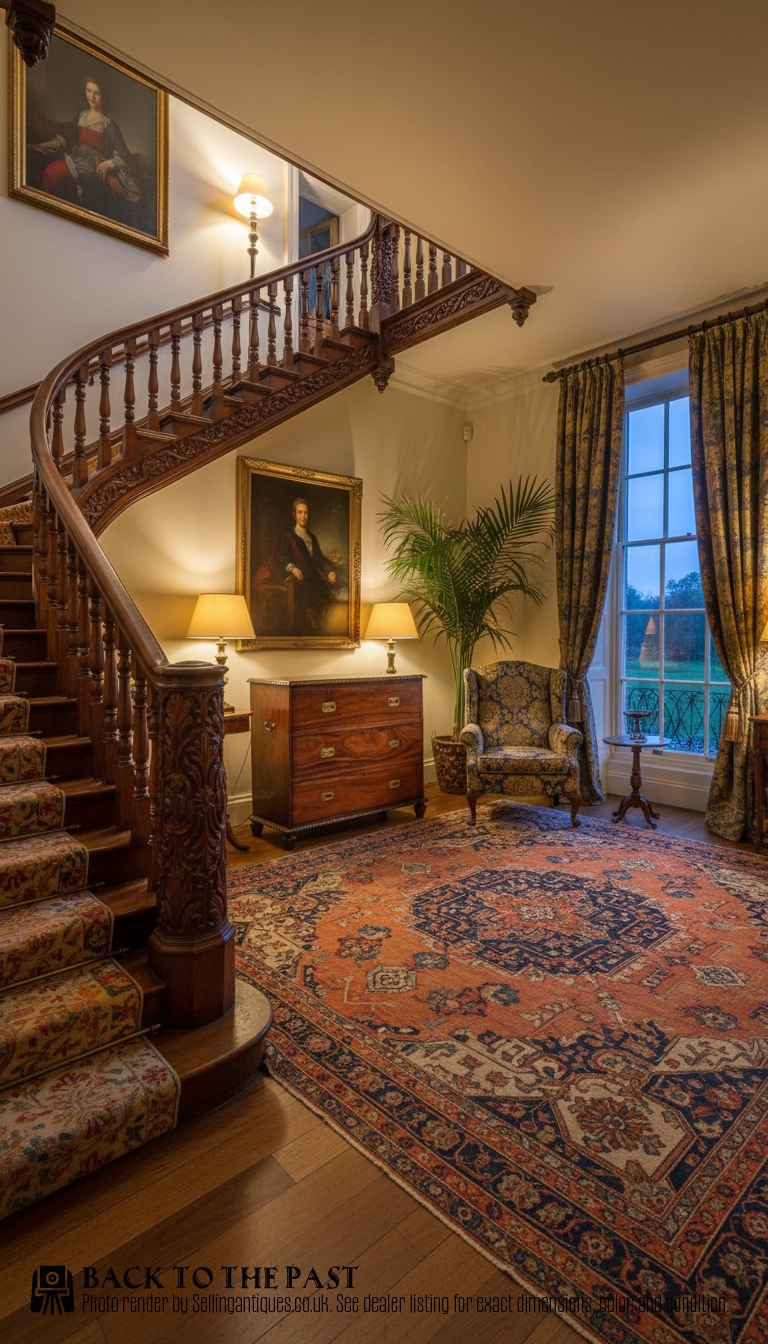
Anglo Indian Chest Drawers
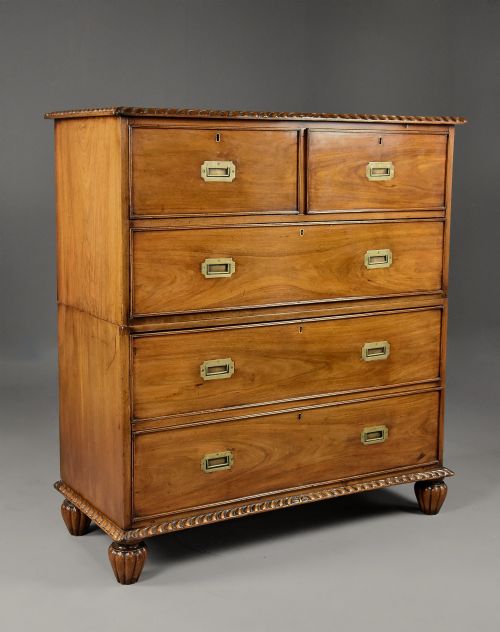
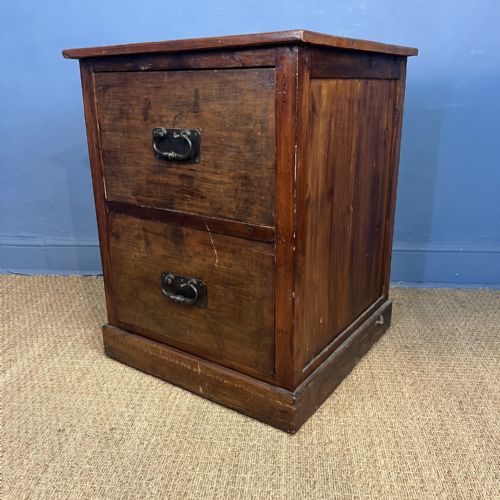
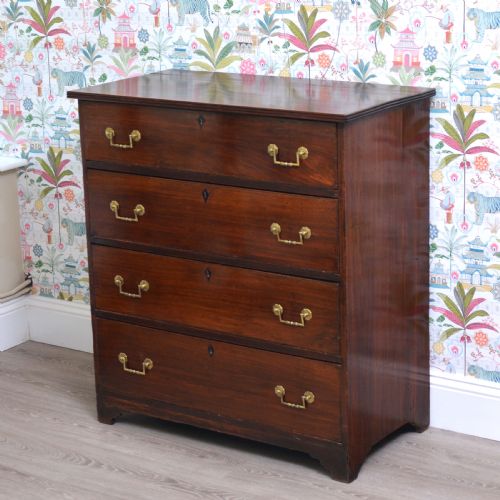
When you search for anglo indian chest drawers, you encounter robust case furniture designed for colonial life and military campaigns. The selection here spans compact filing units and miniature items alongside tall cabinets and traditional two section campaign chests.
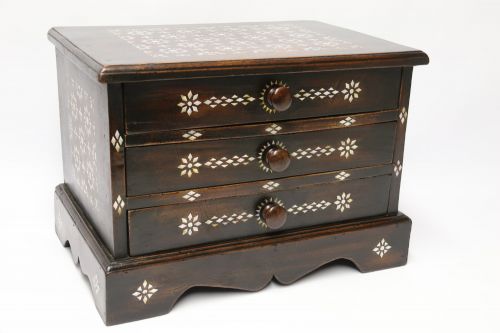
Teak, padouk and camphor wood dominate the forms, frequently paired with brass hardware and bone inlay. Most examples date from the nineteenth century, reflecting the period when British officers and colonial administrators required portable, modular storage.
The variants include secretaire bureaux and multi drawer collector chests alongside standard chests of drawers. Each piece illustrates the adaptation of British furniture forms to overseas workshops utilising local timbers.
How they were made
Cabinet makers utilised dense tropical hardwoods such as teak, padouk and camphor wood, which withstood humid climates and heavy transport. These timbers were often hand carved or inlaid with bone and brass to create striking surface contrast.
Construction prioritised modular dismantling, dividing larger cases into two separate sections fitted with iron or brass carrying handles. Recessed drawer pulls and reinforced corners protected the edges during transit across colonial territories.
Anglo Indian Chest Drawers Retail Price Guide 2026
Typical asking prices for anglo indian chest drawers among the pieces listed under this phrase on Sellingantiques today, from the lower quarter to the upper quarter. They describe what is for sale here now, not the wider market.
Forms range from miniature linen presses and sixteen drawer collector cabinets to secretaire bureaux and filing units.
What varies in quality
The standard of an anglo indian chest drawers depends upon the selection of timber and the precision of the brass or iron fitments. Solid teak and padouk assemblies with tightly dovetailed joints represent superior workshop execution.
Carved detail and bone inlay execution distinguish finer decorative pieces from utilitarian camp furniture. Original flush hardware and intact sectional locking mechanisms preserve the integrity of the design.
The Anglo Indian Chest Drawers Glossary
- Campaign chest
- A modular chest of drawers built in two or more stacking sections for easy transport by military officers. These units feature recessed handles and brass corner brackets.
- Padouk
- A heavy, durable reddish brown tropical hardwood utilised extensively in colonial furniture. It polishes to a fine lustre and resists warping.
- Secretaire
- A desk form incorporating a fitted writing drawer with small compartments and pigeonholes. In campaign pieces, the top drawer pulls down to reveal this writing surface.
- Tallboy
- A tall chest of drawers arranged in stacked sections, providing generous vertical storage capacity. The form minimises floor space usage.
- Camphor wood
- A fragrant tropical timber valued for its insect repellent properties and distinct aroma. It frequently forms the interior or carcase of campaign chests.
Anglo Indian Chest Drawers: Frequently Asked Questions
How were campaign chests used?
Officers and administrators utilised them as portable wardrobes and desk units that packed down into manageable sections for travel.
Recessed brass handles and protective corner brackets safeguarded the timber during frequent transit across rugged terrain.
How do I identify nineteenth century pieces?
Look for construction traits such as hand cut dovetails, solid secondary timbers, and heavy brass or iron hardware.
Padouk and teak surfaces often display deep oxidisation and patination accumulated over decades of colonial service.
Where should I place one at home?
Their compact proportions and flat tops make them suitable as bedside units, hallway chests, or living room storage.
Avoid positioning solid hardwood furniture directly against active heat sources to prevent timber movement.