

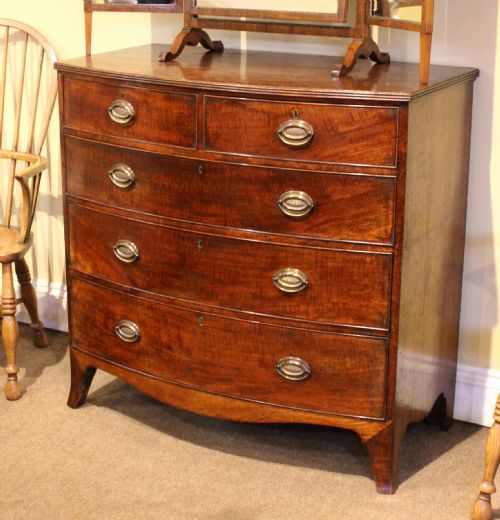

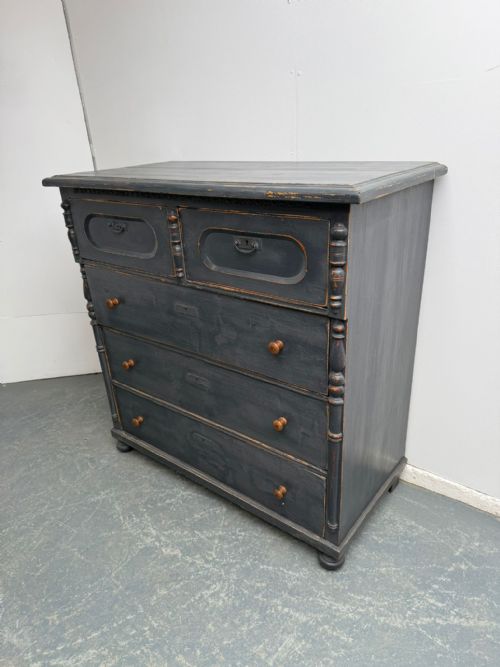
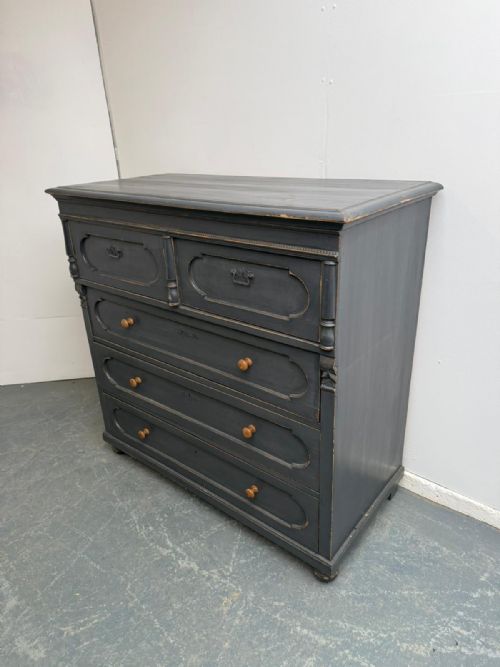


Five Drawer Tallboy
A five drawer tallboy offers vertical storage with classic proportions, bringing enduring presence and practical surface space to any room.
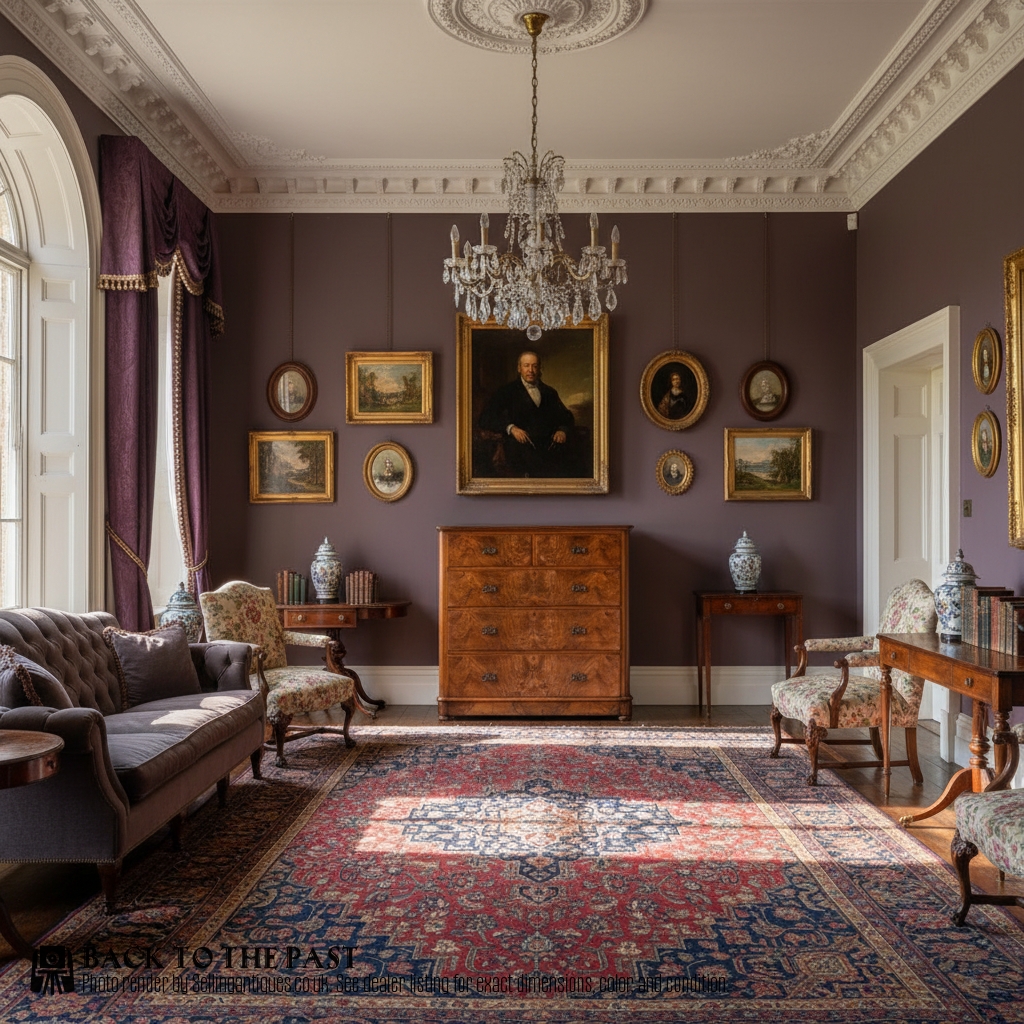
Five Drawer Tallboy
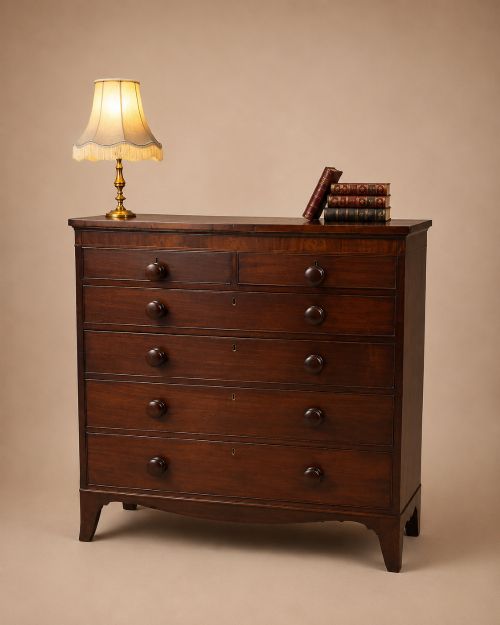
A five drawer tallboy combines height with a compact footprint, providing substantial storage without dominating the floor space of a room. When searching for a five drawer tallboy, expect to encounter vertical case furniture designed primarily for bedroom organisation.
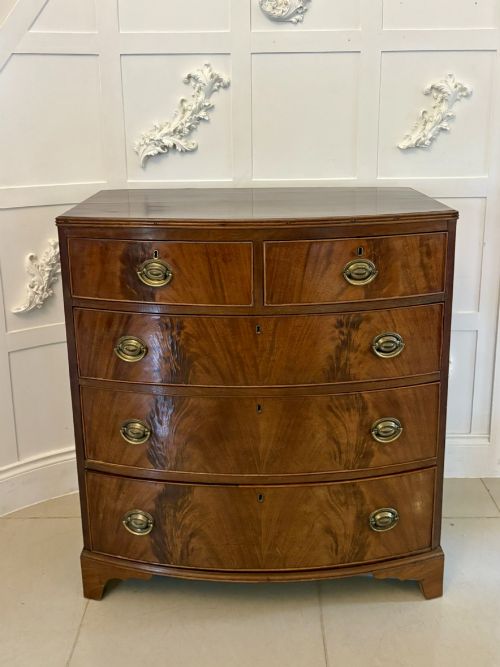
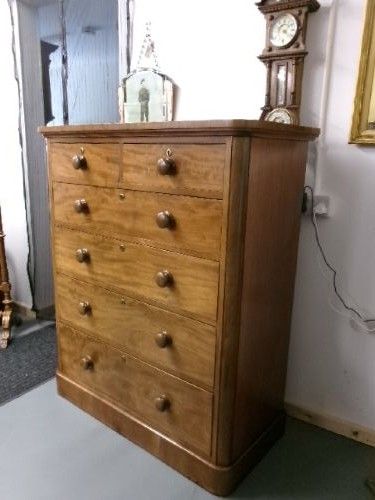
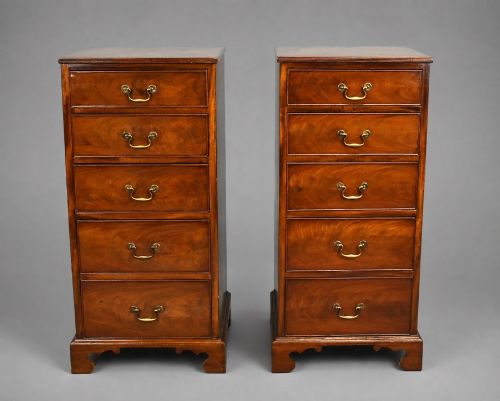
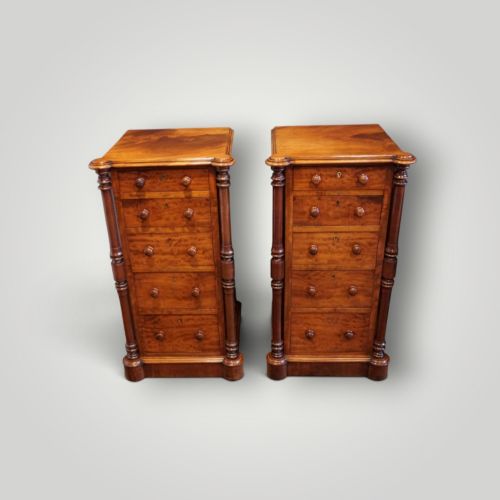
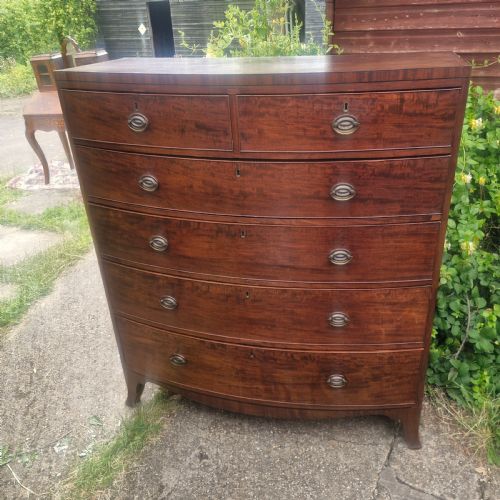
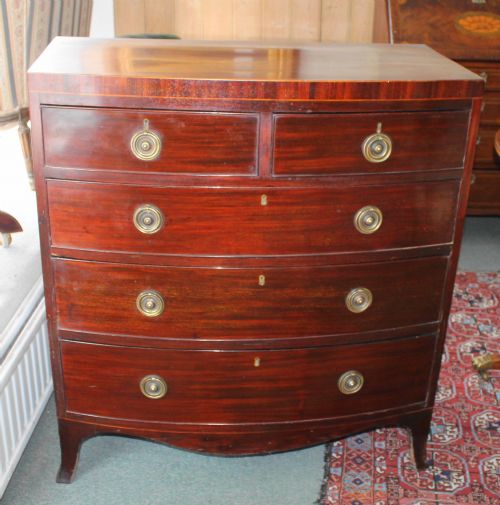
The pieces listed here span multiple periods, including the 18th Century, Regency, Victorian, Edwardian, and the 1920s to 1930s Art Deco era. Forms range from traditional bow front chests and Wellington chests to narrow tall chests and bedside variants.
Makers and regional styles represented include English workshops, Swedish pieces in flame birch, and French Empire designs. These tall forms typically present five distinct horizontal tiers of drawers arranged vertically.
Materials and construction
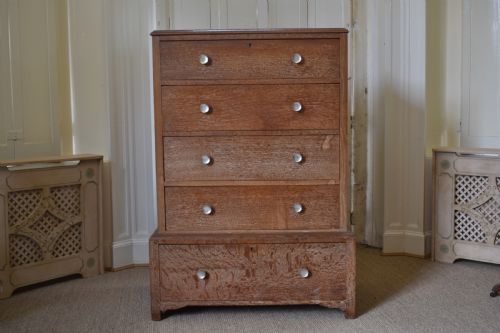
Makers constructed these cabinets using dense timbers such as mahogany, walnut, burr walnut, oak, flame birch, satin birch, satinwood, and pine. Selected decorative veneers like flame mahogany and burr walnut provided striking surface figures across the drawer fronts.
Secondary treatments involve applied paint finishes, limed surfaces, wax polishing, and brass hardware details. Joinery techniques reflect the period of origin, from Georgian cabinet-making standards to later 19th and 20th-century production methods.
Assessing quality and finish
Quality rests upon the selection of timber veneers, such as matched flame mahogany or burr walnut, and the crispness of the cabinet mouldings. Superior examples demonstrate careful grain alignment across multiple drawer tiers and well-proportioned cornices.
The integrity of the internal drawer construction and the smoothness of the drawer action separate standard utility furniture from finer workshop pieces. Original hardware, consistent surface patination, and uncompromised structural timber define the upper tier of surviving examples.
Warings Liverpool·Heal s
The Five Drawer Tallboy Glossary
- Tallboy
- A tall chest of drawers, often comprising a lower chest section combined with an upper section or built as a single tall vertical unit.
- Bow front
- A convex, curved front section on a cabinet or chest of drawers that projects outward in a smooth arc.
- Flame mahogany
- A decorative mahogany veneer cut from the branch junction where the grain creates a characteristic flame-like pattern.
- Wellington chest
- A tall, narrow chest of drawers secured by a hinged locking side stile that fastens over the drawer edges.
- Burr walnut
- Timber taken from a walnut tree growth or burl, yielding intricate, swirling grain patterns highly prized for cabinet fronts.
Five Drawer Tallboy: Frequently Asked Questions
What is a five drawer tallboy used for?
A five drawer tallboy provides vertical storage for clothing and linens while occupying minimal floor space in a bedroom or dressing area. The top surface also offers space for display or daily accessories.
Its tall, narrow configuration makes it adaptable to rooms where floor area is limited but vertical capacity is needed.
How do I date a wooden tallboy?
Dating relies on identifying the primary timbers, construction methods, and stylistic details associated with periods like the Regency, Victorian, or Art Deco eras. Examining the drawer linings and backboards offers further clues to the manufacturing decade.
Cabinet proportions and decorative veneers often align closely with the prevailing design standards of their specific century.
Where should I place a tallboy?
These tall chests suit bedrooms, dressing rooms, or hallways where vertical storage is required without blocking walking paths. Their compact footprints allow them to fit into narrower wall spaces between doors or windows.
Ensure the piece is anchored securely if placed in high-traffic zones or homes with children, given its height.
What woods were used for tallboys?
Common timbers include mahogany, walnut, oak, and pine, often enhanced by decorative veneers like burr walnut or flame birch. Some pieces feature painted finishes or satinwood highlights.
Choice of wood typically reflects the period of manufacture and the prevailing regional style of the workshop.