

Vintage Swing Vanity Mirror
A vintage swing vanity mirror brings proportion and movement to a dressing space, tilting gracefully to catch the morning light.
Vintage Swing Vanity Mirror
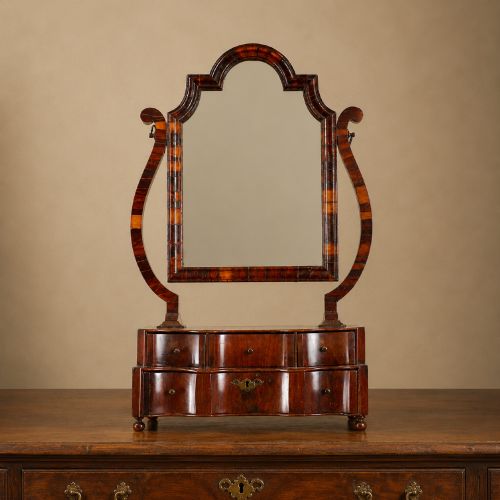
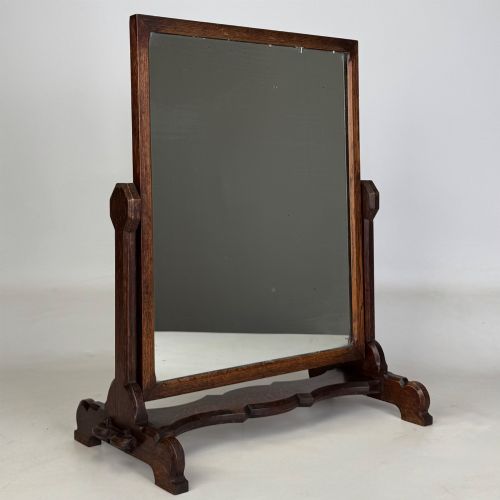
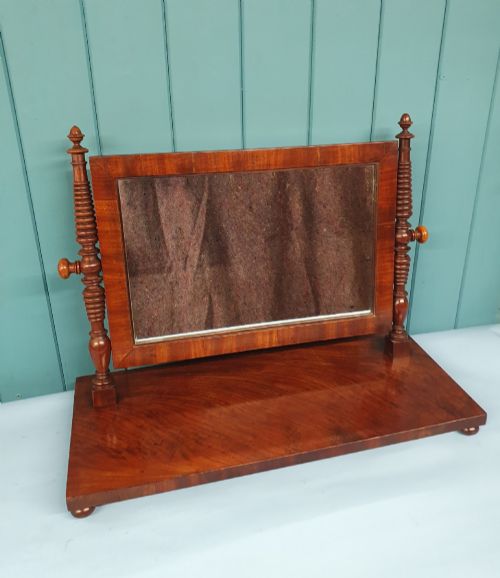
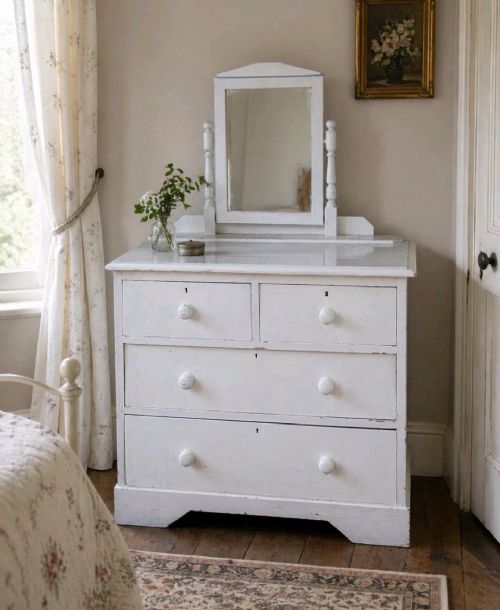
When you examine a vintage swing vanity mirror, you encounter a pivoting glass plate set within a freestanding frame, designed to sit upon a chest or dressing table. These pieces primarily date from the Georgian, Victorian, and Edwardian eras, spanning the eighteenth, nineteenth, and early twentieth centuries.
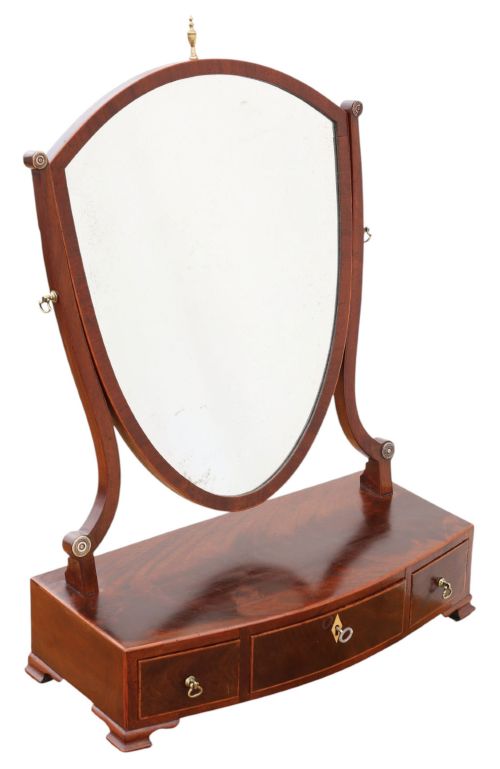
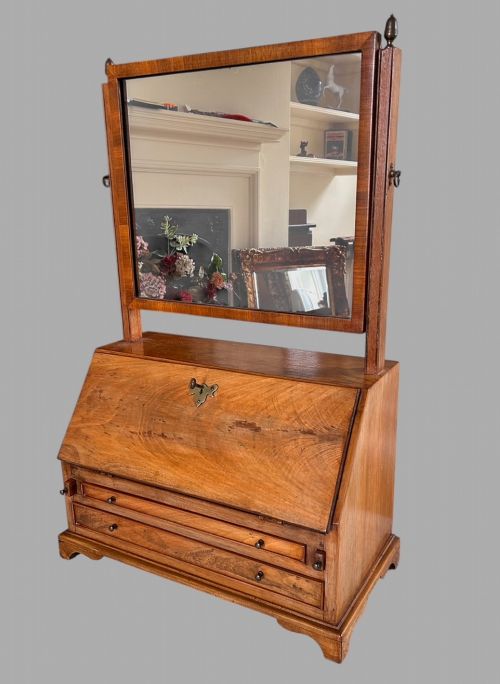
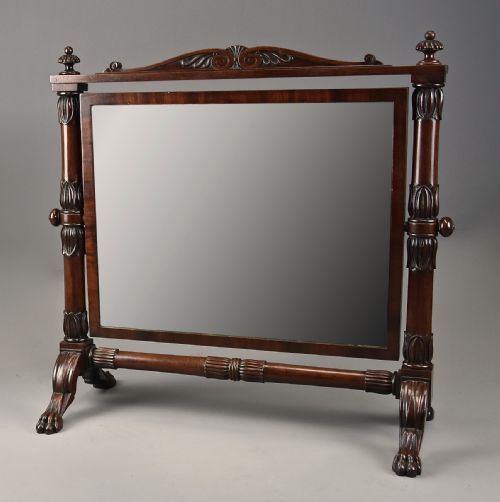
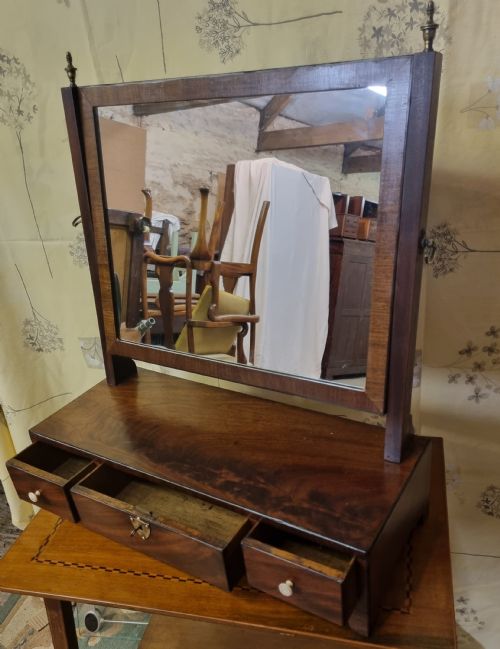
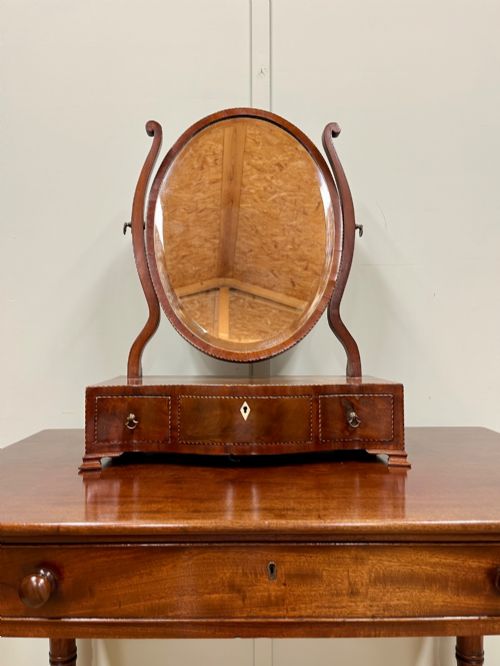
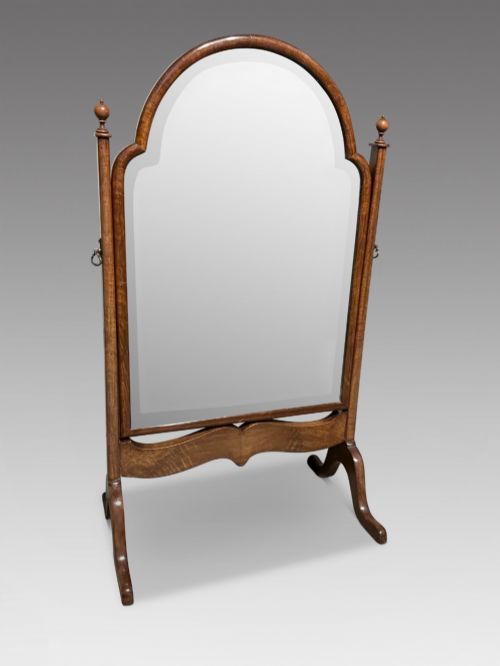
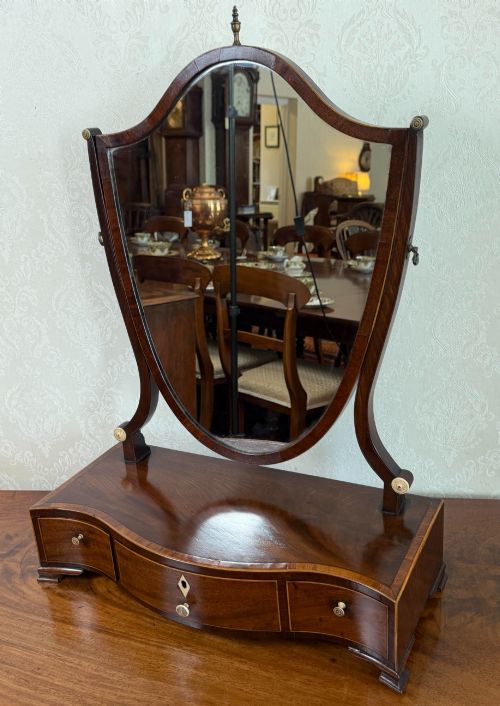
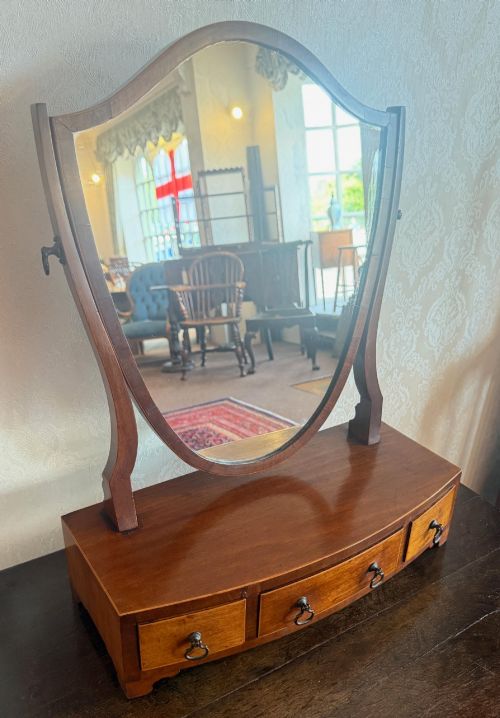
The most common formats on this page are mahogany dressing table mirrors and toilet mirrors featuring small box bases fitted with drawers. You will also find walnut, satinwood, and oak examples, alongside occasional cheval mirrors and table-top bureaux.
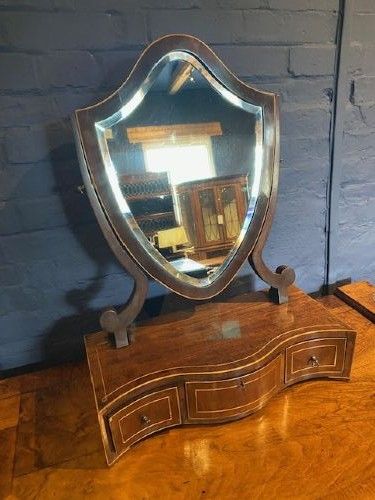
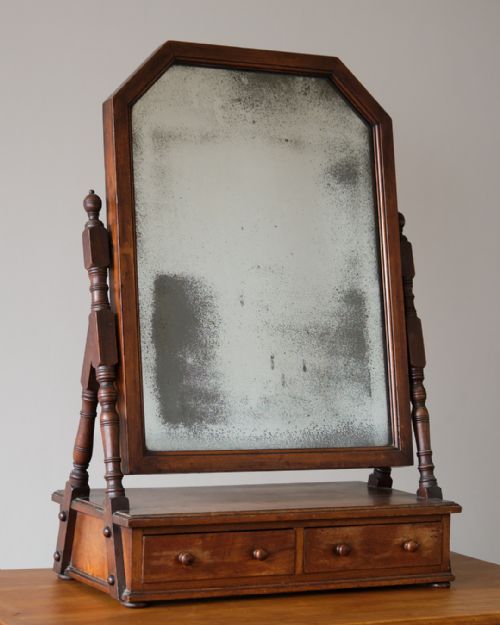
Originating as functional bedroom furnishings for grooming and dressing, these mirrors combine pivoting hardware with stationary wooden stands. The plates range from plain rectangular glass to shield and oval shapes, often supported by scroll arms or upright posts.
How they were made
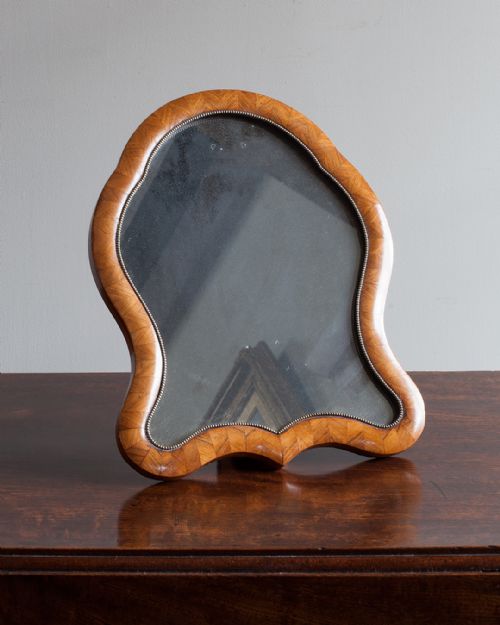
Cabinet makers constructed the frames and box bases using timbers such as mahogany, walnut, satinwood, and oak, frequently employing crossbanding and marquetry for surface decoration. Glass plates were silvered and secured into shaped wooden surrounds, sometimes featuring parcel-gilt details or bone escutcheons.
The pivoting mechanism typically relies on brass screw pins, side arms, and threaded nuts set into the upright supports, allowing the mirror plate to tilt to various angles. Drawer boxes beneath the mirror frame utilise traditional dovetail joinery, housing small compartments for personal items.
Some miniature drawer bases hide secret compartments for storing letters and trinkets.
What varies in quality
Quality reveals itself in the selection of figured timber veneers, the crispness of inlaid crossbanding, and the delicacy of the scrollwork on the support arms. Finer examples display meticulous dovetailing on the miniature drawers and substantial cast brass hardware rather than stamped metal.
Proportion and balance dictate the aesthetic success of the piece, where the weight of the mirror plate matches the stability of the base. The clarity of the glass and the retention of original backboards further distinguish superior specimens from simpler utility pieces.
Heal And Sons
The Vintage Swing Vanity Mirror Glossary
- Toilet mirror
- A small mirror designed to stand on a table or chest, popular from the eighteenth century onwards for grooming.
- Cheval mirror
- A full-length swing mirror supported by a vertical floor-standing frame, though occasionally encountered in smaller table-top formats.
- Crossbanding
- A border of veneer laid perpendicular to the grain of the main surface, frequently seen on Georgian and Regency frames.
- Shield mirror
- A mirror plate cut into the shape of a heraldic shield, characteristic of late eighteenth-century design.
- Parcel-gilt
- Partially gilded with gold leaf or powder, highlighting specific carved details on the wooden frame.
Vintage Swing Vanity Mirror: Frequently Asked Questions
What is a swing vanity mirror?
A swing vanity mirror is a tabletop looking glass mounted on vertical pivots, allowing the user to adjust the angle of reflection.
These pieces were traditionally placed on top of dressing chests or tables in bedrooms to assist with personal grooming.
How do I date a wooden mirror?
Dating relies on identifying the timber species, construction methods like dovetailing, and the overall style of the frame and base. Georgian and Victorian examples display distinct shifts in proportions, wood selection, and decorative inlays.
Examining the mirror plate itself and the backboards provides further clues regarding the manufacturing period.
Where should I place a table mirror?
These mirrors sit comfortably on top of chests of drawers, sideboards, or dedicated dressing tables. They require a stable surface with enough depth to support the base and clearance for the swinging frame.
Positioning them near a natural light source enhances their practical use for daily routines.
Are the mirror plates original?
Many older pieces retain their original glass, which often exhibits minor foxing, subtle distortion, or age spots. Replacement glass is sometimes fitted during the lifetime of the piece to maintain clarity.
Inspect the silvering and edges to understand the history and preservation of the glass plate.