


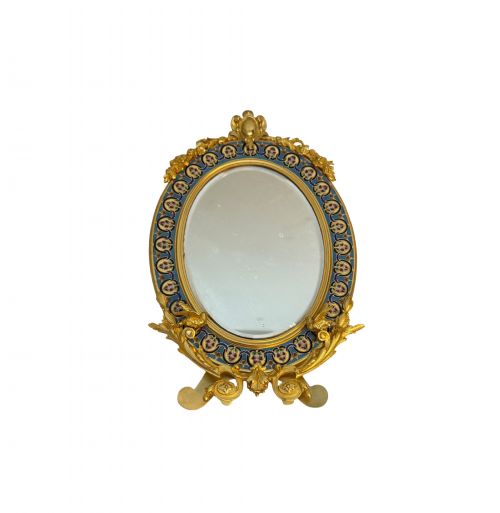


Vintage Swing Mirror Standing
Vintage swing mirror standing pieces are pivoting looking glasses designed to tilt for adjustments, bringing period craftsmanship and practical reflection into a room.
Vintage Swing Mirror Standing
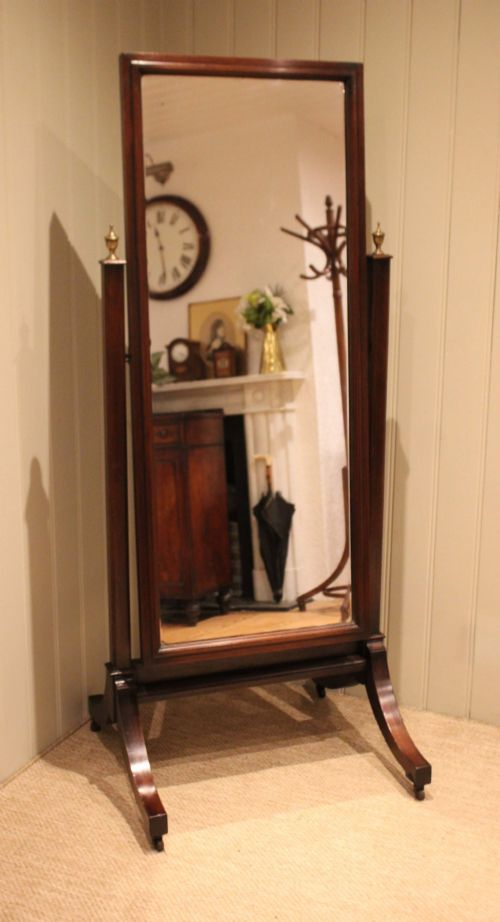
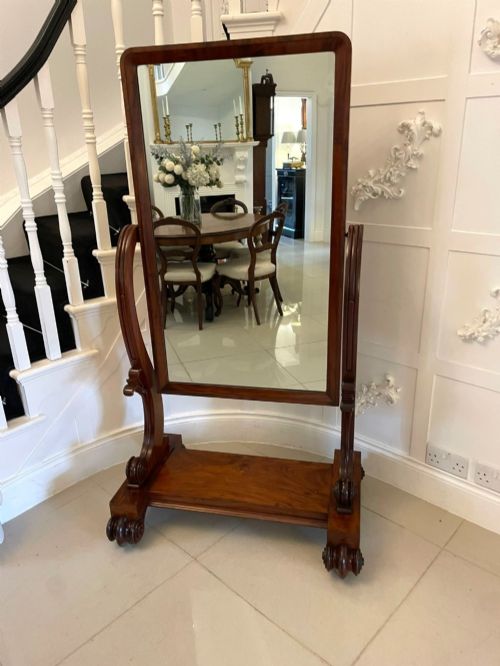
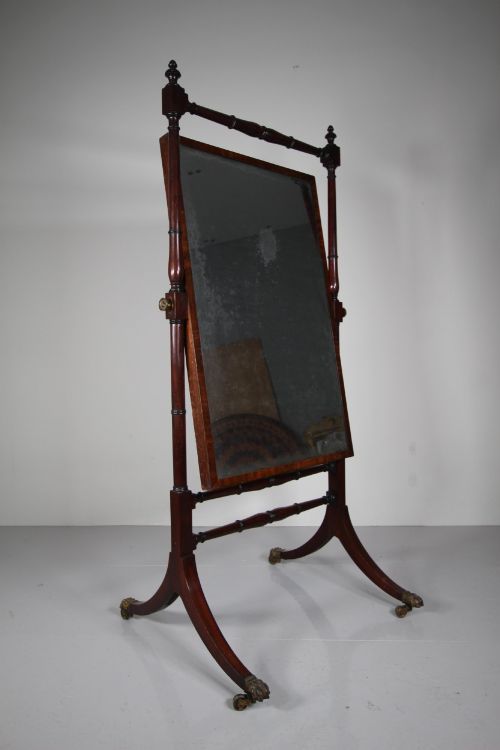
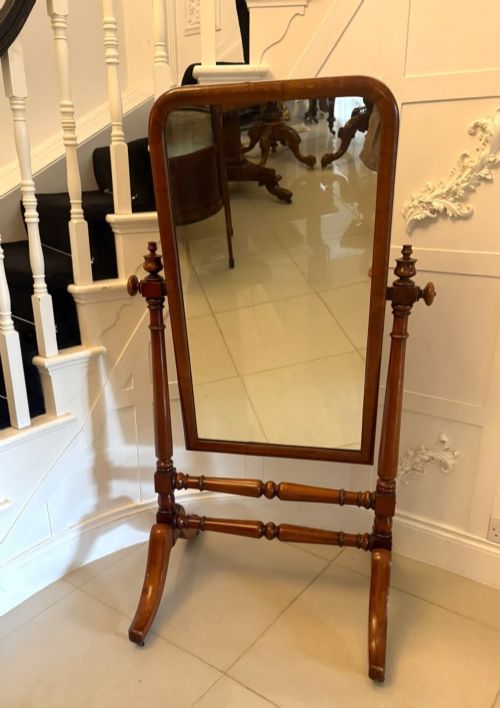
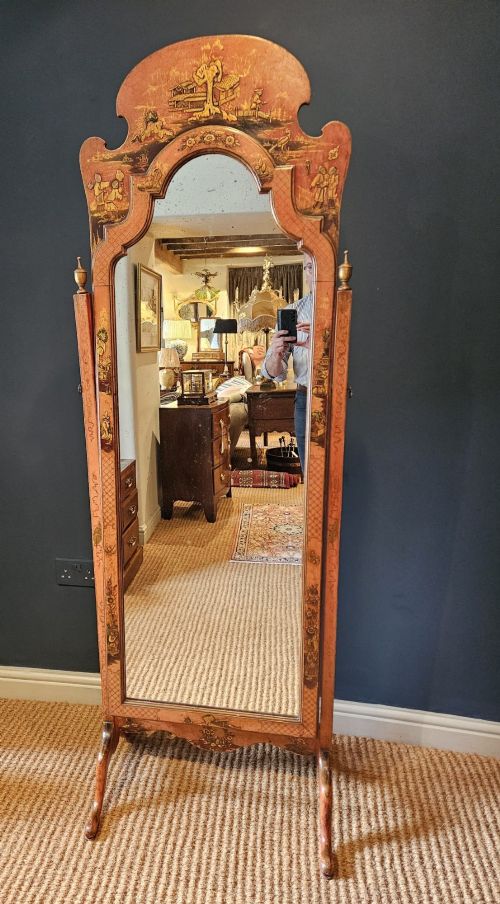
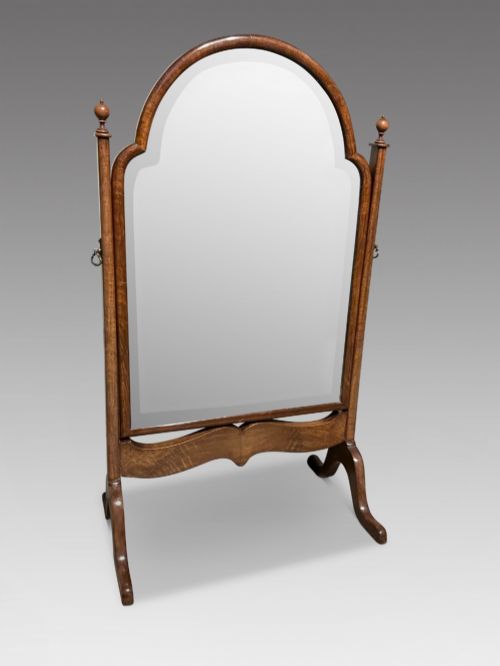
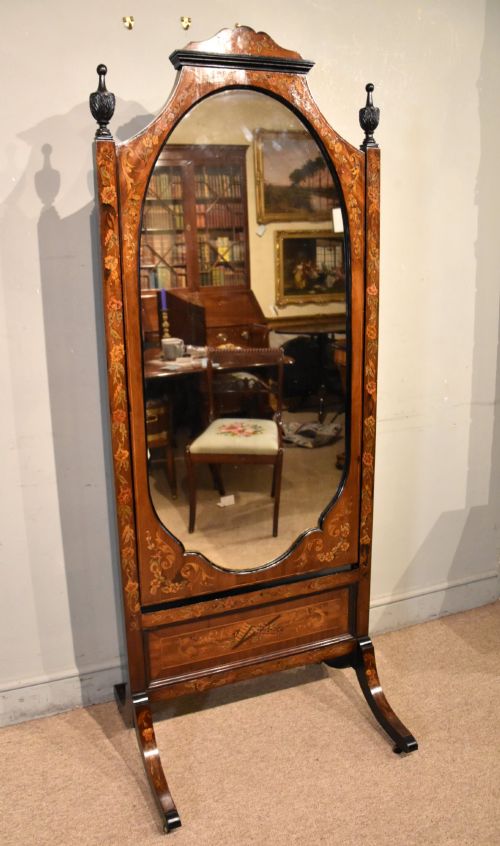
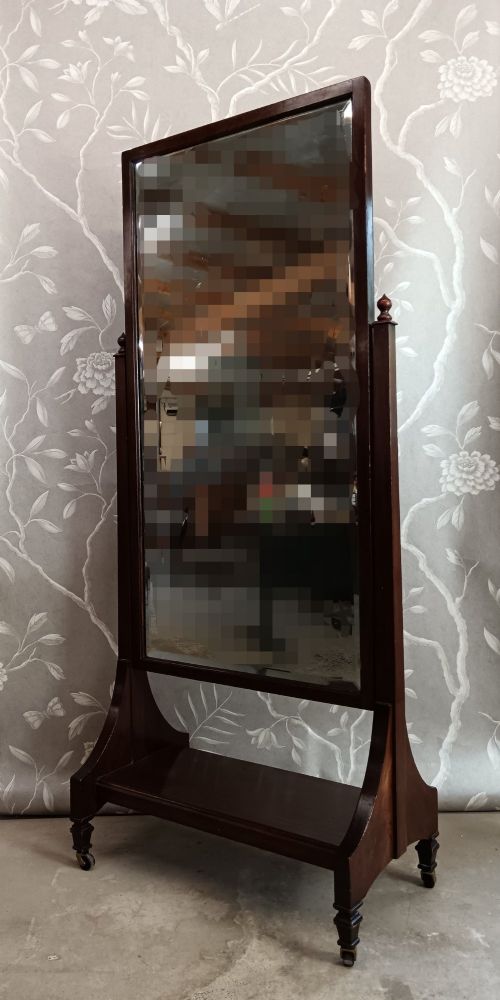
When you search for vintage swing mirror standing designs, you encounter pieces that range from small tabletop toilet mirrors to large floor-standing cheval glasses. The selection spans several centuries, touching the Georgian, Regency, Victorian, and Edwardian eras.
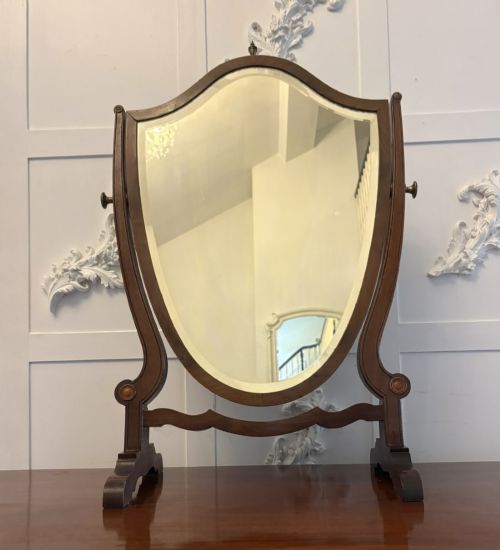
The most common formats on this page are mahogany and walnut dressing mirrors, alongside taller cheval mirrors intended for full-length viewing. Makers utilised various woods and sometimes brass or gilt bronze frames to house the tilting glass.
Many items reflect specific historical revivals, such as Queen Anne style walnut or Arts and Crafts oak frames, showing how cabinetmakers adapted earlier aesthetics for later homes.
Materials and construction
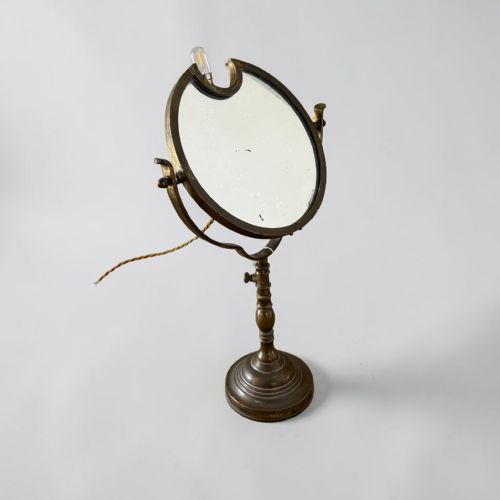
Frames are constructed predominantly from hardwoods like mahogany, walnut, and oak, occasionally featuring decorative inlays or satinwood veneers. Brass fixtures, including hinges and candle holders, frequently support the pivoting mechanism of the glass.
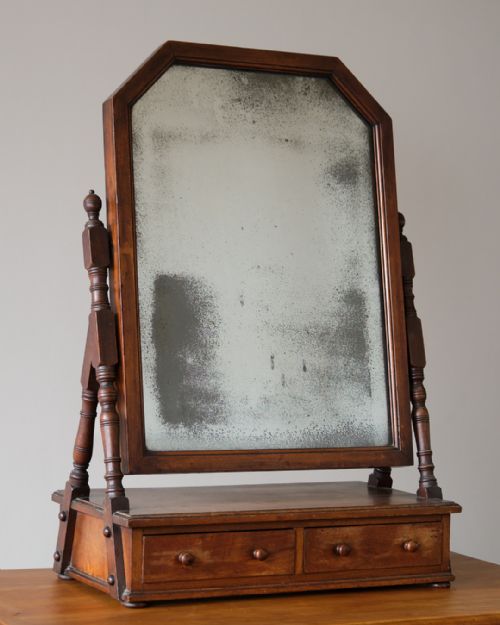
Cabinetmakers mounted the mirror plates within upright supports or standards, often set upon shaped box bases containing small drawers for trinkets or documents. Joinery techniques varied from simple pegged joints in earlier examples to more complex framing in later Victorian and Edwardian workshops.
Vintage Swing Mirror Standing Retail Price Guide 2026
Typical asking prices for vintage swing mirror standing among the pieces listed under this phrase on Sellingantiques today, from the lower quarter to the upper quarter. They describe what is for sale here now, not the wider market.
Object variations include cheval mirrors, toilet mirrors, dressing table mirrors, and travelling swing mirror designs.
Markers of quality
The sophistication of the timber figure and the crispness of the carving dictate the standing of a piece within its period. Finely figured flame mahogany or choice walnut veneers demonstrate superior material selection by the maker.
Mechanical execution also separates standard items from the finest examples, particularly the smoothness of the brass pivoting pins and the stability of the support frames. Original mirror glass with appropriate bevels and silvering adds to the integrity of the object.
Heal and Sons·Waring and Gillow
The Vintage Swing Mirror Standing Glossary
- Cheval mirror
- A large freestanding mirror supported on a frame with four legs or a heavy base, designed for full-length viewing. The glass pivots on vertical side pins.
- Toilet mirror
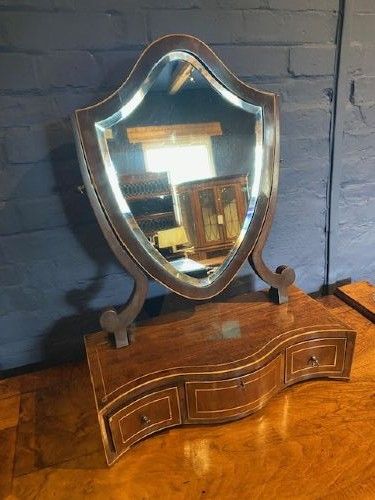
- A smaller swing mirror designed to sit atop a dressing table or chest of drawers. These often incorporate small drawer boxes at the base.
- Champleve
- An enamelling technique where metal cells are gouged out of the surface and filled with vitreous enamel before firing. It appears on decorative metal frames from the nineteenth century.
- Skeleton mirror
- A dressing glass with an open, slender wooden frame structure rather than a solid box base. This style provides a lighter visual footprint on furniture.
- Serpentine
- A gently undulating curved line often seen on the front base drawer sections of Georgian dressing mirrors. It requires high skill from the woodworker to shape accurately.
Vintage Swing Mirror Standing: Frequently Asked Questions
How do I date a swing mirror?
Dating relies on timber choices, construction methods, and hardware styles. Earlier pieces often display secondary woods and hand-cut dovetails.
Later Victorian and Edwardian examples show machine-sawn elements and different brass pivot mechanisms that correspond to their specific manufacturing decades.
Where should I place a cheval mirror?
Cheval mirrors work well in bedrooms or dressing rooms where full-length reflection is practical. Their pivoting frames allow you to angle the glass to capture light from nearby windows.
Ensure the floor surface is even to keep the heavy freestanding frame stable during daily adjustments.
Can I tilt the mirror safely?
Most swing mirrors use side thumbscrews or brass pivot pins designed to hold the glass at a preferred angle. Tightening these gently secures the plate in position without straining the wooden uprights.
Older mechanisms require careful handling to avoid wearing down the original threaded brass components.
What is the difference between a toilet mirror and a cheval mirror?
A toilet mirror is compact and sits upon a table surface, usually featuring small storage drawers in the box base. It is intended for upper-body reflection.
A cheval mirror is a tall, floor-standing piece designed to show the entire outfit from head to toe.