


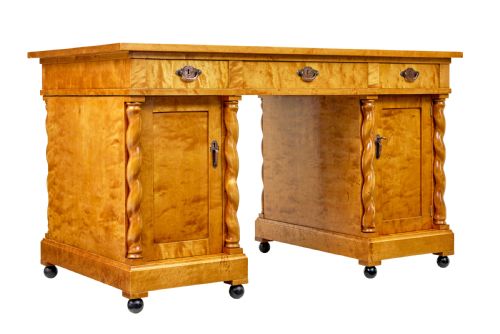


Vintage Swedish Writing Desk
These vintage Swedish writing desk examples bring practical Nordic workspace history into a room through pale birch, painted pine, and classic bureau forms.
Vintage Swedish Writing Desk
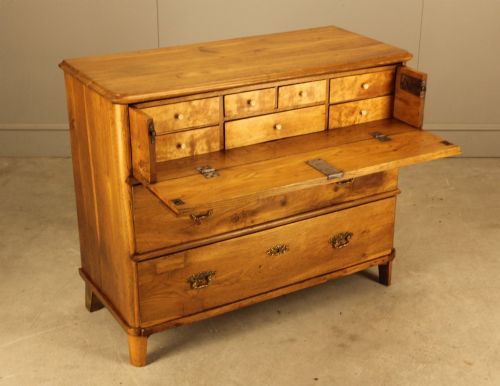
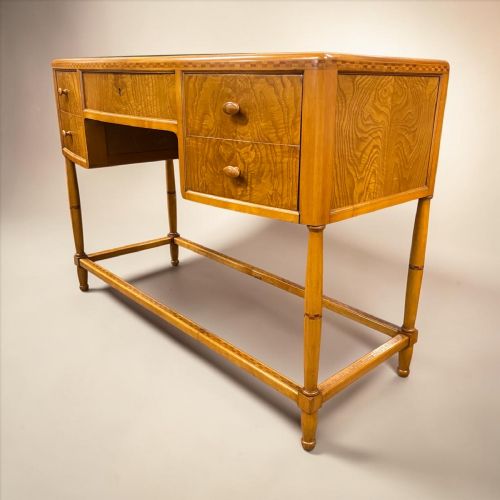
A vintage Swedish writing desk spans functional forms from mid-nineteenth-century bureau cabinets and secretaire chests of drawers down to compact writing tables and pedestal desks. These pieces originate across the nineteenth and early twentieth centuries, drawing on traditional Scandinavian country craft alongside formal revivals.
Buyers searching this phrase encounter diverse variations ranging from plain scraped pine side tables and rustic painted work to sophisticated Biedermeier and Art Deco designs in figured woods. The selection balances utilitarian workspace needs with distinct Nordic aesthetic periods.
The most frequent finds on this page include nineteenth-century painted writing desks and twentieth-century birch pedestals. Each piece reflects regional woodworking traditions prioritising clean lines and practical proportions.
What varies in quality
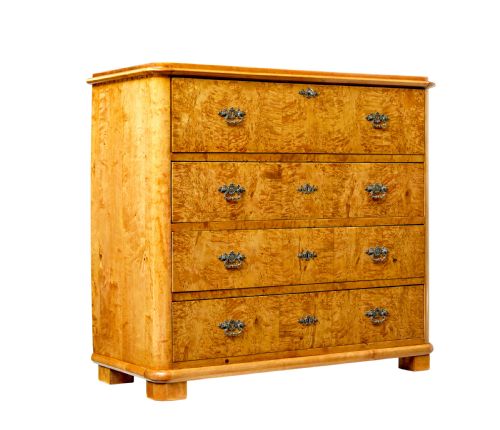
Quality rests in the selection of timber veneer, particularly the vibrancy of burr and flame birch figuring across primary display surfaces. Superior examples demonstrate meticulous grain matching and cabinetry precision.
The condition and authenticity of original decorative paintwork significantly separate standard items from finer survivals. Subtle variations in carved detailing and hardware integration further distinguish regional workshop standards.
Several tables retain original painted surfaces that stubbornly survived centuries of kitchen prep and homework.
The Vintage Swedish Writing Desk Glossary
- Secretaire chest of drawers
- A case piece featuring a fitted writing drawer that drops down to reveal compartments and pigeonholes. This hybrid form combines storage with a dedicated workspace.
- Burr birch
- A specialised timber cut from tree growths featuring swirling, highly figured grain patterns. Cabinetmakers prize this material for decorative drawer fronts and panel inserts.
- Bureau cabinet
- A tall case furniture piece combining a sloping writing flap above lower drawers and upper shelving or bookcase storage. These dual-purpose units dominated domestic studies.
- Pedestal desk
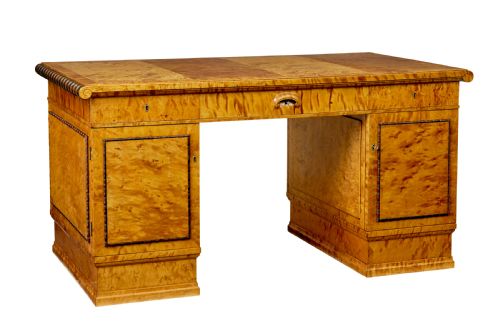
- A substantial freestanding writing table supported by two banks of drawers or columns. This heavy form offers extensive built-in storage beneath the main writing surface.
Vintage Swedish Writing Desk: Frequently Asked Questions
How do I care for painted pine surfaces?
Maintain painted pine surfaces by dusting regularly with a soft dry cloth and avoiding harsh chemical cleaners that strip historic finishes. Keep these pieces away from direct heat sources and strong sunlight to prevent paint cracking.
Wax finishes on unpainted wooden elements require occasional nourishing with appropriate beeswax formulations. Gentle upkeep preserves the integrity of original decorative paintwork over decades of daily use.
Where were these desks originally used?
These desks served administrative, domestic, and writing functions in Swedish homes, estates, and country houses. Bureau cabinets and pedestal desks provided private workspaces for correspondence and household management.
Smaller side tables and writing slopes offered portable or compact surfaces for casual daily tasks. Their adaptable sizing allowed placement in studies, bedrooms, and reception rooms alike.
Are these desks suitable for daily work?
Many vintage Swedish desks function effectively for modern writing and laptop use, though surface heights and knee clearances vary by period. Compact writing tables and pedestal desks offer adequate proportions for contemporary workspaces.
Bureau cabinets provide enclosed storage that conceals modern office clutter when the writing flap closes. Checking specific dimensions ensures comfortable legroom and functional desktop space before purchase.