
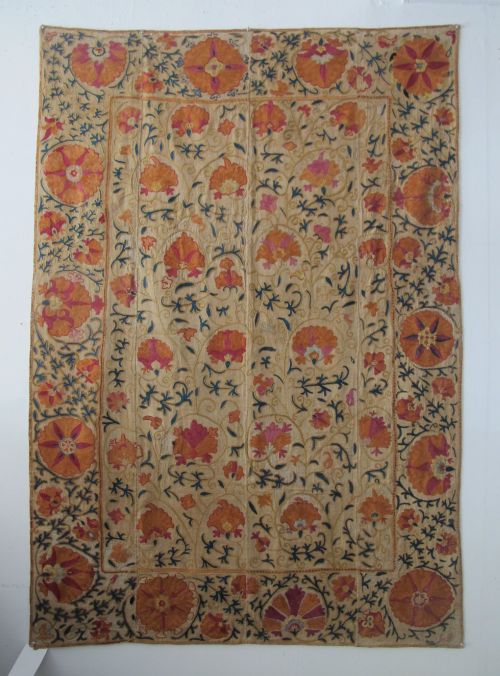
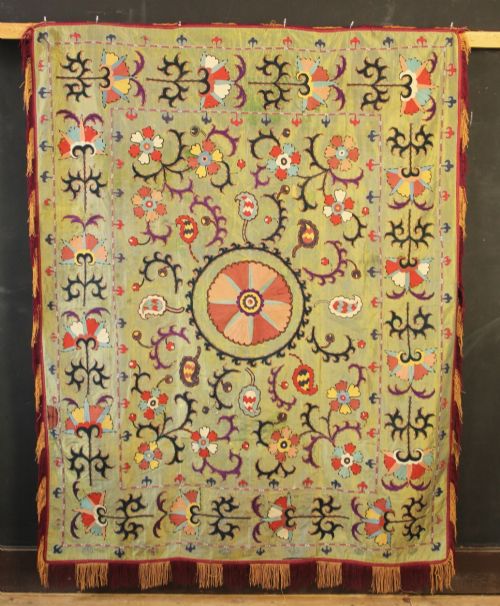
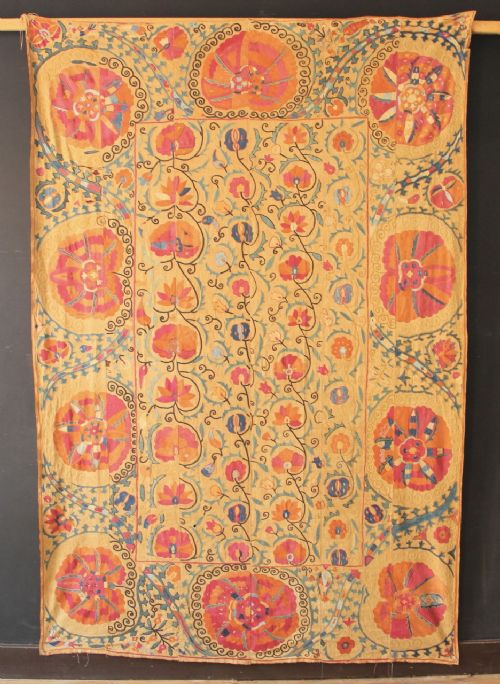

Vintage Suzani Embroidery
Vintage suzani embroidery pieces are Central Asian tribal textiles worked in silk thread on cotton, wool, or adras grounds, prized for hanging on walls or dressing beds.
Vintage Suzani Embroidery
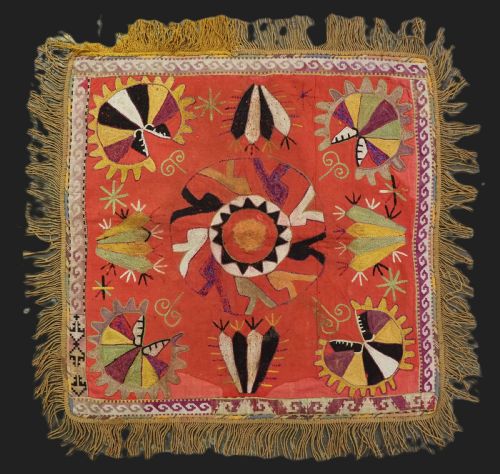
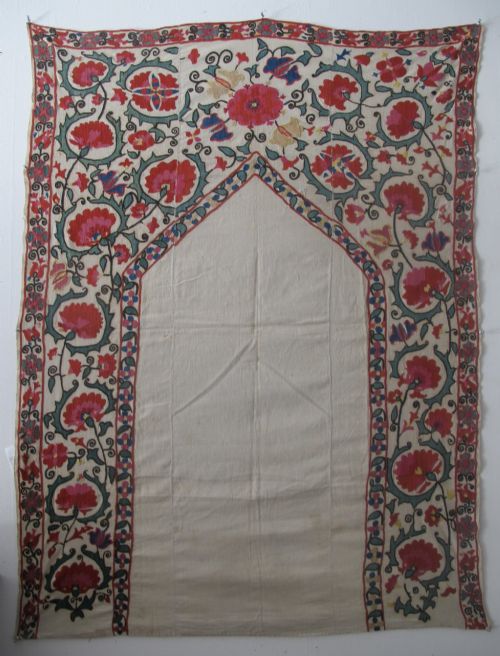
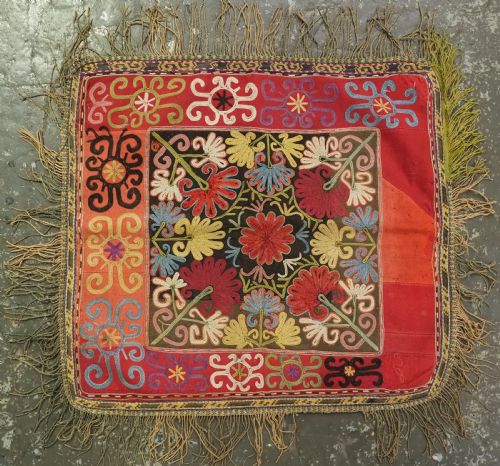
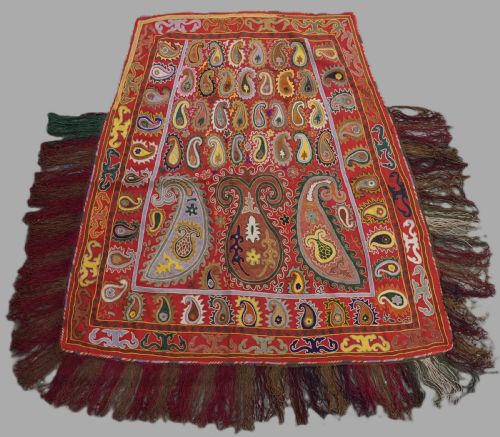
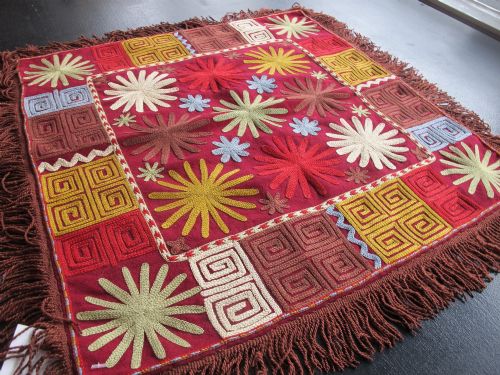
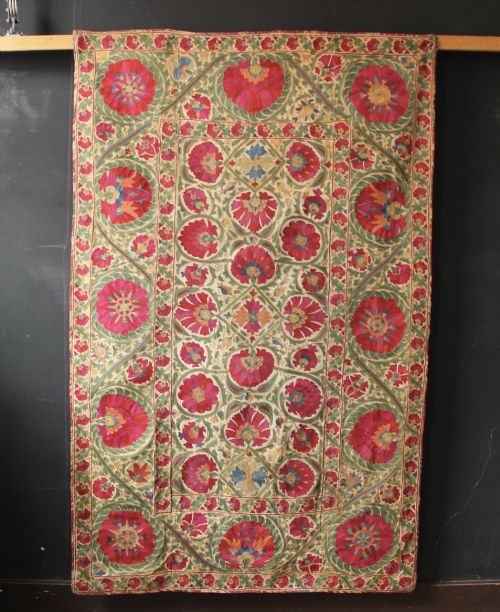
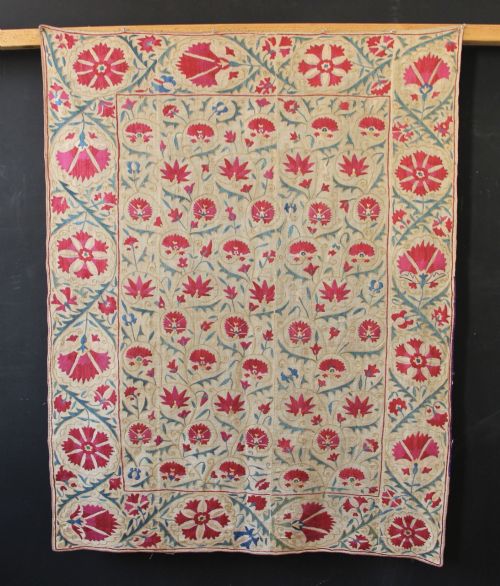
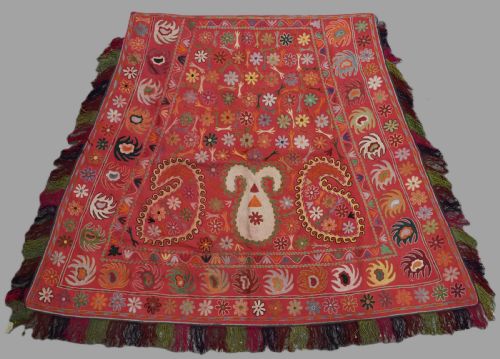
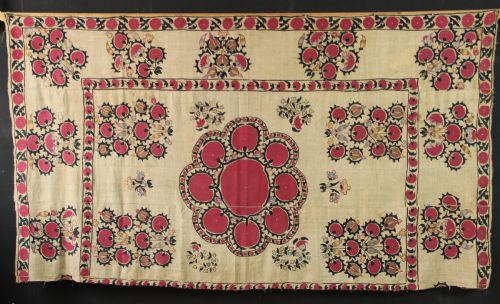
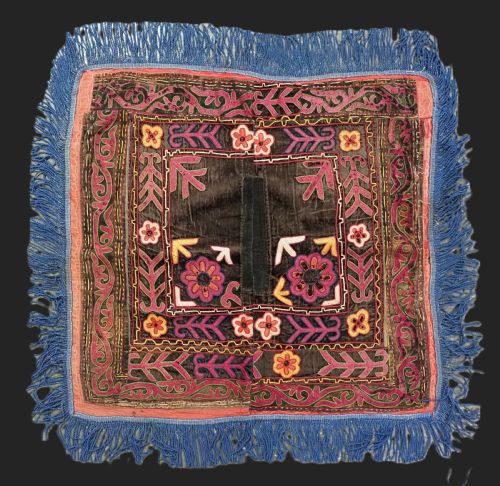
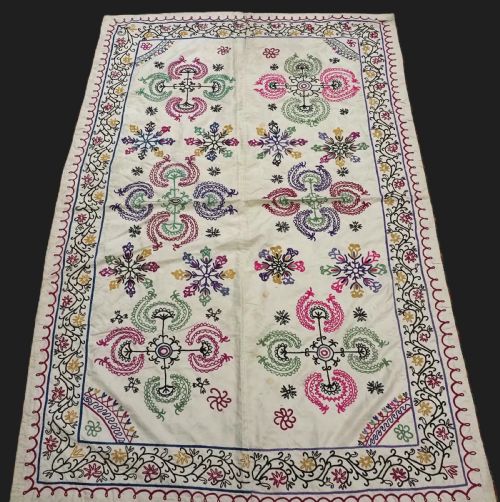
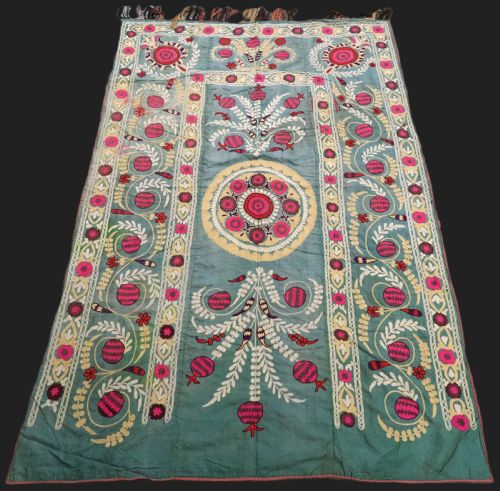
When searching for vintage suzani embroidery, buyers encounter Central Asian tribal textiles originating from Uzbekistan, including works attributed to the Lakai tribe, Tajik makers, and regional centres such as Bokhara, Tashkent, and Shakrisabz. These textiles take several forms, spanning large wall hangings, smaller nim suzani panels, bed covers known as ru-i-jo, and ceremonial horse covers or saddle rugs.
The material foundations of these works vary across grounds of woven cotton, wool, red wool, black cotton, yellow cotton, and adras, which is a mixed silk and cotton fabric. Silk thread provides the primary medium for the dense needlework applied across these diverse textile panels.
Dating across the selection ranges from the nineteenth century into the early decades of the twentieth century, encompassing periods around 1850, 1860, 1880, 1890, 1900, 1910, 1920, and 1930. Central Asian folk art traditions govern the visual language, presenting floral motifs, architectural designs, central stars, and medallion variants.
How they were made
Artisans constructed these textiles by working silk thread by hand onto woven foundation fabrics of cotton, wool, or adras silk and cotton mix. Regional workshops utilised specific ground colours, ranging from dyed red wool and black cotton to vibrant yellow cotton grounds.
Needlework techniques encompassed full work embroidery where the ground cloth disappears beneath dense stitching, alongside specific tribal formats created by nomadic groups like the Lakai. Stitchers deployed fine silk threads to map out complex floral, architectural, and medallion patterns across domestic dowry items and ceremonial horse covers.
Nomadic embroiderers occasionally incorporated cheerful asymmetry into their horse covers, ensuring protective motifs faced the right direction.
What varies in quality
The distinction between standard examples and the finest pieces rests upon the density of the needlework and the execution of the full work embroidery. Tashkent and Bokhara pieces exhibiting complete ground coverage demand closer attention than sparser compositions.
Palette control and dye depth dictate visual success across regional styles, with specific yellow, red, and green grounds creating greater contrast for the silk thread motifs. The crispness of geometric and floral drawing within Lakaiilgich and larger medallion variants defines the upper tier of the available range.
The Vintage Suzani Embroidery Glossary
- Suzani
- An embroidered textile panel originating from Central Asia, traditionally worked in silk on a cotton or wool ground as part of a bride's dowry.
- Lakai
- A Central Asian tribal group known for distinctive small embroidered hangings, horse covers, and dynamic geometric or figurative folk art motifs.
- Nim suzani
- A smaller format suzani textile, roughly half the size of a standard wall hanging, utilised for regional domestic interiors and bedding.
- Adras
- A traditional Central Asian woven fabric combining silk warp and cotton weft threads, frequently used as a ground for embroidery.
- Ru-i-jo
- A traditional Central Asian bed cover textile worked in silk embroidery, designed to be displayed within domestic living spaces.
Vintage Suzani Embroidery: Frequently Asked Questions
How were suzani embroideries used originally?
These textiles served primarily as dowry items created by brides and their families, functioning as wall hangings, bed covers, or decorative panels within Central Asian homes.
Nomadic and tribal groups also utilised specific embroidered pieces as ceremonial horse covers, saddle rugs, and yurt furnishings.
What is a nim suzani?
A nim suzani represents a smaller variant of the standard wall hanging, translated literally as half suzani.
These compact panels offered flexible placement within domestic interiors while retaining the full complexity of silk thread embroidery found on larger pieces.
How do you hang a textile safely?
Mounting antique textiles requires distributing the weight evenly across the entire upper edge using a non-damaging sleeve or conservation velcro system.
Direct exposure to bright sunlight should be avoided to protect the natural silk threads and dyed cotton or wool grounds from fading.
How do I distinguish regional styles?
Regional attribution relies on observing the specific combination of ground fabric colour, motif structure, and embroidery density.
Bokhara and Tashkent pieces often present architectural designs or full work medallions, whereas Lakai tribal works display bold, energetic folk art compositions.