
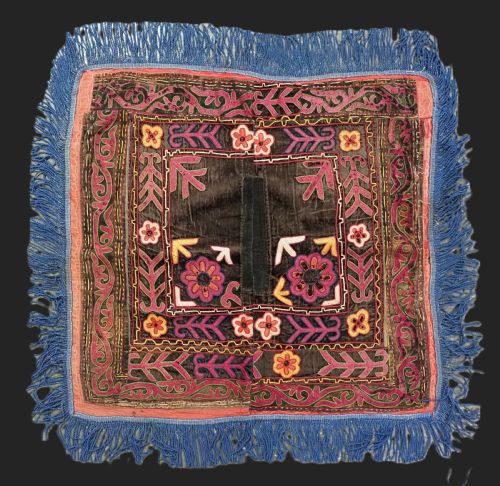


Lakai Tribe Suzani
These lakai tribe suzani textiles bring bold Central Asian tribal artistry into a modern interior through intricate needlework.
Lakai Tribe Suzani
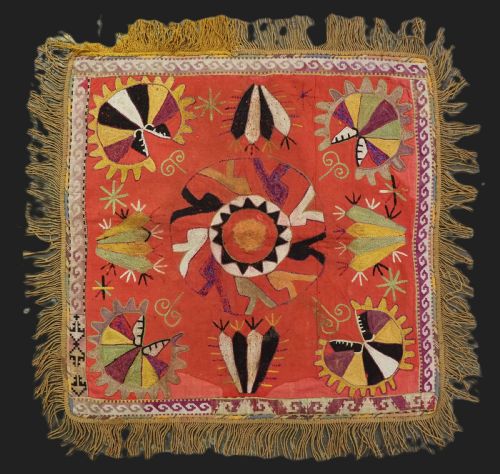
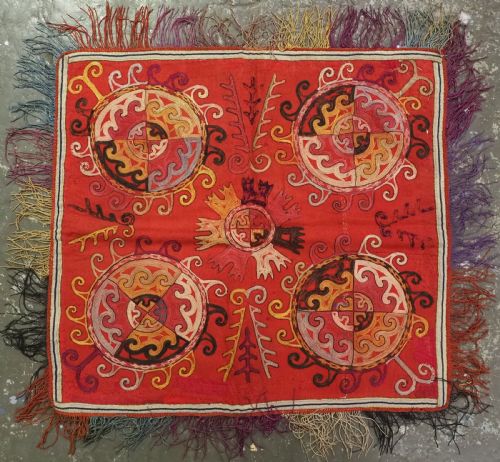
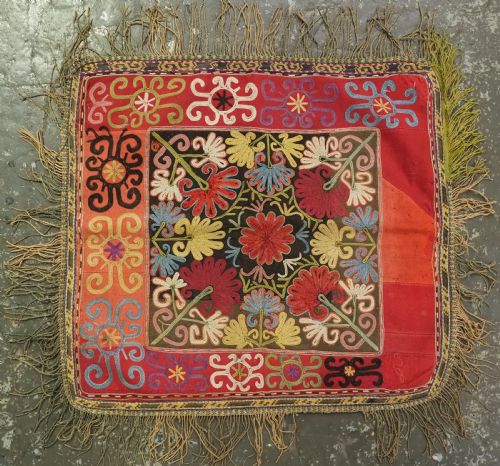
A lakai tribe suzani represents distinctive Central Asian tribal embroidery originating from Uzbekistan. Collectors search for these pieces to acquire authentic Uzbek folk art with a strong visual presence.
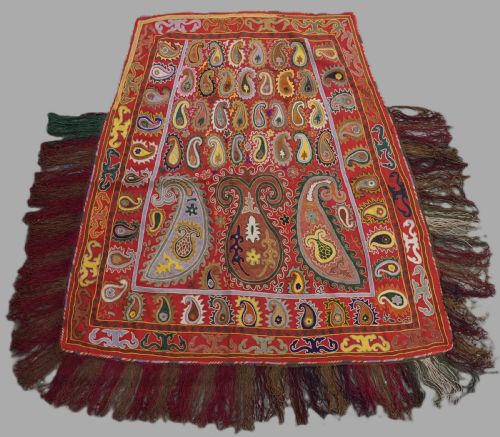
The most common forms encountered here include dowry embroideries for wall hanging, known as ilgich, alongside ceremonial horse and saddle covers. Bed decorations such as saye gosha also appear within the selection.
Dating primarily from the late nineteenth century up to the nineteen-twenties, these textiles reflect traditional nomadic craftsmanship. Each piece demonstrates the characteristic aesthetic of Uzbek tribal makers.
Materials and Construction
These textiles rely on a foundation of cotton or velvet fabric which supports dense hand embroidery. Artisans stitch elaborate patterns directly onto the base material using vibrant threads.
Silk thread and wool provide the colourful medium for the needlework, creating raised textures across the surface. Wool fringe occasionally finishes the edges of specific ceremonial examples.
Some embroidered horse covers were designed so horses could wear dowry art into tribal ceremonies.
Assessing Quality and Execution
Quality rests upon the density of the stitchwork and the precision of the geometric or floral composition. Finer examples display meticulous needle control across the entire cotton or velvet ground.
The choice of materials and the preservation of the silk and wool threads influence the overall impact of the piece. Strong contrast in the colour palette enhances the visual rhythm of the tribal design.
The Lakai Tribe Suzani Glossary
- Suzani
- An embroidered textile from Central Asia. The word derives from the Persian term for needle.
- Ilgich
- A traditional dowry embroidery created for wall hanging. These pieces frequently feature prominent central motifs.
- Saye gosha
- A specific form of bed decoration produced with detailed needlework. These items formed part of traditional furnishings.
- Central Asian Tribal
- A stylistic designation encompassing nomadic arts from the region. This grouping includes distinct regional embroidery traditions.
Lakai Tribe Suzani: Frequently Asked Questions
What is a lakai suzani?
A lakai suzani is a hand-embroidered textile created by the Lakai tribe of Uzbekistan. These works display energetic geometric and symbolic designs.
Maker communities produced them using silk and wool thread on cotton or velvet foundations for domestic and ceremonial use.
How were these textiles used?
Nomadic families utilised these textiles as dowry wall hangings, bed decorations, and ceremonial horse covers. They brought colour and status to domestic interiors and important gatherings.
Horse and saddle covers played a role in tribal ceremonies and festive processions.
How do I hang a textile?
Wall hangings require careful mounting methods that distribute the weight evenly across the fabric. Conservation-grade Velcro or a custom sleeve attached to the cotton backing works well.
Avoid direct nails or pins through the silk embroidery to prevent damage to the historic fibres.
How are the periods dated?
Dating relies on stylistic analysis, material wear, and the specific natural dye palettes observed in the silk and wool threads. Pieces from the late nineteenth century show distinct traditional motifs.
Works from the nineteen-twenties often incorporate different textural qualities and colour combinations.