

Vintage Stem Glass
When you handle a vintage stem glass, you feel the weight of centuries in the balance and the clarity of lead crystal in the hand.
Vintage Stem Glass
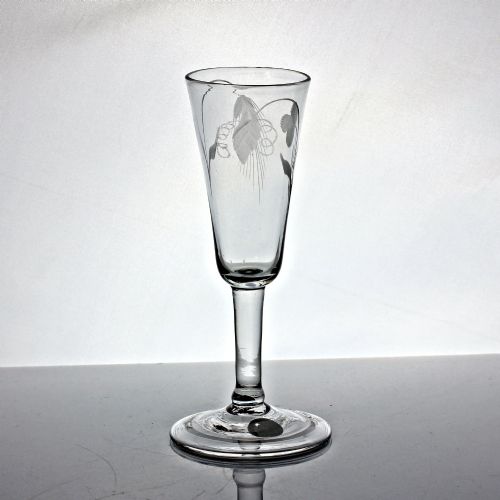
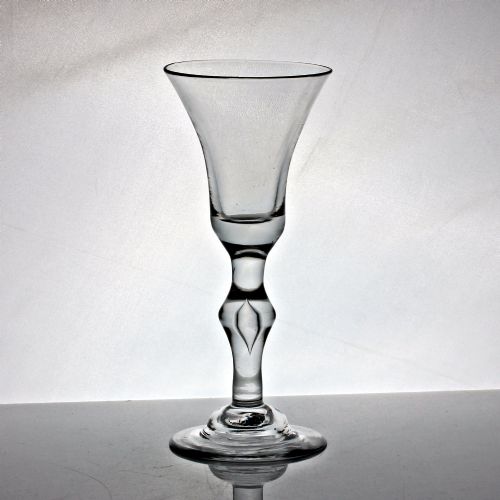
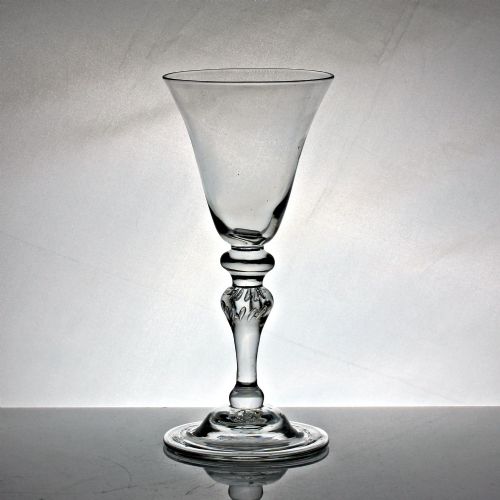
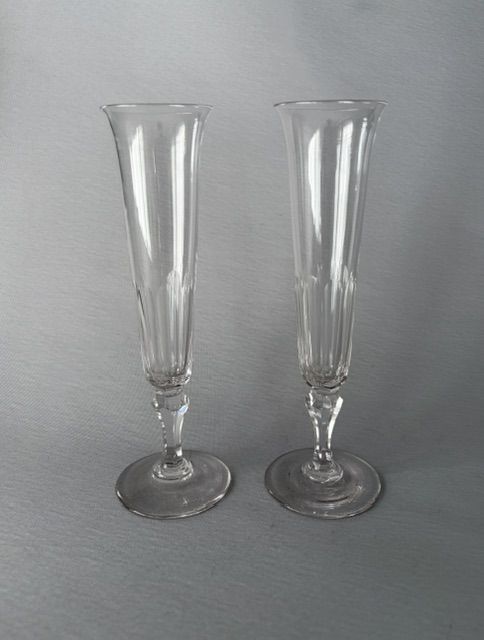
A vintage stem glass encompasses drinking vessels designed with a distinct stem and foot, spanning from eighteenth-century Georgian balusters to twentieth-century Art Deco and Edwardian creations. Collectors searching this phrase encounter everything from delicate opaque twist ale glasses and tall champagne flutes to colourful Bohemian roemers and enamelled hock glasses.
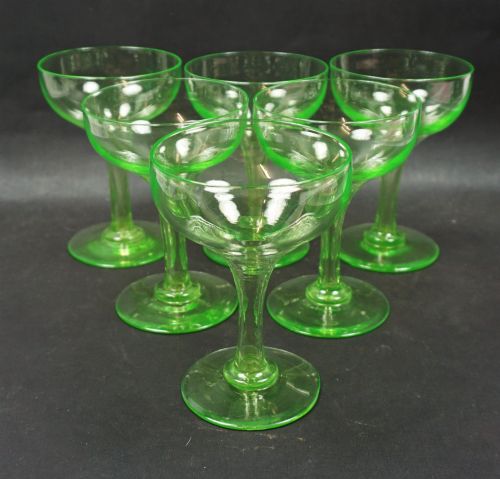
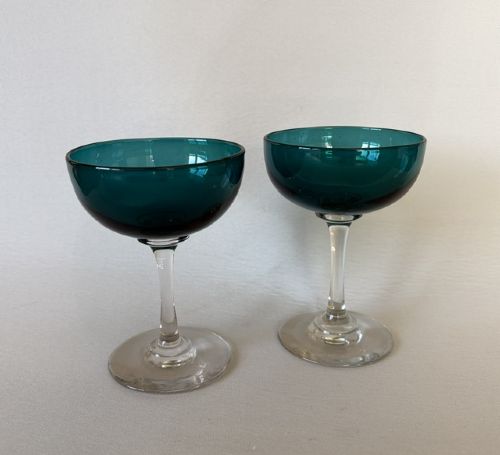
The selection here draws heavily from eighteenth-century English tavern and toast glasses alongside nineteenth-century Victorian cranberry and green glass stemware. Form follows function across these eras, shifting from heavy balustroid drinking glasses to slender flutes and richly decorated continental tablewares.
Materials and production methods
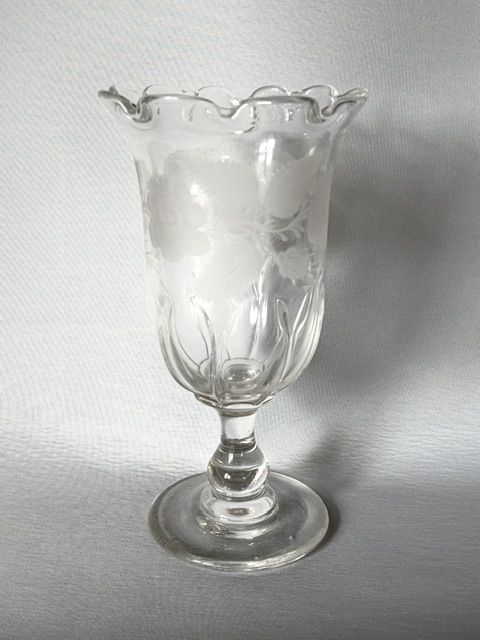
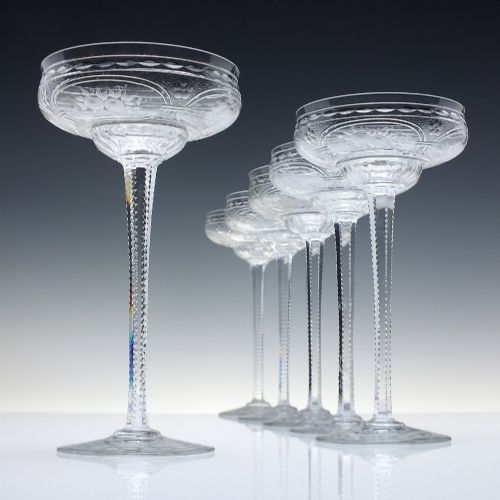
Makers utilised lead glass and lead crystal alongside clear and coloured glass, shaping vessels through hand-blowing and mould-blowing techniques. Many pieces feature applied gold leaf, intricate wheel-engraving, or vibrant floral enamelling applied to the exterior bowls.
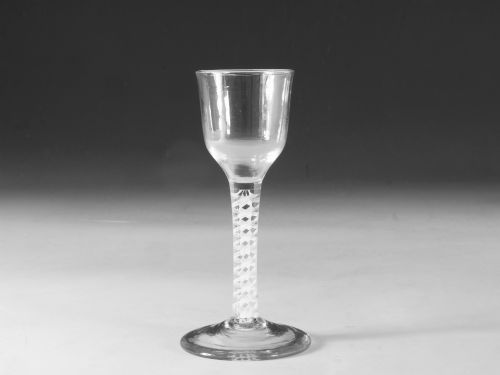
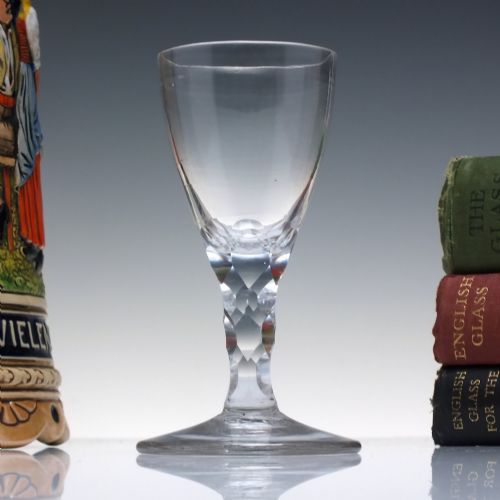
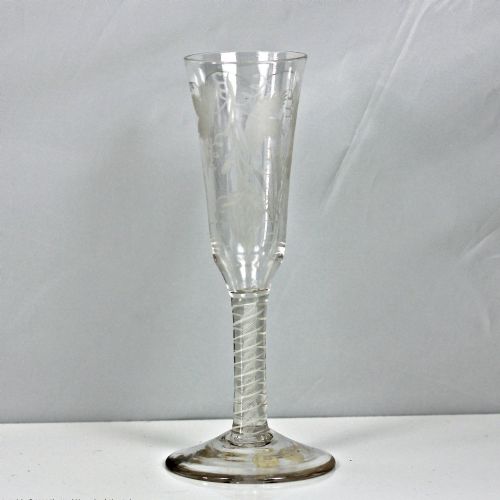
The stems themselves demonstrate sophisticated glasshouse methods, incorporating single or double series opaque twists, air twists, and faceted stem structures. Bases often include folded feet or domed formations to provide stability to the elevated bowls.
Vintage Stem Glass Retail Price Guide 2026
Typical asking prices for vintage stem glass among the pieces listed under this phrase on Sellingantiques today, from the lower quarter to the upper quarter. They describe what is for sale here now, not the wider market.
Several seventeenth-century drinkers swore that lead crystal improved the flavour of dubious claret, though modern science remains neutral on the matter.
Judging quality in stemware
Quality rests upon the optical purity of the metal and the precision of the manipulation, whether in the tightness of an opaque twist or the crispness of wheel-cut facets. Superior examples display thin, even walls and balanced proportions between foot, stem, and bowl.
Artistry in the secondary decoration, such as delicate star-etching or finely detailed heraldic enamel work, separates ordinary utility vessels from masterworks. The integrity of the pontil mark and the resonance of the metal when tapped further indicate the standard of the glasshouse.
James Powell·Theresienthal·Baccarat
The Vintage Stem Glass Glossary
- Baluster
- A heavy, thick stem form characterised by swelling knops reminiscent of architectural pillars. These appear frequently on mid-eighteenth-century drinking vessels.
- Opaque twist
- A stem containing white or coloured enamel glass threads pulled into spiral patterns during formation. This technique gained prominence in Georgian drinking glasses.
- Roemer
- A continental Germanic drinking goblet typically featuring a large spherical bowl upon a ribbed or studded cylindrical stem. These often appear in green or amber hues.
- Pontil mark
- A rough scar left on the underside of the base where the holding rod was detached after blowing. Its presence indicates traditional hand-blown manufacture.
- Ogee
- An S-shaped profile curving concave at the top and convex at the bottom, commonly seen on eighteenth-century wine glass bowls.
Vintage Stem Glass: Frequently Asked Questions
How do I date a stem glass?
Dating relies on observing the form of the bowl, the construction of the stem, and the finish of the foot. Georgian pieces often display folded feet and heavier baluster stems, while Victorian examples lean toward cut decoration and vibrant cranberry hues.
Techniques like pontil mark removal and metal composition further narrow the era of production. Comparing the silhouette to documented examples helps secure an accurate period attribution.
Can I use antique stemware for dining?
Most sturdy vintage stemware can be utilised for special occasions, though eighteenth-century lead glass demands careful handling. Hand washing in lukewarm water preserves the fragile enamel and delicate cut surfaces.
Sudden temperature changes should be avoided to prevent thermal shock to the aged metal. Storing them securely on their bases protects the vulnerable rims and stems.
What is an opaque twist stem?
An opaque twist is a decorative stem enclosing white or coloured enamel glass rods that have been spun into a spiral thread. This method flourished in England during the mid-eighteenth century.
Single series twists contain one set of threads, while double series variants combine inner corkscrews with outer gauze formations. These patterns remain highly sought after by collectors.
Why are roemer glasses coloured?
Roemers were traditionally produced using forest glass, which naturally contained impurities like iron oxides that imparted green or amber tones. Germanic and Bohemian glasshouses continued this aesthetic well into the nineteenth century.
The coloured bowls provided a striking canvas for elaborate enamel heraldic motifs and gilding. Today, these vibrant hues distinguish continental table settings from clear English crystal.