



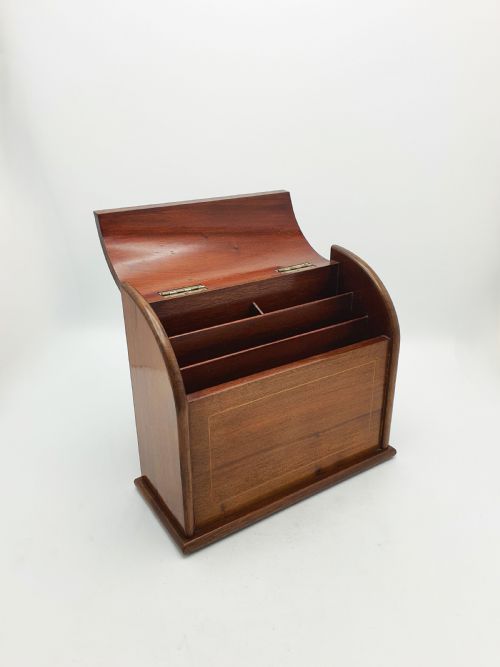


Vintage Stationery Organizer
A vintage stationery organizer keeps your correspondence in order, bringing period materials and craftsmanship directly to the desktop.
Vintage Stationery Organizer
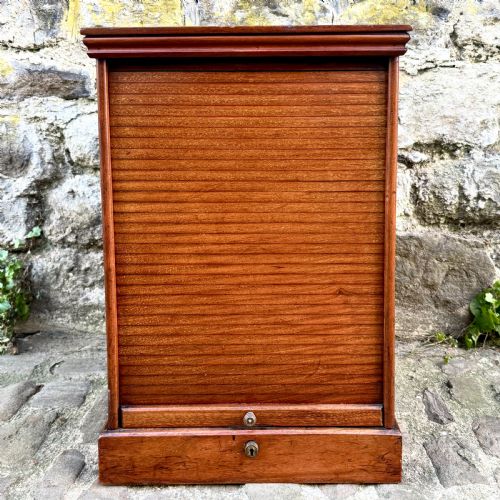
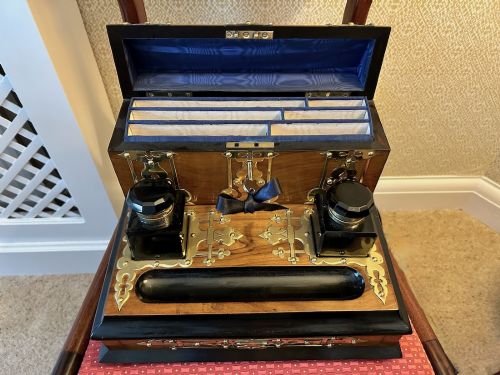
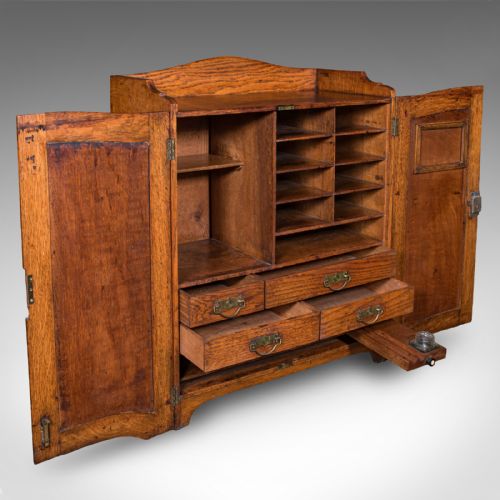
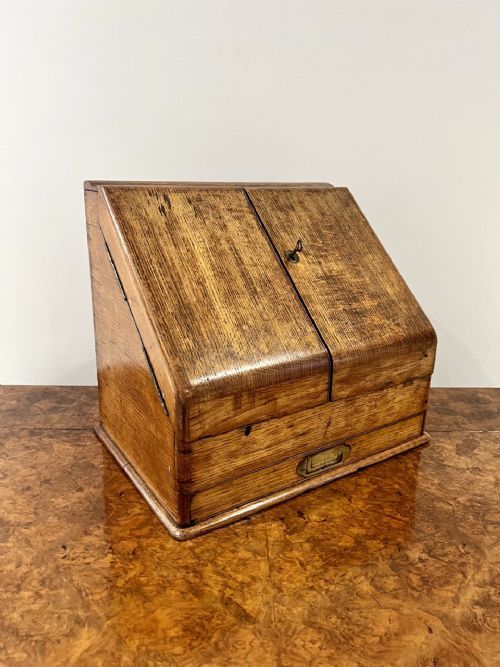
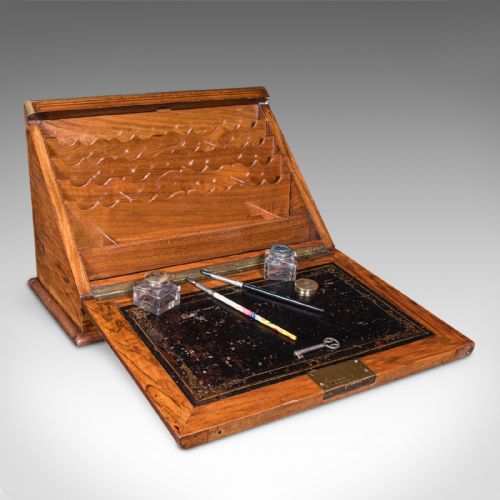
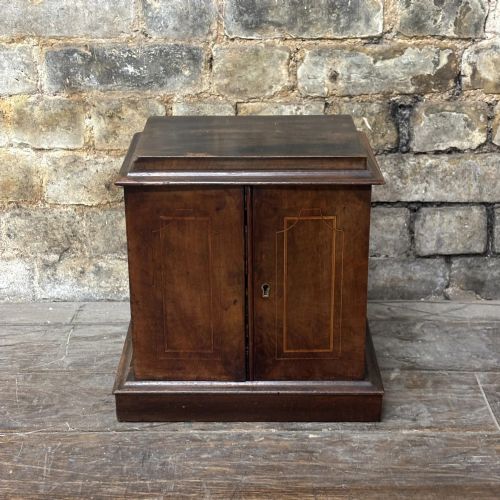
A vintage stationery organizer gathers papers, letters, and writing implements into designated compartments on a desk or table. These pieces emerge in forms such as stationery cabinets, letter racks, fall-front boxes, and desk tidies.
The selections span from the Victorian and Edwardian eras into the early twentieth century. Oak and mahogany versions dominate the offerings, alongside brass desk sets and papier-mâché letter stands.
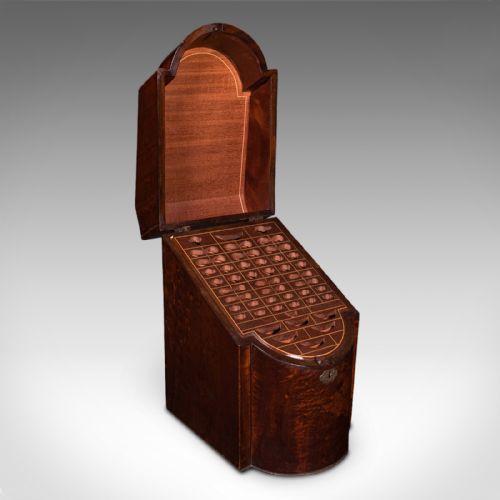
Originating as practical items for country houses, estate offices, and naval stations, these organisers range from simple sloping boxes to elaborate cabinets with secret drawers and silver mounts.
How they were made
Cabinet makers utilised dense hardwoods like oak, mahogany, walnut, and rosewood, often constructing boxes with hinged lids, fall fronts, and tiered pigeonholes. Marquetry, inlay, and carved details frequently decorate the exterior surfaces of these desks and boxes.
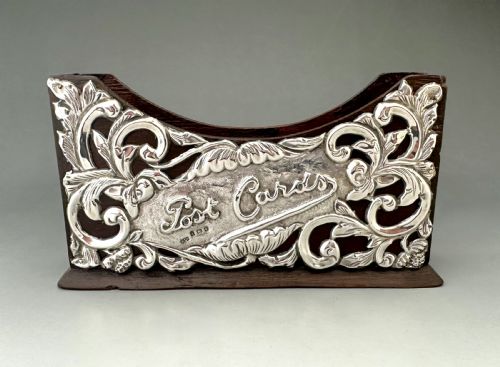
Metal components appear through cast brass, copper, and sterling silver mounts, inkstands, and telegram folders. Papier-mâché and glass also feature in specific desk sets and letter stands from the nineteenth century.
Vintage Stationery Organizer Retail Price Guide 2026
Typical asking prices for vintage stationery organizer among the pieces listed under this phrase on Sellingantiques today, from the lower quarter to the upper quarter. They describe what is for sale here now, not the wider market.
Listings feature pieces constructed from oak, mahogany, walnut, brass, copper, glass, leather, and papier-mâché.
What varies in quality
Construction methods and timber selection set the baseline, with solid golden oak and figured mahogany standing apart from simpler secondary woods. The presence of internal fittings such as secret drawers, fitted inkwells, and silver mounts elevates a piece.
Decorative execution dictates the upper tiers, seen in crisp marquetry, hand-carved mahogany waterfall tiers, and ornate brass or gilt bronze work. Integrated locks, tidy joints, and retained original hardware distinguish superior examples.
The Vintage Stationery Organizer Glossary
- Stationery cabinet
- A tabletop cabinet with doors or a fall front, fitted internally with dividers and pigeonholes for paper and envelopes. These pieces keep correspondence enclosed and protected from dust.
- Letter rack
- An open stand designed to hold incoming and outgoing mail upright in separate slots. They appear in brass, copper, wood, and silver.
- Desk tidy
- A compact accessory holding multiple desktop items like inkwells, pens, stamps, and letters in one consolidated tray or box. Versions range from simple wooden troughs to elaborate metal sets.
- Papier-mâché
- A composite material made from paper pulp or layers of paper bound with glue, moulded and dried into firm shapes. It provides a smooth base for lacquer, gilding, and inlay.
- Inkstand
- A tray or stand incorporating one or more inkwells, pen grooves, and sanders for writing desk use. They frequently feature matched glass inserts and hinged metal lids.
Vintage Stationery Organizer: Frequently Asked Questions
What is a vintage stationery organizer used for?
These pieces hold letters, envelopes, paper, and writing accessories in dedicated slots and compartments on a desk.
Historically, they managed daily correspondence in offices, country houses, and studies, keeping paper flat and organised.
How do I date a wooden stationery box?
Dating relies on timber choices, construction techniques, and stylistic markers such as Victorian Gothic or Edwardian marquetry.
Hardware styles, dovetail joints, and internal drawer configurations also offer clear clues to the period of manufacture.
Where do I place a letter rack on a desk?
A letter rack sits safely towards the back or corner of a desk where it remains accessible without obstructing writing space.
Heavier oak or brass models anchor themselves securely on blotters or open desk surfaces.
Are desk tidies and stationery cabinets different?
Desk tidies are typically open trays or boxes combining inkwells and pen rests with shallow letter slots.
Stationery cabinets feature enclosed doors or fall fronts designed specifically to store larger quantities of paper and envelopes out of sight.