


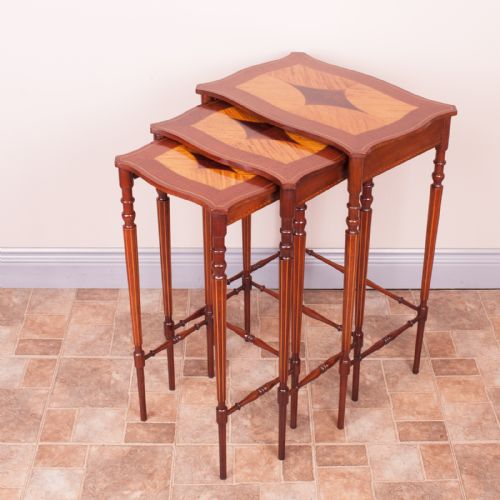


Vintage Stackable Tables
Vintage stackable tables offer clever space-saving design, bringing graduated tiers of mahogany, rosewood and walnut into compact daily use.
Vintage Stackable Tables
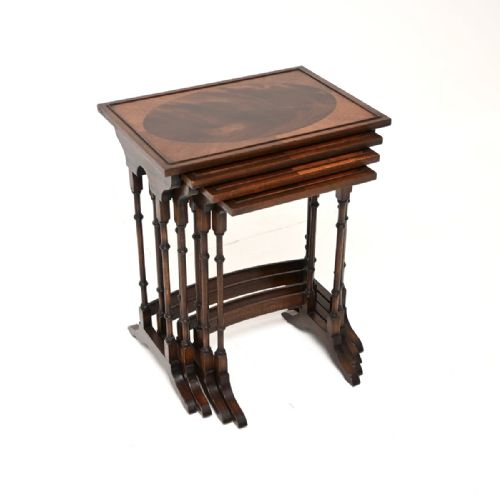
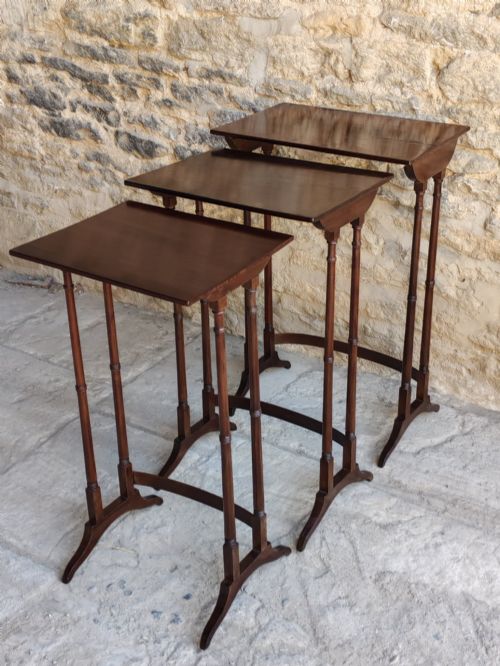
Vintage stackable tables appear primarily as nests of three or four occasional pieces, designed to slide neatly beneath one another when floor space is needed. These sets span diverse periods from Edwardian and Regency eras through to Art Deco designs, featuring both rectangular and oval table tops.
The most common examples encountered here are Edwardian mahogany nests, often finished with delicate inlay work or boxwood stringing. Alongside these sit distinct Regency quartetto sets and striking 1930s rosewood or walnut variations.
How they were made
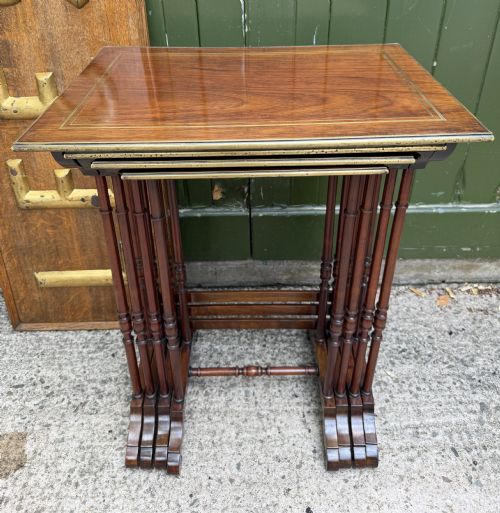
Cabinetmakers utilised rich timber veneers such as mahogany, rosewood and satinwood, applying them over sturdy hardwood carcases to achieve striking grain patterns. Brass inlay, parquetry and floral marquetry were frequently employed to elevate the decorative surface finish of the tops.
Tables were constructed to graduate precisely in size so that each smaller piece fits seamlessly within the frame of the next. Joinery techniques ensured the legs and underframes remained slender yet strong enough to withstand regular daily withdrawal and stacking.
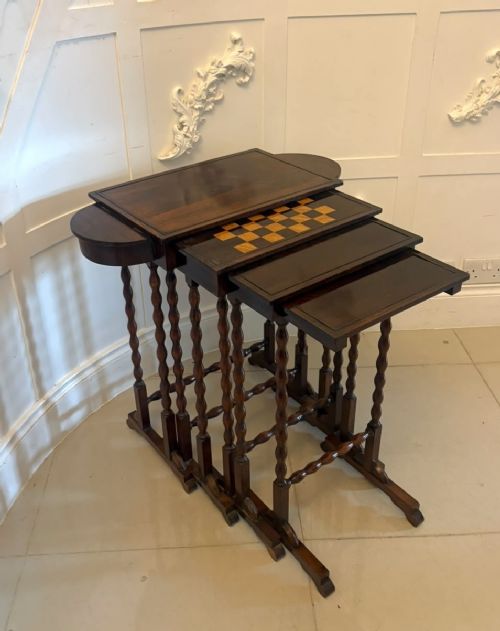
Some Regency stackable tables conceal integrated chess boards, proving that historical ancestors enjoyed a quick board game on demand.
What varies in quality
Quality rests upon the selection and matching of timber veneers, the crispness of any inlaid brass or boxwood stringing, and the integrity of the graduated frame construction. Superior sets maintain structural alignment without excessive wobble when individual tables are extracted.
The sophistication of the design dictates distinction, moving from plain utilitarian mahogany frames to elaborate quartetto sets with integrated games boards or intricate French walnut parquetry. Well-executed carving and careful proportioning separate standard utility pieces from finer cabinet work.
Heal's
The Vintage Stackable Tables Glossary
- Quartetto
- A matched set of four stackable tables designed to nest together. This term frequently appears in Regency and Edwardian cataloguing.
- Marquetry
- Decorative patterns formed by fitting together small pieces of coloured wood veneer. These intricate floral or geometric designs adorn table tops.
- Inlay
- The technique of inserting contrasting strips of timber, such as boxwood, into depressions within a solid wood surface to create borders.
- Parquetry
- Geometric mosaic woodwork used for covering floors or table tops. It often employs walnut to form repeating angular patterns.
Vintage Stackable Tables: Frequently Asked Questions
What is a quartetto nest of tables?
A quartetto set consists of four graduating tables designed to slide neatly beneath the largest main table. These sets date back to the Regency period and continued through the Edwardian era.
They provide flexible surface space while occupying the footprint of a single small table when stacked away.
How were stackable tables used historically?
These tables served primarily as occasional furniture for taking tea, writing notes or holding books in drawing rooms. Servants would pull them out individually for guests and stack them away afterward.
Today they function effectively as versatile side tables or modular coffee tables in modern living spaces.
How do I distinguish Edwardian nests from Regency ones?
Edwardian examples typically feature light mahogany framing with delicate boxwood stringing or satinwood inlay, reflecting turn-of-the-century revival tastes. Regency quartetto tables often showcase heavier rosewood veneers and occasionally incorporate brass inlay.
Construction details and timber choice generally signal the manufacturing period.
Can I use vintage stackable tables daily?
Most antique nests are built from durable hardwoods like mahogany and rosewood, making them suitable for everyday placement. Regular use requires care with moisture and heat to protect the polished wood surfaces.
Lifting each table clear of the frame rather than dragging prevents unnecessary wear on the legs.