


Vintage Spirit Decanter Frame
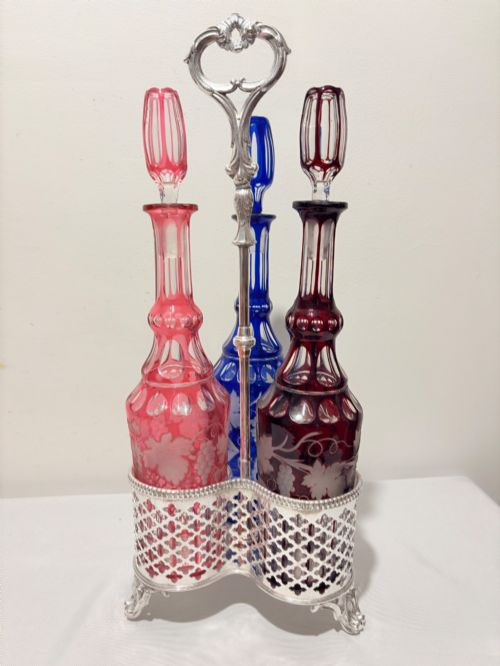
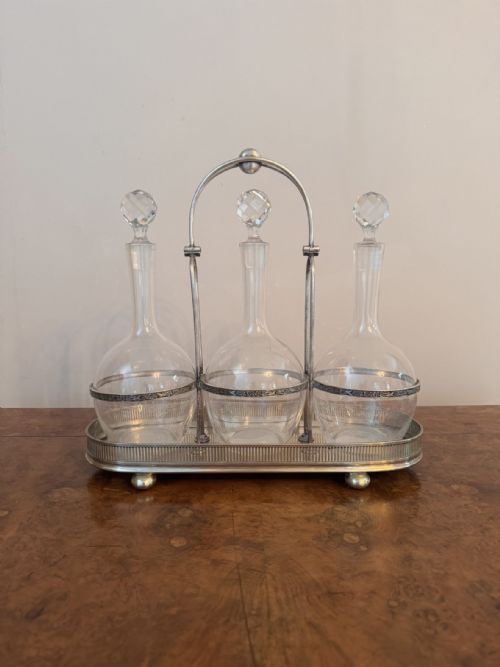
A vintage spirit decanter frame holds the bottles of an evening host, combining metalwork with cut glass to secure the whiskey.
Vintage Spirit Decanter Frame
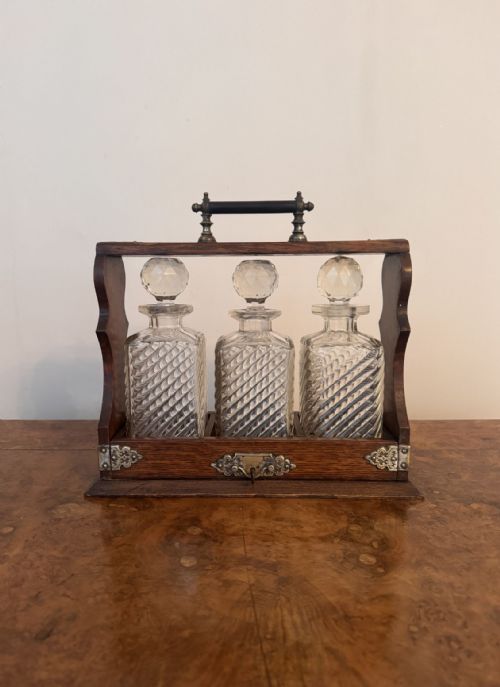
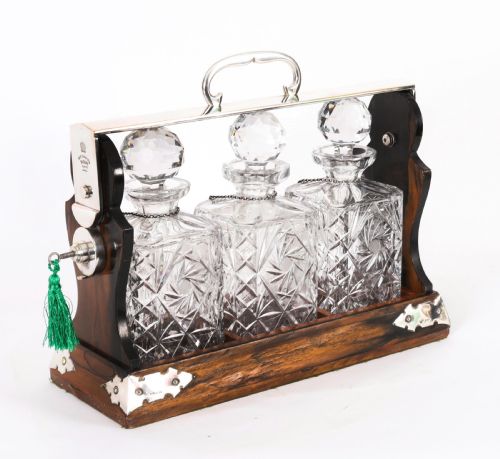
A vintage spirit decanter frame houses multiple glass vessels within a secure metal or wooden carrier, often designed for portability on the sideboard. These pieces serve as both barware and display stands, with locking tantalus variants keeping the contents secure.
The versions most commonly met here span the Victorian, Edwardian, and Art Deco periods, utilising frames of silver plate, oak, coromandel, and chrome. They typically contain two or three cut glass or crystal decanters.
Makers and retailers such as Betjemann, Elkington, Hukin and Heath, and The Goldsmith Co. produced these stands, alongside unmarked examples in similar forms. The selection includes cruet sets, liqueur stands, and locking tantalus frames.
What varies in quality
The calibre of the metal plating and the density of the timber determine the longevity of the frame, alongside the complexity of any locking mechanism. Maker attribution to firms such as Betjemann or Hukin and Heath elevates the standing of a piece.
The clarity and depth of the cut glass on the decanters, and whether the set retains its matching original bottles, set apart finer examples. Ornate casting on the stand and robust construction indicate superior workshop standards.
Listings for vintage spirit decanter frames span the Victorian, Edwardian, and Art Deco periods, utilising silver plate, oak, and cut crystal.
Betjemann·Elkington·Hukin and Heath·The Goldsmith Co.·Jacques Adnet
The Vintage Spirit Decanter Frame Glossary
- Tantalus
- A locking spirit decanter frame that restrains the bottles behind a metal bar so they cannot be removed without a key. This device prevented unauthorised pouring by servants or guests in nineteenth-century homes.
- Silver Plate
- A base metal, such as copper or nickel brass, coated with a layer of silver. This technique provided the appearance of solid silver at a lower cost.
- Old Sheffield Plate
- An early form of plated metal produced by fusing a sheet of silver to a copper core before rolling. It is identified by the subtle show of copper beneath worn silver highlights.
- Cut Glass
- Glass shaped and patterned by grinding wheels to create facets that reflect light. It was widely used for decanters in the nineteenth and early twentieth centuries.
Vintage Spirit Decanter Frame: Frequently Asked Questions
What is a decanter tantalus?
A decanter tantalus is a locking spirit frame that secures the bottles with a metal bar across the stoppers. This prevented guests or staff from accessing the liquor without the key.
The name derives from the mythological figure Tantalus, as the drink remains visible yet unreachable to anyone lacking the key.
How do I date a decanter frame?
Dating relies on the materials, the style of the metalwork, and any maker marks or registration numbers. Victorian and Edwardian examples often feature oak or silver plate with heavy cut crystal.
Later pieces from the nineteen-thirties lean towards modernist chrome and glass construction, reflecting Art Deco design trends.
Are the decanters usually original?
Many frames retain their matching original cut glass or crystal decanters, which fit precisely into the dedicated recesses of the stand. Because bottles were easily broken over decades of use, replacement vessels do occur.
Matching the cut pattern and the tint of the glass helps determine if the decanters belong to the frame.
How do I care for silver plated frames?
Silver plated frames require gentle cleaning with a soft cloth and a reputable silver polish to maintain the finish without wearing through the plating. Avoid harsh abrasives that can damage the underlying base metal.
Wood components like oak or coromandel benefit from occasional application of furniture wax to preserve the moisture and grain.