


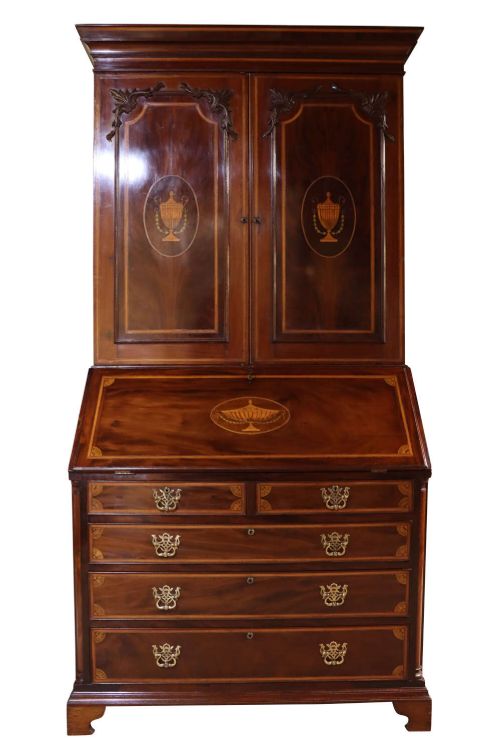
Vintage Slant Front Desk
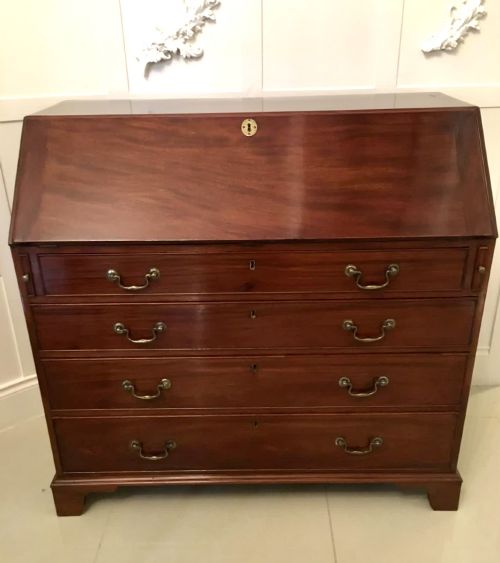
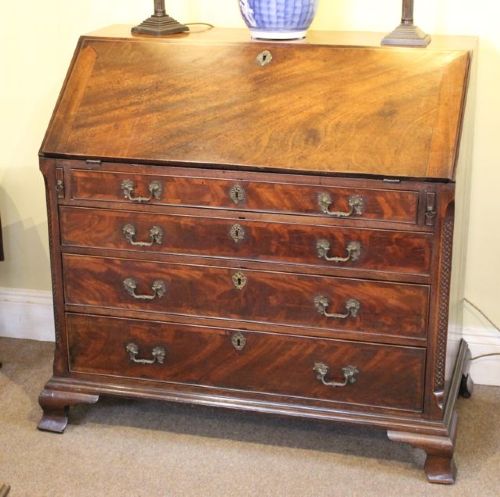
A vintage slant front desk offers a hinged writing flap that opens to reveal fitted drawers and pigeonholes.
Vintage Slant Front Desk
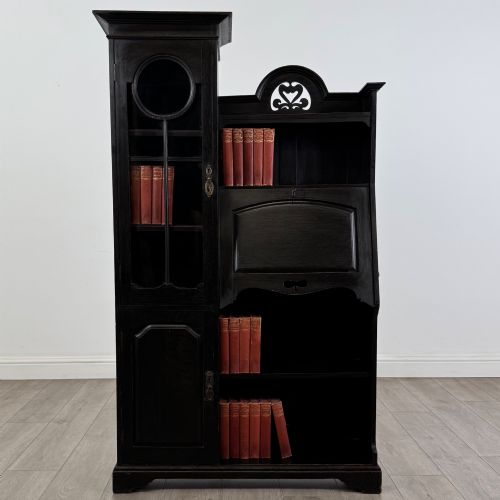
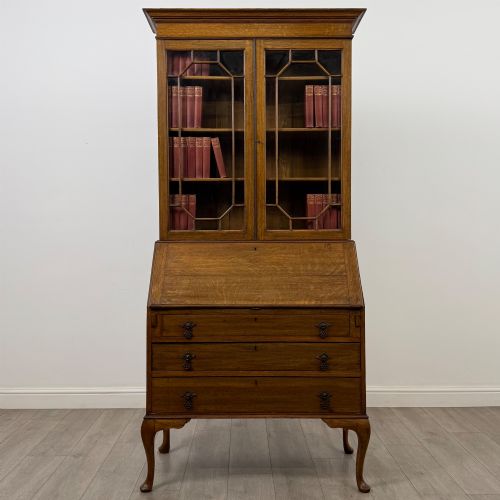
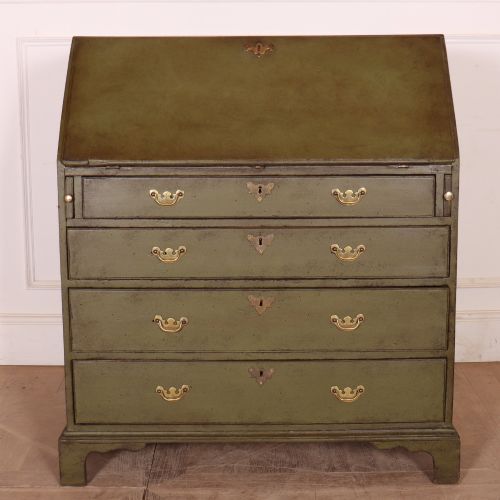
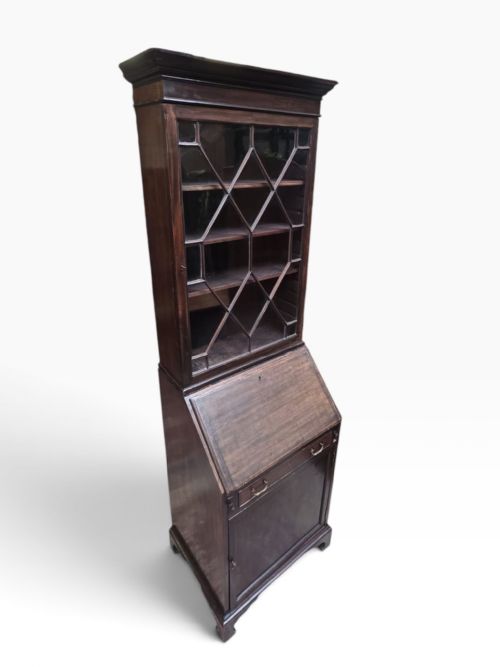
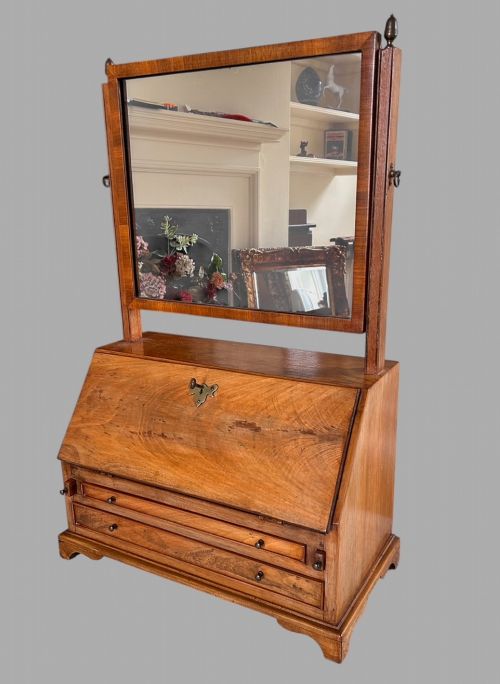
A vintage slant front desk combines a sloped writing flap with a set of lower drawers for storage, appearing across multiple centuries from the 18th century to the 1930s. Buyers searching for a vintage slant front desk encounter variations ranging from compact table-top models to tall bureau bookcases fitted with glass doors. The Edwardian period and the 1920s generate the highest volume of examples on this page, alongside Georgian and Victorian pieces.
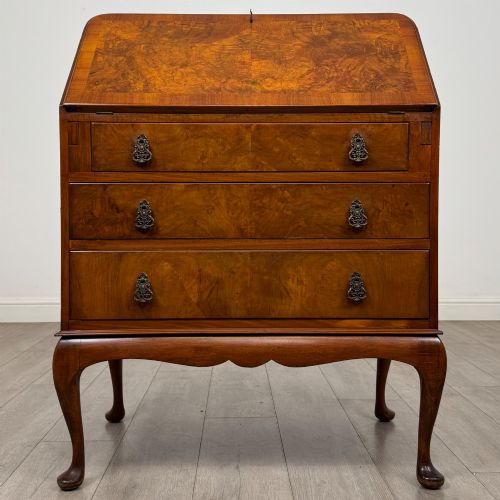
Makers constructed these writing pieces in forms such as standard bureaux, bureau bookcases, and specialised writing desks with fitted interiors. Oak and mahogany dominate the structural woods, while walnut and burr walnut appear on decorative surfaces. Revival styles like Jacobean, Tudor, and Queen Anne frequently recur alongside Arts and Crafts interpretations.
Materials and Technique
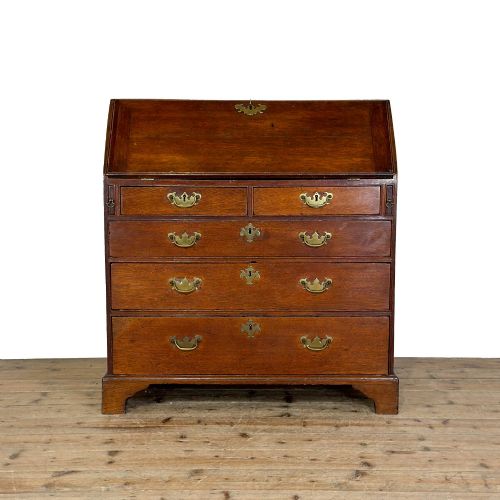
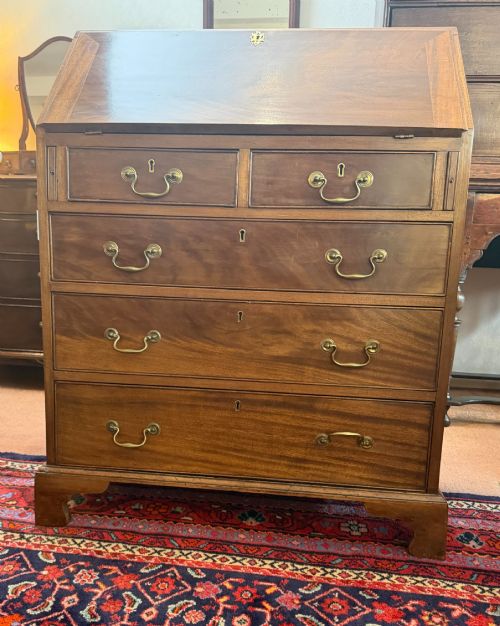
Cabinetmakers built the primary carcase and drawer frames using solid timbers including oak and mahogany, applying veneers of burr walnut, walnut, and yew wood to the primary surfaces. Brass handles, escutcheons, and hinges secure the fall front flaps and drawers, while glass panels feature in the upper sections of bureau bookcases.
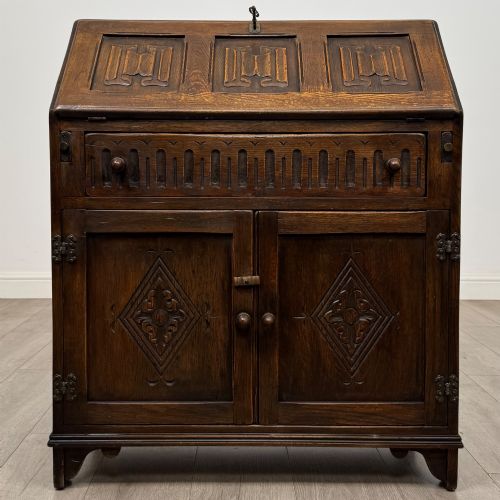
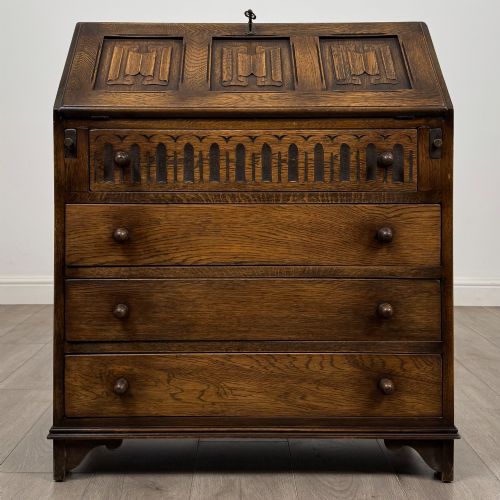
Joinery methods involve dovetailed drawer construction and framed panels, supplemented by carved linenfold details or inlaid stringing. Workshops finished these writing desks with polished timber surfaces that highlight the natural grain patterns of the wood.
Vintage Slant Front Desk Retail Price Guide 2026
Typical asking prices for vintage slant front desk among the pieces listed under this phrase on Sellingantiques today, from the lower quarter to the upper quarter. They describe what is for sale here now, not the wider market.
Primary materials recorded across the inventory include oak, mahogany, walnut, burr walnut, yew wood, and brass.
Judging Quality
The choice of timber veneer defines the visual impact, with burr walnut and figured walnut demanding greater skill in matching grain patterns across the fall front and drawer fronts. Finely executed cabinetwork shows tight dovetails on internal drawers and smooth operation of the hinged writing flap.
Design complexity separates standard utilitarian examples from superior pieces, particularly where upper bookcase sections incorporate glazed doors or custom internal pigeonholes. The integration of period hardware, such as brass drop handles and matching escutcheons, preserves the integrity of the piece.
Heals of London·Arthur Basil Reynolds·Larkin
The Vintage Slant Front Desk Glossary
- Bureau
- A writing desk featuring a sloping hinged flap that covers a fitted interior of small drawers and pigeonholes. This term encompasses the primary form found within these listings.
- Fall Front
- The hinged writing flap on a desk that pulls down to form a horizontal surface for writing. It conceals the internal compartments when closed.
- Bureau Bookcase
- A combined furniture form comprising a slant front desk base topped by a glazed or panelled shelving cabinet. These pieces provide both writing facilities and enclosed display storage.
- Linenfold
- A style of wood carving that imitates folded linen cloth, frequently seen on the panels of Edwardian oak pieces. This decorative motif adds texture to the exterior surfaces.
- Pigeonhole
- A small, open compartment fitted inside the interior of a desk for sorting papers and letters. These compartments sit behind the sloping fall front.
Vintage Slant Front Desk: Frequently Asked Questions
What is a slant front desk?
A slant front desk is a writing cabinet featuring an angled hinged lid that drops down to create a writing surface. This design conceals internal compartments for paper storage.
Such pieces range from compact Edwardian oak examples to tall Georgian bureau bookcases constructed in mahogany and walnut.
How do I use a bureau desk?
The sloping front panel opens outward to rest on integrated support brackets, providing a sturdy platform for writing. Internal drawers and pigeonholes remain accessible above this surface.
Closing the flap secures correspondence and papers out of sight while maintaining a tidy appearance in a room.
Which woods were used for these desks?
Cabinetmakers utilised solid timbers including oak, mahogany, and yew wood for structural stability and durability. Decorative surfaces often featured veneers of burr walnut, walnut, and satinwood.
Brass hardware and glass panels completed the construction of more elaborate bookcase variations.
How do I distinguish Edwardian from Georgian desks?
Edwardian desks often feature lighter oak construction, sometimes with carved linenfold details or Arts and Crafts influences. Georgian pieces typically display darker mahogany or walnut timbers with restrained proportions and fine bracket feet. Nooks and internal fittings also reflect the manufacturing techniques characteristic of their respective centuries.