


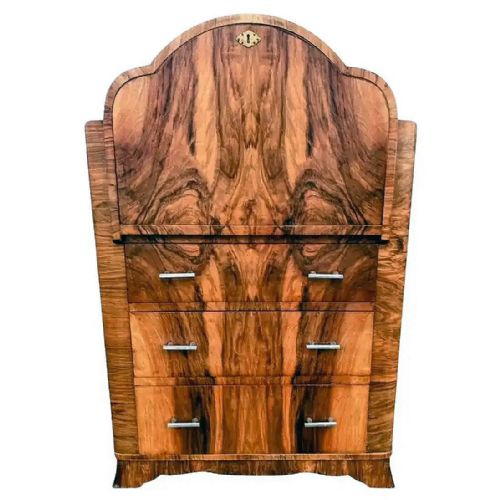


Walnut Art Deco Bureau
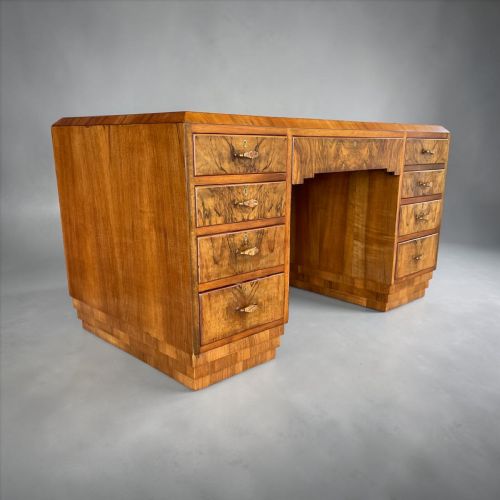
A walnut art deco bureau brings clean geometric lines and rich timber grain to a room, offering a practical writing surface with concealed storage.
Walnut Art Deco Bureau
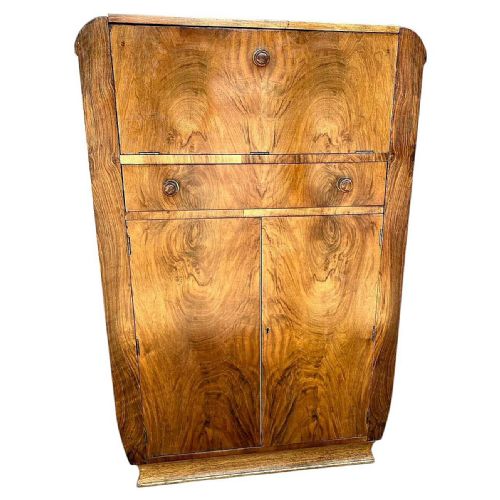
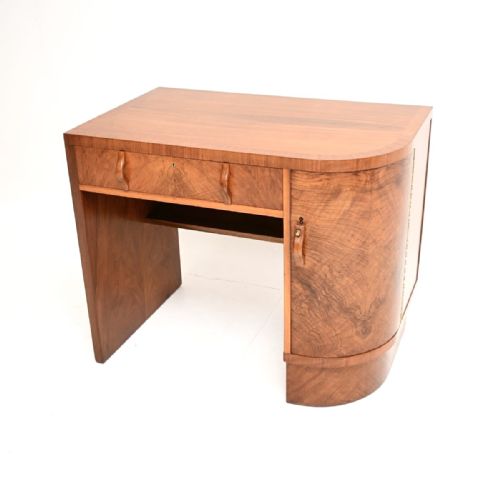
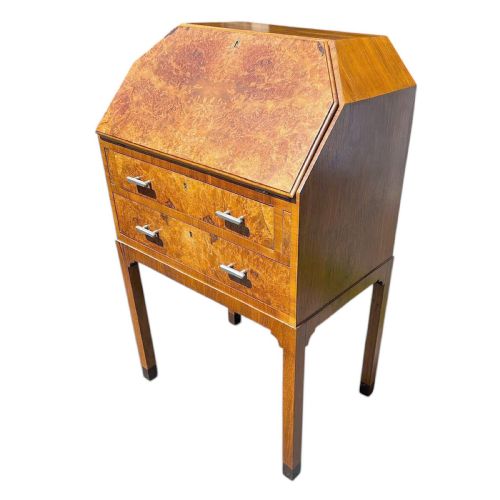
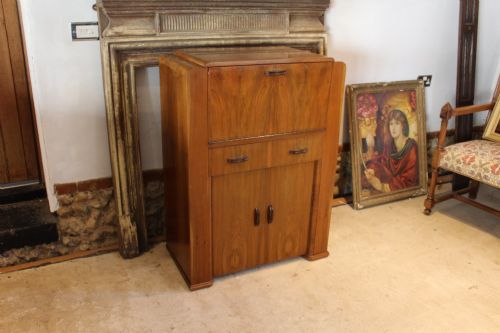
A walnut art deco bureau combines the drop-down writing flap of a traditional bureau with the streamlined aesthetic characteristic of the nineteen-thirties. These pieces frequently appear in compact formats, cloud-shaped silhouettes, and taller bookcase configurations.
The objects seen here stem principally from the nineteen-twenties and nineteen-thirties, with occasional examples from subsequent decades. English and French workshops produced the majority of these desks and writing cabinets.
Beyond standard writing desks, the category encompasses bureau bookcases and cocktail cabinets sharing the same characteristic style and timber selection.
Materials and construction methods
Cabinet makers utilised walnut, burr walnut, and figured walnut veneers over solid wood carcases to create dramatic, symmetrical grain patterns across the fall fronts and drawer faces. Glass panels and brass hardware frequently complement the polished wooden surfaces.
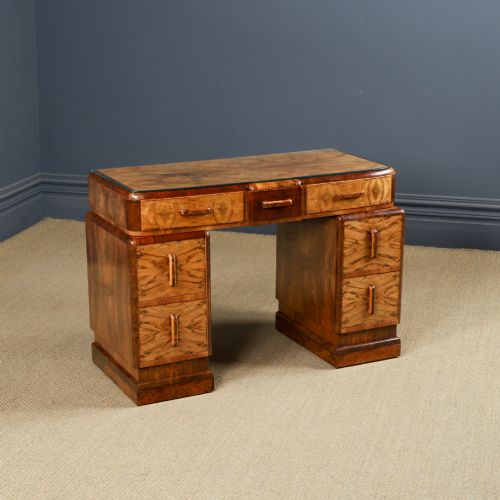
Construction techniques combine traditional cabinet making joints with modern industrial shaping, resulting in curved silhouettes such as cloud-shaped writing bureaus and skyscraper pedestal forms.
The listings show bureau designs combining walnut, brass, and glass across English and French origins from the interwar period.
Assessing quality in the range
Quality rests upon the selection and matching of the veneer, where book-matched burr walnut creates a striking visual symmetry across the front of the bureau. Heavy figuring and careful grain continuity separate standard production from superior pieces.
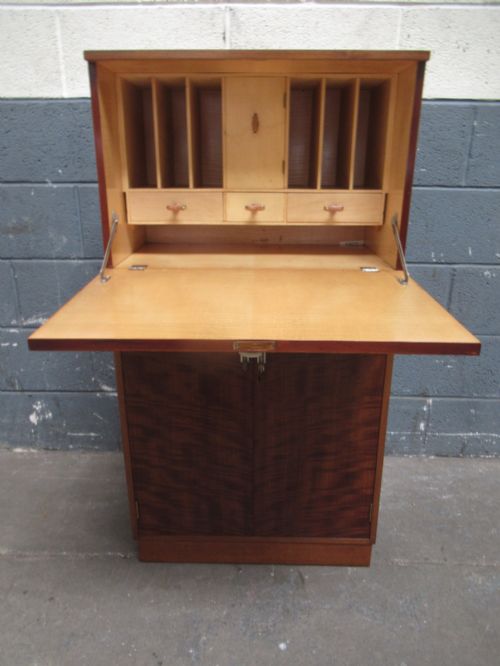
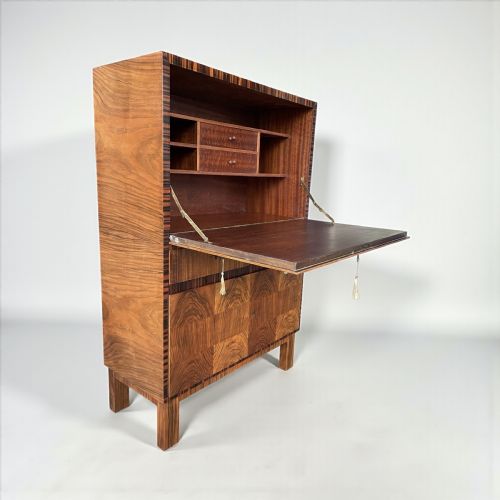
The execution of curved forms and the integration of internal fittings, such as pigeonholes and smaller drawers behind the fall front, indicate the level of craftsmanship invested in the furniture.
F.H. Marshall and Co Glasgow·Maurice Adams·Étienne Kohlmann·Rurka
The Walnut Art Deco Bureau Glossary
- Bureau
- A writing desk featuring a sloping hinged lid or fall front that conceals pigeonholes and small drawers. This form provides a closed cabinet appearance when not in use.
- Burr Walnut
- A distinctively patterned wood grain derived from the wart-like growths on walnut trees. Cabinet makers prize it for its intricate, swirling patterns.
- Veneer
- A thin layer of superior wood applied over a base timber surface. This technique allows makers to display decorative grains economically.
- Fall Front
- The hinged panel on a bureau that drops down to form the writing surface. It typically rests on pull-out wooden supports.
- Book-Matched
- A technique where adjacent veneer leaves are mirrored to create a symmetrical pattern. This method highlights the natural grain of the timber.
Walnut Art Deco Bureau: Frequently Asked Questions
How do I use a walnut art deco bureau?
The drop-down flap opens to reveal a compact writing surface accompanied by small pigeonholes and letter compartments. This design allows you to conceal correspondence and writing materials simply by closing the front panel.
Beneath the writing surface, cupboards or drawers provide storage space for books and household items. Many variations also incorporate upper shelving or glass display sections for books and glassware.
What periods do these bureaus come from?
The pieces available primarily originate from the nineteen-thirties, which represents the height of the art deco movement. You will also encounter examples from the nineteen-twenties and mid-century periods.
French and English workshops designed these variations using similar geometric principles and timber selections. Dates generally span from nineteen-twenty through to the nineteen-fifties.
Are these desks suitable for modern laptops?
Compact writing bureaus offer functional desktop space for paperwork and smaller electronic devices. You should check the interior dimensions of the fall front to ensure a comfortable fit for your specific equipment.
The sturdy wood construction provides a stable surface for writing, while the enclosed compartments help keep cables and accessories organised.
How should I care for walnut veneer?
Keep the timber surfaces clean by dusting with a soft, dry cloth. Avoid placing the bureau in direct sunlight to prevent the walnut veneer from fading or drying out over time.
Applying a quality furniture wax periodically helps nourish the wood and maintain the polished sheen. Keep the interior free from excessive moisture to protect the underlying veneers.