


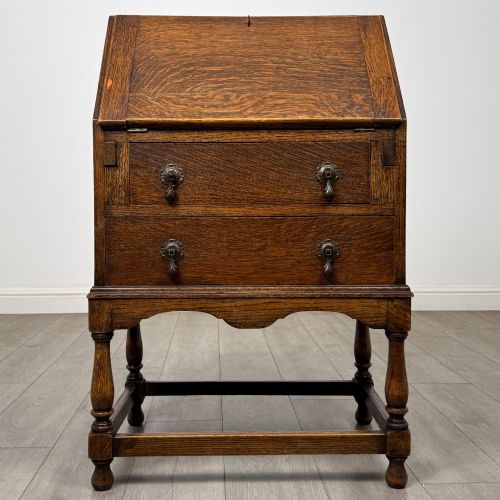
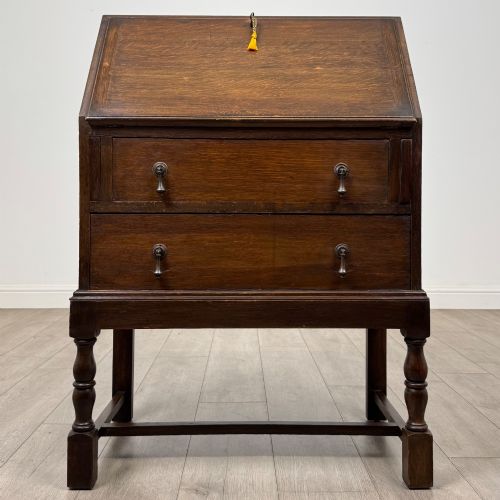
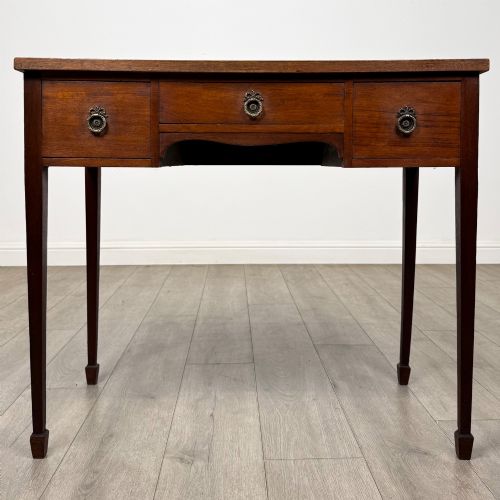
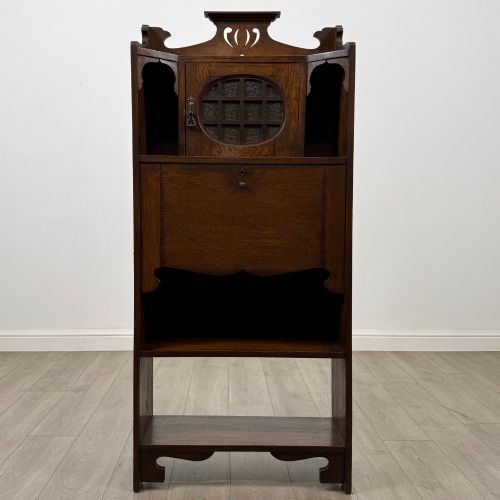
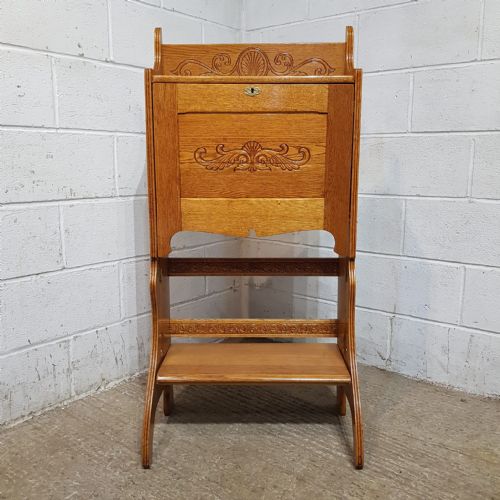
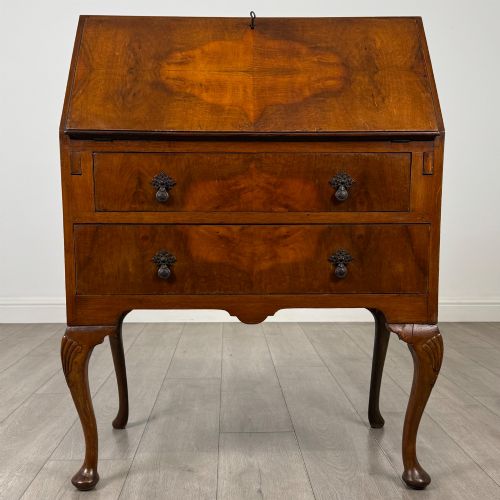
Vintage Compact Writing Desk
A vintage compact writing desk brings small-scale workspace and fitted storage together in oak, walnut, and mahogany.
Vintage Compact Writing Desk
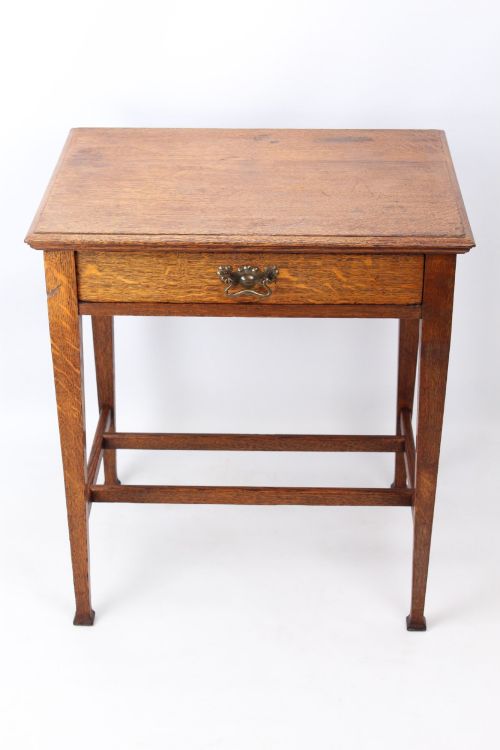
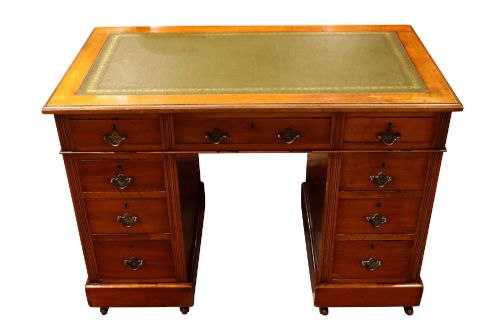
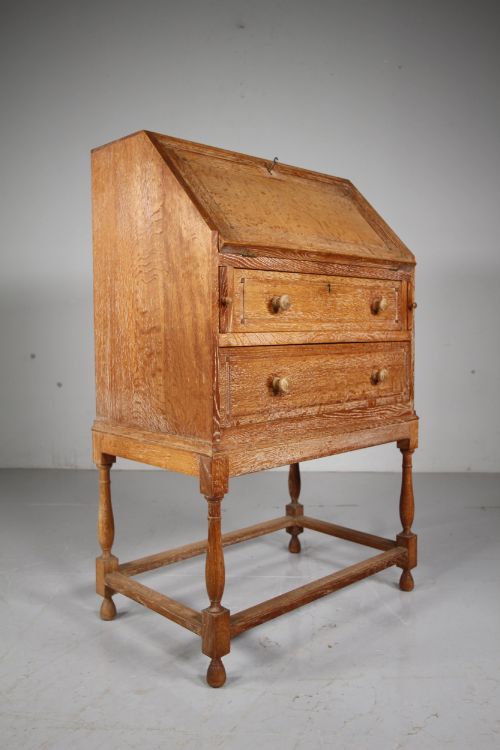
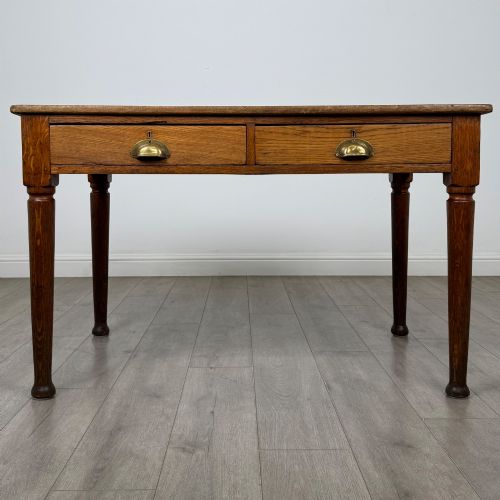
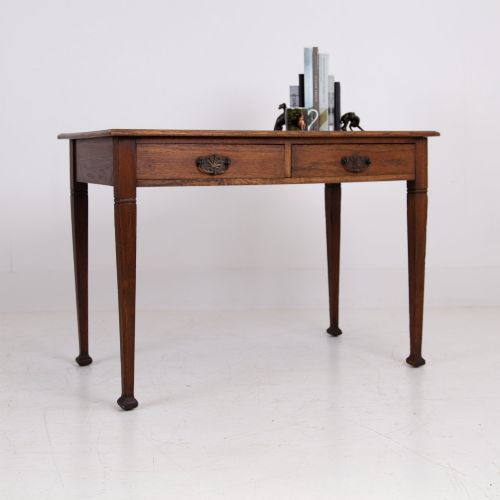
A vintage compact writing desk serves as a functional workspace designed for smaller rooms, taking forms such as writing tables, pedestal desks, and drop-front bureaux. Buyers seeking a vintage compact writing desk encounter pieces originating primarily from the Victorian and Edwardian periods through the 1920s and 1930s.
The selection ranges from simple oak writing tables to elaborate bureau bookcases and secretaire bookcases fitted with internal drawers and pigeonholes. Edwardian and Art Deco examples appear frequently alongside nineteenth-century designs influenced by Georgian and Queen Anne revival styles.
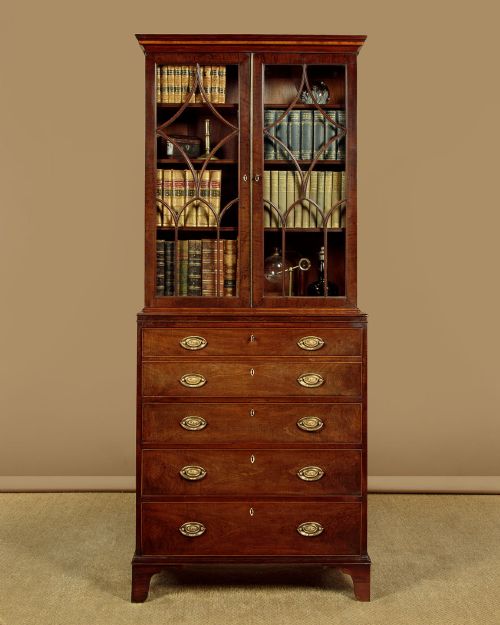
Many variants incorporate specialised functions, including fold-over actions, integrated lamps, or glass-fronted bookcases positioned above the writing surface. These pieces utilise domestic footprints while maintaining traditional cabinet-making forms.
How They Were Made
Cabinet-makers constructed these desks using solid timbers and veneers, predominantly oak, mahogany, and walnut, frequently accented with burr walnut or sycamore. Writing surfaces often incorporate inset leather panels to provide a durable working area.
Listings feature oak, walnut, and mahogany across Edwardian, Victorian, and Art Deco periods.
What Varies in Quality
The standard of timber selection and veneering distinguishes individual pieces, particularly where figured walnut or golden oak exhibits deliberate grain patterns. Superior examples often retain original maker labels, such as those from Heal's of London, Jenners, or F.H. Marshall and Co.
Internal complexity also marks the division between basic writing tables and superior pedestal desks or fitted bureaux. The integration of specialised mechanics, such as metamorphic fold-over actions and fitted stationary compartments, demonstrates finer workshop execution.
Heals of London·F.H. Marshall and Co·Bryn Mawr·Jenners
The Vintage Compact Writing Desk Glossary
- Bureau
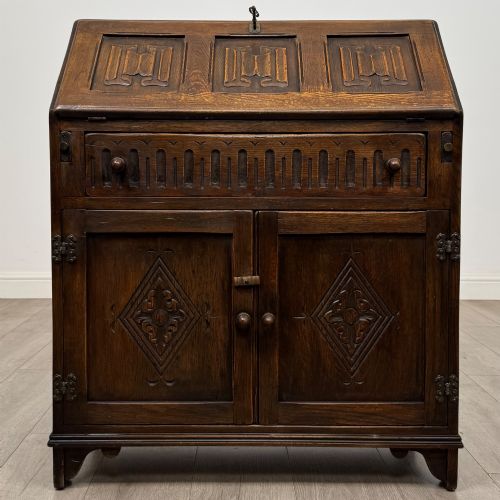
- A desk featuring a sloping hinged flap that opens to reveal a fitted interior of small drawers and pigeonholes. These often sit above sets of larger drawers or bookcase compartments.
- Secretaire
- A cabinet or desk incorporating a pull-down writing drawer or fall front that conceals a writing surface and internal compartments. They frequently combine workspace with shelving or bookcase storage.
- Pedestal desk
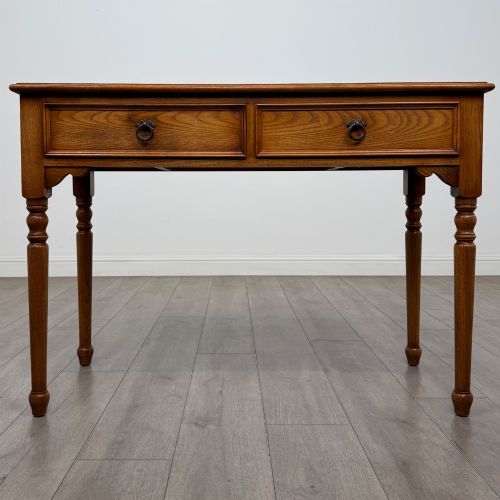
- A freestanding writing table supported by two piers or pedestals containing multiple small drawers. They offer a stable footprint and substantial storage capacity.
- Linenfold
- A carved wood panel motif resembling folded cloth, commonly found on the fronts of Edwardian and Arts and Crafts oak furniture. This decorative carving reflects medieval textile designs.
- Inlay
- The technique of embedding contrasting pieces of wood or other materials into a solid timber surface to create decorative patterns. Edwardian mahogany desks frequently utilise this method for borders.
Vintage Compact Writing Desk: Frequently Asked Questions
What is a bureau desk?
A bureau desk is a writing unit featuring a hinged sloping flap that drops forward to create a writing surface. This flap conceals a fitted interior filled with small drawers and pigeonholes for stationery.
Beneath the writing flap, these pieces typically provide several full-width drawers for storage. Many examples from the Edwardian and Art Deco periods combine this form with upper bookcase sections.
How do I identify an Edwardian desk?
Edwardian desks often feature lighter timbers such as golden oak, walnut, or inlaid mahogany. They frequently display stylistic influences from earlier periods, including Georgian and Queen Anne revivals.
Construction from this era around 1900 to 1910 balances traditional cabinet-making with domestic practicality for smaller rooms. Look for crisp brass hardware and fitted interiors designed for contemporary correspondence.
What materials were used?
The primary timbers found in these desks include oak, mahogany, and walnut. More decorative examples utilise burr walnut or sycamore veneers to create striking grain patterns on drawer fronts and writing flaps.
Working surfaces frequently incorporate inset leather writing pads, while brass provides the handles, hinges, and escutcheons. Glass is also common in upper bookcase and display doors.
How do I fit a desk in a small room?
Compact writing desks and student bureaux are specifically proportioned for restricted spaces, utilising narrow footprints and clever vertical storage. Drop-front writing surfaces require minimal clearance when closed.
Pedestal desks and writing tables offer shallow depths while providing integrated drawer storage beneath the work surface. Choosing a piece with built-in upper shelving eliminates the need for separate bookcases.